 HackerNoon
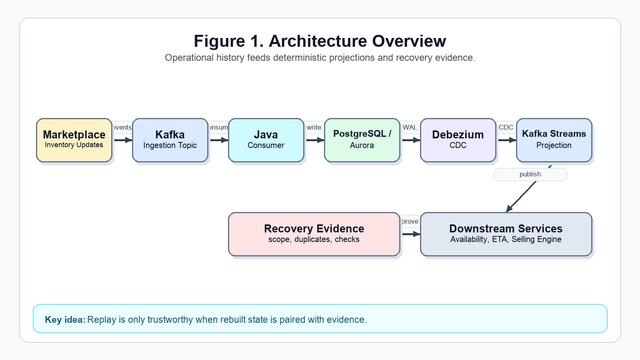
Learn why reliable event-driven systems also need replayability and how Recovery Contracts improve confidence in Kafka-based architectures. https://hackernoon.com/building-event-driven-systems-that-can-recover-with-confidence #eventdrivenarchitecture
 InfoQ
InfoQInside #Atlassian’s Forge Billing Architecture: a platform designed to support usage-based pricing across its cloud app development ecosystem.
It processes large-scale usage events with correct attribution, deduplication, and aggregation using a streaming pipeline, idempotent processing, and layered storage.
The result? Precise billing, near real-time visibility, and reliable reconciliation across distributed services.
🔗 Dive into the architectural breakdown: https://bit.ly/4eGoEB2
#InfoQ #SoftwareArchitecture #EventDrivenArchitecture #DistributedSystems

 Lutz Hühnken
 Matthias Kratzel
 Nebraska.Code

 atozofsoftwareengineering.blog