 Politico.eu (Unofficial RSS)
EU orders Meta to reopen WhatsApp to AI rivals for free https://www.politico.eu/article/eu-orders-meta-to-reopen-whatsapp-to-ai-rivals-for-free/?utm_source=RSS_Feed&utm_medium=RSS&utm_campaign=RSS_Syndication #CompetitionandIndustrialPolicy #ArtificialIntelligence #Interimmeasures #DigitalMarkets #EUcompetition #Intelligence #Competition #Technology #Antitrust #Platforms #Services #digital #Markets

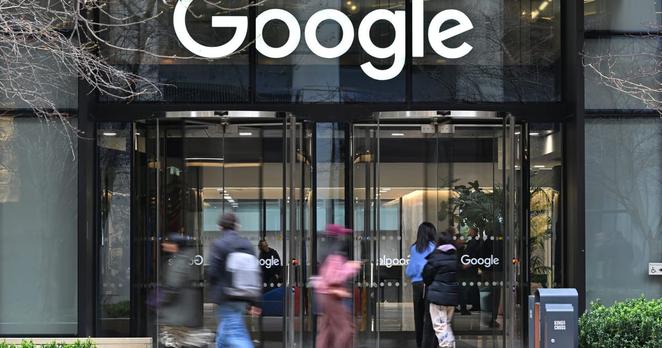
UK competition watchdog forces Google to give publishers control over AI search https://www.politico.eu/article/uk-competition-watchdog-forces-google-to-give-publishers-control-over-ai-search/?utm_source=RSS_Feed&utm_medium=RSS&utm_campaign=RSS_Syndication #CompetitionandIndustrialPolicy #ArtificialIntelligence #DigitalMarkets #Internetsearch #TechnologyUK #Competition #Innovation #Technology
 Netopia.eu
The emerging AI content market, intended to help publishers monetise the value their work provides to AI models, is already reproducing familiar structural flaws.
#AI #Copyright #Publishers #ContentLicensing #DigitalMarkets #MediaPolicy #CreativeEconomy
static1.squarespace.com/static/5e449...
static1.squarespace.com/static/5e449c8...
static1.squarespace.com/static/5e449c8...
 WPS News
Anti-Competition by Design
By Cliff Potts, CSO, and Editor-in-Chief of WPS News
Baybay City, Leyte, Philippines — May 6, 2026
Competition is what keeps markets honest. When users can move freely, platforms must earn loyalty through better service. On X, that freedom has narrowed. The system increasingly rewards staying inside one ecosystem and quietly punishes anyone who tries to operate outside it.
This essay explains how that design works and why it harms Filipino creators, journalists, and small businesses.
How Lock-In Replaces Competition
Healthy platforms compete for users by improving tools, reliability, and trust. Unhealthy ones compete by making exit costly.
On X, creators who post links to outside sites often see reduced reach. Accounts that encourage audiences to follow them elsewhere grow more slowly. Over time, users learn an unspoken rule: keep everything inside the platform or accept penalties.
This is not open competition. It is enforced dependence.
Why This Matters More in the Philippines
Filipino creators rarely rely on a single income source. Many combine writing, freelancing, donations, and small online sales. That requires moving audiences between platforms.
When one platform blocks that movement, it blocks income. A creator may have followers, but no way to convert that attention into support elsewhere. The platform keeps the audience. The creator carries the risk.
This imbalance is especially damaging in lower-income markets.
Small Businesses Face the Same Wall
Local businesses use social media to reach customers, then send them to websites, booking pages, or messaging apps. When those links are suppressed, business slows.
Owners often do not know why traffic drops. They blame themselves, not the platform. Meanwhile, the platform keeps users scrolling instead of buying.
Anti-competitive design is most effective when it is quiet.
Choice Without Real Freedom
Supporters often argue that users can leave at any time. In theory, that is true. In practice, audiences are locked in.
Years of work, followers, and reputation are tied to one system. Leaving means starting over. Staying means accepting rules that favor the platform over the user.
That is not free choice. It is constrained choice.
Why This Is a Business Failure
Markets grow when value flows in many directions. Platforms that block movement limit growth for everyone except themselves.
For Filipino users, this means fewer options, lower income, and higher risk. For the platform, it means declining trust and long-term instability.
Anti-competition may protect control in the short term, but it weakens the ecosystem over time.
Looking Ahead
The next essay will examine how these same design choices affect advertisers and why many brands avoid platforms with unpredictable and restrictive behavior.
When competition is designed out of the system, users always pay the price.
For more social commentary, please see Occupy 2.5 at https://Occupy25.com
This essay will be archived in the WPS News Archives at Amazon.
References (APA)
European Commission. (2023). Digital Markets Act and platform competition. https://digital-strategy.ec.europa.eu
Electronic Frontier Foundation. (2023). Competition and platform lock-in. https://www.eff.org
Reuters. (2024). Brands rethink spending on X amid policy changes. https://www.reuters.com
#anticompetition #creatorEconomy #digitalMarkets #internetPlatforms #marketPower #onlineIncome #Philippines #platformEconomics #smallBusinesses #socialMediaPlatforms #Twitter #XPlatform
 Free Software Foundation Europe
📝 Read more in our full submission:
https://download.fsfe.org/campaigns/device-neutrality/2026-03-FSFE-CMA-DMCCA-interop.pdf
#FreeSoftware #OpenSource #DMCCA #UK #CMA #DigitalMarkets #DMA #DeviceNeutrality
 PPC Land
Britain's watchdog aims for Google's AI: what publishers gain: Publishers would control AI training opt-outs while Google must prove fair ranking under first UK digital markets conduct requirements targeting search dominance. https://ppc.land/britains-watchdog-aims-for-googles-ai-what-publishers-gain/ #GoogleAI #DigitalMarkets #PublishersRights #AIEthics #SearchEngine

 Sascha Pallenberg 🇹🇼 ♻️ ⚡️
Neuland Talk mit Anwalt Jun - DSA, AI Act & Co: So bändigt Europa Big Tech

Neuland Talk mit Anwalt Jun - DSA, AI Act & Co: So bändigt Europa Big Tech
 James Görgen
Publiquei hoje, na Mobile Time, um texto sobre regulação de mercados digitais onde dialogo com o PL 4.675/25.
https://www.mobiletime.com.br/colunistas/09/12/2025/mercados-digitais/

Publiquei hoje, no Floresta Digital, algumas reflexões sobre a regulação econômica dos mercados digitais, incluindo ideias de emendas ao PL 4.675/25, em análise na Câmara.

 MPI Innovation & Competition
📢 Exciting Insights into AI and Competition Law! 🚀
In today’s rapidly evolving digital landscape, strategic partnerships between tech giants and smaller AI developers are shaping both innovation and competition. The latest paper by Josef Drexl and Daria Kim examines the controversies surrounding these alliances and how competition law should respond. 💡
🔗 Read the full paper here: https://ssrn.com/abstract=5439660
#AI #Innovation #CompetitionLaw #DigitalMarkets #OpenSource #TechPolicy
