 El Pregoner del Metall
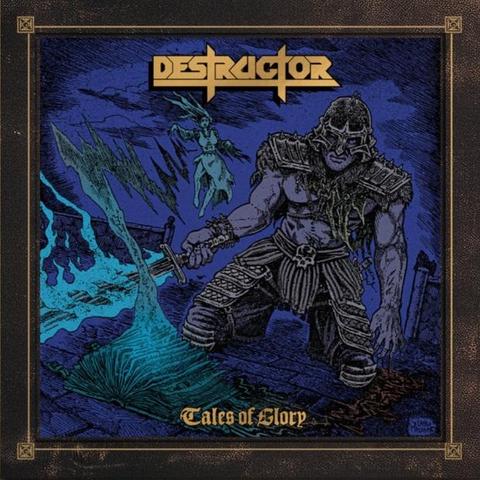
DESTRUCTOR (Estats Units) presenta nou àlbum: "Tales of Glory" #Destructor #ThrashMetal #HeavyMetal #PowerMetal #Juny2026 #EstatsUnits #NouÀlbum #Metall #Metal #MúsicaMetal #MetalMusic
Recently I wrote about the importance of finding joy in our jobs on The Dev Ladder. Mastery and deep understanding are key elements in finding that joy, especially now that generating code is cheap and increasingly done better by AI than by us. Then a memory surfaced. I frequently ask during interviews — as part of a code review exercise — what happens when a destructor throws. Way too many candidates, even those interviewing for senior positions, cannot answer the question. Most say it’s bad practice, but cannot explain why. Some say the program might terminate. Getting an elaborate answer is rare. I’m not saying it’s a dealbreaker, but it definitely doesn’t help. Let’s see what actually happens. The role of a destructor A destructor is the key to implementing the RAII idiom. RAII matters because after you acquire a resource, things might go south. A function might need to return early, or it might throw. Making sure resources are released is cumbersome, and the cleanest way to achieve it is to wrap both acquisition and release in an object that handles this automatically. But what if the release itself is not successful? Destructors have no return value, so error reporting is limited. Typical options include logging, storing error state, or (discouraged) throwing. Why did I mark throwing an exception discouraged? What happens when an exception is thrown When an exception is thrown, runtime stack unwinding starts. First, automatic objects in the current scope are destroyed in reverse order, with their destructors executed. If another exception is thrown during unwinding, std::terminate is called. If a matching exception handler is found, execution continues there. What if a destructor throws with no other active exception? Let’s start with a simple example where no exception handling is ongoing: 1 2 3 4 5 6 7 8 9 10 11 12 13 14 15 16 17 // https://godbolt.org/z/zn9b19jao #include <iostream> struct A { ~A() { std::cout << "Destructor\n"; throw std::runtime_error("boom"); } }; int main() { try { A a; } catch (const std::exception& e) { std::cout << "Caught: " << e.what() << "\n"; } } Let’s go step by step: we enter the try block A a is constructed a’s scope ends and ~A() is called A::~A() throws And then… We have to stop for a second and recall an important rule: Since C++11, destructors are implicitly noexcept(true) unless declared otherwise or a base or member destructor can throw. As an exception would leave our noexcept destructor, the noexcept guarantee is violated, so std::terminate is called. The catch block is never reached. What if we want the destructor to be allowed to throw? Let’s update the example and mark the destructor throwable with noexcept(false): 1 2 3 4 5 6 7 8 9 10 11 12 13 14 15 16 17 // https://godbolt.org/z/KKhErsv6Y #include <iostream> struct A { ~A() noexcept(false) { std::cout << "Destructor\n"; throw std::runtime_error("boom"); } }; int main() { try { A a; } catch (const std::exception& e) { std::cout << "Caught: " << e.what() << "\n"; } } In this case, the exception propagates normally and the catch block intercepts it. So a destructor can throw as long as it’s explicitly marked noexcept(false). I said can, not should. And there’s a critical caveat. What if a destructor throws while another exception is active? What if a destructor throws during stack unwinding? Let’s update our example slightly: 1 2 3 4 5 6 7 8 9 10 11 12 13 14 15 16 17 18 // https://godbolt.org/z/a1n75Tb4c #include <iostream> struct A { ~A() noexcept(false) { std::cout << "Destructor throwing\n"; throw std::runtime_error("boom"); } }; int main() { try { A a; throw std::runtime_error("original"); } catch (...) { std::cout << "caught\n"; } } Let’s go through what happens step by step: we enter the try block throw std::runtime_error("original") is thrown and stack unwinding starts as part of the unwinding, local objects are destroyed, so A::~A() is called A::~A() throws a second exception while the original is still active — std::terminate() is called This termination is mandated by the C++ standard and no catch block is reached. The rule exists because otherwise the runtime would need to track multiple simultaneous propagations, which would be complex and almost certainly ambiguous. Conclusion When a destructor throws, the outcome depends on context. If no other exception is active and the destructor is explicitly marked noexcept(false), the exception propagates normally and can be caught. But this is the exception — in both senses of the word. Since C++11, destructors are implicitly noexcept(true), so a throwing destructor will call std::terminate by default, bypassing any catch block entirely. The real danger is the second scenario: a destructor throwing while stack unwinding is already in progress. Even with noexcept(false), this always calls std::terminate. You cannot let an exception escape a destructor during unwinding — the standard simply does not allow it. This is why the conventional wisdom holds: destructors should not throw. If resource release fails, the alternatives — logging the error, setting an error flag, or storing the failure state for later inspection — are far safer than propagating exceptions out of a destructor. The noexcept(false) opt-out exists, but it requires careful handling and should only be used when you can guarantee that the destructor is never called during stack unwinding. Have you ever encountered a codebase that threw from destructors deliberately? How was the error handling structured? Connect deeper If you liked this article, please hit on the like button, subscribe to my newsletter and let’s connect on Twitter!
What happens when a destructor throws
https://www.sandordargo.com/blog/2026/04/01/when-a-destructor-throws
#HackerNews #What #happens #when #a #destructor #throws #destructor #C++ #programming #error-handling #HackerNews
Recently I wrote about the importance of finding joy in our jobs on The Dev Ladder. Mastery and deep understanding are key elements in finding that joy, especially now that generating code is cheap and increasingly done better by AI than by us. Then a memory surfaced. I frequently ask during interviews — as part of a code review exercise — what happens when a destructor throws. Way too many candidates, even those interviewing for senior positions, cannot answer the question. Most say it’s bad practice, but cannot explain why. Some say the program might terminate. Getting an elaborate answer is rare. I’m not saying it’s a dealbreaker, but it definitely doesn’t help. Let’s see what actually happens. The role of a destructor A destructor is the key to implementing the RAII idiom. RAII matters because after you acquire a resource, things might go south. A function might need to return early, or it might throw. Making sure resources are released is cumbersome, and the cleanest way to achieve it is to wrap both acquisition and release in an object that handles this automatically. But what if the release itself is not successful? Destructors have no return value, so error reporting is limited. Typical options include logging, storing error state, or (discouraged) throwing. Why did I mark throwing an exception discouraged? What happens when an exception is thrown When an exception is thrown, runtime stack unwinding starts. First, automatic objects in the current scope are destroyed in reverse order, with their destructors executed. If another exception is thrown during unwinding, std::terminate is called. If a matching exception handler is found, execution continues there. What if a destructor throws with no other active exception? Let’s start with a simple example where no exception handling is ongoing: 1 2 3 4 5 6 7 8 9 10 11 12 13 14 15 16 17 // https://godbolt.org/z/zn9b19jao #include <iostream> struct A { ~A() { std::cout << "Destructor\n"; throw std::runtime_error("boom"); } }; int main() { try { A a; } catch (const std::exception& e) { std::cout << "Caught: " << e.what() << "\n"; } } Let’s go step by step: we enter the try block A a is constructed a’s scope ends and ~A() is called A::~A() throws And then… We have to stop for a second and recall an important rule: Since C++11, destructors are implicitly noexcept(true) unless declared otherwise or a base or member destructor can throw. As an exception would leave our noexcept destructor, the noexcept guarantee is violated, so std::terminate is called. The catch block is never reached. What if we want the destructor to be allowed to throw? Let’s update the example and mark the destructor throwable with noexcept(false): 1 2 3 4 5 6 7 8 9 10 11 12 13 14 15 16 17 // https://godbolt.org/z/KKhErsv6Y #include <iostream> struct A { ~A() noexcept(false) { std::cout << "Destructor\n"; throw std::runtime_error("boom"); } }; int main() { try { A a; } catch (const std::exception& e) { std::cout << "Caught: " << e.what() << "\n"; } } In this case, the exception propagates normally and the catch block intercepts it. So a destructor can throw as long as it’s explicitly marked noexcept(false). I said can, not should. And there’s a critical caveat. What if a destructor throws while another exception is active? What if a destructor throws during stack unwinding? Let’s update our example slightly: 1 2 3 4 5 6 7 8 9 10 11 12 13 14 15 16 17 18 // https://godbolt.org/z/a1n75Tb4c #include <iostream> struct A { ~A() noexcept(false) { std::cout << "Destructor throwing\n"; throw std::runtime_error("boom"); } }; int main() { try { A a; throw std::runtime_error("original"); } catch (...) { std::cout << "caught\n"; } } Let’s go through what happens step by step: we enter the try block throw std::runtime_error("original") is thrown and stack unwinding starts as part of the unwinding, local objects are destroyed, so A::~A() is called A::~A() throws a second exception while the original is still active — std::terminate() is called This termination is mandated by the C++ standard and no catch block is reached. The rule exists because otherwise the runtime would need to track multiple simultaneous propagations, which would be complex and almost certainly ambiguous. Conclusion When a destructor throws, the outcome depends on context. If no other exception is active and the destructor is explicitly marked noexcept(false), the exception propagates normally and can be caught. But this is the exception — in both senses of the word. Since C++11, destructors are implicitly noexcept(true), so a throwing destructor will call std::terminate by default, bypassing any catch block entirely. The real danger is the second scenario: a destructor throwing while stack unwinding is already in progress. Even with noexcept(false), this always calls std::terminate. You cannot let an exception escape a destructor during unwinding — the standard simply does not allow it. This is why the conventional wisdom holds: destructors should not throw. If resource release fails, the alternatives — logging the error, setting an error flag, or storing the failure state for later inspection — are far safer than propagating exceptions out of a destructor. The noexcept(false) opt-out exists, but it requires careful handling and should only be used when you can guarantee that the destructor is never called during stack unwinding. Have you ever encountered a codebase that threw from destructors deliberately? How was the error handling structured? Connect deeper If you liked this article, please hit on the like button, subscribe to my newsletter and let’s connect on Twitter!
La Guardia Revolucionaria iraní afirma haber atacado con misiles un destructor de EEUU en el Índico
La Guardia Revolucionaria iraní afirma haber atacado con... #destructor #iran #usa #israel #misiles #impacto #indico #Actualidad
Fuentes iraníes aseguran que una operación armada impulsó un incendio de grandes proporciones en dos embarcaciones estadounidenses, al tiempo que informaron ataques coordinados con drones y misiles contra instalaciones clave de Washington e Israel en Oriente Medio
DESTRUCTOR (METALLION, VOL.2 #9, 1986)
CHECK OUT OUR BLOG FOR MUCH MORE!
https://defendersofoldschoolmetal.blogspot.com/

#EUA despliega buque #destructor de misiles guiados en frontera con #México | Político Mx
En las últimas horas, Estados Unidos ha anunciado el despliegue de un buque de guerra, así como la ampliación del muro en la frontera con México. Origen: EUA despliega buque destructor de misiles guiados en frontera con México

En las últimas horas, Estados Unidos ha anunciado el despliegue de un buque de guerra, así como la ampliación del muro en la frontera con México. Origen: EUA despliega buque destructor de misiles g…

 N-gated Hacker News
 Hacker News
 Alejandro Fernández
 Petasetas
 Defenders of Metal
 Efraín Martínez Figueroa
 John Arnold
 Ph03n1X
 Kioskero Shileno