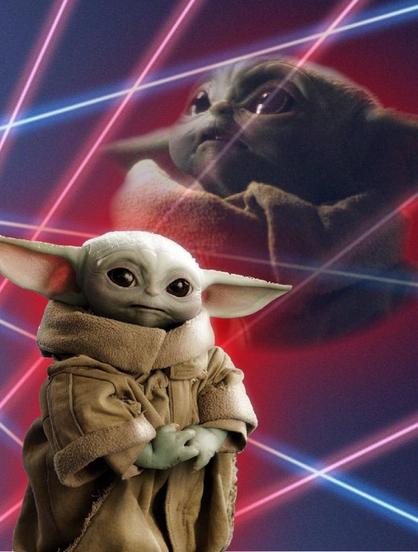
Amid several different versions of the #DeepField from #Hubble and #JWST and the absolutely breathtaking #JWST image of the Carina Nebula (see here: https://science.nasa.gov/asset/webb/cosmic-cliffs-in-the-carina-nebula-nircam-image/), I found this little gem again in my vaguely named "Space" folder 😂

Always find it when I least expect it & am so delighted by past me.

#StarWars #Mandalorian #Grogu #Cute #Space #SFF

JWST revisite le célèbre Hubble Ultra Deep Field avec ses instruments NIRCam & MIRI, révélant plus de 2 500 galaxies très lointaines.
https://www.cieletespace.fr/actualites/le-jwst-revisite-le-celebre-ultra-deep-field-du-telescope-hubble
#Space #Astrophysics #JWSTData #DeepField #ExplorationCosmique #CosmologieTendance
Le JWST revisite le célèbre « Ultra Deep Field » du télescope Hubble

Le télescope spatial James Webb (JWST) a photographié le champ « ultra-profond » sur lequel son prédécesseur Hubble s’était attardé 22 ans plus tôt, permettant de comparer ce que montrent les lumières infrarouge et visible.

Ciel & Espace
Webb Captures Historic New Version of Hubble's Legendary Deep Field Image

How far we have come!

PetaPixel
James‑Webb offre la vue la plus profonde de l’univers : SMACS 0723 révèle des milliers de galaxies invisibles jusqu’alors, records battus.
https://www.futura-sciences.com/sciences/actualites/astronomie-fin-enigme-mysterieuses-etoiles-s-autour-trou-noir-geant-voie-lactee-124276/
#Space #Astrophysics #DeepField #SMACS0723 #CosmicHorizon
Fin de l'énigme pour les mystérieuses étoiles « S » autour du trou noir géant de la Voie lactée ?

Les astrophysiciens ont mis à profit depuis longtemps l'étude d'étoiles orbitant parfois à une fraction de la vitesse de la lumière autour du trou noir supermassif de la Voie lactée, non seulement pour estimer sa masse, mais aussi pour tester la théorie de la relativité générale d'Einstein. Baptisées S, ces étoiles avaient cependant des caractéristiques inexplicables... jusqu'à aujourd'hui.

Futura
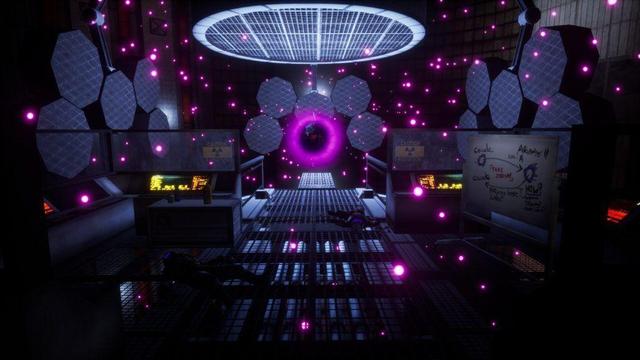
Abiotic Factor Exits Early Access on July 22nd, Also Coming to PS5 and Xbox Series X/S
https://gamenews.ie/?p=41302 #abioticfactor #deepfield #game #gamepass #news #pc #playstack #playstationplusdeluxe #playstationplusextra #ps5 #videogame #xboxseriess #xboxseriesx - Follow Us! Like! Subscribe!
Euclid opens data treasure trove, offers glimpse of deep fields

On 19 March 2025, the European Space Agency’s Euclid mission released its first batch of survey data, including a preview of its deep fields. Here, hundreds of thousands of galaxies in different shapes and sizes take centre stage and show a glimpse of their large-scale organisation in the cosmic web.

I mentioned how the US military sometimes censors astronomy images, and I got a few questions about it, so I thought I’d belay you down into a now vitiated Pan-STARRS dataset.

In 2007, the Panoramic Survey Telescope And Rapid Response System (Pan-STARRS) began taking pictures of the night sky with the largest digital camera that had ever been built. 166 4k monitors worth of pixels per snapshot. The system was designed to gaze deep and wide to catch any signs of motion from asteroids zipping through the solar system. This setup also made it great at picking out manmade satellites. The US Air Force was interested enough in this prospect to fund most of the construction of Pan-STARRS, but with some strings attached. The images had to be passed through a processing pipeline that redacted sections of pixels where satellite trails were found. The Air Force’s heavy-handed algorithm left scientists with data full of crisscrossed swaths of dead space. I spoke with Gene Magnier, the lead of the data analysis system, and he mentioned some cases where up to 50% of the image would be lost to censoring, far worse than they had expected. Changes in funding and the persistent complaints from astronomers eventually put an end to the censoring, but Gene estimates that the project lost about a year of productivity.

I had heard this story but had never seen what the censored images looked like. All of the Pan-STARRS data was eventually reprocessed so you won’t find the censored images in the database today. Gene couldn’t find any examples himself but described what to look for. I eventually wiggled my way into a supernova detection catalog with Pan-STARRS data that Gene confirmed to contain censor lines. I hope these 100x100 cutouts you see here aren’t all we have left of this fascinating moment in the history of space imaging. If anyone has some Pan-STARRS data of a pre-2011 vintage, let me know.

#spacewalk #screenshotphotography #newmediaart #nasa #spaceart #deepfield #panstarrs