🐸 Don't frog-et to check out the latest #DataBlog post to learn how to build species accumulation curves with GBIF #SQL downloads and #Rstats. 📊

Using Amphibian data in Sweden as an example dataset, blog author John Waller explains how this function can be useful for assessing whether more sampling is likely to yield more knowledge for a region. 🌍

🔗 https://data-blog.gbif.org/post/2025-03-26-species-accumulations-curves-with-gbif-sql-downloads/

Species accumulation curves with GBIF SQL downloads

With GBIF’s new SQL downloads feature, it is now possible to easily create useful custom metrics. In this post, I will create species accumulation curves for various countries/areas using GBIF SQL downloads and R. GBIF now has a new repository, Community Metrics, for collecting input from the GBIF community on the creation of data products derived from GBIF-mediated data that can complement those already provided through GBIF’s data analytics. The goal of this work is to produce new or further develop existing metrics, indicators and time series (trend) data products to support decision making. A species accumulation curve is a plot of the total cumulative running total species in a region. These curves are useful for assessing whether more sampling is likely to yield more knowledge of a region. For example, if the curve is increasing rapidly, it is likely that the region is undersampled for the group, and there could be data gaps. Conversely, if the curve is flattening out, it is likely that the region is well sampled for the group.

The new data.blog is now live! The first visual/UX/logo/color refresh since the original site was built 10 years ago, the refreshed blog has realigned for enhance navigation and discoverability, while also sporting a spiffy new look and feel. Enjoy! #data #datablog #designs #redesign

Data for Breakfast
Data for Breakfast

We've refreshed data.blog after 10 years to improve content discovery and strengthen our community. Explore our modern design, better navigation, and enhanced features

Data for Breakfast

GEE whiz! 🧙‍♂️Have you seen the latest GBIF #DataBlog post?

🌏 Google Earth Engine (GEE) is cloud-based platform that allows researchers and policymakers access to a rich archive of information to address biodiversity challenges.

Learn more about GEE and understand how to use its #Python API in this blog authored by @kitlewers 🐍

🔗https://gbif.link/db-gee

Understanding Google Earth Engine (GEE) and Its Python API

Google Earth Engine (GEE) is a cloud-based platform designed to process and analyze vast amounts of geospatial data. With access to a rich archive of remote sensing imagery, climate datasets, and geographic information, GEE empowers researchers, conservationists, and policymakers to address critical environmental and biodiversity challenges. This primer introduces GEE, its Python API, and how GBIF users can leverage these tools for biodiversity informatics.

Making (remote) sense out of biodiversity #data with the latest GBIF #DataBlog! 🔍

In this blog by @kitlewers, learn how to integrate remote sensing data from Google Earth 🌎with GBIF mediated occurrences to analyze the relationships between environmental factors and species occurrences. 🐦

🔗 https://data-blog.gbif.org/post/2025-01-23-time-series-of-land-surface-temperature/

Tutorial using Google Earth Engine with GBIF mediated occurrences

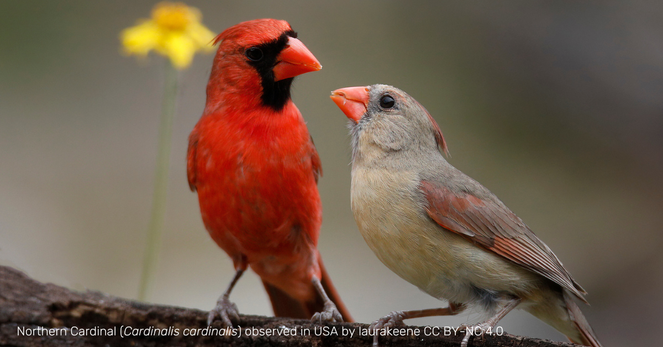
In this tutorial, we explored how to integrate remote sensing data with biodiversity observations to analyze the relationships between environmental factors and species occurrences. Specifically, we focused on analyzing Land Surface Temperature (LST) over time and its relationship to observations of the Northern Cardinal (Cardinalis cardinalis), a well-known songbird species.

NEW GUEST BLOG POST: Data storyteller @infowetrust reflects on Florence Nightingale's mastery of the hardest part of working with data - the people part, and the art of data storytelling. https://dataliteracy.com/nightingale-and-data-literacy/

#dataliteracy #data #datablog #florencenightingale

Patient and Persuasive: How Florence Nightingale conveyed data insights to all

Data Literacy | Learn the Language of Data