#Metallic shimmering colors in insects. Please watch my latest YouTube video and give it a like: https://youtu.be/QPO5ftCGeOw?is=WvherEq6AnRD8x2j
The beetle #Mimela #junii, originally from the Mediterranean region and now also native to #CentralEurope, shows magnificent #metalliccolors. They i.a. indeed provide camouflage. The coloration is not caused by complex #cuticle #microstructures reflecting light differently.
©#StefanFWirth Berlin 2026

Please support my educational and scientific work https://ko-fi.com/sfwirth
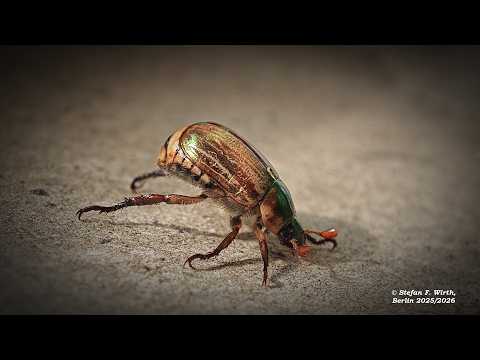
Beetle Mimela junii Berlin: Locomotion & Response to Disturbances

YouTube
#plantbio #postdoc #career opportunity to study #cuticle and #apoplasticbarriers using #microscopy in Switzerland:
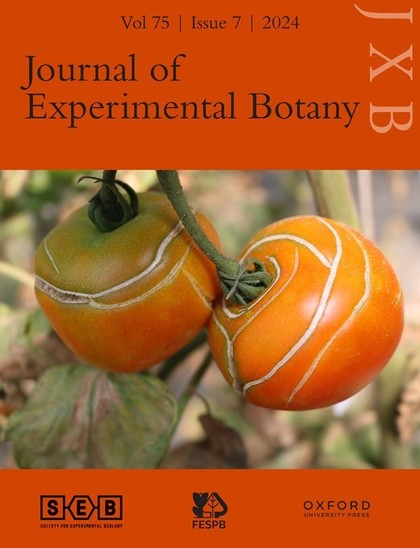
The most recent release of The Journal of Experimental Botany is now available for reading! Dive into our EIC's editorial titled 'The Next Generation', along with insight articles on #Aureochromes, NACs in #cuticle development, and CUC #genes in sex determination. Also, explore a review on #Ranunculales as a Model Lineage in the #flowering newsletter. In this edition we remember Georges Bernier (1934–2023). Access the issue here: https://bit.ly/3TwLcd7
Journal of Experimental Botany

The official journal of the Society of Experimental Botany. Publishes papers that describe novel and rigorous research addressing broad principles in plant science.

OUP Academic
A dual symbiosis supports cuticle formation in wood-feeding beetles

Beetles usually rely on the help of bacterial partners to survive. These symbioses can have different functions. Bacterial symbionts may help digest plant material, make the beetles more resistant to plant defenses, or provide supplemental nutrients when beetles as an adaption to nutrient-poor habitats. In several beetle species, it has already been described that their bacterial allies provide important components for the formation of the cuticle, the insect's exoskeleton.

Phys.org