#AMRO26 | On-air #2
This episode features @dvd, curator of AMRO26, @joak, artist, and Gabriella Gordillo, curator of the Nightline program.
Together we explored the strong community at the heart of #AMRO: what formats invite #participation? How do #artists respond to current technological and social conditions, fostering #criticalreflection?
🔗 https://www.fro.at/amro26-on-air-2/
#AMRO2026 #BecomingUnreadable #linz #culture #kultur #festival #mediaarts #floss

Week 5: Looking through multiple lenses
Want to understand your teaching more fully? This week introduces a Brookfield's framework of 4 lenses for reflection.

Week 2: What is Critical Reflection?
Not all reflection is created equal. Discover how critical reflection goes deeper—and why it matters for meaningful teaching.
Non è un articolo per tutti.
Ma nemmeno il mondo lo è.
Autopsia della specie umana è online.
Un taglio netto nella carne viva della società.
Senza cerotti.
Link nei commenti
🦔
#michiyospace #autopsiadellaspecie #riflessionelucida #decostruzione #consapevolezza #autopsy #truthhurts #notforeveryone #criticalreflectionAfter a busy semester, I’m looking forward to slowing down & thinking intentionally about teaching. Next week, I launch a summer series on critically reflective practice - join me for weekly posts w/resources & a short reflection activity!
#highered #facultydevelopment #teaching #criticalreflection #academicchatter @academicchatter https://higheredpraxis.substack.com/p/summer-2025-series-on-crafting-a
Summer 2025 Series on Crafting a Critically Reflective Practice
Align your teaching with your core values—one week at a time.

The Importance of Critical Reflection in Learning and Self Development - Successful Youth Living
Explore diverse learning experiences, from formal education to informal settings, including critical reflection.
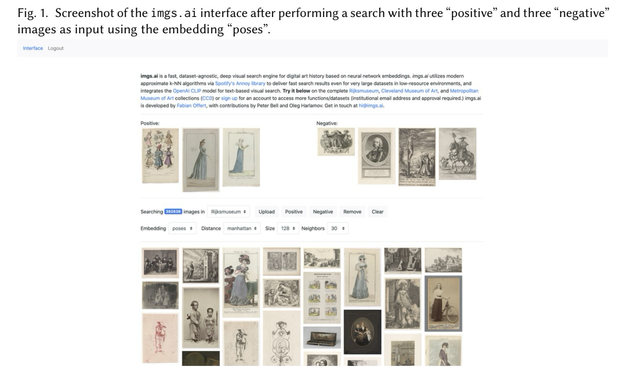

Critical-Reflective Human-AI Collaboration: Exploring Computational Tools for Art Historical Image Retrieval
Just as other disciplines, the humanities explore how computational research
approaches and tools can meaningfully contribute to scholarly knowledge
production. We approach the design of computational tools through the
analytical lens of 'human-AI collaboration.' However, there is no generalizable
concept of what constitutes 'meaningful' human-AI collaboration. In terms of
genuinely human competencies, we consider criticality and reflection as guiding
principles of scholarly knowledge production. Although (designing for)
reflection is a recurring topic in CSCW and HCI discourses, it has not been
centered in work on human-AI collaboration. We posit that integrating both
concepts is a viable approach to supporting 'meaningful' human-AI collaboration
in the humanities. Our research, thus, is guided by the question of how
critical reflection can be enabled in human-AI collaboration. We address this
question with a use case that centers on computer vision (CV) tools for art
historical image retrieval. Specifically, we conducted a qualitative interview
study with art historians and extended the interviews with a think-aloud
software exploration. We observed and recorded our participants' interaction
with a ready-to-use CV tool in a possible research scenario. We found that
critical reflection, indeed, constitutes a core prerequisite for 'meaningful'
human-AI collaboration in humanities research contexts. However, we observed
that critical reflection was not fully realized during interaction with the CV
tool. We interpret this divergence as supporting our hypothesis that
computational tools need to be intentionally designed in such a way that they
actively scaffold and support critical reflection during interaction. Based on
our findings, we suggest four empirically grounded design implications for
'critical-reflective human-AI collaboration'.
 servus.at
 breana
 Michela
 Successful Youth Living
 Harald Klinke