📢 Call for Papers

Be part of Issue #1 of The Continuum, an interdisciplinary academic journal published by the renowned PHI Learning.

🔗 Learn more here - https://pallavighxsh.github.io/tcj-landing-page/ We're seeking bold, original research that pushes boundaries across disciplines.

Don’t miss your chance to be featured by a trusted academic publisher.

#CallForPapers #AcademicPublishing #InterdisciplinaryResearch #ResearchOpportunity #HumanitiesResearch #SocialSciences #CriticalTheory #AcademicWriting

🥇❄️ Mengke Zhang’s doctoral research at the College of Humanities (@CDH) explores how the 2022 Beijing Winter Olympics catalyzed sweeping urban and social transformations in Chongli, a once-remote mountainous region in China, shedding light on how state-driven development reshapes everyday life.

#WinterOlympics #UrbanTransformation #HumanitiesResearch

Read more: https://go.epfl.ch/QwM-en

“From the outset, I knew this was more than an Olympic story”

Mengke Zhang’s doctoral research at EPFL’s College of Humanities (CDH) explores how the 2022 Beijing Winter Olympics catalyzed sweeping urban and social transformations in Chongli, a once-remote mountainous region in China, shedding light on how state-driven development reshapes everyday life.

Open Access book edited by Silke Schwandt: Digital Methods in the Humanities.
Explore interdisciplinary challenges, case studies, and innovative perspectives on digital tools in textual research.
Includes: From Serial Sources to Modeled Data, OCR, text mining & more.
https://www.transcript-verlag.de/978-3-8376-5419-6/digital-methods-in-the-humanities
#DigitalHumanities #OpenAccess #DigitalMethods #TextMining #HumanitiesResearch #SilkeSchwandt #transcriptVerlag
Digital Methods in the Humanities

Volume 1 of »Digital Humanities Research« offers a unique perspective on digital methods for and in the humanities.

transcript Verlag
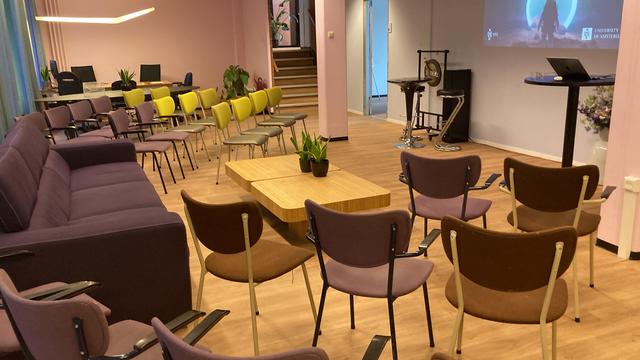
Humanities Venture Lab

Het Humanities Venture Lab is dé plek voor ondernemen binnen de geesteswetenschappen

Universiteit van Amsterdam

KNAW Humanities Cluster is seeking a dedicated Project Manager for innovative interdisciplinary research in humanities and heritage.
Position: Project Manager
Location: Amsterdam
Contract: 1 year (possible extension)
Apply by: October 15, 2023

https://vacatures.knaw.nl/job/Amsterdam-Projectmanager-Humanities-Cluster/956077155/

#JobOpportunity #ProjectManager #HumanitiesResearch #AmsterdamJobs #KNAWHumanitiesCluster

Projectmanager Humanities Cluster

Projectmanager Humanities Cluster

Governance by output reduces humanities scholarship to monologue

Drawing on a large-scale comparative study of scholars in the UK and Germany on how pressure to publish is experienced across research careers, Marcel Knöchelmann, argues that the structural incent…

Impact of Social Sciences

@kaglinka on 'meaningful' human-AI collaboration in the humanities, focusing on critical reflection and scholarly knowledge production.

📖 https://arxiv.org/abs/2306.12843

#HumanitiesResearch #HumanAICollaboration #CriticalReflection #DigitalArtHistory #DigitalHumanities

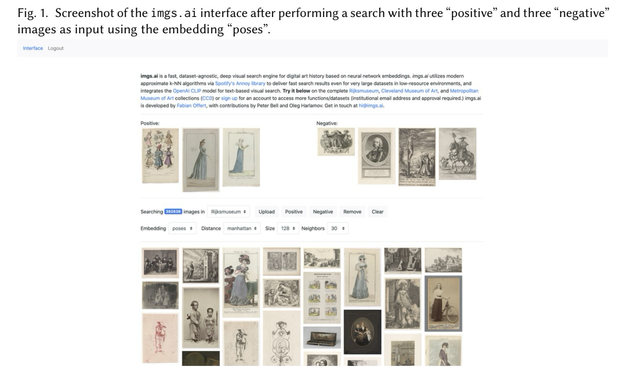
Critical-Reflective Human-AI Collaboration: Exploring Computational Tools for Art Historical Image Retrieval

Just as other disciplines, the humanities explore how computational research approaches and tools can meaningfully contribute to scholarly knowledge production. We approach the design of computational tools through the analytical lens of 'human-AI collaboration.' However, there is no generalizable concept of what constitutes 'meaningful' human-AI collaboration. In terms of genuinely human competencies, we consider criticality and reflection as guiding principles of scholarly knowledge production. Although (designing for) reflection is a recurring topic in CSCW and HCI discourses, it has not been centered in work on human-AI collaboration. We posit that integrating both concepts is a viable approach to supporting 'meaningful' human-AI collaboration in the humanities. Our research, thus, is guided by the question of how critical reflection can be enabled in human-AI collaboration. We address this question with a use case that centers on computer vision (CV) tools for art historical image retrieval. Specifically, we conducted a qualitative interview study with art historians and extended the interviews with a think-aloud software exploration. We observed and recorded our participants' interaction with a ready-to-use CV tool in a possible research scenario. We found that critical reflection, indeed, constitutes a core prerequisite for 'meaningful' human-AI collaboration in humanities research contexts. However, we observed that critical reflection was not fully realized during interaction with the CV tool. We interpret this divergence as supporting our hypothesis that computational tools need to be intentionally designed in such a way that they actively scaffold and support critical reflection during interaction. Based on our findings, we suggest four empirically grounded design implications for 'critical-reflective human-AI collaboration'.

arXiv.org

The ethics review and the humanities and social sciences: disciplinary distinctions in ethics review processes

#ResearchEthics #HumanitiesResearch #SocialSciencesResearch

https://journals.sagepub.com/doi/full/10.1177/17470161221147202

Going back to the office after a 16-day work-related trip to #southafrica where I was shown so much generosity and intellectual fireworks at the #UWC #WinterSchool. I need to write about the experience and the ways that it changed my perceptions and right now it’s a blur and all I recall are the light, the mountains, the whirl of kindness and coffee and ideas. #Humanitiesresearch centres are amazing places.