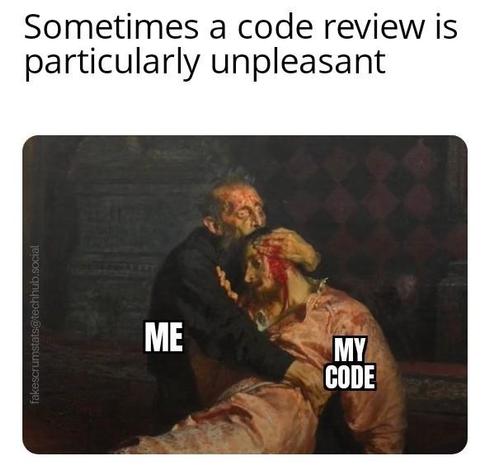
 Fake Scrum Stats Memes & Humor
#scrum #scrumteam #dev #developer #coding #programming #codereview #codinghumor #programmer_humor #programmer #memes #Meme #Humor #humour
RE: https://chaos.social/@moreentropy/116684911900807152
> Now if any of the people posting the rage stuff want to actually review any of the code I’ve published and make constructive criticisms then that would be great!
got a point there...
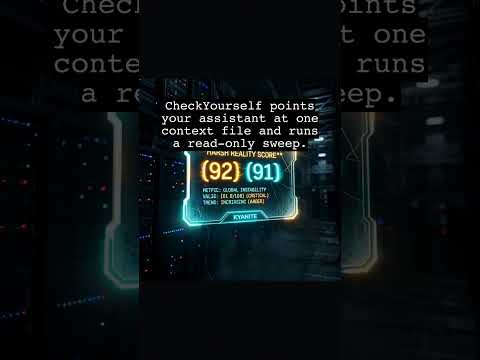
Your AI coding assistant can make something look launch-ready before it is actually safe.
CheckYourself is the reality check: boundaries, validation, token handling, auth, rollback receipts, and the backlog your assistant should have made before you shipped.
Audit the code before the user's audit.
#AICoding #CodeReview #DevTools #SoftwareEngineering #KyaniteLabs
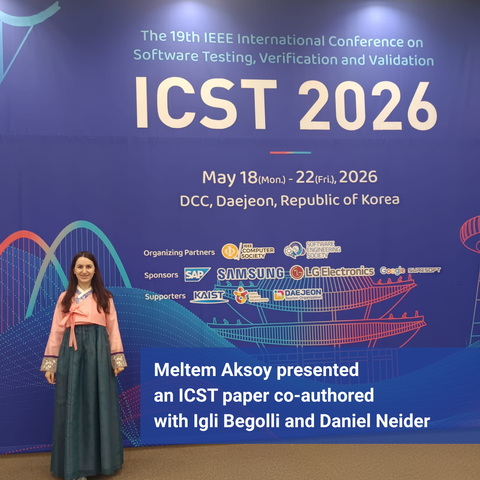
#CodeReview and #Sustainability in the #DigitalHumanities Humanities Publication Landscape
Are you developing code for Digital Humanities research? Have you ever thought about publishing your code? Do you wish code would be more reusable, visible, and impactful? Join our webinar to explore how code review and publication practices could transform how we think about code written for research.
When? June 4, 2026 at 10am ET/4pm CET
Where? On Zoom, register here: https://asu.zoom.us/meeting/register/heP_utGnSBScRLtGGXlwZg
Are you developing code for Digital Humanities research? Have you ever thought about publishing your code? Do you wish code would be more reusable, visible, and impactful? Join our upcoming webinar to explore how code review and publication practices could transform how we think about code written for research. We’ll discuss how publication requirements contribute to reusability and sustainability of code written for research and how they increase the visibility of code as a valuable part of research output.
Anthropic standardisiert den Einsatz von KI-Agenten zur Schwachstellensuche mit einem sechsstufigen Best-Practice-Prozess.
Ein Multi-Agenten-System trennt die initiale Codesuche strikt von einem zweiten Prüf-Agenten, der Funde in isolierten MicroVMs verifiziert. Das Modell generiert abschließend Patches inklusive Vorab-Tests.
#Anthropic #ClaudeOpus #CodeReview #CyberSecurity #AIGeneratedImage
https://www.all-ai.de/tutorials/tutorials-ki/anthropic-best-practices-code-1
The Hidden Cost of Nice Syntax: When Angular's New Template Features Make Code Harder to Reason About
Angular's newer template syntax is powerful, but spread/rest, arrow functions, multi-case switches, and richer control flow need team rules before clever templates become maintenance debt.
#Angular #Frontend #TypeScript #SoftwareArchitecture #CodeReview #Maintainability
Un papier arXiv récent a étudié 302 600 commits vérifiés comme écrits par IA dans 6 299 repos GitHub.
Il trouve 484 366 problèmes distincts par analyse statique, et 22,7% des problèmes suivis survivent jusqu'à la version la plus récente.
Ça ne veut pas dire "l'IA écrit du mauvais code". Un humain introduit aussi de la dette. Le point : l'IA baisse la friction à produire du plausible. Le goulot se déplace vers la qualification.
 Klaus Frank
 Kyanite Labs
 Arda Kılıçdağı
 DHTech
 prompt
 Andreas Becker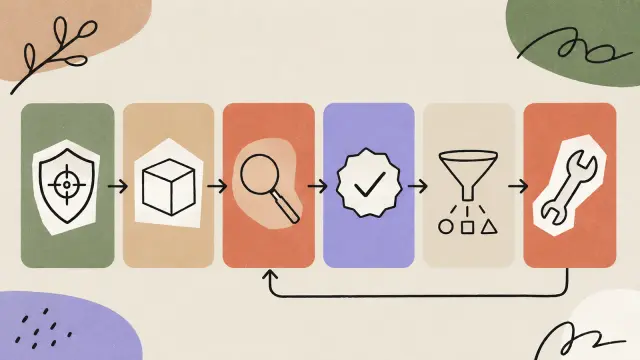
 RC Trustworthy Data Science
 Omid Farhang
 Charlon