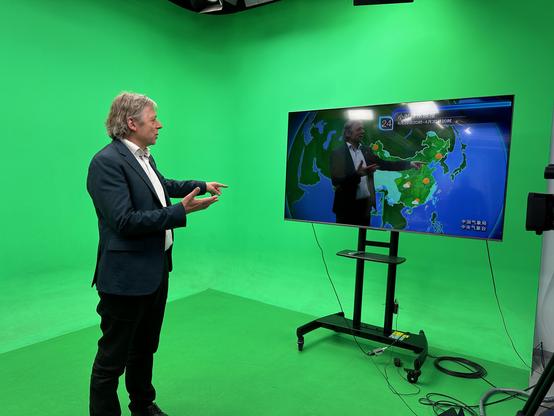
Paul Beckwith, a climate science educator, goes through James Hansen's recent warnings about a coming "Super El Niño".

This video (24:48) assumes a small amount of background in math and science, enough to read time/temperature graphs, but is generally quite accessible in its explanations. He walks through a lot of good stuff like how the El Niño / La Niña cycle works, what some of the "forcings" are that are driving some of these things, why things like aerosols matter, what different models show, what the consensus predictions have been and why Hansen's predicting something substantively stronger.

It's a pretty worrisome set of things, but Hansen has been an important voice in the climate conversation, and I think Beckwith's presentation is pretty level—trying to just walk through the information dispassionately in a way that can help you understand the science part.

https://www.youtube.com/watch?v=tP3VQk3mIgQ

Note: Notwithstanding the use of em dash, this post was written by a human.

#climate #ElNiño #ElNino #SuperElNiño #SuperElNino #ClimateModels #ClimateModeling #warming #heat #GlobalWarming #aerosol #aerosols #OceanWarming #ClimateSensitivity #ClimateScience #science #co2 #IPCC #forcing #Greenhouse #JamesHansen #PaulBeckwith #video #YouTube

New Evidence show Planet Heading to Super - El Niño, on top of Super Warming: James Hansen’s Warning

YouTube

We were happy to welcome MSc and BSc students from Wageningen University & Research to the Max Planck Institute for Meteorology in Hamburg yesterday. 🌍

Through presentations on #ClimateModeling, ocean #biogeochemistry, and #cloud observations, the students got an inside look at our research. In small-group discussions with early-career scientists, they could also ask questions about PhDs and careers in #ClimateScience. We finished the visit with a rooftop view over Hamburg 📸
© M. Schulz, MPI-M

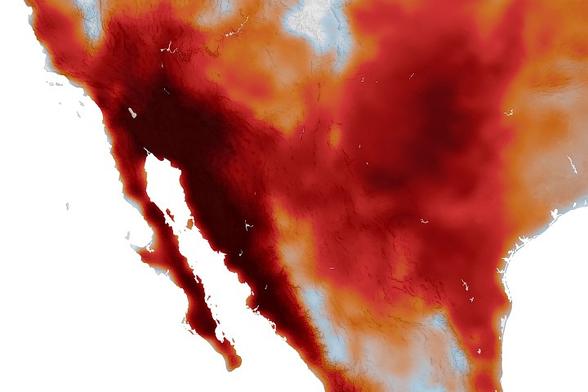
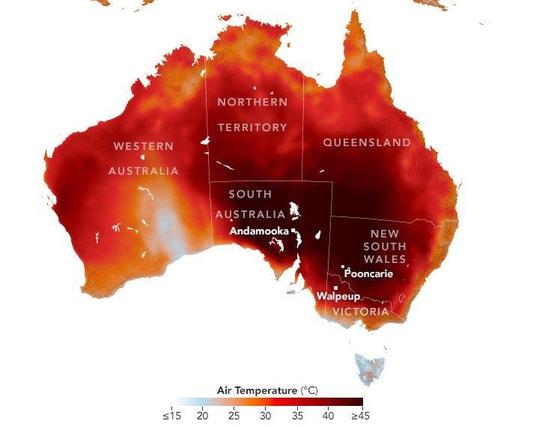
Summer Heat Hits Southeastern Australia

January brought blistering extremes Down Under as record temperatures scorched the nation’s southeast.

NASA Science
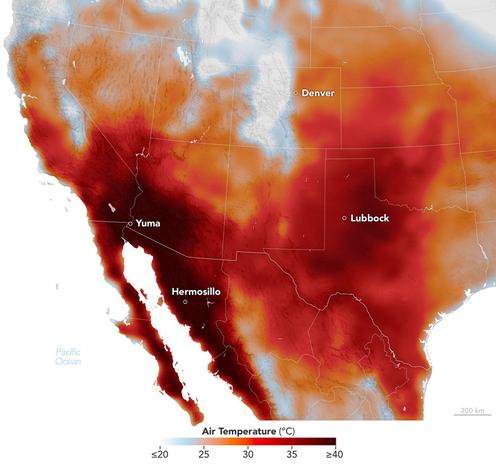
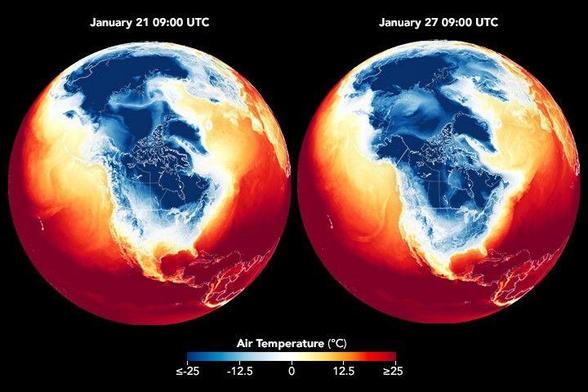
Extreme January Cold

Following a significant winter storm, frigid temperatures lingered in late January 2026 across a vast swath of the U.S.

NASA Science
🌿 Last week, the #MPIM hosted a colloquium on "Vegetation-Climate Interactions," celebrating the 70th birthday of our former director, Prof. Martin Claussen.
The symposium featured talks on the #GreenSahara, past #monsoons, tropical tree‑cover dynamics, and #ClimateModeling—all of which sparked lively discussions.
Thank you to everyone who contributed to making this event truly memorable! 🥂
#ICON team earns international recognition in #HPC🏆👏
What an outstanding achievement! Using the ICON Earth system model, a team led by #MPIM + #DKRZ successfully simulated the full Earth system at an unprecedented grid spacing of 1.25 km. For this, they received the Gordon Bell Prize for #ClimateModeling, awarded at #SC25. The team also included experts from #JSC, #ETH Zurich, CSCS, #UHH, & #NVIDIA. We're thrilled, proud, & grateful for this wonderful recognition! 🎉
🔗 https://mpimet.mpg.de/en/communication/detail-view-news-homepage/icon-team-receives-international-recognition-for-groundbreaking-achievements-in-high-performance-computing
A team led by #MPIM & #DKRZ has received the prestigious HPCwire Readers’ Choice Award🏆, presented at the #SC25 conference in St. Louis, MO, US. It recognizes a simulation of the full Earth system with the #ICON model at 1.25-km resolution 🌐, which was carried out on the Alps & #exa_JUPITER supercomputers & achieved an unprecedented time compression of 145.7 simulated days per day. Congratulations on this outstanding achievement! 🎉 #HPC #Supercomputing #ClimateModeling
🔗 https://www.hpcwire.com/2025-readers-editors-choice-top-hpc-enabled-scientific-achievement/