Burning down the house or burning up some film! Today's video focuses on deFehr 510-Pyro. It is the newest entry into the family of Pyro Developers, first invented in 1858!

https://www.youtube.com/watch?v=MblVXIrgSxk

#510pyro #believeinfilm #shootfilmbenice #bwdeveloper #review #filmphotography

Pyromaniac | Zone Imaging 510-Pyro Review

YouTube

Is there something special about Foma's Retro Special Developer? Yes, but you are limited. It's not bad, it's too highly specialised for my tastes.

http://www.alexluyckx.com/blog/2023/09/25/developer-review-blog-no-45-foma-retro-special/

#foma #filmphotography #review #bwdeveloper #believeinfilm #shootfilmbenice

Developer Review Blog No. 45 - Foma Retro Special

Regarding film developers, I tend to stray from those designed for one specific film stock. It's not that I don't want to try them; I have a dislike of closed image systems. A good developer

Alex Luyckx | Blog

Develop BW Film at Home with Coffee?! Yes! With our new CUP O’ JOE!

_Greetings Fellow Film Shooters!
If you listen to the FPP Podcast, you know that in addition to film photography we love coffee, frugality, and a Do-It-Yourself approach. So, it’s with great pleasure we announce our new caffeine-based Black and White Home Developer: **CUP O’ JOE! *The handy pouch contains all you need to process up to 4 rolls of 35mm, 120 or 8 4×5 sheets of BW film, with the extra bonus of reducing caustic chemicals from the process.

And if conversations about alternative film processing really inspire you to DIY it, there are plenty of online recipes for mixing your own Caffenol solution at home, as well as on our very own website. Just scroll down to our “What is Caffenol?” section and links to blogs with recommendations for first-timers.

Keep experimenting and SHOOT FILM!
Michael Raso

*Developing tank and fixer required._

CUP O’ JOE
The FPP’s new Caffenol Developer for Black and White Processing at home! CUP O’ JOE is a powder solution in a handy pouch that when mixed with water produces 1 Liter of BW Home Developing solution that will process up to 4 rolls of 35mm, 120 or 8 4×5 sheets of BW film.

Just follow the easy mixing instructions that come with each pouch for a safe, non-caustic way to eliminate the guesswork and wake up your BW home processing.

Please be aware you’ll need adeveloping tank and fixer to complete this process.

Photo byEric Swanger / Developed in Cup 'O Joe Developer

WHAT IS CAFFENOL?
Caffenol is an alternative to traditional chemical film development that uses caffeic acid (usually coffee or tea) and a pH modifier. There are many recipes available online, some of which also include Vitamin C.
According to the Wikipedia, this method of developing photographic film using standard household items was discovered by the Rochester Institute of Technology in 1995. And while instant coffee appears to be the most popular primary ingredient, you can also find home development recipes that use beer, red wine and various food items as the primary ingredient.

Commercially available Caffenol products frequently contain instant coffee and washing powder, along with Vitamin C and other ingredients.

Photo byMichael Raso / Developed in Cup 'O Joe Developer

SHOULD I BUY A CAFFENOL SOLUTION OR MAKE MY OWN?
In the 2013 FPP blog Strange Brew - The Caffenol CM Experiment , Alex Luycks goes full Caffenol DIY with the Caffenol-C-M recipe that requires 500mL water, 50mL washing soda, 8mL vitamin-c powder, 80mL instant coffee and Ilford’s Rapid Fixer. It’s a quick read with valuable insight for first timers (hint: a stinky solution is to be expected, don’t let it deter you!).

In Coffee Break – Develop Film at Home with Caffenol, Darren “Ballard” Riley (check out his music on Band Camp!) embraces his experimental and thrifty side to develop BW photos using only instant coffee, washing soda and water (to great results, especially if you like a “grungy” look!).

If it’s your first time using Caffein to develop at home and / or you want to eliminate the guesswork while eliminating the chemicals, commercially produced Caffenol mixtures like the FPP’s CUP O’ JOE are readily available.

FPP Blue Sensitive BW film As with most blue sensitive films, it renders skin tones as tan or "chromy" as I call it. Canon FTb / Canon FD 20mm f2.8 lens January 15, 2015 Image shot at 1/15th sec f2.8 Processed in Caffenol Cuo 'O Joe / Epson v700 scan

WAIT! NO BW FILM? WE 'VE GOT YOU COVERED.
The Film Photography Project Store has an incredible section of BW film, for shooters of all formats and budgets.

The post Develop BW Film at Home with Coffee?! Yes! With our new CUP O’ JOE! appeared first on The Film Photography Project.

#news #bwdeveloper #caffenol #cup039ojoe #developfilmathome

Develop BW Film at Home with Coffee?! Yes! With our new CUP O’ JOE! - The Film Photography Project

The Film Photography Project informs, engages and inspires film enthusiasts of all levels. While promoting the viability of vintage cameras and film.

The Film Photography Project

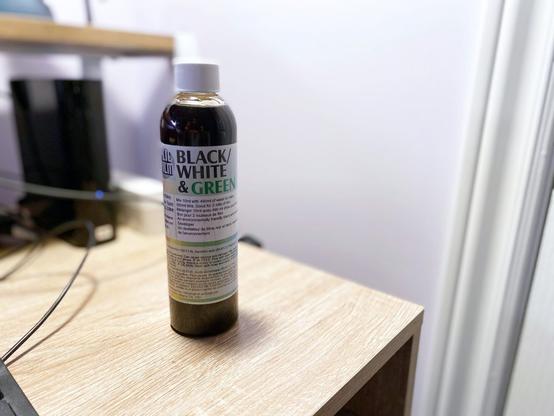
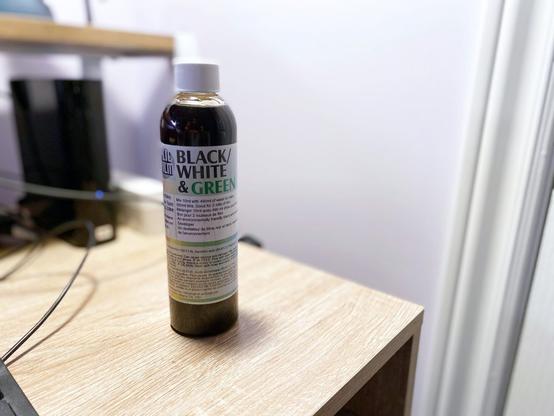
Developer Review Blog No. 27 – Flic Film Black/White & Green

It's not often that something new hits the market, especially something that comes out of Canada. If you haven't heard of Flic Film, that's okay; I only recently discovered this Canadian film lab out of Alberta late in 2021. They mainly focus on selling rebranded motion picture films, the Eastman Vision3 series and Eastman Double-X; they have a chemistry production side. But there's a twist with their chemistry; they're working on making it more environmentally safe. And that should come as no surprise given they are based out of Alberta with many rural properties and reliance on septic systems. And that is where Black/White & Green (B/W & Green) comes into play; despite the long name, the developer is one of the best mashups for developers; they certainly picked two iconic developers to blend. I'm of course talking about Kodak Xtol and old school Kodak HC-110.

Technical Details
Manufacture: Flic Film
Name: Black/White & Green
Primary Developer: Ascorbic Acid & Phenidone
Type: One-Shot
Mix From: Liquid

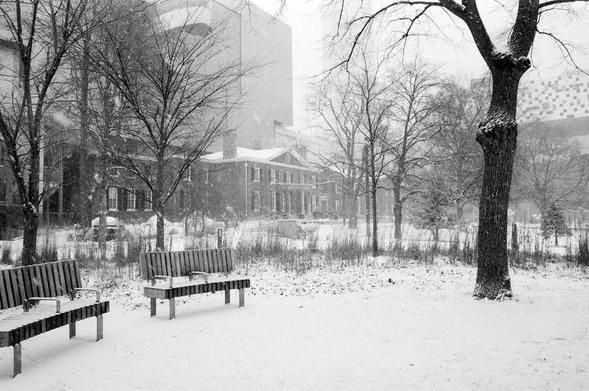
Nikon FE - AI Nikkor 24mm 1:2.8 (Green-11) - Ilford Ortho+ @ ASA-80 - Flic Film Black/White & Green (1+49) 12:15 @ 20CNikon FE - AI Nikkor 24mm 1:2.8 (Green-11) - Ilford Ortho+ @ ASA-80 - Flic Film Black/White & Green (1+49) 12:15 @ 20CNikon FE - AI Nikkor 24mm 1:2.8 (Green-11) - Ilford Ortho+ @ ASA-80 - Flic Film Black/White & Green (1+49) 12:15 @ 20CNikon FE - AI Nikkor 24mm 1:2.8 (Green-11) - Ilford Ortho+ @ ASA-80 - Flic Film Black/White & Green (1+49) 12:15 @ 20C

Handling
If you've worked with the old-school formulation for Kodak HC-110, then you'll be well prepared for working with B/W & Green; it comes in a small bottle of a thick syrupy liquid that is a little hard to handle if you're not used to this type of developer. You will want to use either a syringe or a small cylinder to measure the concentrate and add it to your water for mixing to working strength. I work with a small graduated cylinder and find that after I pour (more like coax) out the majority of the concentrate, I will run a couple of full cylinders of water through it to catch the last dredges. Then top up my main graduated cylinder, and stir it. The stirring is essential as it does take a bit to fully incorporate the concentrate into the water to make up the working solution. And while most developers of this type have multiple dilutions, B/W & Green has only one, 1+49. That means there's no guesswork, mix up 10 mL of concentrate to 490 mL of water, and you're good! And while being a new developer, Flic Film did extensive testing and provides a long list of films and developing times, for Kodak, Ilford, Foma, Rollei and more. Most times, their testing is in line with Kodak D-76 1+2 times. The trouble is that those are long developing times. With most being 10+ minutes, with only a couple of options under 10 minutes. As for keeping, it seems that B/W & Green has the same staying power of old school HC-110. And the best is that it is safe for all sewage systems, both municipal and septic. But I do not recommend drinking the stuff; while it probably won't kill you, you will need to go to the hospital.

Minolta Maxxum 9 - Minolta Maxxum AF 28mm 1:2.8 - Eastman Double-X 5222 @ ASA-250 - Flic Film Black/White & Green (1+49) 11:45 @ 20CMinolta Maxxum 9 - Minolta Maxxum AF 28mm 1:2.8 - Eastman Double-X 5222 @ ASA-250 - Flic Film Black/White & Green (1+49) 11:45 @ 20CMinolta Maxxum 9 - Minolta Maxxum AF 28mm 1:2.8 - Eastman Double-X 5222 @ ASA-250 - Flic Film Black/White & Green (1+49) 11:45 @ 20CMinolta Maxxum 9 - Minolta Maxxum AF 28mm 1:2.8 - Eastman Double-X 5222 @ ASA-250 - Flic Film Black/White & Green (1+49) 11:45 @ 20C

Applications
The number one application for B/W & Green is for those who want to process at home but feel they cannot work due to their sewage system. If you're in a rural area and rely on a septic tank, B/W & Green is undoubtedly a strong option as it is safe for your septic and doesn't have a significant environmental impact. The one thing I did notice about B/W & Green is that it certainly lives up to the reputation of being liquid Xtol, so this is an excellent choice for films that need a bit more work on taming the grain while helping to maintain sharpness. While I can't say I've made a direct comparison between Kodak Xtol and Black/White & Green, I can certainly see the similarities in how it handles film stocks. Given this, I would say that this developer is a good choice for both push and pull development to help compensate for any over and under-exposure. I found that it handled pull development with Fomapan 400 and even does an excellent film stock when shooting at box speed. I can also see this developer working well with Fomapan 200. As for the films I shot for this review, B/W & Green worked well on each one, Tri-X, Ortho+, Double-X, and Delta 400.

Mamiya m645 - Mamiya-Sekor C 35mm 1:3.5 N - Kodak Tri-X 400 @ ASA-400 - Flic Film Black/White & Green (1+49) 13:00 @ 20CMamiya m645 - Mamiya-Sekor C 35mm 1:3.5 N - Kodak Tri-X 400 @ ASA-400 - Flic Film Black/White & Green (1+49) 13:00 @ 20CMamiya m645 - Mamiya-Sekor C 35mm 1:3.5 N - Kodak Tri-X 400 @ ASA-400 - Flic Film Black/White & Green (1+49) 13:00 @ 20CMamiya m645 - Mamiya-Sekor C 35mm 1:3.5 N - Kodak Tri-X 400 @ ASA-400 - Flic Film Black/White & Green (1+49) 13:00 @ 20C

Qualities
B/W & Green does live up to its name as liquid Xtol; the results from the developer match reasonably close to what I got from both Kodak Xtol and Adox XT-3 when working with the stock dilution. It is a neutral developer, doing little to adjust any inherent contrast in the film stock being developed; that said, with any push or pull development because of over and under-exposure, you will have an excellent middling effect on the contrast. While it won't add or reduce, it will certainly help smooth out that contrast. And that does help with the sharpness in the film as you will have excellent tonal separation and representation of greys. When it comes to grain, it certainly helps reduce any overly grainy film stock, not completely mind you, but neither did Xtol. I saw some grain reduction with Fomapan 400, especially when I pulled the development, it did even things out with Tri-X, and if you have a fine-grained film, you will see even more reduction in grain. But it does so without any real loss in edge sharpness.

Rolleiflex 2.8F - Carl Zeiss Planar 80mm 1:2.8 - Ilford Delta 400 @ ASA-400 - Flic Film Black/White & Green (1+49) 16:15 @ 20CRolleiflex 2.8F - Carl Zeiss Planar 80mm 1:2.8 - Ilford Delta 400 @ ASA-400 - Flic Film Black/White & Green (1+49) 16:15 @ 20CRolleiflex 2.8F - Carl Zeiss Planar 80mm 1:2.8 - Ilford Delta 400 @ ASA-400 - Flic Film Black/White & Green (1+49) 16:15 @ 20CRolleiflex 2.8F - Carl Zeiss Planar 80mm 1:2.8 - Ilford Delta 400 @ ASA-400 - Flic Film Black/White & Green (1+49) 16:15 @ 20C

Lowdown
Being a new arrival on the scene, the availability of B/W & Green remains limited, but you can get the stuff readily if you know where to look. There is no way for personal users to buy directly from the company. The most impressed me is how many camera shops across Canada carry their product, Downtown Camera in Toronto, Studio Argentique in Montreal, and shops in Alberta and British Columbia. The cost on average is about 21$ for a bottle of 250 mL, which is enough to process 25 rolls of 120 or 50 rolls of 35mm (with two rolls per tank), assuming a 500 mL solution. Will I use this stuff again? Probably, it has a long shelf life, it's fairly economical, plus I support a Canadian business! What's there not to love?

Nikon FM - AI-S Nikkor 35mm 1:2.8 (Yellow-12) - Fomapan 400 @ ASA-400 - Flic Film Black/White & Green (1+49) 13:30 @ 20CNikon FM - AI-S Nikkor 35mm 1:2.8 (Yellow-12) - Fomapan 400 @ ASA-400 - Flic Film Black/White & Green (1+49) 13:30 @ 20CNikon FM - AI Nikkor 28mm 1:3.5 - Fomapan 400 @ ASA-200 - Flic Film Black/White & Green (1+49) 12:00 @ 20CNikon FM - AI Nikkor 28mm 1:3.5 - Fomapan 400 @ ASA-200 - Flic Film Black/White & Green (1+49) 12:00 @ 20C

Recommended Reading
Don't just take my word on Black/White & Green. Check out these other blogs on the subject!
No Other Reviews Found

#developerreviewblogs #bwdeveloper #blackwhitegreen #canada #chemistry #developer #distillerydistrict #eastmandoublex #filmchemistry #flicfilm #flicfilmblackwhitegreen #fomapan400 #guelph #ilforddelta400 #ilfordortho #kodaktrix400 #mamiyam645 #milton #minoltamaxxum9 #newhamburg #niagaraonthelake #nikonfe #nikonfm #ontario #rolleiflex28f #toronto

Developer Review Blog No. 27 - Flic Film Black/White & Green

A new player has entered the game. Flic Film's original creation, Black/White & Green, is their liquid gold. Thick, syrupy and designed to be environmentally, specifically septic safe. It's liquid Xtol that behaves like the original HC-110.

Alex Luyckx | Blog

Develop BW Film at Home with Coffee?! Yes! With our new CUP O’ JOE!

_Greetings Fellow Film Shooters!
If you listen to the FPP Podcast, you know that in addition to film photography we love coffee, frugality, and a Do-It-Yourself approach. So, it’s with great pleasure we announce our new caffeine-based Black and White Home Developer: **CUP O’ JOE! *The handy pouch contains all you need to process up to 4 rolls of 35mm, 120 or 8 4×5 sheets of BW film, with the extra bonus of reducing caustic chemicals from the process.

And if conversations about alternative film processing really inspire you to DIY it, there are plenty of online recipes for mixing your own Caffenol solution at home, as well as on our very own website. Just scroll down to our “What is Caffenol?” section and links to blogs with recommendations for first-timers.

Keep experimenting and SHOOT FILM!
Michael Raso

*Developing tank and fixer required._

CUP O’ JOE
The FPP’s new Caffenol Developer for Black and White Processing at home! CUP O’ JOE is a powder solution in a handy pouch that when mixed with water produces 1 Liter of BW Home Developing solution that will process up to 4 rolls of 35mm, 120 or 8 4×5 sheets of BW film.

Just follow the easy mixing instructions that come with each pouch for a safe, non-caustic way to eliminate the guesswork and wake up your BW home processing.

Please be aware you’ll need adeveloping tank and fixer to complete this process.

Photo byEric Swanger / Developed in Cup 'O Joe Developer

WHAT IS CAFFENOL?
Caffenol is an alternative to traditional chemical film development that uses caffeic acid (usually coffee or tea) and a pH modifier. There are many recipes available online, some of which also include Vitamin C.
According to the Wikipedia, this method of developing photographic film using standard household items was discovered by the Rochester Institute of Technology in 1995. And while instant coffee appears to be the most popular primary ingredient, you can also find home development recipes that use beer, red wine and various food items as the primary ingredient.

Commercially available Caffenol products frequently contain instant coffee and washing powder, along with Vitamin C and other ingredients.

Photo byMichael Raso / Developed in Cup 'O Joe Developer

SHOULD I BUY A CAFFENOL SOLUTION OR MAKE MY OWN?
In the 2013 FPP blog Strange Brew - The Caffenol CM Experiment , Alex Luycks goes full Caffenol DIY with the Caffenol-C-M recipe that requires 500mL water, 50mL washing soda, 8mL vitamin-c powder, 80mL instant coffee and Ilford’s Rapid Fixer. It’s a quick read with valuable insight for first timers (hint: a stinky solution is to be expected, don’t let it deter you!).

In Coffee Break – Develop Film at Home with Caffenol, Darren “Ballard” Riley (check out his music on Band Camp!) embraces his experimental and thrifty side to develop BW photos using only instant coffee, washing soda and water (to great results, especially if you like a “grungy” look!).

If it’s your first time using Caffein to develop at home and / or you want to eliminate the guesswork while eliminating the chemicals, commercially produced Caffenol mixtures like the FPP’s CUP O’ JOE are readily available.

FPP Blue Sensitive BW film As with most blue sensitive films, it renders skin tones as tan or "chromy" as I call it. Canon FTb / Canon FD 20mm f2.8 lens January 15, 2015 Image shot at 1/15th sec f2.8 Processed in Caffenol Cuo 'O Joe / Epson v700 scan

WAIT! NO BW FILM? WE 'VE GOT YOU COVERED.
The Film Photography Project Store has an incredible section of BW film, for shooters of all formats and budgets.

The post Develop BW Film at Home with Coffee?! Yes! With our new CUP O’ JOE! appeared first on The Film Photography Project.

#news #bwdeveloper #caffenol #cup039ojoe #developfilmathome

Develop BW Film at Home with Coffee?! Yes! With our new CUP O’ JOE! - The Film Photography Project

The Film Photography Project informs, engages and inspires film enthusiasts of all levels. While promoting the viability of vintage cameras and film.

The Film Photography Project

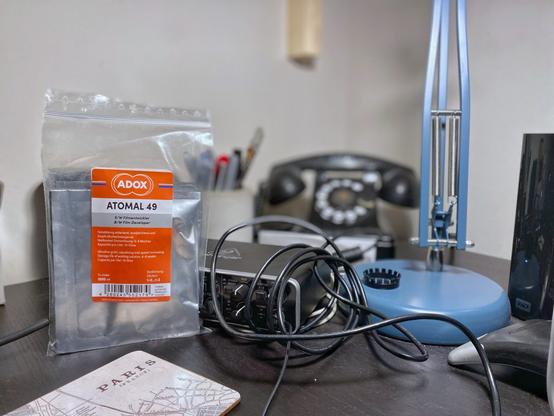
Developer Review Blog No. 23 – Adox Atomal 49

Being in North America and raised on Kodak and Ilford developers, I did not even know that Atomol existed, other than seeing it listed on the Massive Dev chart and just passing it by as another European developer. But when I was hunting for more Rollei developers at Freestyle, I came across Atomol 49 as an 'other people purchased' listing. I was excited to give this a shot, and after mixing it up, I posted in a Film Photography Chat group on Facebook and asked if anyone else had used the stuff. The response was overwhelming how many people used the stuff. However, the best was from Cheyenne Morrison, who sent me a whole pile of information on the stuff. Adox Atomol 49 is not a new developer and not even originally produced by Adox. It is originally an Agfa product. When World War Two divided Germany there also ended up being two Agfa factories, one continuing under the name of ORWO in 1964. Originally named Atomol and Atomol F before the war, the formula had a slight change after the war and took the name Atomol 49. ORWO and other companies continued to produce their own versions of Atomol known as A49, ATM49, or A03. And like a lot of Agfa chemistry it was picked up by Adox in the 21st Century the formula being nearly identical to the original Agfa/ORWO formulation. What I found is a developer that checks all the boxes for me, it's reusable, does a high volume of films per litre, is compensating, fine-grain and sharp.

Technical Details
Manufacturer: Adox
Name: Atomol 49
Primary Developer: Phenidone & Hydroquinone
Type: Reusable/One-Shot
Mix From: Powder

Minolta Maxxum 9 - Minolta Maxxum AF 28-135mm 1:4-4.5 (Yellow-12) - Efke KB100 @ ASA-100 - Adox Atomal 49 (Stock) 8:00 @ 20CMinolta Maxxum 9 - Minolta Maxxum AF 28-135mm 1:4-4.5 (Yellow-12) - Efke KB100 @ ASA-100 - Adox Atomal 49 (Stock) 8:00 @ 20CMinolta Maxxum 9 - Minolta Maxxum AF 28-135mm 1:4-4.5 (Yellow-12) - Efke KB100 @ ASA-100 - Adox Atomal 49 (Stock) 8:00 @ 20CMinolta Maxxum 9 - Minolta Maxxum AF 28-135mm 1:4-4.5 (Yellow-12) - Efke KB100 @ ASA-100 - Adox Atomal 49 (Stock) 8:00 @ 20C

Handling
If you're already used to mixing up powdered developer, then Atomol will be a breeze to mix up. Now unlike developers like D-76, this is not an all in one pouch. Atomol comes in three separate pouches, each labelled A, B, and C. Now it is important to mix these in order with 900mL of water. Mix each pouch in until it is totally dissolved then top up the full 1L. Thankfully you don't have to overheat the water as you mix it between 20-26°C but don't have the water hotter than 30°C. The good news about these temp values is that you can start using it right away. Although I usually let my freshly mixed developers sit for about a day before using. In actual use in the lab, you're going to be working with the stuff in either stock solution or diluting it down 1+1 or 1+2. Your one-litre bottle will developer ten rolls of film without any dilution. Your stock solution is not long-lasting, with a full container, unused last for six weeks. Thankfully, I could use my standard agitation pattern, constant for the first minute then five inversions every minute.

Minolta XE-7 - Minolta W.Rokkor-X 28mm 1:2.8 - Ilford FP4+ @ ASA-125 - Adox Atomal 49 (Stock) 8:00 @ 20CMinolta XE-7 - Minolta W.Rokkor-X 28mm 1:2.8 - Ilford FP4+ @ ASA-125 - Adox Atomal 49 (Stock) 8:00 @ 20CMinolta XE-7 - Minolta W.Rokkor-X 28mm 1:2.8 - Ilford FP4+ @ ASA-125 - Adox Atomol 49 (Stock) 8:00 @ 20CMinolta XE-7 - Minolta W.Rokkor-X 28mm 1:2.8 - Ilford FP4+ @ ASA-125 - Adox Atomal 49 (Stock) 8:00 @ 20C

Applications
One of the first and best applications for this developer is with high silver content films. Think Adox Silvermax and CHS 100 II or if you're lucky to have some leftover Efke or OG Adox films. And I can say, that Efke sings in Atomol! But don't limit yourself to those films, modern emulsions work like magic, both traditional and cubic grained films. And it seems that speed doesn't matter. The sweet orange is 100-400 but again, being a compensating developer you can easily push and pull, and I did that with Fomapan 400 earlier in the year shooting the stock at both 200 and 400 without any trouble. And a developer that can make Fomapan 400 sing is solid in my book. But it also runs well with FP4+, Acros TMax 100, HP5+, TMax 400 and Tri-X 400, all films that I count as among my favourites, and Atomol makes me love the films all the same. Besides general-purpose development, Atomol would easily fit it with shooting in a historical context, being a developer that can trace its history back before the war, like D-23. It works well with classic film stocks and provides a classic look. I can see using this with Fomapan 400 through the Contax IIIa or Rolleiflex during a WW2 event would make for amazing shots.

Nikon FE - AI-S Nikkor 35mm 1:2.8 (Yellow-12) - Kodak TMax 100 @ ASA-100 - Adox Atomal 49 (Stock) 8:00 @ 20CNikon FE - AI-S Nikkor 35mm 1:2.8 (Yellow-12) - Kodak TMax 100 @ ASA-100 - Adox Atomal 49 (Stock) 8:00 @ 20CNikon FE - AI-S Nikkor 35mm 1:2.8 (Yellow-12) - Kodak TMax 100 @ ASA-100 - Adox Atomal 49 (Stock) 8:00 @ 20CNikon FE - AI-S Nikkor 35mm 1:2.8 (Yellow-12) - Kodak TMax 100 @ ASA-100 - Adox Atomal 49 (Stock) 8:00 @ 20C

Qualities
Probably the strongest quality that you get with Atomol is the dynamic tonality that it delivers. It is across all films, Efke, Acros, Tri-X, HP5+, and TMax 100 that I shot for this review but also found it with Fomapan films 100, 200, and 400. And that tonality comes from the developer's compensating nature, which means that if you combine the developer with a film with a lot of latitude and forgiveness means that you can take full advantage of those even in less-than-ideal lighting or metering mistakes. When it comes to grain and sharpness, the developer handles both with ease thanks to the two developing agents, Phenidone which we know with Rodinal gives you that sharpness, while Hydroquinone keeps the grain tamed. And it does a wonderful job at both when combined with a film that already has that fine grain and sharpness, but even in films not known for that, I'm looking at you Fomapan 400. I noticed right off the bat that the grain on Fomapan 400 even at ASA-400 is far less than what you would expect.

Mamiya m645 - Mamiya-Sekor C 45mm 1:2.8 N - Ilford HP5+ @ ASA-400 - Adox Atomal 49 (Stock) 7:30 @ 20CMamiya m645 - Mamiya-Sekor C 45mm 1:2.8 N - Ilford HP5+ @ ASA-400 - Adox Atomal 49 (Stock) 7:30 @ 20CMamiya m645 - Mamiya-Sekor C 45mm 1:2.8 N - Ilford HP5+ @ ASA-400 - Adox Atomal 49 (Stock) 7:30 @ 20CMamiya m645 - Mamiya-Sekor C 45mm 1:2.8 N - Ilford HP5+ @ ASA-400 - Adox Atomal 49 (Stock) 7:30 @ 20C

Lowdown
Atomol is the film developer that you didn't know you needed. And when I was initially shooting the film to try out Atomol for the first time, I purchased a new batch of film to keep using the developer throughout the ongoing 52-roll project and for my first all Adox film review (Silvermax). While not readily available in North America in most photography stores you can order it online through Argentix.ca, but you can also order through Freestyle Photographic for US readers. But the best way is to order directly from Adox through their Fotoimpex storefront. But if you want to save some money on the stuff, eBay is the way to go as there is still plenty of the ORWO stuff floating around online and in a sealed pouch will last for a long time, even the Cold War-era stuff. If you're a little concerned about age, I've been assured that it will still work from a trusted source. So if you're looking for something different or have a huge stash of Efke film floating around, then I highly recommend Atomol.

Hasselblad 500c - Carl Zeiss Planar 80mm 1:2.8 - Fuji Neopan Acros 100 @ ASA-100 - Adox Atomal 49 (Stock) 7:15 @ 20CHasselblad 500c - Carl Zeiss Planar 80mm 1:2.8 - Fuji Neopan Acros 100 @ ASA-100 - Adox Atomal 49 (Stock) 7:15 @ 20CHasselblad 500c - Carl Zeiss Planar 80mm 1:2.8 - Fuji Neopan Acros 100 @ ASA-100 - Adox Atomal 49 (Stock) 7:15 @ 20CHasselblad 500c - Carl Zeiss Planar 80mm 1:2.8 - Fuji Neopan Acros 100 @ ASA-100 - Adox Atomal 49 (Stock) 7:15 @ 20C

Recommended Reading
Don't just take my word on Atomol 49 check out these other blogs on the subject!
No other Reviews Found

#developerreviewblogs #adox #adoxatomal49 #atomal #atomal49 #bwdeveloper #believeinfilm #canada #chemical #chemistry #developer #efkekb100 #filmdeveloper #filmisalive #filmisnotdead #fujineopanacros100 #guelph #hasselblad500c #ilfordfp4 #ilfordhp5 #kodaktmax100 #mamiyam645 #milton #minoltamaxxum9 #minoltaxe7 #nikonfe #oakville #ontario

Developer Review Blog No. 23 - Adox Atomal 49

Looking for contrast control and grain control while delivering box speed from your film? Then Adox Atomal 49 is the developer for you. While nothing overly special, Atomol delivers an excellent negative.

Alex Luyckx | Blog

Developer Review Blog No. 18 – Acufine

There are a couple of highly specialised and mysterious developers out there, both made by the same company. While most people are drawn towards Diafine (which I plan on reviewing next year), Acufine is the cousin of that magic bullet developer. Like Diafine, Acufine's chemistry is a trade secret; even the datasheets are redacted in that sense. But Acufine is a rare bird; it has the capability to increase the speed of most film stocks. But without all the drawbacks of push processing, increased grain, over the top contrast. While I have worked with Acufine before the stuff was way out of date, and I think I did a couple of things wrong, so I just left it behind. But when you have content to fill, it's time to revisit the things of the past.

Technical Details
Manufacturer: Acufine Chemicals
Name: Acufine
Primary Developer: Unknown (Classified)
Type: Reusable
Mix From: Powder

Minolta Maxxum 9 - Minolta Maxxum AF 28-135mm 1:4-4.5 - Kodak Tri-X 400 @ ASA-1000 - Acufine (Stock) 5:00 @ 21CMinolta Maxxum 9 - Minolta Maxxum AF 28-135mm 1:4-4.5 - Kodak Tri-X 400 @ ASA-1000 - Acufine (Stock) 5:00 @ 21CMinolta Maxxum 9 - Minolta Maxxum AF 28-135mm 1:4-4.5 - Kodak Tri-X 400 @ ASA-1000 - Acufine (Stock) 5:00 @ 21CMinolta Maxxum 9 - Minolta Maxxum AF 28-135mm 1:4-4.5 - Kodak Tri-X 400 @ ASA-1000 - Acufine (Stock) 5:00 @ 21C

Handling
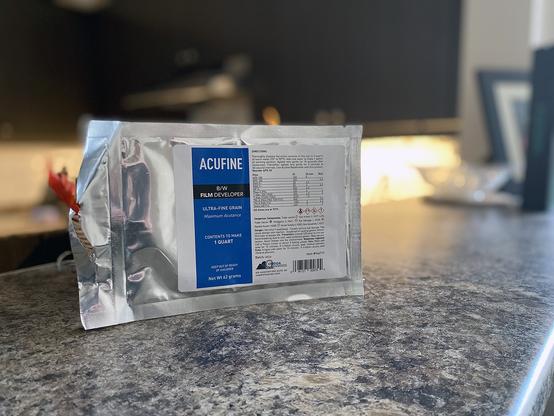
If you can mix up your standard powder developer, Acufine will be no stretch. You can get two versions, a quart or a gallon, one thing to note is that the one-quart pouch has the one-gallon instructions printed on the label. Earlier versions of Acufine will come in cans, but these days it comes in your standard foil pouch and is available in one quart and one-gallon sizes. You might see some colouration; mine had almost a dull yellow/brown colour upon mixing. The datasheet does mention this but also notes that such a colouration won't affect the development. While there is no storage life stated for the developer, it will deteriorate over time with each roll of 135/36, one roll of 120 or four sheets o 4×5 using up 1/2 oz of the chemistry. You can adjust as you see fit with the details being laid out in the datasheet. Most full, well-stored bottles of Acufine can last for years according to some, make sure to keep track of the amount of developer and rolls/sheets you've run through and adjust accordingly. The one thing to note about Acufine is your agitation, while the massive dev chart doesn't always mention this fact. You should be gentle with you agitation, with four inversions in the first ten seconds, then two every thirty seconds. It does require a bit more attention. If you miss a cycle, it doesn't impact image quality I found.

Mamiya m645 - Mamiya-Sekor C 1:28 f=80mm - Kodak TMax 400 @ ASA-1600 - Acufine (Stock) 5:15 @ 21CMamiya m645 - Mamiya-Sekor C 1:28 f=80mm - Kodak TMax 400 @ ASA-1600 - Acufine (Stock) 5:15 @ 21CMamiya m645 - Mamiya-Sekor C 1:28 f=80mm - Kodak TMax 400 @ ASA-1600 - Acufine (Stock) 5:15 @ 21CMamiya m645 - Mamiya-Sekor C 1:28 f=80mm - Kodak TMax 400 @ ASA-1600 - Acufine (Stock) 5:15 @ 21C

Applications
Acufine is not what I would call a general use developer, but it is the most versatile speciality developer I've come across so far in writing these reviews. While many speciality developers are designed to process one or two film stocks providing the best possible results. Acufine is designed to provide the best possible results under specific conditions. Acufine will allow you to shoot films faster than box speed but removes any of the drawbacks to pushing your film. Oddly enough, there are no times for films like P3200 or Delta 3200, but you can shoot your Delta 400 and TMax 400 up to 3200. While I didn't try that, it might be worth exploring in the future. Making Acufine an excellent developer for us here in Canada with our long, dull grey winters that seem to drag on forever. Being able to shoot our favourite films faster without drawbacks is always welcome. Films like Kodak Tri-X and TMax performed in ways I've never seen before when shot at speeds above ASA-800. And I got the same results from the two Ilford films, HP5+ and FP4+. Both performed awesome, especially the HP5+ which I gave a run for its money in less-than-ideal conditions. The one film I wouldn't say I liked the results of too much was Rollei Retro 80s, sure I only shot it at ASA-100, but it took a lot of effort in Photoshop to get some usable results back. But if there's one thing that you can Acufine will achieve and well is being able to get the most baseline results from a film despite any amount of under-exposure you throw its way, which makes it great for indoor available light work, and when you need that extra bump of speed.

Nikon FM - AI-S Nikkor 105mm 1:2.5 - Ilford FP4+ @ ASA-320 - Acufine (Stock) 5:00 @ 20CNikon FM - AI-S Nikkor 105mm 1:2.5 - Ilford FP4+ @ ASA-320 - Acufine (Stock) 5:00 @ 20CNikon FM - AI-S Nikkor 105mm 1:2.5 - Ilford FP4+ @ ASA-320 - Acufine (Stock) 5:00 @ 20CNikon FM - AI-S Nikkor 105mm 1:2.5 - Ilford FP4+ @ ASA-320 - Acufine (Stock) 5:00 @ 20C

Qualities
If there is a single word that I can use to describe the qualities of Acufine, it's magic. As I mentioned previously, while not a general-purpose developer, it gives you an excellent baseline result no matter how much you under-expose the film. If you're running with a film that is grainier than average, Acufine will not decrease that baseline grain, if your film is sharp, Acufine will not increase that sharpness. But what it will do is that it won't exaggerate any of these things either. When you push films, you'll find that the contrast and grain will increase the more you push the film and then push process that film. That is where the magic comes in, despite that, you won't see that increase when you process in Acufine, it is the ultimate in compensating developers as it gives you, to be honest, the look of film exposed at box speed in Kodak D-76/Ilford ID-11. I say that because when I look roll of Tri-X shot at ASA-400 and TMax 400 shot at ASA-400 processed in D-76 next to rolls shot at ASA-1000 and ASA-1600 respectively the results are darn close. The one thing I do notice with Acufine is a slight decrease in contrast, but that's of no issue as it can be easily fixed in post-processing.

Rolleiflex 2.8F - Carl Zeiss Planar 80mm 1:2.8 - Rollei Retro 80s @ ASA-100 - Acufine (Stock) 5:00 @ 20CRolleiflex 2.8F - Carl Zeiss Planar 80mm 1:2.8 - Rollei Retro 80s @ ASA-100 - Acufine (Stock) 5:00 @ 20C[](https://www.flickr.com/photos/axle81401/50589100088/in/dateposted-public/ "The "New" Post Office")Rolleiflex 2.8F - Carl Zeiss Planar 80mm 1:2.8 - Rollei Retro 80s @ ASA-100 - Acufine (Stock) 5:00 @ 20CRolleiflex 2.8F - Carl Zeiss Planar 80mm 1:2.8 - Rollei Retro 80s @ ASA-100 - Acufine (Stock) 5:00 @ 20C

Lowdown
I'll admit, when I first put Acufine down on the list of developers to review this year I started a little sceptical, having only used it once before to process a single roll of film as was 'meh' about it, I didn't think it could do what it says. Yet I quickly realised the power of Acufine wasn't improving film at box speed, it was improving how well it develops film when pushed beyond that box speed. That is where the power and magic of Acufine stand above most other developers I've used. And that's saying something because I do love Ilford Microphen when it comes to pushing processing, but it does not hold a candle to Acufine. As a speciality developer, you do have to go to speciality photographic suppliers, Argentix.ca and Freestyle Photographic are your best bets. And you will pay for the stuff, one-quart costs about 20$ while a gallon costs 51$ (Canadian). Given that the stuff will last nearly forever if well stored and not abused too much, it would be worth it. And while I don't do a lot of pushing of film, now that I know that I have such a tool at my disposal, it'll be worthwhile keeping Acufine in the back of my mind.

Minolta XE-7 - Minolta MD W.Rokkor-X 28mm 1:2.8 - Ilford HP5+ @ ASA-800 - Acufine (Stock) 6:30 @ 20CMinolta XE-7 - Minolta MD W.Rokkor-X 28mm 1:2.8 - Ilford HP5+ @ ASA-800 - Acufine (Stock) 6:30 @ 20CMinolta XE-7 - Minolta MD W.Rokkor-X 28mm 1:2.8 - Ilford HP5+ @ ASA-800 - Acufine (Stock) 6:30 @ 20CMinolta XE-7 - Minolta MD W.Rokkor-X 28mm 1:2.8 - Ilford HP5+ @ ASA-800 - Acufine (Stock) 6:30 @ 20C

Recommended Reading
Don't just take my word on Acufine check out these other blogs on the subject!
No other reviews found

#developerreviewblogs #acufine #bwdeveloper #believeinfilm #cambridge #canada #carlzeiss #chemistry #developer #developerreview #elora #filmisalive #filmisnotdead #hamilton #ilfordfp4 #ilfordhp5 #kodaktmax400 #kodaktrix400 #mamiyam645 #mamiyasekor #maxxum #milton #minoltamaxxum9 #minoltaxe7 #nikkor #nikonfm #oakville #ontario #review #rokkor #rolleiretro80s #rolleiflex28f #sheridancollege

Developer Review Blog No. 18 - Acufine

I've reviewed some unique developers, but none as closely guarded as Acufine. A secret formula helps this developer enhance film speeds without any increase in grain. And you know, it does exactly that!

Alex Luyckx | Blog

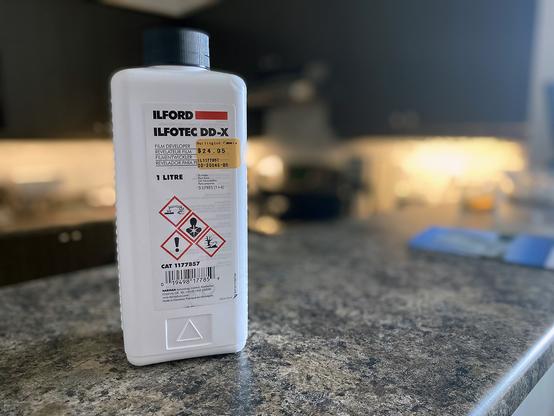
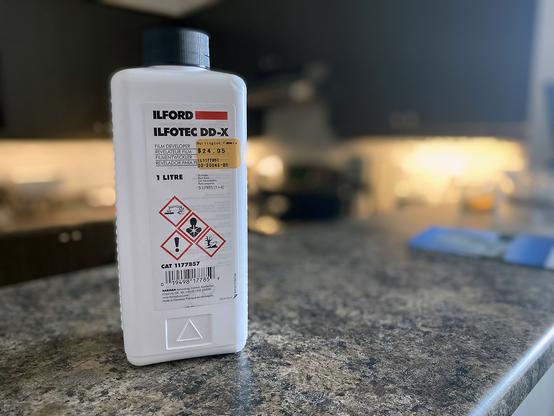
Developer Review Blog No. 17 – Ilford Ilfotec DD-X

Let me start this by saying that DD-X and I have not had the best of relationships. The first time I used it I wasn't happy with my results and decided that I was never going to touch the stuff again. But hey, almost every filmstock and developer are worth a second glance. DD-X, like its Kodak cousin, TMax developer was initially designed for use with the Delta range of films, specifically Delta 3200. Ilford has two versions of this developer, Ilfotec DD which is designed mainly for automated film processors that will use a dedicated replenisher and used in the stock formulation. White DD-X designed more for home processing how I do things. If I got that wrong, please leave a comment with the correction, and I can update this post.

Technical Details
Manufacturer: Harman Technologies/Ilford Photo
Name: Ilfotec DD-X
Primary Developer: Hydroquinone
Type: One-Shot
Mix From: Liquid

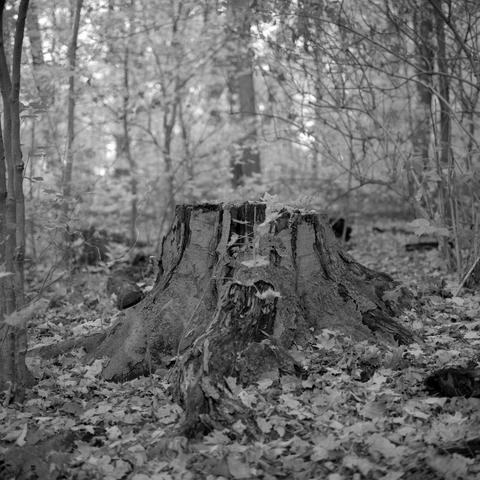
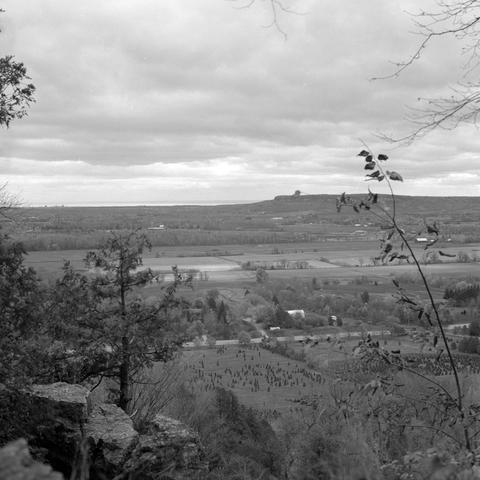
Rolleiflex 2.8F - Carl Zeiss Planar 80mm 1:2.8 - Ilford Delta 400 @ ASA-200 - Ilford Ilfotec DD-X (1+4) 6:00 @ 20CRolleiflex 2.8F - Carl Zeiss Planar 80mm 1:2.8 - Ilford Delta 400 @ ASA-200 - Ilford Ilfotec DD-X (1+4) 6:00 @ 20CRolleiflex 2.8F - Carl Zeiss Planar 80mm 1:2.8 - Ilford Delta 400 @ ASA-200 - Ilford Ilfotec DD-X (1+4) 6:00 @ 20CRolleiflex 2.8F - Carl Zeiss Planar 80mm 1:2.8 - Ilford Delta 400 @ ASA-200 - Ilford Ilfotec DD-X (1+4) 6:00 @ 20C

Handling
DD-X is an easy developer to handle; you'd almost think that it had been mixed up from powder. The first thing that I noticed is how easily it pours; it's near perfectly liquid with no viscosity at all, even Kodak TMax developer is much more viscous. Most of the developing combinations used with DD-X calls for a 1+4 dilution although you can also use at 1+7 or 1+9. The official documentation calls for all dilutions are one-shot, yes even at 1+4. However, you can use that 1+4 for up to ten rolls of film, with an appropriate adjustment in developing times, with a 10% increase after that first roll and a 90% increase for roll number 10. Ilford does warn that the more you reuse that stock solution even with the time adjustments you will lose image quality. If you do want to increase the life of your concentrate, use the 1+9 dilution and adjust your times. Ilford also warns to ensure that you use at minimum 10mL of the concentrate when mixing up your working solution. DD-X has a good shelf-life a sealed bottle is shelf-stable and has a decent life when opened. Although it will yellow, it can still function normally, although you might see some degradation of image quality the longer it stays open. Even the working solution has a decent life, with it lasting up to twenty-four hours once mixed.

Minolta Maxxum 9 - Minolta Maxxum AF 28-135mm 1:4-4.5 - Ilford Delta 100 @ ASA-100 - Ilford DD-X (1+4) 10:30 @ 20CMinolta Maxxum 9 - Minolta Maxxum AF 28-135mm 1:4-4.5 - Ilford Delta 100 @ ASA-100 - Ilford DD-X (1+4) 10:30 @ 20CMinolta Maxxum 9 - Minolta Maxxum AF 28-135mm 1:4-4.5 - Ilford Delta 100 @ ASA-100 - Ilford DD-X (1+4) 10:30 @ 20CMinolta Maxxum 9 - Minolta Maxxum AF 28-135mm 1:4-4.5 - Ilford Delta 100 @ ASA-100 - Ilford DD-X (1+4) 10:30 @ 20C

Applications
Despite my initial thoughts on DD-X, I now realise that the developer is no one-trick pony. Honestly, I first thought that the only film that worked well with DD-X is Delta 100. And it's true, Delta 100 sings in DD-X. But you can get amazing results from other films so don't let DD-X go by. Before we continue, one of the best films to develop with DD-X is Delta 3200. Also, it's one of the films that I did not include in this review. Thinking back, I probably should have, but what can you do? Either way, DD-X works well with any modern emulsion, Kodak's TMax line, Ilford Deltas, along with Fomapan 400 and 200 and Fuji Acros II. But there are some surprising additions, including Adox HR-50, making it a viable developer when you cannot or don't want to invest in a bottle of HR-DEV. And it also does a good job processing traditional or classic grained films like Ilford FP4+ It also does a good job with push and pull processing thanks to its nature as being semi-compensating.

Nikon FE - AI-S Nikkor 35mm 1:2.8 - Kodak TMax 100 @ ASA-100 - Ilford Ilfotec DD-X (1+4) 7:00 @ 20CNikon FE - AI-S Nikkor 35mm 1:2.8 - Kodak TMax 100 @ ASA-100 - Ilford Ilfotec DD-X (1+4) 7:00 @ 20CNikon FE - AI-S Nikkor 35mm 1:2.8 - Kodak TMax 100 @ ASA-100 - Ilford Ilfotec DD-X (1+4) 7:00 @ 20CNikon FE - AI-S Nikkor 35mm 1:2.8 - Kodak TMax 100 @ ASA-100 - Ilford Ilfotec DD-X (1+4) 7:00 @ 20C

Qualities
Let's start with tonality, if there's one thing that DD-X can give you is amazing tonality especially when you nail the exposure on the negative, but that's your usual goal eh? The idea is to create a negative that prints easily both in a traditional darkroom or even an alternative process. And in addition to the beautiful greys, you get excellent deep blacks and bright whites. But DD-X will also deliver excellent sharpness and fine-grain. Although there is a drawback, that added tonality does step down the contrast, and if you aren't careful with your exposure, you do get a little muddled. While not a low-contrast developer, it's more of a middling force for your contrast and that probably helps knockback that contrast when pushing your film.

Mamiya m645 - Mamiya-Sekor C 1:2.8 f=80mm - Kodak TMax 400 @ ASA-400 - Ilford Ilfotec DD-X (1+4) 8:00 @ 20CMamiya m645 - Mamiya-Sekor C 1:2.8 f=80mm - Kodak TMax 400 @ ASA-400 - Ilford Ilfotec DD-X (1+4) 8:00 @ 20CMamiya m645 - Mamiya-Sekor C 1:2.8 f=80mm - Kodak TMax 400 @ ASA-400 - Ilford Ilfotec DD-X (1+4) 8:00 @ 20CMamiya m645 - Mamiya-Sekor C 1:2.8 f=80mm - Kodak TMax 400 @ ASA-400 - Ilford Ilfotec DD-X (1+4) 8:00 @ 20C

Lowdown
Despite my initial aversions to the developer, I think I have come to like DD-X and might even use it more than TMax Developer. First off, I now have a good local source for the chemical, no need to head into Toronto or pay for shipping, and I find it easier to handle while processing film. Sure you still have the issues that the chemistry is a bit more expensive, and a bottle doesn't last too long unless I decide to try the time extension, which thanks to Ilford they include all that information in the datasheet. And also if I decide to get some Delta 3200 again, DD-X will certainly be the developer of choice. These days Ilford chemistry is getting easier to find in local camera stores in Canada which is excellent because I certainly will want to continue to work and support an excellent company that is a big supporter of the film photography community.

Nikon F5 - AF Nikkor 35mm 1:2D - Adox HR-50 @ ASA-50 - Ilford Ilfotec DD-X (1+4) 7:30 @ 20CNikon F5 - AF Nikkor 35mm 1:2D - Adox HR-50 @ ASA-50 - Ilford Ilfotec DD-X (1+4) 7:30 @ 20CNikon F5 - AF Nikkor 35mm 1:2D - Adox HR-50 @ ASA-50 - Ilford Ilfotec DD-X (1+4) 7:30 @ 20CNikon F5 - AF Nikkor 35mm 1:2D - Adox HR-50 @ ASA-50 - Ilford Ilfotec DD-X (1+4) 7:30 @ 20C

Recommended Reading
Don't just take my word on DD-X check out these other blogs on the subject!
No Reviews Found on the Subject

#developerreviewblogs #adoxhr50 #bwdeveloper #believeinfilm #canada #chemistry #ddx #developerreview #film #filmdeveloper #filmisalive #filmisnotdead #harmantechnologies #ilford #ilforddelta100 #ilforddelta400 #ilfordilfotecddx #ilfordphoto #ilfotecddx #kodaktmax100 #kodaktmax400 #mamiyam645 #milton #minoltamaxxum9 #nikonf5 #nikonfe #oakville #ontario #review #rolleiflex28f #thorold

Developer Review Blog No. 17 - Ilford Ilfotec DD-X

Ilford's own developer designed around their Delta film lines, while my original experience with the developer was not the best, I've been grown to see the draw of the stuff!

Alex Luyckx | Blog