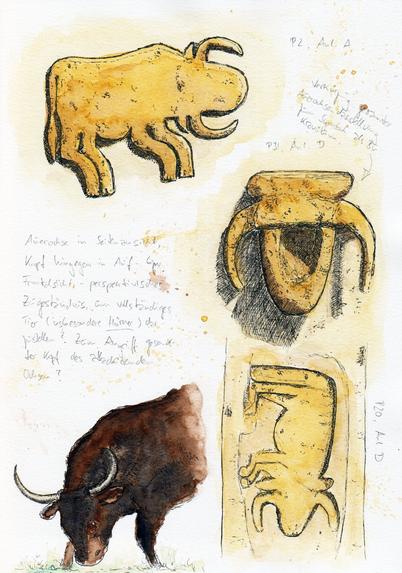
And sometimes there are even #symbolic substitutes for larger, more complex depictions. Like, for example, the #bucranium ("ox head") instead of an aurochs in its entirety, arrow-like zigzag lines instead of snakes, or large birds reduced to a few lines.

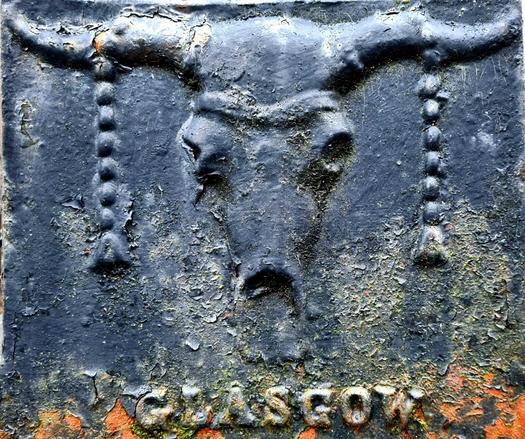
Today's animal in Glasgow's architecture is this Bucranium (Ox Skull) on lamp post at Alexander 'Greek' Thomson's Great Weatern Terrace in the west end of Glasgow. While this was a common decoration in classical architecture, animal motifs are not common in Thomson's work.

#glasgow #alexandergreekthomson
#greatwesternterrace #greatwesternroad #classicalarchitecture #bucranium #animalsinarchitecture #designdetails #architecturaldetail #architecturephotography

This mode of depicting #aurochs heads even has become so specific that it’s been turned into what almost could be considered kind of a #Neolithic #meme:

The #bucranium substituting the whole animal and, emphasising the horns, arguably its most dangerous and impressive element. https://t.co/CPDZxn8kwW

Jens Notroff on Twitter

“This mode of depicting #aurochs heads even has become so specific that it’s been turned into what almost could be considered kind of a #Neolithic #meme: The #bucranium substituting the whole animal and, emphasising the horns, arguably its most dangerous and impressive element.”

Twitter