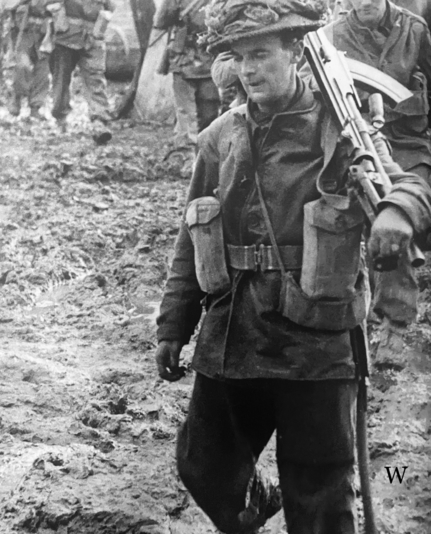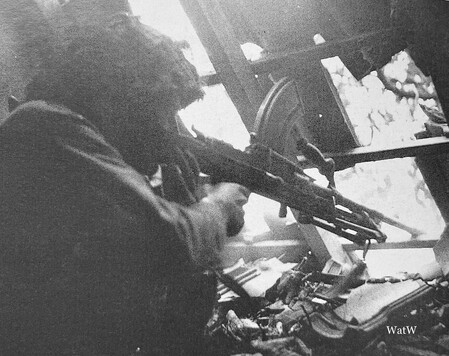
Finished Bren gun by Veronica Foster, one of many women working in war industry during WW2, Canada, 1941
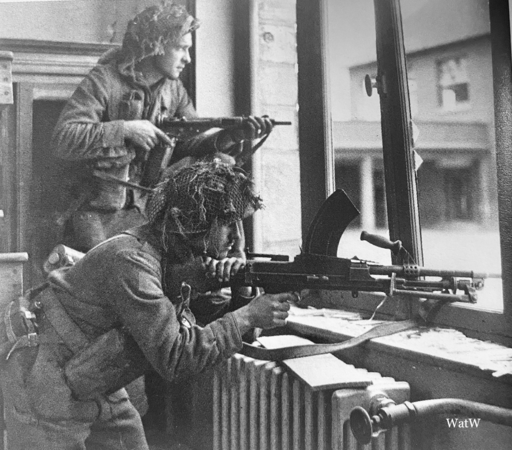
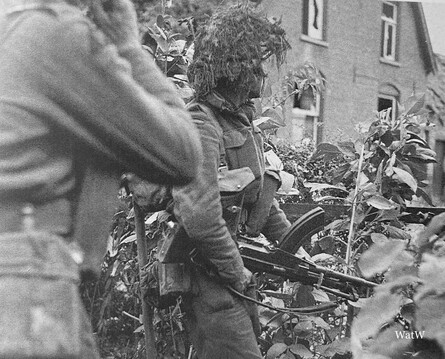
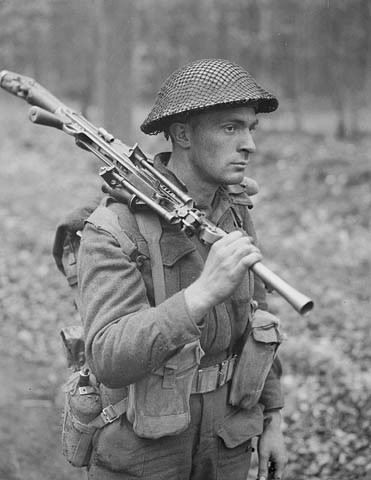
Canadian soldier with a Bren Gun, the Netherlands, WW2, 1945
EXPENDABLE PAWNS: MY GRANDFATHER IN WORLD WAR ONE AND ITS AFTERMATH By Veronica Smith
What do you do when there is a hell of a party going on and you are deemed too young to join in? You lie about your age, of course! At least, that is what my maternal grandfather, Jack Morgan did in 1915. Not only that, but he lied about his surname too!
Born John Morgan in Kanowna, Western Australia, in 1899, Jack was only sixteen years old, when he signed up for the Australian Imperial Forces, bound for the European Front in World War One. He gave his age as nineteen. The recruiting officer must have been suspicious because he insisted on one of Jack’s parents verifying his details.
The problem was that Jack’s father, Percy Morgan, had abandoned his wife and two sons and Jack’s mother, Florence Haigh Morgan, was currently living with another man, named Hawkins. For the sake of appearances, Florence was known as Mrs Hawkins. So, when Florence signed those papers for Jack, she wrote their family name as Hawkins, rather than Morgan. Young Jack happily went along with the ruse, to save his mother’s reputation, little realising the consequences of using the wrong name!
All Jack thought about was going off on the biggest adventure of his young life! The British and Australian governments of the time actively encouraged a romantic view of serving king and country, so that new recruits would keep enlisting. Times were hard economically and many a bloke was grateful for the regular army pay to send home to his family.
The 48th Battalion and Private John Haigh Hawkins, Number 4444, cheerfully sailed off to the far side of the world, not knowing what would await them.
Private John Haigh Morgan, Australian TroopsEarlier that same year (1915), many Australian soldiers had been massacred or maimed at Gallipoli. After Gallipoli, Australian troops were moved to France in March of 1916, although the AIF Mounted Division stayed in the Middle East, mainly to help defend the Suez Canal. It is possible that Jack’s battalion, and its raw Aussie recruits, trained for some time near Cairo in Egypt, before being assigned. Jack was in the infantry division at this point.
Australian forces sustained heavy losses on the Western Front in 1916 and 1917. Jack had his fair share of trauma. While in the trenches, he encountered a young German soldier, all dressed up to go on leave. The German was only a teenage, about the same age as Jack. Killing was far from either boy’s mind but in a split second, Jack had to make a vital decision. It was him or the German. Jack plunged his bayonet into the young German and killed him outright.
Jack never forgot the look of shock on that German boy’s face. It haunted him for the rest of his life. Worst still, the military system encouraged soldiers to take “Hunting Trophies” from their adversaries. Jack kept his victim’s German helmet and bayonet, which he would later use to terrorise his wife and child, whenever he had one of his frequent mental break-downs.
In another horrifying incident, a friend of Jack’s was running alongside him during an assault. Suddenly, a cannon ball hissed towards them. It completely sheared off his mate’s head, killing him instantly. Nevertheless, the headless body kept running around in circles until its nervous system finally stopped working. Evidently, that was not an uncommon occurrence.
Photo of Jack Morgan and one of his friends in the Australian 48th Battalion in World War One.At some time during 1916, Jack himself was badly injured. The tendons in his right foot were severed, so that his foot swung around to face backwards. He was invalided out from the front to England, where an operation repaired his foot. He was sent to recover in Wharncliffe War Hospital, Yorkshire, a complex which had formerly been the West Riding of Yorkshire Asylum at Wadsley in Sheffield. The War was producing such large numbers of war-wounded that many large houses and institutions and even ships had to be converted into hospitals and nursing homes to accommodate them.
At Wharncliffe, Jack would meet a young woman named Marion Dodds (my grandmother), who was four years older than him, although he was pretending to be the same age. Marion had gone to Wharncliffe because her aunt was a nursing sister there. Many young women were volunteering as nurses’ aides. Marion was deciding if she wanted to volunteer, when she got distracted by the wild colonial Jack!
Although Marion was already engaged to a local lad, she allowed Jack to sweep her off her feet in a whirlwind romance! Marion threw over her English fiancé and married the wounded Australian soldier in December 1916, in spite of her parents advising against it. She was married under the name of Hawkins.
Many of the Aussie lads hastily married English girls during World War One. They believed that they would be killed at the Front and this was one way of leaving behind a new generation to replace them! Unfortunately, the British War authorities disapproved of these marriages. They declared that British War Brides and their babies would NOT be repatriated to Australia with their husbands! This was like a red rag to a bull to the Australian soldiers, who were renowned for their disregard for authority.
Many of these newly-married soldiers, including Jack, protested by going AWOL (absent without leave). They headed for Dublin, Ireland. Although still part of the British Empire at the time, Ireland had recently held an uprising for independence, known as the 1916 Rising. The Irish were sympathetic towards the soldiers’ plight. Most importantly, Ireland was in the opposite direction to the battle fronts – almost neutral territory, in fact!
The protesting soldiers refused to return, until the authorities agreed to allow their British wives and children to be shipped home with them. It received a lot of press coverage, which created sympathy amongst the general British population. The Authorities were forced to back down, if they wanted further cooperation from the public.
Inevitably, though, there was a price to pay. The British War machine was spiteful in its revenge, as it decided to discourage anyone else from “desertion”. The soldiers, who had gone AWOL, whether wounded or not, were returned to the Front as punishment.
Jack was no longer mobile enough for trench warfare. He could not run. So, he was reassigned as a Bren Gunner, stationed at a fixed turret. This was a type of light machine-gun, originally developed in Czechoslovakia and modified under licence to British requirements. The Bren was a gas-operated weapon, the vented gas driving a piston, which actuated the breech block. Each gun came with a spare barrel that could be quickly changed when the barrel became hot during sustained fire. In other words, it could be as dangerous for the operator as for the target!
A Vickers machine gun on a tripod, circa 1912. (Photo by Paul Thompson/FPG/Getty Images)Jack’s daughter Audrey was born in Sheffield in September 1917, while Jack was away at the front. Like most of those World War One new mothers, Marion sent her husband a photo of the naked baby, to show him that the child was healthy and not deformed in any way. It is not clear if Jack was allowed leave to see his new daughter. Audrey’s surname was registered on the birth certificate as Hawkins.
Marion Nina Dodds Morgan and daughter Audrey Marion MorganSometime between September 1917 and the end of the war in November 1918, Jack’s gun turret received a direct hit from a mortar. Everything exploded! Jack was buried alive for three days, with severe head injuries. When they dug him out, he was presumed dead and was laid in the morgue, to await burial.
It is only thanks to an orderly, who thought he saw a faint movement in the “corpse”, that Jack was not put into the grave. A mirror was placed under Jack’s nose. There was enough breath to mist the mirror. With this proof, he was given drugs, to stimulate his heart, and he miraculously came round. Part of his skull had been so severely damaged that surgeons had to insert a metal plate, in order to replace the shattered bone. All this happened before his 20th birthday!
Years later, he recounted his near-death experience, which seemed a common occurrence amongst his fellow war-survivors. He saw himself falling down a deep well. The walls of the well were filled with dirty arms and hands, reaching out to grab him. He wanted to get away from them but he just kept falling and falling… then he started moving upwards again, towards the light – and the operating table.
Despite his serious injuries and German surrender on the 11th of November 1918, Jack was still taking part in the aftermath of the war. He sent two Christmas postcards from Belgium, dated Christmas 1918. One was to his wife Marion and the other to his one-year-old daughter, Audrey.
As Fate would have it, Jack accidentally met his estranged father, Percy Morgan, who was also a soldier in the Australian Army. Percy was distantly related to Welsh peer, Courtney Morgan, 3rd Baron and 1st Viscount Tredegar, who had supported the British war effort with both money and ships. Father and son decided to bring Jack’s baby daughter Audrey to meet the Viscount and, more importantly, to ask this venerable personage for “money to wet the baby’s head”! After all, Audrey was the newest member of the Australian branch of the Morgan clan!
First, though, they had to tell Jack’s wife Marion that his real surname was MORGAN, not Hawkins, which was on her marriage certificate and on Audrey’s birth certificate. Marion, although impressed by her husband’s noble relations, was furious with Jack’s deception. It made her realise how little she really knew about him.
In her distress, she asked her parents for help but they replied that she had made her choice by marrying the man (against their wishes) and must abide by it. She then turned to her former fiancé and asked if he would take her back. He said he would gladly take Marion back but not her baby by Jack. With no support, Marion’s only option was to stay with the husband, whom she no longer trusted.
Now that the war was over, troops could return home. The Australian commission was faced with a dilemma because, not only were there the soldiers to ship back but also their new British families, tripling the capacity needed. A larger ship had to be found for the job. The British government allocated a captured German warship, named the “Königer Louise”, to carry everyone back to Australia.
Audrey was only eighteen months old at the time and it would prove to be a long and eventful sea voyage from Europe to the far side of the world.
Little did anyone realise that the former German crew had sabotaged the ship before surrendering it. They had painted acid on the handles of the shovels used to stoke the steam engines. So, when the British naval crew, who were assigned to the ship, touched the handles, they received severe burns to their hands. Jack and the other return soldiers had to stoke the engines until the crew recovered.
Koniger Louis Repatriation Troop Ship from UK to AustraliaThere was a welcome break in Cape Town, South Africa, midway on the voyage. My grandmother kept the tiny photos taken on that stop-over, which I still have. Evidently, my mother Audrey felt afraid of the African dancers sent to entertain them and screamed her head off!
The Königer Louise ended her journey in Freemantle, the major naval port of Western Australia, on the Indian Ocean. It was a huge culture shock for Marion, a city girl from the north of England, who was neither prepared for the heat nor colonial society. Many of the English war-brides felt that way. Back home in England, they imagined they were marrying wealthy sheep-station owners, who would provide them with a life of luxury!
Marion had hoped, because Jack had wealthy and important relations in Britain, that they would be well-off in Australia. It soon became clear that this was not the case at all. She still had not forgiven her husband for using a false name on their marriage certificate and she regretted marrying him in such haste, while knowing so little about him. To make matters worse, Marion miscarried with a second child and she was unable to have any more children after that, which put an extra strain on their already uneasy relationship.
Jack was officially discharged from the army on 28th September 1919. His papers record that he had served abroad for three years and 1,711 days and was discharged because he was medically unfit, not because of misconduct. The Australian government had a policy of rewarding returned soldiers with jobs, land, whatever material support they might need. They offered Jack a permanent job as post-master in a rural area but Marion did not want to be marooned in the “Out-Back” and made him reject it.
Instead, he took a job loading cargo at Fremantle port. Unfortunately, there was a lot of pilferage going on. Jack was not involved but he foolishly accepted two silk scarves from a mate as “gifts” for Marion and Audrey. In reality, they were plants used to draw the authorities away from the real culprits. Although Audrey was only three years old at the time, she never forgot the police arriving in the middle of the night, her Mummy screaming and crying while they searched the house, finding the scarves and taking Daddy away in hand-cuffs.
Jack was convicted and sent to prison, leaving Marion alone in a foreign country with no friends or family to help her and her child. Panicking, Marion packed up their belongings and took a train to the state capital, Perth. Once there, she did not know where to go or what to do. A fellow passenger at the train station noticed how distressed the young mother and child were and decided to help.
Mrs. Kennewell brought Marion and Audrey back to her home, where they stayed, while Marion found paid domestic work. Thanks to the support of this kind lady (who remained a close family friend for years after), Marion found that she was more than capable of coping in her adoptive country. Indeed, there were many kind people over the years, who helped the Morgan family.
After six months in prison, Jack was found totally innocent of the theft, when the real culprits were caught red-handed. He was released without a stain on his character and joined his wife and child in Perth, unsure of his reception. Trying to make amends, Jack arranged a Deed Pole in 1922, so that his army name of Hawkins, his marriage lines and Audrey’s birth certificate, could all be changed to Morgan. The Deed Pole is an interesting document because it tells us that by 23rd August 1922, the family was living in Adelaide Terrace, Perth, and Jack was working as a “Tramway Employee”.
Western Australia was Jack’s home place and for some years, the family moved around the state, living in tents in the countryside, while Jack worked on the roads or on farms, taking whatever work he could get in the 1920s post-war era. Marion took paid domestic work too and Audrey was often cared for by her paternal grandmother, Florence.
Three generation formal photograph of Mrs. Florence Haigh Morgan, her son John Morgan, his wife Marion Dodds Morgan and their daughter Audrey.The hardest thing to bear was Jack’s bouts of hysteria, when he would relive the war and chase his wife and child through the bush in the middle of the night, brandishing the bayonet taken from the young German he killed. At that time, little was known about Post-Traumatic Stress. So there was no medical treatment readily available for it. My mother Audrey never got over the trauma of these experiences, running for her life from her crazy father. She was yet another casualty of World War One.
Good luck finally came to the family, when the State offered Jack a permanent home in the new settlement of Kondinin, situated in the Wheat Belt of Western Australia. It gave the Morgans some semblance of stability and Audrey got to school. She was a bright child, quick to learn, with an exceptional talent for music.
Their next door neighbours in Kondinin were the Smiths, who had a large family of children around Audrey’s age. One of those children was a son called Robert, who would grow up to marry Audrey and change her life in a most dramatic way!
The Smiths themselves had been affected by World War One. Although the father, who was a veteran of the Boer War, had not taken part in it, his younger brother Daniel had enlisted. My great-uncle Daniel returned home to Australia a broken man. Although physically unharmed, he had suffered mental and emotional trauma and his family did not understand or know how to deal with it.
When the love of his life rejected him, because of his strange and unpredictable behaviour, Daniel took a gun and shot her dead. He then turned the gun on himself and committed suicide. The family, including my father, never talked about it. That kind of behaviour was considered insanity and no-one wanted their family to have the stigma of mental illness, even if the culprit was post-traumatic stress. It was only seventy years later, while researching our family tree, that I found the old newspaper article reporting the tragedy.
The marriage of Audrey and Robert in 1938 also changed the life of Jack and Marion. The newly-weds had to move to Adelaide in South Australia, for Robert’s work. The Second World War was just beginning but this time Jack was too disabled to take part.
When Audrey started a family of her own, Robert was often away with his work and she needed help caring for her three children. Jack and Marion moved to Adelaide to help. At the same time, Jack finally accepted a job in the post office and worked there for sixteen years, even after Audrey and Robert moved overseas.
Adelaide, South Australia, during World War Two, featuring Jack Morgan with his wife Marion on the right and his daughter Audrey on the left.Jack retired from the Post Office in 1957, due to on-going health problems. The old war wounds were catching up on him. Despite the fact that his lungs had never recovered from the nerve gases used in the World War One trenches, he was a heavy smoker and his lungs had developed cancer.
The Returned Soldiers Association, to which both Jack and Marion belonged, became their main social focal point. It seemed to keep them stuck in a time warp, constantly reliving the past, their “young days” and the First World War, as if the Second had never really happened! Each day, they would scan the death notices in the newspapers, to see which one of Jack’s old comrades had died next.
In August 1963, Jack himself died, aged 64 years. He had been hoping to travel back to Dublin, Ireland, where his youngest grand-daughter Veronica had been born five years previously. He had even bought himself a new suit for the journey but he never made it. It was the widowed Marion, who traveled back to her part of the world. She moved in with her daughter Audrey’s family, where she later died at the age of 83, another veteran of World War One!
Author Veronica Smith first published 13th July 2016.
#AustralianSoldiersInFirstWorldWar #AWOLInDublin #Biography #BrenGun #history #KonigerLouisGermanBattleShip #PTS #WarBridesInWorldWarOne #WorldWarOne