 MisWiredKE
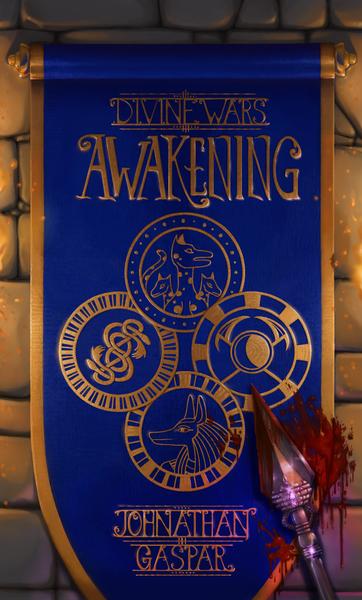
So, if you still want to grab my books off of any D2D affiliates before I delist them, this is your last reminder before the end of the month.
Awakening: https://books2read.com/dwawakening
Legends of Signaia https://books2read.com/signaia
So, if you still want to grab my books off of any D2D affiliates before I delist them, this is your last reminder before the end of the month.
Awakening: https://books2read.com/dwawakening
Legends of Signaia https://books2read.com/signaia
Author Spotlight: Black Sapphic Vampire Romance author Liza Wemakor
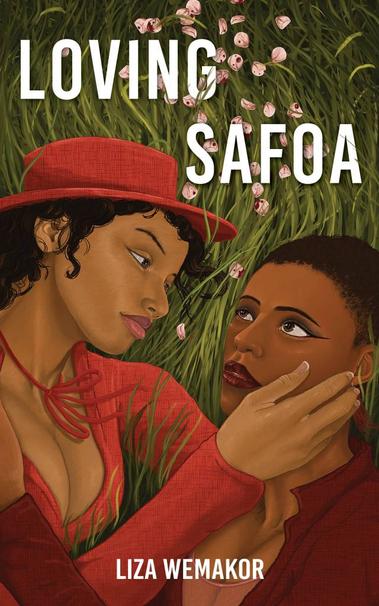
Liza Wemakor (she/they) is a writer and a Ph.D. candidate in UC Riverside’s English Department. Her fiction has been published in Strange Horizons, Anathema Magazine, Baffling Magazine, and elsewhere. Her debut novella, Loving Safoa, was published by Neon Hemlock Press in February 2024.
AUTHOR LINKS:
Website: www.lizawemakor.com
Instagram: @lizawemakor
Bluesky: @lizawemakor.bsky.social
Book Link: Loving Safoa (Neon Hemlock)
Book Elevator Pitch for readers/book clubs
If you enjoy paranormal romance with literary stylings, you will enjoy Loving Safoa!
Get a copy from Neon Hemlock.Your novella, Loving Safoa, is out now with Neon Hemlock. What were your main inspirations behind this sapphic vampire novella?
I wanted to write a vampire story that reflected underrepresented elements of my worldview. It seemed sensible to lean into Safoa’s experience of being an undocumented immigrant in the Western world across a long expanse of time, and to demonstrate how this extended period of uncertainty and precarity forces Safoa into survival mode. Meanwhile, she is also recovering from the trauma of being held captive by a sadistic colonizer for a number of years, as well as experiencing new kinds of freedom in New York, and eventually Maryland.
Cynthia, on the other hand, feels orphaned — she is navigating adulthood without her mother or any other parent, yet becoming a maternal figure to her students. She also feels a level of insecurity about her connection to her motherland, as a Ghanaian-American woman, and faces this head-on in her relationship with Safoa, who she imagines as a pure embodiment of African identity. Safoa and Cynthia’s lives are quite complex, and together they tell a story of diasporic reunification.
The novella features woven stories from different places and time periods, from 18th-19thC Ghana to a near-future Maryland. How did you decide what segments of these characters’ lives to include, and were there scenes and times that you played with but ultimately decided to cut?
I wanted to maintain a focus on Cynthia and Safoa’s romance, so I omitted some portions of their lives before they met; I may have explored more of those past moments in a longer project, like a novel, but a novella length felt right for this story. I wanted the passage of time to be a bit surreal, because it is surreal to have lives as long as Cynthia and Safoa’s. Time itself and the details of their lives are a blur.
I was seriously toying with showing glimpses of Safoa’s life in London — her lovers, and her brief skirmishes with other European predators. I would’ve emphasized how she was simultaneously powerful and vulnerable to exploitative people, which motivated her departure to the U.S. after a few decades. I didn’t include these scenes because Cynthia may have been lost in the larger narrative — there wouldn’t have been as much of a balanced representation of their lives, and Safoa would have taken over the story.
How does vampirism and the donor concept work in your novella, and is this based on any folklore?
I was very inspired by Jewelle Gomez’s approach to vampire networks in The Gilda Stories — vampire communities that are explicitly political, and whose politics have been informed by their previous experiences of being hurt, exploited, and truly loved.
I was also inspired by Octavia Butler’s approaches to both community and feeding in Fledgling. Shori depends upon a host of human companions and vampires while navigating a white supremacist vampire hierarchy. Shori’s companions also gain a lot from her presence, in a symbiotic fashion.
Tamara Jerée wrote beautifully about these dynamics in her Strange Horizons essay, “How to Make a Family: Queer Blood Bonds in Black Feminist Vampire Novels“.
There was a hint of Ghanaian folklore in the novella, though I took creative liberties. Safoa and a character named Yaba occasionally refer to the first vampire they met as ‘ɔbonsam’ — or a demonic entity. In some Ghanaian folklore, there are vampiric, humanoid creatures called ɔbonsam or sasabonsam that have very long hair, like Safoa does at some point, and live / feed on people in the forest. I didn’t opt to include other details like sharp teeth and bat-like features in my depiction of vampires. Tongue feeding was more fun for a smutty sapphic story.
At some point in my life I encountered myths related to the obayifo (another West African vampire) as well, and I took liberties with the factoid that they are phosphorescent, i.e. when Cynthia noticed a blue aura around Safoa’s body.
Can you tell us more about Cynthia – where did she come from, and what made you set her as a schoolteacher in the early 1990s at the start of this novella? How did you develop her character, her voice, and her desires (e.g. to be an “everlasting elder”)?
I am one of those people who insists on a vaguely-defined, somewhat secretive spirituality that undergirds my writing practices. In the spring of 2021, Cynthia and Safoa appeared to me almost effortlessly, and I was compelled to write about them. Not long before that, I’d gotten into the Ph.D. program I am at the end of now, and I started writing feverishly before my time and energy became more limited. Cynthia and Safoa were fascinating to me, and their chemistry was palpable; at times I blushed when writing and editing their sex scenes, because it felt like an intrusion upon their privacy.
Cynthia’s life resembles my life in some ways, but not all. I haven’t lost my mother, and she (Cynthia) has spent more of her life in New York City and Maryland than I have, but her anxieties about her authenticity as a Ghanaian diasporan and her interest in teaching certainly resonate with me. I am sure that some of my own subjectivity informed how I wrote Cynthia, though a lot of it was subconscious.
I had a moodboard for both Cynthia and Safoa, and Cynthia’s moodboard included images of the actresses Nicole Beharie and Moses Ingram, and the model Dede Mansro. I was interested in channeling not only the softness of their appearances, but the moodiness and subdued seductiveness they are able to convey.
Regarding the choice to begin in the 1990s: it was a perfect fit both aesthetically and politically. The 90s was a period of intense political maturation for educators, artists, and the general public. There was, especially for queer black people, queer people of color, a mingling of death and renewal — an increasing awareness of identity (and its constructedness) mingling with the optimism of entering a new millenium. The perfect setting for politically conscious vampires to come into themselves.
Can you tell us more about Safoa, the vampire, her Ghanaian roots, her relationship with tattoos and her place in her communities across time as a body artist, and how she came to be shaped on the page? What was the character development process like for her, and was there research involved to craft her journey from 1799 onwards – if so, what research did you do?
A pattern that is emerging in my answers to these questions is that I placed Cynthia and Safoa in historical moments that were hotbeds for social resistance. I wanted Safoa to live through multiple eras of Black and African resistance, and I wanted readers to see her putting in the work to pursue what she saw as her purpose in life, which was being a body artist from the beginning, and then evolved, through meeting Cynthia, to include more social pursuits.
In writing Safoa, I revisited a few books from a class I took in college about pre-colonial African history, and I read a few books and articles about West African empires and West African mythology. I also made an effort to research some of the geography (landscapes and flora) of West Africa, and brushed up my knowledge of some Twi terms and phrases, which I grew up hearing from my maternal family. Ultimately, only some of these details made it onto the page, because making the world feel lived in required me to look at these landscapes through Safoa’s eyes.
What research did you do for the different settings in the novella, and what sociopolitical/ideological projections were you going with for the development of your near-future Maryland setting to avoid it being a utopia/dystopia?
I wanted each of the major settings of the novella, 19th century West Africa, 1990s New York City, and 1990s / 21st century Maryland, to reflect major political movements of their time. Safoa’s time in the part of West Africa we now know as Ghana was inflected with rising anticolonial sentiments. New York City is and was sensational for the community organizing within its boroughs, though it was not without the risk of violence (see: the 2003 murder of Sakia Gunn in the nearby Newark, New Jersey). Like New York City, the DMV is and was a major locus of queer arts organizing (especially literary arts) and queer political organizing, which I aimed to reflect in Cynthia and Safoa’s commune involvements.
I wouldn’t say I was consciously avoiding the story being classified as a utopia or dystopia, and this defiance of categories came about because I had naturalistic inclinations in the writing of this novella. I wanted my writing to reflect how deeply traumatic and how stunningly gorgeous people can be. For the Maryland commune in particular, I wanted to hint at the fact that there were conflicts commune members had already worked through before Cynthia and Safoa arrived, and working through these conflicts laid the groundwork for Cynthia and Safoa to soar, as cooperative leaders in their new community.
Would you ever consider expanding upon the story of Cynthia and Safoa, perhaps in a connected story, and/or are you moving on to other projects (if so, what’s next?!)
I would love to write a short story or novelette focused on Safoa’s time in London / Europe, when the time seems right to do so. I’ve written several short stories that I’m proud of since Loving Safoa came out in 2024, and it’s just been a matter of finding the right magazine at the right time for the stories that haven’t been published yet. I also have a few short stories that are in partial states, that I am slowly finishing as my dissertation takes priority.
I also have a novel project that is half-drafted! The novel project follows a polarizing, and potentially revolutionary, celebrity musician.
Beyond my own fiction, I am a nonfiction editor and finance manager for Anathema Magazine, a venue dedicated to speculation fiction by and for queer people of color that is relaunching after a 3-year hiatus — yay!
Add Loving Safoa to GoodreadsLike This? Try These:
Author Spotlight: Black Sapphic Vampire Romance author Liza Wemakor
Meet Liza Wemakor (she/they), author of paranormal vampire romance, LOVING SAFOA, out now with Neon Hemlock. This multi-POV novella spans continents and eras, and Cynthia & Safoa’s romance stands the test of time.
by cmrosensApril 29, 2026April 9, 2026Author Spotlight: Vampire Fiction Author Lucius Valiant
Meet Lucius Valiant, a Danish-British author, and learn more about his series, The Thornhill Vampire Chronicles.
by cmrosensOctober 29, 2025February 3, 2026Author Spotlight: Vampire Fiction Author Talia Wall
Meet Talia Wall and her dystopian vampire series, ‘Until Equinox’ trilogy! Books 1&2 are out now, and Book 3 is coming soon.
by cmrosensOctober 8, 2025January 7, 2026Author Spotlight: Vampire Fiction Author Eule Grey
Meet Eule Grey (she/they), a Sculpture artist, disability activist, and disabled author of queer, sparkly books. We talk about disability and sapphic elements in their work.
by cmrosensJune 27, 2025January 7, 2026Author Spotlight: Horror & Vampire Fiction Author C. Lenz
C. Lenz is a Canadian author and scientist who lives with her wife Zoey in Hamilton, Ontario. In this spotlight interview, she discusses her monster-vampire slasher, Thyrst Festival.
by cmrosensApril 18, 2025February 3, 2026Author Spotlight: Vampire Fiction Author Frankie Sutton
Frankie Sutton writes paranormal and urban fantasy, and talks to us about her novel, Vampiric Crush.
by cmrosensFebruary 28, 2025January 7, 2026 #AuthorInterview #AuthorSpotlight #BlackAuthor #paranormalRomance #queerAuthor #sapphicBooks #vampireBooks
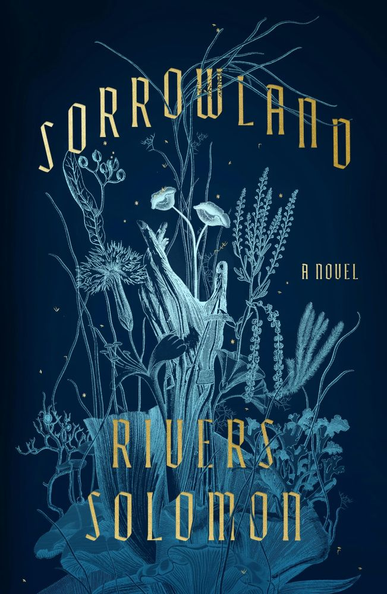
(1/5) “Sorrowland” by Rivers Solomon.
A religious cult escapee raises her babies in the woods while being chased by a monster, but she’s also changing.
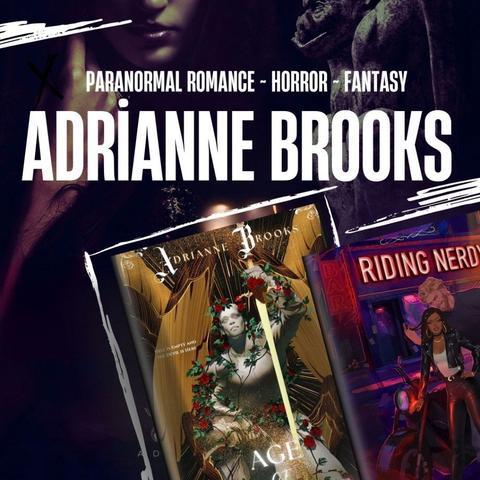
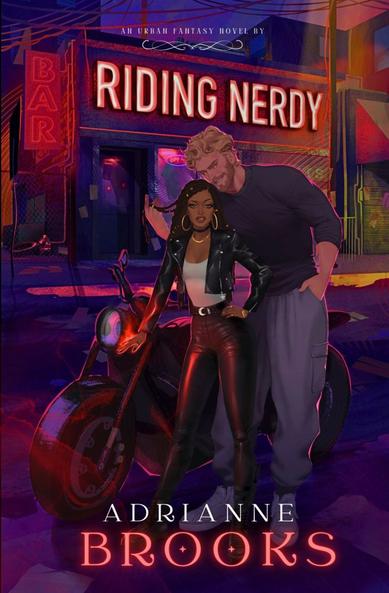
Author Spotlight: Urban Fantasy Author Adrianne Brooks
Adrianne is a paranormal/fantasy author of over 15 novels.
When she isn’t writing, she’s busy with her kids on their homestead in the south.
Author Links:
All links: linktr.ee/adriannebrooks
Threads: @adrianne_brooks
Instagram: @adrianne_brooks
X: @AdrianneXBrooks
TikTok: @a_brookswriting
Bluesky: @adriannebrooks.bsky.social
You’re the author of 15 paranormal/fantasy books (and counting!), but we’re here to spotlight 2 – Riding Nerdy and Age of Defiance. Firstly, can you tell us what draws you to paranormal and fantasy, and why this has become your preferred set of genres to write in?
I read pretty much all genres, but I’ve always been drawn to the fantastical. I wrote my first short story when I was six or seven about a little girl who lost her baby sister in a fairy ring and went in to go find her only for neither to ever be seen again. I never really looked back after that.
Tell us about Age of Defiance. Did your own cultural/religious background play into the worldbuilding of this post-apocalyptic fantasy with angels and demons, and if so, how? If not directly, can you tell us about the inspiration and research that went into it?
My religious and cultural backgrounds influenced the worldbuilding in the sense that when I first wrote Age of Defiance back in 2012 it was a documentation of my own split from Christianity.
I’ve always been interested in various religions and have dabbled in theology and creation myths for most of my life.
I took recurring themes from these stories and built something from the pieces left behind.
Can you share your favourite quote or describe (briefly!) your favourite scene from Age of Defiance, and tell us why that’s your favourite, where that came from in terms of inspiration, and how readers have reacted/how you’d ideally like readers to react to it?
My favorite scene is toward the end when Defiance is facing down a zombie horde. I’ve always wanted an excuse to write something like that and the scene is a culmination of a lot of emotion and heartbreak in addition to just being really compelling to read.
My favorite quote from this book would have to be when the Archangel Uriel is speaking to Defiance about her sin of worshiping the devil. He says,
“If Hell awaits you, Defiance Gray, I pray you find it here, on earth, with me. Where I might still protect you from it. Where it might pass you by so quickly that the eternity you are left with is one of nothing but bliss.”
Can you tell us more about your character creation process – are you a world-first or character-first author, or something different? Can you use your FMC Defiance as an example, and tell us how she came to be fully developed?
I’m a bit of both. Usually, when a character comes to life in my mind, they’re existing in a moment or scene within their world.
From there, it’s up to me to sort of work backward and figure out – How did they get there? What sort of world is this and how did it affect them? who are they? what motivates them? where are they going from here? and so on.
Defiance came to me when I was listening to Castle by Halsey for the first time. I saw a girl painting death on God and watching him crumble into ashes at her feet as she danced and the story just unfolded from there.
Did you find yourself using the same process for your novel Riding Nerdy, and which character from this book was the most fun to create/develop? Who gave you the most trouble?
Yes, I use the same process for all of my books. And it would have to be a secondary character named Ape. He’s an aging werewolf biker zaddy, and I’m low-key obsessed with him.
The character that gave me the most trouble would have to be Edward’s mother. There’s an aspect of her characterization that’s very difficult for me to delve into, but I know that if I can go there, it will be a turning point in the whole series.
How much research did you do for biker gangs/what media did you consume for getting the right feel for the book?
For the crime aspect I actually just spoke to my older brother, lol. He robbed some banks/armored trucks and was kind enough to beta read my crime scenes.
In addition, the editor I chose was a woman who was a member of a biker club and had some experience with drag racing. She was kind enough to give me some invaluable advice about the inner workings of a club as well as bike and car specs for my chase scenes.
Can you share your favourite quote or describe (briefly!) your favourite scene from Riding Nerdy, and tell us why that’s your favourite, where that came from in terms of inspiration, and how readers have reacted/how you’d ideally like readers to react to it?
There are so many fun scenes in this book. There’s a part where the MMC is in the middle of naked fight club and turns his jingle jangle into a helicopter rotor, and I’ve seen people cry laughing over it. It’s my favorite because it’s such a great example of how the book blends genres, and I love the visceral reaction it evokes in readers.
Which books from your back catalogue should readers who liked AoD try next and what should they try after RN, in terms of similar character dynamics, settings, gods and monsters/angels and demons, or shared themes?
Right now, these are my only two books out. I’m currently revising my backlog so that I can republish them. Hopefully, AoD will appeal to the readers of RN and vice versa, especially since both books technically take place in the same world and feature some of the same characters.
Like This? Try These:
#AuthorInterview #AuthorSpotlight #BlackAuthor #BlackBooks #paranormalFantasy #urbanFantasy
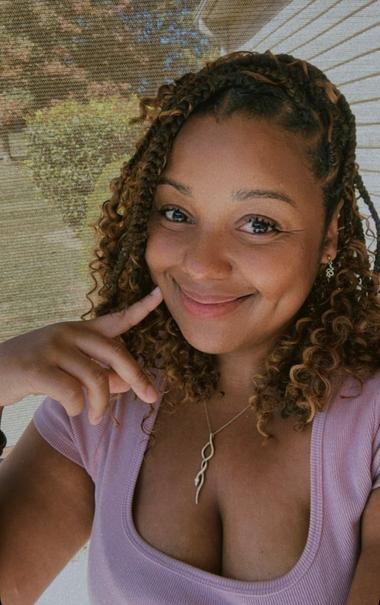
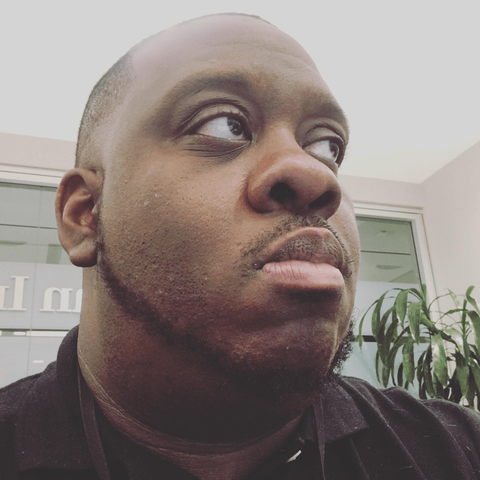
Author Spotlight: SFF Serial Fiction Author Lem McMillan
As a kid I loved telling stories through cartoons and drawings, heavily inspired by movies Return of the Jedi, Tron, and the animated Lord of the Rings. It wasn’t until High School that I took up reading in any recreational sense. That’s when I realized that I enjoyed the telling of the tale more then the drawing of it.
I started a few projects, but didn’t have the confidence of drive to follow them to completion. For years I dabbled through short stories and running TTRPGs. I didn’t take writing seriously until 2015 when I finished my first manuscript and realized with confidence, I could finish a story. I committed to writing everyday and took a Creative Writing Course. All to improve. Now here we are, nearly 10 years later.
Taking inspiration from every thing I see and hear, I write tales that interest me, sprinkled with bits of my lived experiences and what I see in the world around me. I prefer Speculative Fiction and Paranormal stories, but I’m always trying my hand at other genres. I love writing stories about marginalized people living lives not defined by that which would make them targets in the real world, I love feedback.
Author Links:
Wattpad: LemuelMcMillan
TikTok: @author.lem.mcmillan
Instagram: @author.lem.mcmillan
Threads: @author.lem.mcmillan
You are a prolific writer with 23 works available for people to read for free at the moment, but we’re going to be talking specifically about 3 of them – Raving Moon, Demon Hunters: Last Class, and Light, Glorious Light. First of all, tell us about these stories, where to read them, and a little bit about why the Wattpad route was/is a good fit for you and your work.
Oh, I like this question a lot! Raving Moon was born of a vampire story I started when I was Freshman in High School. Inspired by The Anita Blake series by Laurel K. Hamilton, the story was all about vampires and werewolves in a darker version of our world. Even then, it was important to me that the main character be a black man. Years later, I tried to rewrite it and the idea of the black vampire in a world reluctant to accept him grew even greater as did my vision for the world.
In November of 2018, I revisited my idea and it flowed out of me as if it had always been waiting for that moment. Vampires, werewolves, magic, and social commentary smothered in a murder mystery, dear to my heart.
Demon Hunters: Last Class is a novelization by a TTRPG I created and ran for my wife and sister years ago. It was a great adventure that brought us together and meant a lot to me as a game runner and as a storyteller. This story is a love story to those women and the time we had. It follows two young ladies as they discover that the world they live in is far larger than they grew up to believe. It’s a coming of age tale that is a prelude to a grand adventure that spans time and space.
Light, Glorious Light was the capstone project for my Creative Writing Course. The story started out as just the first three chapters, but I loved the story I’d started and could not leave it as it was. Over the course of the next couple of months, I lived in the land of The Bright Waste where roving bands of bandits kill and plunder to survive and Phalanx stands as the last bastion of peace and civilization.
Somehow, this story has become my most popular. Female protagonists fighting mutants, a harsh landscape, and bandit queens. It’s quite a rife. As I said before, I love feedback and Wattpad creates a space where readers can comment on your work in-line as soon as you post.
The community is strong and for me the experience has been rewarding. Book Clubs have helped me grow as a writer and reader feedback has inspired more than a few of the other stories I’ve written.
What sort of representation can readers expect to find in these 3 stories, and can you tell us anything about the reception of these characters with readers?
My protagonists are always people of color, usually black or green! Most of my many characters are women and more than half are queer. I just find a certain kinship with characters who love who they want and stand strong and secure in their differentness. People seem to resonate with my characters and the stories they tell.
Light, Glorious Light had very few reads for a long time, but when it blew up I received so much positive feedback from women who loved my characters that I was quite surprised. I didn’t expect the same sex relationship within to received the fanfare it did.
Let’s talk about the settings of these books – Light, Glorious Light is a dystopian future, Demon Hunters: Last Class is set in a contemporary USA where angels and demons are real, and Raving Moon takes place in an alternate universe in the fictional Gorgon City. What inspired the settings for each one, and how do you go about worldbuilding?
Once the idea starts to take root, I ask myself questions that will constantly make me think of the the story’s world. What inspires this world, why is it different from this one? Why is it the same?
Light, Glorious Light was an extreme vision of a world ravaged by climate change and science unchecked. If the world burned, what would grow from the ashes.
Demon Hunters: Last Class took inspiration from post-apocalyptic games where demons and angels fight over the remnants of humanity. How would a world destined for that fate have looked before the ‘end’?
Raving Moon has lived in my head for so long, it’s become kind of a default contemporary world for me. if I have a dark fantasy idea, my first thought is how does this fit into Gorgon City? I have to say the Anita Blake series and underworld have definitely shaped this world, but so have things like Neil Gaiman’s Neverwhere and Vampire: The Masquerade. In a modern world where monsters rule, what would a day in the life for said monsters look like?
What are the central themes of each of these books, and how do the settings and worlds of each book work to bring them out and help you explore them?
Light, Glorious Light: Love in a world where weakness will get you killed.
The Bright Waste is harsh and unforgiving so I attack the love between the two MCs from every angle. Forcing them to fight for their love constantly.
Raving Moon: Faith in one’s self and fighting the ghosts of the past. The man character is a vampire who believes in the Christian God and the power of his salvation. yet this very faith is a weapon against him, harming him as well as it helps him. How do memories and family secrets affect a man who’s centuries old?
Demon Hunters- Last Class: Found family and self-discovery. The ladies in this story have lost everything and are learning about the world with fresh eyes as newborns. Both are dealing with loss and betrayal, so I constantly asked myself how would they find each other or how did they find each other. This story was unique in it was based on characters played by people and so I had to reconcile my questions with how the characters behaved in the game they came from. This one was surprisingly difficult.
Do you find yourself revisiting the same/similar themes in your work, and if so, which ones?
A recurring theme in all of my work is faith and what does it look like to different people. There are always themes of acceptance, from self and from society. Learning to love one’s self is also a prominent element. The settings directly shape how these themes are approached. Whether in a desert wasteland or a school for misfits or a city ruled by vampire, the way the characters seek acceptance from themselves is very different and part of the protagonists’ tale is finding it in their own way.
What are you most looking forward to writing in the future, and are you/do you think you would consider other publishing routes?
Light, Glorious Light has a ‘Sidequel’, Roar, Lioness, Roar, which follows the antagonist of the first book. I loved writing it so much that I’ve been toying with the idea of writing another ‘Sidequel’ following the villain introduced in the second book.
Raving Moon and Demon Hunters: First Class were both always intended to be the first books in their own series. I look forward to returning to those worlds one day. I have the outlines finished or near completion and it’s just a matter of finding the inspiration and time. It truly feels like I have dozens of stories in my head and no time to write them down.
I want to pursue self-publishing, but I have to admit, I don’t know what needs to be done. People have pointed me towards videos and articles, but they confuse me more than help me. I’ll get it eventually, but I do sometimes become disheartened. Lol. The traditional publishing route is also an option, but I don’t write to market and it feels like that’s all the big publisher’s want. Wattpad gives me platform to post what I want, but what I really want is to hold my books in physical form.
Read Lem’s books for free online while you can!Like This? Try These!
#BlackAuthor #fantasy #fantasyBooks #freeFiction #indieAuthor #paranormalBooks #serialFiction
Author Spotlight: Afrofuturist Fantasy Author Celeste Harte
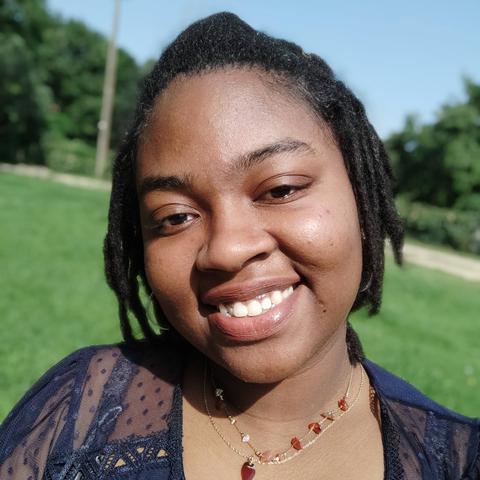
Celeste Harte (she/her) is out here making worlds and taking names.
She writes books, does professional illustrating under her alter ego, Becky Brown, and even makes video games.
Her favorite way to relax is with a good anime or manga, and her favorite games to play range from farming sims to RPG and action games.
Author Links:
Website: celesteharte.com
Instagram: @celeste_harte
Threads: @celeste_harte
Do you feel that your experiences of living in the US and then in Europe have influenced your writing and the themes you tend to focus on in your work? If so, how?
Absolutely. Having moved various times in my life at a young age, my sense of identity has shifted often. And going through so much change all of the time, I have often felt “other” in most spaces I occupied. My characters can sometimes reflect that feeling in different ways.
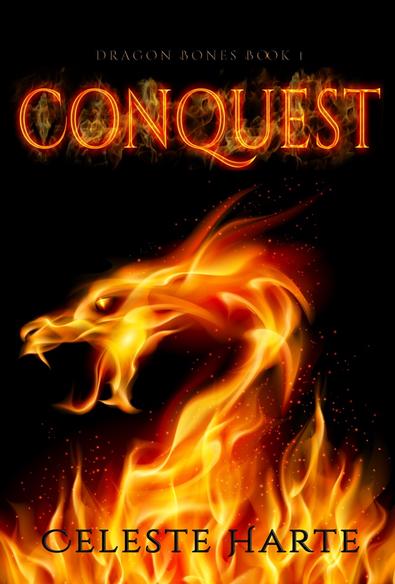
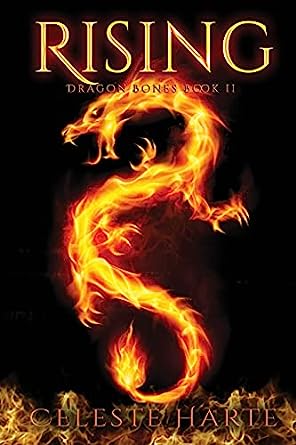
In the Dragon Bones trilogy, Jashi has lived in the same place her whole life, but she has a part of her she’s kept from even those closest to her, and that has made her feel isolated. Kahmel has never stayed in one place since becoming an adult, and now he’s used to having to stake claim on a space when he enters it. I think Jashi is more similar to me in that she keeps to herself when she doesn’t feel she belongs. Kahmel is the opposite of her and me. He embodies the boldness I could never have to welcome himself into a space, even if no one has made room for him. I may not go that far, but I do think I wish I had some of Kahmel’s confidence.
When I wrote for the Magic in the Melanin anthology, I do think I embraced more of that bold energy to make a space yours rather than waiting for someone to give you permission. It’s not reflected in the characters I wrote so much as in the approach to writing the story. I created a setting that reflected my interests at the time; I was watching a lot of anime with temples and shrines and I wanted to tell a story inspired by the sort of medium you might see in those animes. The only difference is this is my story, and my characters are all Black.
You have recently completed your Afrofuturist fantasy trilogy Dragon Bones : how does that feel, and can you share some of the highlights of your writing and publishing journey with us?
It feels good to have it finally be over! Interesting fact; the third book almost didn’t happen. I was really stuck for a good while because I got burnt out pretty bad in between rewrites of the first book and editing the second book at the same time (we ended up writing a second edition of the first book, which neither me or my publisher had ever done before!).
By the time I was supposed to write the third book of the trilogy, I had lost most of my motivation to finish. I can’t even articulate why I didn’t want to finish anymore at that point. I think when you work really hard at something and have too much time to think about why, you start wondering why anyone does anything in the first place. At least for me, thinking too long when I’m already not in a great headspace never makes for good decisions.
The thing is, because I was finishing up the trilogy, I wanted to tie up all of the loose ends in a nice and pretty way, so I was doing a lot of research to brush up on story structure, finishing plot arcs and such and so forth. But it wasn’t until I decided to scrap all of it that I really got my groove back.
I got myself in a better headspace and asked myself, what story am I trying to tell? What am I trying to communicate with the ending of this series? What do I want that valiant reader, who has read all of the books and came to the end of this journey with me, to understand about what I’ve told them over the course of three books? When I answered that question, the book flowed, and I actually finished about 60k words in two weeks after that. Writer’s block, soul quest– same thing, I guess.
What, for you, is the most interesting part of writing a fusion of Afro-futurism with both dystopian and high fantasy elements, and what was the starting point for your worldbuilding?
The funniest thing is that Dragon Bones from two concepts. First, I wanted fantasy story with an arranged marriage between two people with powers they didn’t understand until they met each other. That part of the story called to me for a while before I put pen to paper. However, the world that came with it showed up as a “what if” that came to mind after watching Jurassic park. What if the world was full of dragons instead of dinosaurs? What if they were ancient, as old as the world itself, and people just had to… figure out a way to deal with it? After that, my little story with an arranged marriage met the perfect world to encapsulate it.
One of the aspects I was having the most fun with while I was creating the idea was imagining how the world would evolve based upon dealing with the fact that dragons never went extinct like the dinosaurs did. They just had to live with it.
For that reason, I wanted to put my story at a time where humanity has been dealing with dragons for a while. But their solution was inhumane. Afro-futurism came instinctively, really. Anyone that has read the book can see the parallels to colonialism a mile away. It just felt really fun to make colonizers cyborgs and give my Black characters dragons and fire magic to free themselves.
If you can share without spoilers, what is your favourite thing about the characters’ arcs as they progress through the trilogy?
I love watching Jashi evolve with each book. It was an interesting feat, editing Rising while writing the second edition of Conquest. It was like writing two different characters when I wrote Jashi in each of them. That was one aspect that made editing the two books at the same time so jarring. When I finally found the voice of the story in Uproar, I really was amazed by how Jashi evolved again and became the heroine she needed for herself. Jashi’s arc will always be my favorite part of Dragon Bones.
Preorder NowYou are involved in the release of the Black Fantasy anthology, Magic in the Melanin, which is coming soon (Feb 2025)! Can you tell us how this anthology got started as an idea, and the editorial team behind it?
Magic in the Melanin was conceptualized because we (the editing team) needed two things: to find magical Black books, and create them. Chelsea Lockhart, owner of the Melanin Library, resolved our first need with the Melanin Library, and we fulfill our second need every day as Black authors making stories for ourselves and others like us. But here’s the thing. The Melanin Library is an incredible place to find Black books in every genre by Black authors. But it needs funding to keep itself afloat. Therefore, in order to keep making it easy to find magical Black books, we decided to find even more magical Black authors to contribute to this love letter to all things fantastical and melanated.
With the aim of funding the Melanin Library and keeping this treasure trove available to everyone, the four of us, Chelsea Lockhart, La Purvis, and Tatiana Obey, decided to bring together fantasy stories written by Black authors that would carry none of the heavy trauma that makes some of us turn to fantasy books in the first place.
Magic in the Melanin will feature absolutely NO racial trama between its pages, and that’s one of my favorite things about it. We’re telling stories about what happens when we just talk about being ourselves with no one else in the room. It has been awesome seeing what people came up with when that concept was presented to them.
What are the main themes of the anthology, and can you tell us a bit more about the content and what we can expect?
As I mentioned, there is no racial trauma in Magic in the Melanin. In none of these stories will there be any race of people that we all know represent melanated folk being oppressed by some group of people we all know represent the melanin-challenged.
These stories will be lovely, they will be creepy, they will be sweet, they will be messy, but they will be ours.
Everyone that has worked on this project is Black, and everything within its contents is a love letter to them and others like them. I honestly can’t wait for everyone to feel the love coming from the pages when they get theirs.
Like This? Try These!
#Afrofuturism #AfrofuturistBooks #AuthorInterview #AuthorSpotlight #BIPOCFiction #BlackAuthor #BlackBooks #dragonFiction #fantasyBooks #fantasyFiction
Author Spotlight: Vampire Fiction Author Talia Wall
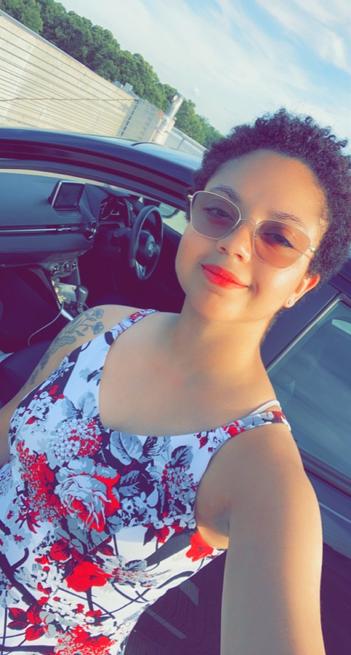
Talia Wall (she/her) spent most of her life in North Carolina and had the lifelong dream of becoming an author since she was five. She not only loves to write but also to draw and paint.
She has a loving husband and Persian cat named Thor who often interrupts her writing sessions. She writes young and new adult, supernatural, fantasy, and dystopian genres with the intent to send powerful, relevant messages and warnings through fiction.
Author Links:
Website: taliawall.com
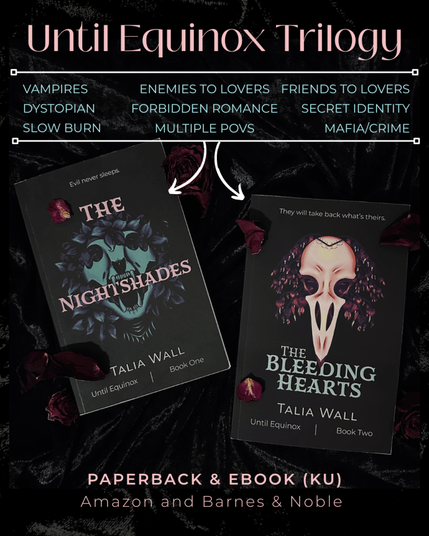
Amazon Book Link: Paperback/eBooks
Barnes & Noble Link: Book Series Link
Instagram, Threads, TikTok, Lemon8: @FromDreamsToPaper
What are your favourite future-set books/films/TV with vampires and paranormal creatures/entities, and what attracted you to combine vampires with a future setting?
I was first drawn into the dystopian genre with assigned readings in middle school (The Giver by Lois Lowry, 1984 by George Orwell, and Fahrenheit 451 by Ray Bradbury). Then I discovered the Hunger Games and Divergent series, and I shifted my writing from fantasy to dystopian.
While none of these works have vampires in them, I have yet to discover a book or film that combined dystopian elements with their presence. So, that inspired me to make one. There’s hundreds of vampire retellings ranging from classic Dracula/Van Helsing to Underworld and Twilight, so I wanted to create a future world of civil unrest, with some echoes of the Jim Crow era.
How did you approach worldbuilding in your series – what’s your worldbuilding process, and can you give some examples of the things you had to think about and develop to create this world?
The idea itself hit me while working as a cashier, with one question I asked myself: “What if vampires weren’t in hiding, and they coexisted with humans?” If they did, I’m sure there would be fear.
How did they come into existence? I created a history of the Red Plague and the Crimson War, which brought on the new oppressive government and laws.
If the vampires survive by blood, how can they live among humans without killing them all?
Humans are mandated to donate blood, which is then sold in grocery stores. The vampires can shop for it rather than hunt it.
Why have a curfew? They get burned by the sunlight, so the curfews were for the humans’ safety.
Why bother rebelling if they have a sun blight? Maybe there would be science experiments for immunity.
How would hospitals, law enforcement, or any other facility operate? Only essential personnel can operate outside of their curfew time.
I had to think about the stereotypes and fears humans could develop towards this species who historically lost control and attacked due to a virus, but still never regained trust generations later, and think about fallacies society operated under despite a more docile/civilized vampire race living among them, much like how racism and discrimination still exists today under ignorance.
Introduce us to your protagonists and tell us about how you developed them! What are their dynamics, and did they give you any trouble?
The Until Equinox trilogy is told under multiple POVs. If there was going to be a lot of division and tension, I wanted my characters to be on opposite sides of the fence.
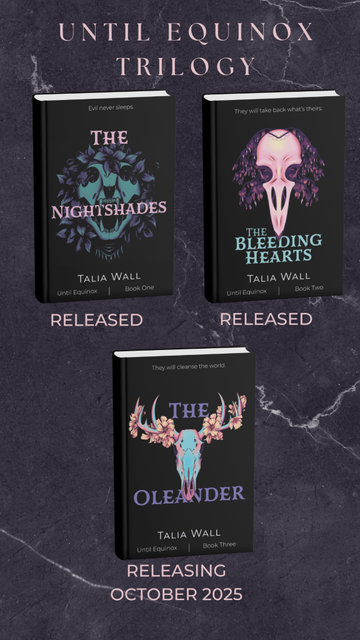
Draven Hawthorne, a reluctant Vampyre belonging to the mafia Nightshades clan, yearns for his old life as a human.
Briar Shaw, a rebellious human with a broken past, is bored with her life and craves purpose under the moonlight. Her brother is a Vampyre-hating police officer and younger sister goes by the book. When she breaks curfew and witnesses a crime Draven committed, he’s supposed to kill her. But her free spirit leaves him hesitant, and her brother’s position in law enforcement proves to be an enormous obstacle. He lived with shame for who he was, believes himself to be the monster of monsters because of the lives he destroyed in the past working in the clan.
I wanted his shame and desire to be free to be an obstacle for his potential. Briar was a little problematic to develop. I needed to create a legitimate reason for her to break curfew for the first time rather than suddenly decide to do so.
I wanted to make her more well-rounded, and not a try-hard or fall under the “not like other girls” trope. She loves motorcycles, but also makeup. I wanted her to be flawed—reactive, temperamental, impulsive. I want her to have a rocky road to maturity, even if it meant making readers smack their heads a few times with some of her decisions.
Introduce us to your antagonist – how did you develop Uriah King, what motivates him, and maybe tell us a bit more about the Vampyre hierarchy, why you chose the title of “Alpha” for Uriah?
I wanted to create a mob boss with a charismatic exterior and a void interior. There are many morally grey antagonists, but I wanted to bring back the purely selfish and evil for the sake of greed and power.
I was inspired by charismatic leaders who appealed to their audience, but held sinister ulterior motives. His motivation is power, but in order to get it, he capitalizes on the oppression of his subordinates to drive a rebellion and spark another war.
Among law abiding citizens, there’s no hierarchy other than authority figures (ex: law enforcement, government) over the general public. For his crime syndicate, “Boss” seemed too basic, “Godfather” never resonated with me, but “Alpha”… with its definition as “the beginning” or “most dominant,” it seemed most fitting. Uriah would take on the title as the one ushering in a new age for his people with the goal to dominate both the humans and vampires.
What key themes can readers expect in these books, and how will these be developed further going forward?
I felt the drive to create a story of love and hate, division and unity, ignorance and understanding, in hopes to send the message that it doesn’t matter who (or what) you are, there’s good and evil on both sides.
The trilogy is titled “Until Equinox” symbolizing where day (humans) and night (vampires) are of equal length. The vampires fight for equality, the protagonists try to survive among each other and within the world, corruption, and unity are some of the key themes.
What are you future project plans?
The Oleander, the final installment in the Until Equinox trilogy is set to release in October this year.
After that, there will be a Christian horror romance, a contemporary romance, and revisiting some of my old stories from my childhood.
Like This? Try These:
#AuthorInterview #AuthorSpotlight #BlackAuthor #dystopian #vampireBooks #vampires
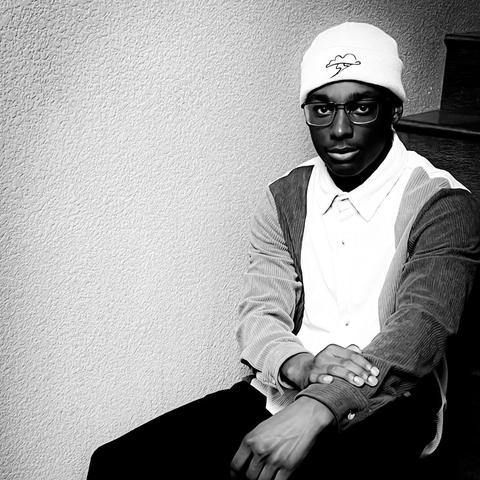
Author Spotlight: Fantasy Author Jalen Tallis
Jalen Tellis (he/him) is an independent novelist & screenwriter who writes complex storytelling.
Author Links:
Website: jalentellisbooks.com
Instagram: @jalentellisofficial
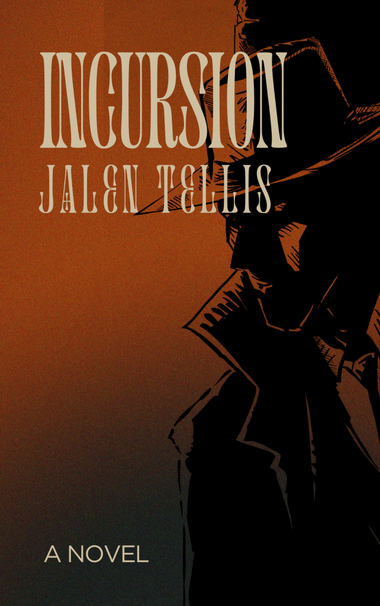
Welcome Jalen, you’re here to tell us about your current books. Let’s start with Incursion, your mystery Sci-Fi thriller, released March 2025. What gave you the idea for this novel, and can you tell us how you developed this idea into its current form?
Thank you for having me, I am honored and grateful to be given this interview. I had the idea for a sci-fi story ever since Middle School. It’s been one of those passion projects where I knew this story was going to be made but not so sure how.
Incursion had been in my brain for as long as I can remember, and ever since I was thinking about a new idea for my debut novel, this story never went away. This idea really came from my love of Sci-Fi and aliens; wanting to tell a story about the unknown and other species that are upon us.
I really wanted to dive into that type of concept where what would happen if an alien invasion were to happen in modern day? How would people in today’s society react? Who would be behind it? Those questions piqued my interests.
How did you develop your protagonist, Riley, a YouTube conspiracy theorist?
Well first off, I am a sucker for conspiracy theories. I use to love watching conspiracy videos on YouTube on pop culture and other areas around it. I enjoyed Shane Dawson, who inspired me to create the character Riley Marson.
Riley is the type of character that you don’t know nothing about but is forced to go along with him in this thrilling adventure. His job as a YouTube Conspiracy Theorist consumed him, making it a lifestyle.
I can’t say much about who is Riley Marson because that is the point, you’re not suppose to know who he is, or his background. Main reason I chose to make this story first person because I wanted it to be where Riley is the one telling you his story, and he doesn’t want you to know nothing about him.
What were the challenges of plotting a mystery, and laying out the clues through the book, while keeping up the action and tension?
The one biggest challenge I would say was making a mystery to keep the readers engaged from start to finish. The books is only 50k words, so it was intentional for it to be fast paced judging by the plot of the story that Riley has to prevent an alien invasion from happening in ten days.
The clues, the action, tension, and mystery were all straightforward which made it easy for me to structure the plot. Trying to make a fast-paced 50k word novel engaging while making sure the pacing isn’t too fast and too slow is hard, but as a writer, you challenge yourself and develop that skill. I see writing a skill, and the more you keep writing, learn and improve, then this type of structure will be a piece of cake to you.
Tell us a little bit about your writing process and style – have you found yourself developing or changing up how you write between your first novella (which is more action-adventure) and your latest book?
My writing process is very complex if I must say. I don’t outline my stories–like at all. Respect to all writers who do outline but I personally despise it.
My greatest blessing as a writer who been writing since I was a kid is I can structure a story in my head and know how it will begin and end. I study the craft of writing, I am a student, and I learn from the greats.
It only took a year to finally find my own voice and my style is quite different and unorthodox, which will be mix with readers, which is fine. I found myself developing how I write, because each book I make, my writing always improves. Like I said before, writing is a skill.
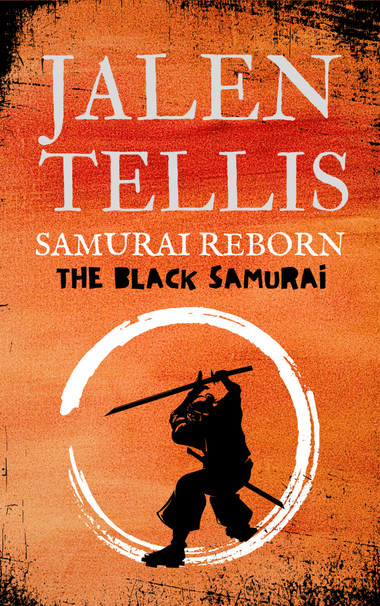
Your novella, Samurai Reborn: The Black Samurai, was a 2024 Indie Ink Awards Nominee for BEST BOOK COVER & COVER ARTIST, BEST LIGHT READ, BEST MENTOR CHARACTER and BEST MORALLY GRAY CHARACTER. Can you tell us more about this novella, and why you were nominated in these categories?
Samurai Reborn is a Black Fantasy Novella about a African American Samurai named Genji Sato who seeks revenge for the murder of his father and his village. This novella was a story of my imagination, and how I dived into the concept of fantasy and Samurai culture.
The book was nominated for those categories mainly because of my readers who helped voted. It wouldn’t be possible without them, readers who read enjoyed the book or even people just wanted to support me and voted.
Nobody knows the amount of drafts, revisions, rewrites, re edits that this book had. For it to be a book nominee in my first indie book awards is a total blessing from God.
What is your relationship with Japanese culture and media, and how did you draw upon these influences for Samurai Reborn?
Anime…I was a big anime person few years ago and Genji Sato was heavily influenced by Tanjiro from Demon Slayer and Aang from Avatar: The Last Airbender.
The history of Samurai and how certain anime medias like Samurai champloo and Afro Samurai had a big impact was the reason for me to create my own story in my own imagination.
Can you tell us about your future publication plans? What can we look out for next?
I am deep in writing for my new book in which when this interview comes out, I should be half way through. It’s a superhero story and it’s unlike anything I’ve written so far. Can’t say too much about it just yet but I am aiming for a 2027 release.
I was originally going to make it a 2026 publication release but due to other projects I’m working on ( I can’t say yet ) and focusing on my personal life, I think 2027 was a good year to go for. The book is aiming to be 90k words, maybe 100k, and I don’t want to rush it.
Like This? Try These!
#AuthorInterview #AuthorSpotlight #BlackAuthor #fantasy #fantasyAdventure #sciFi #SciFiFantasy
Stud/Femme fiction Books written by Black/African-American authors for Juneteenth on 06/19/25.
#Juneteenth #blackauthor #lesfic #sapphicbooks #stud #butchfemme #bookstodon #readingcommunity #lesbian #lgbtq #lgbtqia
@lgbtqbookstodon @bookstodon @sapphicbooks
 Gay Curmudgeon
 cmrosens
 Andy P
 Tiffany E. Taylor