📱 Lazarus Group cache un loader malveillant dans des Git hooks pour cibler les dĂ©veloppeurs
📝 ## đŸ•”ïž Contexte

Publié le 6 mai 2026 par l'équipe OpenSourceMalware, cet article documente une évolution tactique de la...
📖 cyberveille : https://cyberveille.ch/posts/2026-05-08-lazarus-group-cache-un-loader-malveillant-dans-des-git-hooks-pour-cibler-les-developpeurs/
🌐 source : https://opensourcemalware.com/blog/dprk-git-hooks-malware
#BeaverTail #Contagious_Interview #Cyberveille

Lazarus Group cache un loader malveillant dans des Git hooks pour cibler les développeurs

đŸ•”ïž Contexte PubliĂ© le 6 mai 2026 par l’équipe OpenSourceMalware, cet article documente une Ă©volution tactique de la campagne Contagious Interview / TaskJacker attribuĂ©e au groupe nord-corĂ©en Lazarus Group (DPRK). La source est un blog de threat intelligence communautaire spĂ©cialisĂ© dans les menaces open source. 🔄 Évolution de la technique Les opĂ©rateurs ont abandonnĂ© leurs vecteurs habituels (.vscode/tasks.json, scripts postinstall dans package.json, faux fichiers .woff2) au profit de Git hooks malveillants placĂ©s dans .githooks/pre-commit. Le hook se dĂ©clenche automatiquement lorsque la victime tente de committer du code, soit exactement au moment oĂč le faux recruteur lui demande de “corriger un bug et committer”.

CyberVeille

Contagious Interview diventa un worm: Void Dokkaebi trasforma 750 repository in vettori auto-propaganti contro gli sviluppatori

Il gruppo APT nordcoreano Void Dokkaebi (Famous Chollima) ha trasformato le sue finte offerte di lavoro in un attacco supply chain capace di propagarsi automaticamente: basta aprire un repository clonato in VS Code per attivare payload nascosti in commit manipolati. A marzo 2026, Trend Micro ha mappato oltre 750 repository infetti, 500 task.json malevoli e staging C2 su Tron, Aptos e Binance Smart Chain.

https://insicurezzadigitale.com/contagious-interview-diventa-un-worm-void-dokkaebi-trasforma-750-repository-in-vettori-auto-propaganti-contro-gli-sviluppatori/

📱 HexagonalRodent : le sous-groupe DPRK qui industrialise le vol de crypto via l'IA
📝 ## 🌐 Contexte

Publié le 21 avril 2026 par Marcus Hutchins sur le blog d'Expel, cet article présente les résul...
📖 cyberveille : https://cyberveille.ch/posts/2026-04-22-hexagonalrodent-le-sous-groupe-dprk-qui-industrialise-le-vol-de-crypto-via-l-ia/
🌐 source : https://expel.com/blog/inside-lazarus-how-north-korea-uses-ai-to-industrialize-attacks-on-developers/
#BeaverTail #DPRK #Cyberveille

HexagonalRodent : le sous-groupe DPRK qui industrialise le vol de crypto via l'IA

🌐 Contexte PubliĂ© le 21 avril 2026 par Marcus Hutchins sur le blog d’Expel, cet article prĂ©sente les rĂ©sultats d’une investigation approfondie sur un groupe APT nord-corĂ©en (DPRK) nouvellement nommĂ© Expel-TA-0001 / HexagonalRodent, actif depuis au moins octobre 2025 et Ă©valuĂ© avec haute confiance comme Ă©tant un sous-groupe de Famous Chollima (CrowdStrike). 🎯 Ciblage et modus operandi HexagonalRodent cible principalement les dĂ©veloppeurs Web3 dans le but de voler des cryptomonnaies et des NFTs. La chaĂźne d’infection repose sur :

CyberVeille

[Translation] How a “dream job invitation” turns into an attack

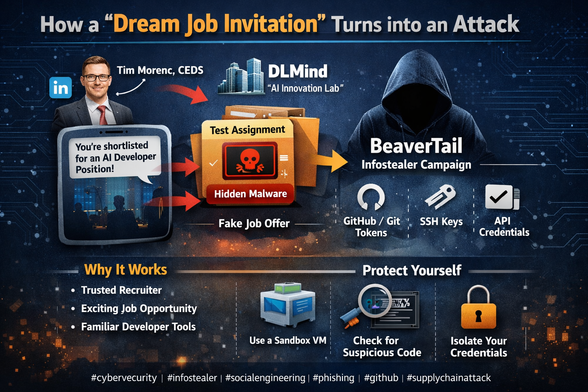
It all starts with a notification that feels familiar and exciting for any developer: “You’ve been shortlisted for an AI developer position.” The company looks impressive — DLMind, an “AI innovation lab.” The recruiter appears legitimate — Tim Morenc, CEDS, with a polished LinkedIn profile, professional communication style, and mutual connections.

But behind this friendly outreach is BeaverTail — a malicious operation designed to steal your code, credentials, and developer assets.

The attack is part of a broader pattern associated with North Korean cyber operations, including groups such as Lazarus Group.

How the attack works

The victim is approached via LinkedIn or similar platforms

A convincing fake company and recruiter profile is used

A “technical assignment” or test task is provided

The task contains malicious code or a compromised dependency

Once executed, it extracts sensitive data such as:

GitHub / Git credentials

SSH keys

API tokens

browser session data

Why it works

The campaign relies on social engineering rather than technical exploitation:

trust in recruitment processes

desire for career opportunities

familiarity of developer workflows (GitHub, npm, Python, etc.)

Key takeaway

Any unsolicited “test assignment” should be treated as potentially hostile code. Execution environments must be isolated, and credentials should never be exposed in evaluation setups.

---

#hashtags
#cybersecurity #infosec #malware #socialengineering #phishing #infostealer #supplychainattack #github #developers #techsecurity #beavertail #lazarusgroup

@habr25 [Translation] How a “dream job invitation” turns into an attack

It all starts with a notification that feels familiar and exciting for any developer: “You’ve been shortlisted for an AI developer position.” The company looks impressive — DLMind, an “AI innovation lab.” The recruiter appears legitimate — Tim Morenc, CEDS, with a polished LinkedIn profile, professional communication style, and mutual connections.

But behind this friendly outreach is BeaverTail — a malicious operation designed to steal your code, credentials, and developer assets.

The attack is part of a broader pattern associated with North Korean cyber operations, including groups such as Lazarus Group.

How the attack works

The victim is approached via LinkedIn or similar platforms

A convincing fake company and recruiter profile is used

A “technical assignment” or test task is provided

The task contains malicious code or a compromised dependency

Once executed, it extracts sensitive data such as:

GitHub / Git credentials

SSH keys

API tokens

browser session data

Why it works

The campaign relies on social engineering rather than technical exploitation:

trust in recruitment processes

desire for career opportunities

familiarity of developer workflows (GitHub, npm, Python, etc.)

Key takeaway

Any unsolicited “test assignment” should be treated as potentially hostile code. Execution environments must be isolated, and credentials should never be exposed in evaluation setups.

---

#hashtags
#cybersecurity #infosec #malware #socialengineering #phishing #infostealer #supplychainattack #github #developers #techsecurity #beavertail #lazarusgroup

đŸ“ąâš ïžWatch as North Korean Lazarus hackers tried to infect #AllSecure CEO Chris Papathanasiou through a fake LinkedIn job interview. The attackers used a coding test loaded with the notorious #BeaverTail malware. đŸŠ«

Read: https://hackread.com/fake-linkedin-interview-lazarus-hackers-allsecure-ceo/

#CyberSecurity #Lazarus #NorthKorea #LinkedIn #Scam

Fake LinkedIn Interview Used by Lazarus Hackers to Target AllSecure CEO

Follow us on all major social media platforms @Hackread

Hackread - Cybersecurity News, Data Breaches, AI and More
BREAKFAST OF CHAMPIONS #Photography #beavertail #ottawa

"... they wear shorts outside in February to shovel snow, and they eat beaver tails! Canadians are either really tough, or effing crazy."

#Canada #Canadian #snow #shovel #shorts #BeaverTail #misunderstanding #tough #crazy

NEW: Developers, crypto users, and job seekers beware - North Korea’s Lazarus Group is deploying a new #BeaverTail variant to steal credentials and crypto via fake job offers, dev tools and smart contracts.

Read: https://hackread.com/lazarus-embed-beavertail-variant-developer-tools/

#CyberSecurity #Lazarus #NorthKorea #DevSec #InfoStealer

Lazarus Group Embed New BeaverTail Variant in Developer Tools

Follow us on Bluesky, Twitter (X), Mastodon and Facebook at @Hackread

BeaverTail and OtterCookie evolve with a new Javascript module

Cisco Talos has uncovered a new attack linked to Famous Chollima, a threat group aligned with North Korea (DPRK).

Cisco Talos Blog