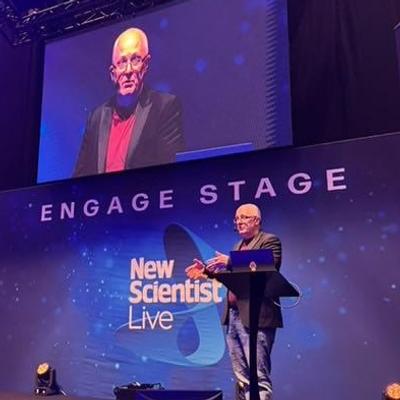
 Dean Burnett (that brains guy)
Busting the Biggest Myths in Neuroscience | Dr Dean Burnett | Instant Genius podcast
https://youtu.be/JQYtTcNSHak?si=0OBLlCwdJtoO4HN-
Dean Burnett answers quickfire questions about familiar brain myths, for the Instant Genius Podcast
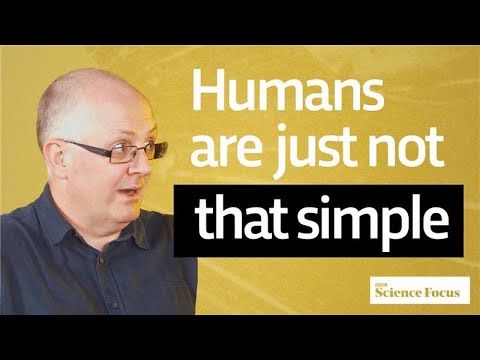
Busting the Biggest Myths in Neuroscience | Dr Dean Burnett | Instant Genius podcast
https://youtu.be/JQYtTcNSHak?si=0OBLlCwdJtoO4HN-
Dean Burnett answers quickfire questions about familiar brain myths, for the Instant Genius Podcast
[P] It's the lobster thing all over again...
https://www.sciencealert.com/crickets-respond-to-injuries-in-a-way-that-suggests-they-feel-pain
This is just quintessential allistic exceptionalism. The question ehould always be whether X doesn't Y rather than if X does Y. Really, wondering if insects or lobsters feel pain is unintelligent exceptionalism. They have the nerves and receptors for it, so high probability for pain experience.
But it wasn't so long ago that autists and black people didn't feel pain.
I knew many years ago that his views aren't as rational as he wants to believe.
https://www.theguardian.com/technology/2026/may/10/mistaking-ai-behaviour-for-conscious-being
More #BadScience. This time #LLMs not just pushing citations from their own work.
"We find a sharp rise in non-existent references following widespread LLM adoption, with a conservative estimate of 146,932 hallucinated citations in 2025 alone."

Large language models (LLMs) are known to generate plausible but false information across a wide range of contexts, yet the real-world magnitude and consequences of this hallucination problem remain poorly understood. Here we leverage a uniquely verifiable object - scientific citations - to audit 111 million references across 2.5 million papers in arXiv, bioRxiv, SSRN, and PubMed Central. We find a sharp rise in non-existent references following widespread LLM adoption, with a conservative estimate of 146,932 hallucinated citations in 2025 alone. These errors are diffusely embedded across many papers but especially pronounced in fields with rapid AI uptake, in manuscripts with linguistic signatures of AI-assisted writing, and among small and early-career author teams. At the same time, hallucinated references disproportionately assign credit to already prominent and male scholars, suggesting that LLM-generated errors may reinforce existing inequities in scientific recognition. Preprint moderation and journal publication processes capture only a fraction of these errors, suggesting that the spread of hallucinated content has outpaced existing safeguards. Together, these findings demonstrate that LLM hallucinations are infiltrating knowledge production at scale, threatening both the reliability and equity of future scientific discovery as human and AI systems draw on the existing literature.
Busting the Biggest Myths in Neuroscience | Dr Dean Burnett | Instant Genius podcast
https://youtu.be/JQYtTcNSHak?si=0OBLlCwdJtoO4HN-
Dean Burnett answers quickfire questions about familiar brain myths, for the Instant Genius Podcast
Busting the Biggest Myths in Neuroscience | Dr Dean Burnett | Instant Genius podcast
https://youtu.be/JQYtTcNSHak?si=0OBLlCwdJtoO4HN-
Dean Burnett answers quickfire questions about familiar brain myths, for the Instant Genius Podcast
Busting the Biggest Myths in Neuroscience | Dr Dean Burnett | Instant Genius podcast
https://youtu.be/JQYtTcNSHak?si=0OBLlCwdJtoO4HN-
Dean Burnett answers quickfire questions about familiar brain myths, for the Instant Genius Podcast
One more way to combat fake research:
https://retractionwatch.com/2026/04/06/data-duplications-errors-open-repositories-markus-englund/
[P] There's a special quality to humanity. Sapience sat atop the dumbest instincts in the animal kingdom (hands down, bar none).
Problem: Overshoot and Capitalism are killing us. We are rapidly running out of water.
Real solution: Just fucking breed less and consume less, be sustainable like other animals already are.
Human solution: Let's build a moon base to mine moon ice, and fling it back at the earth!
#psychology #actuallyautistic #humanity #science #badscience #justplainstupid
[P] I still like the mirror test as the purest example of neurotypical nonsense. It exhibits such limited thinking to not reason that: i.) an animal might not be narcissistic enough to be bothered by a mark (it's forcing a vain human behavior on a non-human animal); ii.) that any mirror-related behaviors might not be what humans think they are from a human perspective; and iii.) human senses are not equivocable with non-human animal senses.
 Weary Wulf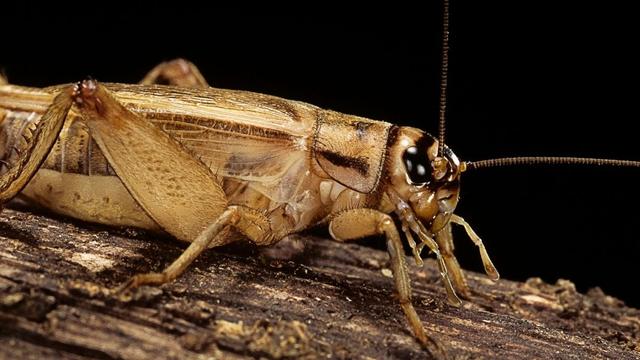
 Tiggy
Tiggy