 info-war.gr
Μάικλ Ρόμπερτς: Τεχνητή νοημοσύνη – η νέα επενδυτική φούσκα https://info-war.gr/maikl-roberts-techniti-noimosyni-i-nea-ependytiki-fouska/ #BACKGROUNDER #KEIMENA #διεθνη #ηπα
Αποκαλύψεις Έπστιν: «Υπό τον έλεγχο του Ισραήλ ο Τραμπ» – «Πράκτορας της Μοσάντ ο Επστίν». https://info-war.gr/apokalypseis-epstin-ypo-ton-elegcho-to/ #BACKGROUNDER #Newsletter #KEIMENA #διεθνη #ισραήλ

 DrWeb
DrWebClarence Thomas: The Court’s Longest-Serving Conservative Voice – A Special SCOTUS Series
Clarence Thomas: The Court’s Longest-Serving Conservative Voice
Early Life and Education
Clarence Thomas was born in 1948 in Pin Point, Georgia, a small Gullah community near Savannah. After his father left, he was raised by his mother and, from age seven, by his grandfather Myers Anderson, whose strict discipline fostered self-reliance. Thomas attended a segregated Catholic school, then the College of the Holy Cross, and earned his law degree from Yale Law School in 1974. He has often expressed skepticism that opportunities attributed to race rather than merit benefitted him—an idea that shaped his later critiques of affirmative action.
Career Before the Court
Thomas worked in Missouri’s attorney general’s office, private practice, and then the Reagan administration. In 1982, he became Chair of the Equal Employment Opportunity Commission (EEOC), where he emphasized individual rights and a “colorblind” interpretation of civil-rights law. In 1990, President George H. W. Bush appointed him to the U.S. Court of Appeals for the D.C. Circuit.
Nomination and Confirmation
In 1991, President Bush nominated Thomas to the Supreme Court. The confirmation became one of the most contentious in modern history after law professor Anita Hill alleged sexual harassment during their time at the EEOC. Thomas was confirmed by a 52–48 Senate vote; his denunciation of the proceedings as a “high-tech lynching” cemented his combative public image.
Judicial Philosophy
Thomas is known for a robust originalism—interpreting the Constitution according to its text and historical meaning. He often questions longstanding precedents he views as inconsistent with the Constitution, writing separate concurrences or dissents even when alone. He favors bright-line rules grounded in text, structure, and history over pragmatic balancing tests.
Signature Areas and Opinions
- Second Amendment: Advocates a strong individual right to keep and bear arms, building on District of Columbia v. Heller (2008) and subsequent cases.
- Affirmative Action: Persistent critic of racial preferences; the Court’s ruling in Students for Fair Admissions v. Harvard (2023) aligned with his long-held views.
- Abortion & Substantive Due Process: Called for overturning Roe v. Wade years before Dobbs v. Jackson Women’s Health Organization (2022); in Dobbs, he wrote separately to question other substantive due-process precedents.
- Administrative State: Consistently argues that expansive agency power threatens the separation of powers and the nondelegation principle.
Legacy and Controversy
As the Court’s longest-serving justice, Thomas has significantly shaped conservative jurisprudence. His spare questioning at oral argument for many years contrasted with the sweep of his written opinions. Recent reporting about undisclosed travel and financial ties has intensified broader debates over Supreme Court ethics and reform.
Conclusion: Thomas and the Court’s “Right Turn”
Thomas anchors the Court’s conservative bloc, pressing for a constitutional order rooted in text and history. Whether praised as principled or criticized as radical, his influence on the Court’s rightward trajectory is undeniable and central to any discussion of the modern Supreme Court.
Works Cited
- Ball, Molly. “Clarence Thomas: The Justice No One Knows.” The Atlantic, July 2011, http://www.theatlantic.com/magazine/archive/2011/07/clarence-thomas/308569/. Accessed 25 Sept. 2025.
- Greenhouse, Linda. “Clarence Thomas, the Justice Who Keeps Silent but Speaks Volumes.” The New York Times, 13 Feb. 2011, http://www.nytimes.com/2011/02/14/us/politics/14thomas.html. Accessed 25 Sept. 2025.
- Liptak, Adam. “Justice Thomas Writes of His Journey.” The New York Times, 30 Sept. 2007, http://www.nytimes.com/2007/09/30/books/30lipt.html. Accessed 25 Sept. 2025.
- Thomas, Clarence. My Grandfather’s Son: A Memoir. Harper, 2007.
- Toobin, Jeffrey. The Nine: Inside the Secret World of the Supreme Court. Anchor Books, 2008.
- Supreme Court of the United States. “Biography of Associate Justice Clarence Thomas.” SupremeCourt.gov, http://www.supremecourt.gov/about/biographythomas.aspx. Accessed 25 Sept. 2025.
← Back to the series landing page
#2025 #America #Backgrounder #ClarenceThomas #Conservative #History #Libraries #Library #LibraryOfCongress #Resistance #SCOTUS #SummaryHistory #SupremeCourt #SupremeCourtOfTheUnitedStates #UnitedStates

Ο ΣΥΡΙΖΑ ζητά να διατηρηθεί η στρατιωτική συνεργασία με το Ισραήλ https://info-war.gr/o-syriza-zita-na-diatirithei-i-stratiot/ #BACKGROUNDER #KEIMENA #ελλαδα #ισραήλ

Σημίτης: Η Θάτσερ της Ελλάδας https://info-war.gr/simitis-i-thatser-tis-elladas/ #BACKGROUNDER #KEIMENA #ελλαδα #πασοκ

 Matt Willemsen
The Story Behind Snopes' RFK Jr. Investigation
https://www.snopes.com/2024/03/08/story-behind-rfk-jr-investigation/ #Snopes #RFKJr #story #backgrounder #misinformation #debunking
https://www.snopes.com/2024/03/08/story-behind-rfk-jr-investigation/ #Snopes #RFKJr #story #backgrounder #misinformation #debunking

 China Xinhua News
Major Palestinian-Israeli conflicts in recent years: http://xhtxs.cn/MS4 #Backgrounder
 Nithin Coca నితిన్
Our latest #AsiaUndercovered #News #Backgrounder is out, focusing on the #Thai #Elections, taking place in just 3 days!
In it, we highlight articles on the key political players, why the #Thailand elections matters, the role of the junta, and the impacts for countries in the region, including #China and #Myanmar
https://asiaundercovered.substack.com/p/news-backgrounder-thailands-elections

News Backgrounder: Thailand's Elections
In three days, Thais will go the polls for an election that, despite the many limitations and restrictions, will play a huge role in determining the country’s future. Yet, coverage of the Thailand election in western media is severely lacking – getting no airtime on major western news channels and sparse coverage in newspapers and magazines, too. It’s, sadly, a common tale, with
 Andrea Learned
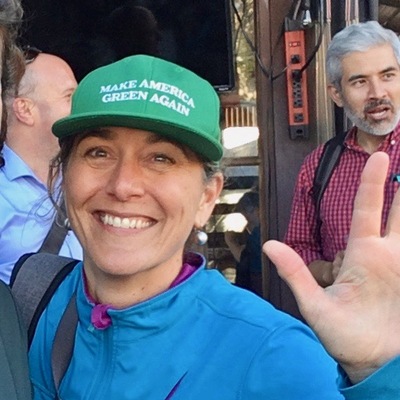
Realizing this 2018 interview makes for a good #introduction / #backgrounder on me, with the story on how my #Bikes4Climate tag came about (it had to do with COP21). The more #cities and #Mayors support #bike infrastructure/safe streets/ #affordablehousing, the more #ClimateAction impact they'll have. https://virtuouscycle.home.blog/2018/12/26/1x10-andrea-learned-bikes4climate/ #ebikes #transportation

 iDownloadBlog
Prevent Now Playing apps from being killed via the App Switcher with DontKillMyMusic https://www.idownloadblog.com/2019/05/02/dontkillmymusic/ #JailbreakApps&Tweaks #Backgrounder #Multitasking #AppSwitcher #Jailbreak #iPhone #Review #iOS11 #iOS12 #Music #News #iPad #iOS #UI