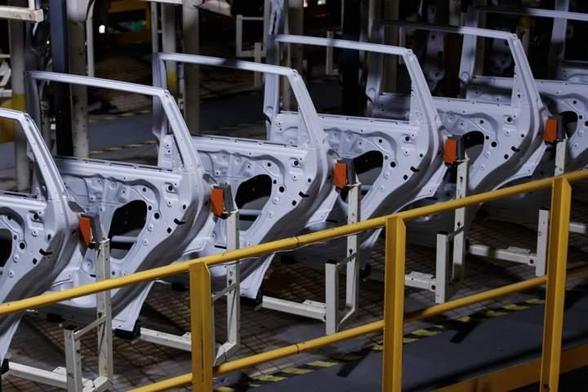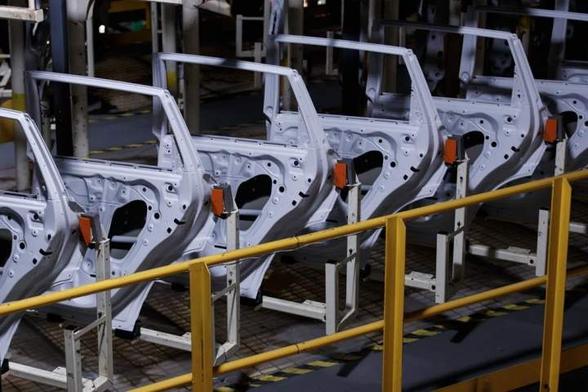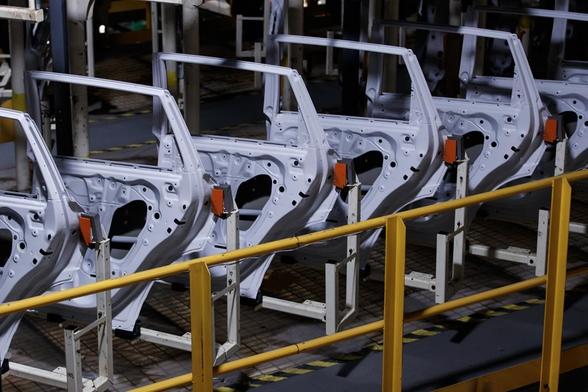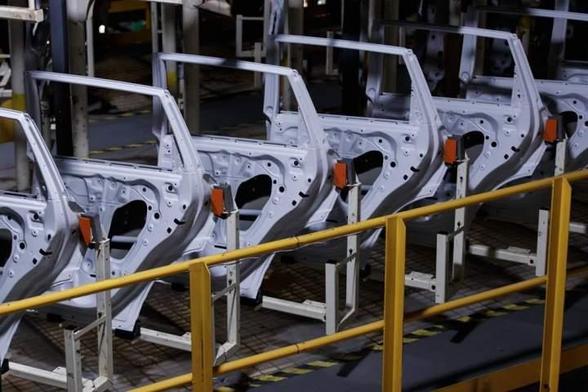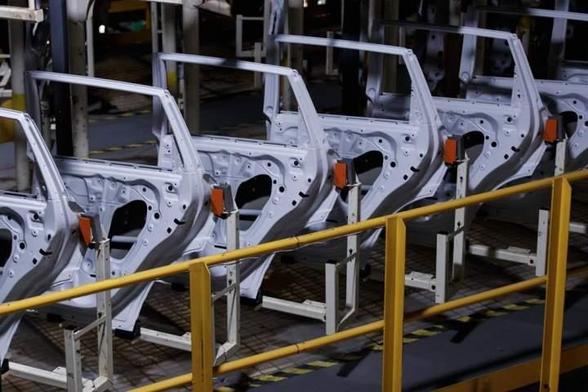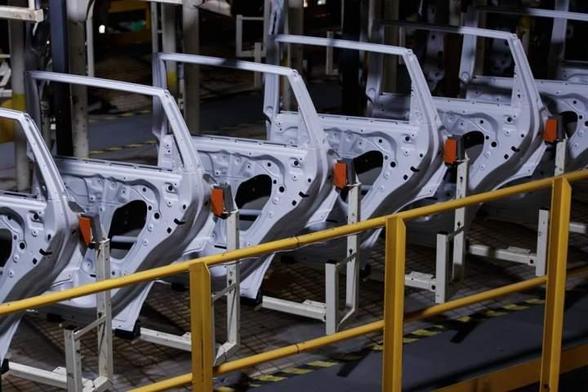

Why do automotive composites still seem mostly limited to premium or specialized vehicles?

They offer clear lightweighting benefits, but mass-market adoption still feels slower than expected.

What’s the real bottleneck — cost, scale, repairability, or manufacturing?

#Automotive #AutoIndustry #Composites #MaterialsEngineering #Lightweighting #Mobility #EV #Manufacturing #AutomotiveEngineering #Sustainability

The New Republic | Gas Prices Are Going Through the Roof. Automakers Aren’t Bothered. by Kate Aronoff

The cars on display at the New York City International Auto Show, which opened to the public at the end of last week, have a lot in common. There are rows of souped-up trucks with fearsome grills, and SUVs that all seem to feature the same smooth lines and sleek, narrow headlights. Casual visitors might even have a hard time differentiating between several of the new models automakers debuted at the Javits Center, where the auto show is held. This year’s Volkswagen Atlas looks a lot like the 2027 Infiniti QX65. The 2027 Ford Explorer’s slightly boxier 30th Anniversary Appearance Package resembles the 2027 Kia Seltos and the 2027 Subaru Wilderness Hybrid. But the real similarity is not in their looks. Whether powered by gas, electricity, or some combination of the two, the cars’ defining feature is that even the models automakers call “affordable” tend to be pretty expensive.

These days, that’s nothing if not typical. The average cost of a new car in the United States is now more than $50,000—up 10 percent since last year, and roughly 44 percent over the last decade. Average monthly payments for buyers of new cars hover at $773; roughly 20 percent of buyers pay $1,000 or more each month. A record 23 percent of new-car purchases are being financed with loan terms that are 84 months or longer. As prices at the pump soar to more than $4 a gallon, in large part because of the Iran War, driving seems to get more expensive by the day. Over the last several months, meanwhile, U.S. automakers have written down tens of billions of dollars worth of investments in electric vehicles, and doubled down on their more profitable gas-powered trucks and SUVs. In other words, right at the moment it would seem there’s more reason than ever to invest in alternatives to gas-powered cars, the auto industry is doing anything but. What gives? 

The truth is that higher gas prices alone aren’t likely to prompt automakers to rethink their business models. That’s partly because the relationship between gas prices, buying habits, and automakers’ product planning isn’t exactly straightforward. While the spike in gas prices has prompted buyers’ interest in EVs to go up modestly, the people who can still afford to purchase new cars are generally wealthier, and relatively insulated from even sizable gas price fluctuations. Market surveys show that the customers buying larger trucks and SUVs like the GMC Yukon tend to make upwards of $150,000 a year, said Alexander Edwards, president of the consultancy firm Strategic Vision. Those with annual incomes between $90,000 and $100,000 a year are considered “poor” among new car buyers, per Strategic Vision’s survey data of new vehicle owners; according to the Social Security Administration, average annual earnings in the U.S. are currently just below $70,000.

Read more: https://newrepublic.com/article/208651/gas-prices-high-automakers-not-bothered

#autoindustry #climate #electricvehicles #iranwar

Gas Prices Are Going Through the Roof. Automakers Aren’t Bothered.

American car manufacturers have banked on a wealthy sliver of the population to buy their huge and hugely expensive vehicles. But what happens if the rich start to feel the pinch too?

The New Republic
One year after the U.S. imposed tariffs on Canada's auto sector, here's how industry leaders say it's going
One year after U.S. President Donald Trump levied tariffs on the Canadian auto industry, industry leaders say they are eager to see an arrangement that restores predictability to the Canada-U.S. trade relationship.
https://www.cbc.ca/news/canada/windsor/us-tariff-one-year-anniversary-9.7152021?cmp=rss
One year after the U.S. imposed tariffs on Canada's auto sector, here's how industry leaders say it's going
One year after U.S. President Donald Trump levied tariffs on the Canadian auto industry, industry leaders say they are eager to see an arrangement that restores predictability to the Canada-U.S. trade relationship.
https://www.cbc.ca/news/canada/windsor/us-tariff-one-year-anniversary-9.7152021?cmp=rss
Kia Determined To Juice EV Sales In The US With New 2027 EV3.

Kia America is confident that its forthcoming compact 2027 Kia EV3 crossover will revive flagging EV sales.

CleanTechnica
Kia Determined To Juice EV Sales In The US With New 2027 EV3.

Kia America is confident that its forthcoming compact 2027 Kia EV3 crossover will revive flagging EV sales.

CleanTechnica
One year after the U.S. imposed tariffs on Canada's auto sector, here's how industry leaders say it's going
One year after U.S. President Donald Trump levied tariffs on the Canadian auto industry, industry leaders say they are eager to see an arrangement that restores predictability to the Canada-U.S. trade relationship.
https://www.cbc.ca/news/canada/windsor/us-tariff-one-year-anniversary-9.7152021?cmp=rss

@Saupreiss @elebertus

Yes, big SUVs (they are trucks too) and Pickup Trucks are different animals, parking them and moving them in a city, all true.
Any city, USA, UK, France, etc.

Did you know, that (maybe back in the 1980s) the US government helped the #autoindustry to legally define SUVs as "cars" and not "trucks".
This "trick" helped to sell more SUVs. A silly perception thing, in my opinion, but it worked. SUVs were very popular from that time.

I also posted the $11 gallon cost (above)