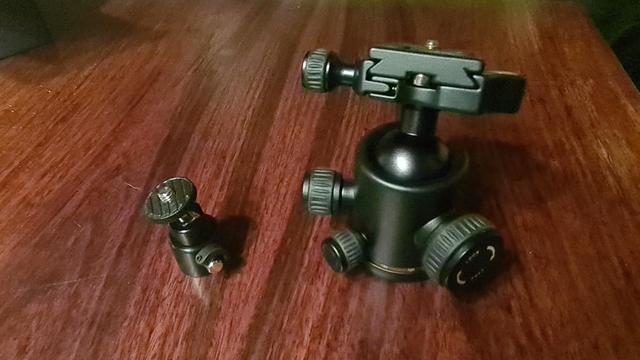
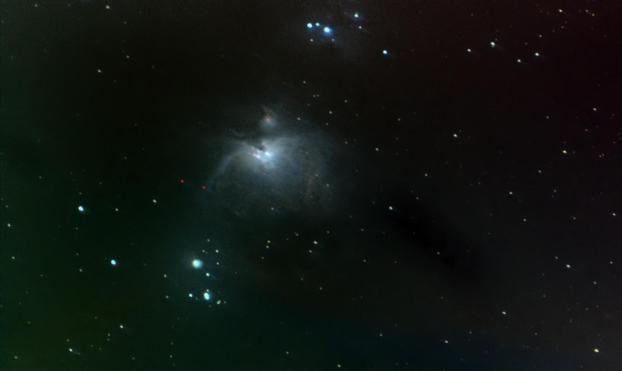
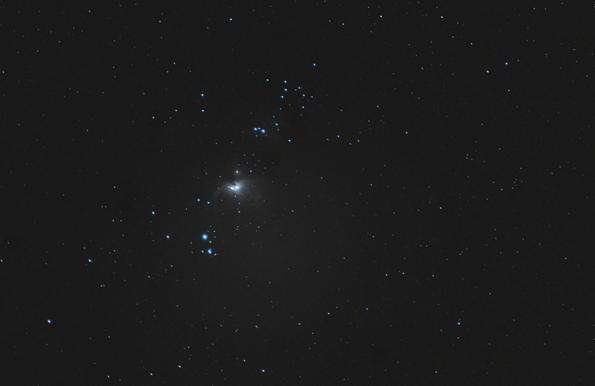
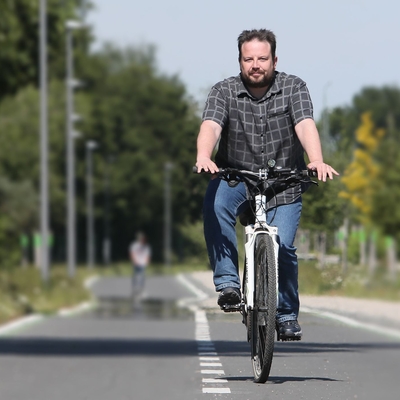
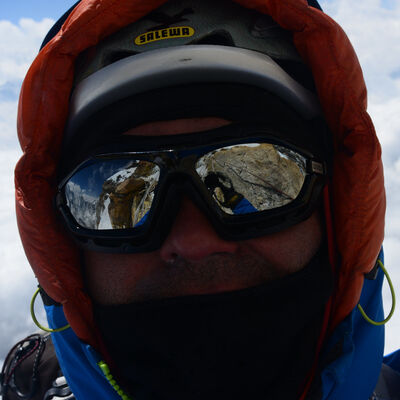
Size does matter! On the left is the old ball head, which always made me wonder why the camera was shaking and I couldn't focus on a subject. On the right is the new one, and now I understand why. Now I managed to capture Orion in the frame – my first ever image of the #orionnebula

- 29 minutes of exposure
- My wife's Pentax K30 (€0)
- 70-210mm f/3.5 lens (€20 from eBay)
- #barndoortracker (approx. €100)

#astrophotography #astrofoto #astronomy #budgetastronomy #orion #ballhead

Immer wieder faszinierend ❤️.

#Vollmond #Wurmond #Mond #Astrofoto

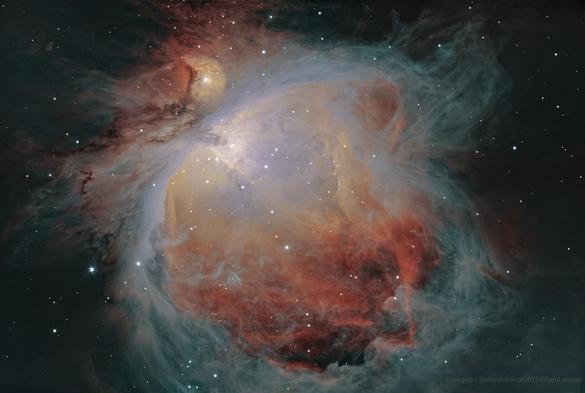
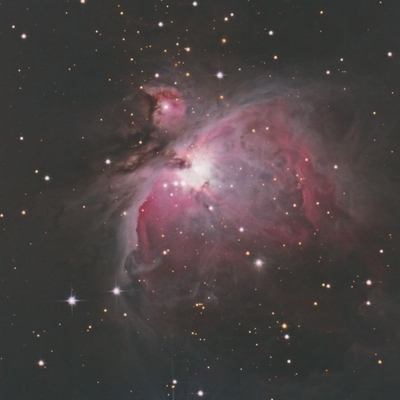
Orion nebula M42 and De Marian's Nebula M43

Total Integration time: 10 hours, Filter Dual-Narrowband.
Sub-Frames taken in several nights, starting with 28. dec 2025. Not "the best nights" due to the moon - I know 🙄.

As my actual focus lies on the horsehead nebula, the orion nebula was done in between (better than nothing). As it is much brighter and at least the important red channel (H-alpha) of the Dual-Narrowband Filter is little affected of the moonlight, I decided to take photos anyway because of the clear sky.

Also this is my first project done with PixInsight - have still to learn and try a lot.

Technical Infos:
Telescope Skywatcher 200mm/1200mm (10" f/6). modified with 3D-printed secondary mirror holder with 3 spider vanes
Coma corrector: TS-Optics TSGPU
Filter: Optolong L-extreme, Dual Narrowband (H-Alpha, OIII)
Camera: ToupTek ATR2600C, cooled color Astrocam, Sensor APS-C (Sony IMX571C)
Mount: iOptron CEM70
Guiding: Guidescope TS-Optics 60/248 mm, ZWO ASI 662 MC
Control via Raspberry Pi (RaspiOS - Debian 13), Indi, KStars, PHD2
Image processing: PixInsight (+RC-Astro Plugins), RawTherapee, Gimp

#Orionnebel #OrionNebula #M42 #M43 #Astrophoto #Astrophotography #Astrofoto #Astrofotografie #DeepSky
NGC 6058 ist ein Planetarischer Nebel im Sternbild Herkules. Er ist 9000 Lichtjahre entfernt und 12,9mag hell. NGC 6058 is a planetary nebula in the constellation Hercules. It is 9,000 light years away and has a brightness of 12.9 mag. RA: 16h 4m 26.5s Dek: +40° 40' 59''
Teleskop: 260mm Cassegrain, Kamera: ZWO ASI 294MC Pro, Programme: NINA, Siril.
1579x20s = 8h 46m

#Astrofotografie #Astrofoto

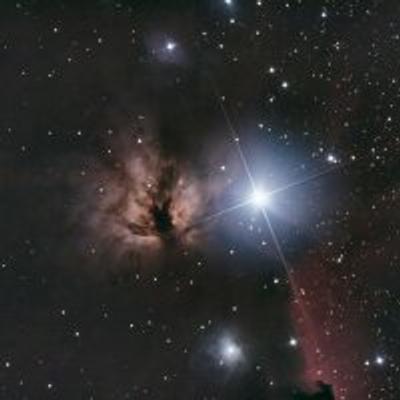
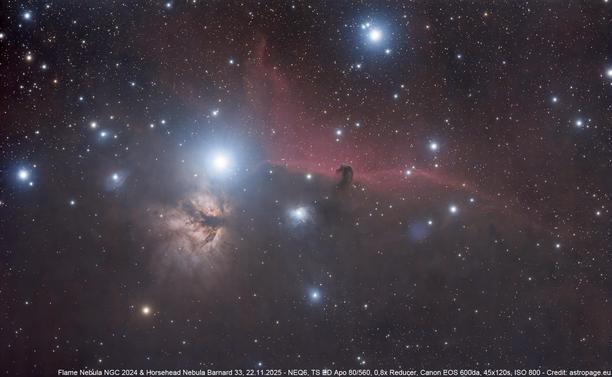
Eiskristalle auf der Frontlinse, aber egal. Flammennebel und der Pferdekopf sind erkennbar. :)

Ice crystals on the front lens but anyway.. Flame Nebula and Horsehead are visible. :)
https://www.astropage.eu/wp-content/gallery/nebel/flammennebel20251122_lab.jpg

#Astrofotografie #Astrophotography #Astrofoto #Astroimage #Deepsky

Właśnie nad moim podwórkiem, idealnie przez środek przechodzi #DrogaMleczna a z niej spogląda gwiazdozbiór Łabędzia, zwany Krzyżem Północy. Na zdjęciu zaznaczyłem - najcharakterystyczniejsze gwiazdy tego gwiazdozbioru. Na biało - najjaśniejsza z nich, czyli #Deneb
Zdjęcie: Nikon Z5 | Viltrox 14mm/4.0 (f5.0) | ISO 3200 | 25 sek. #foto #astrofoto
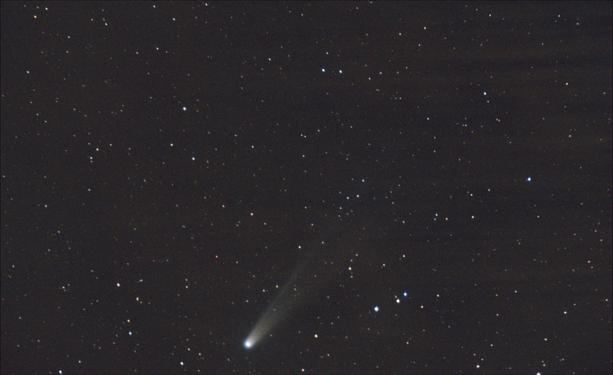
#astrofoto #lemmon #Komet #Astrofotografie
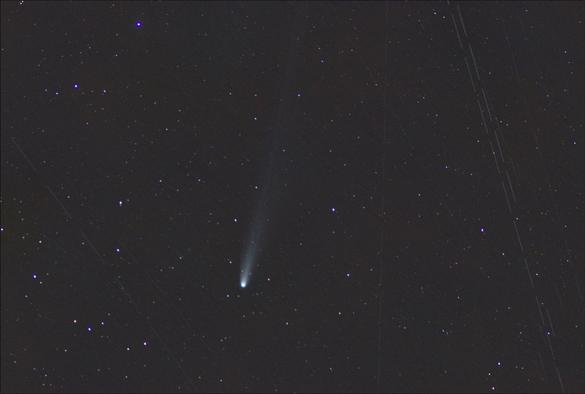
Hab es heute noch einmal versucht und eine Wolkenlücke erwischt. Diesmal waren es 33 Belichtungen a 2 Sek auf ISO 6400. Beim Stacken habe ich die Satellitenspuren drin gelassen.

#astrofoto #astrodon #comet #lemmon

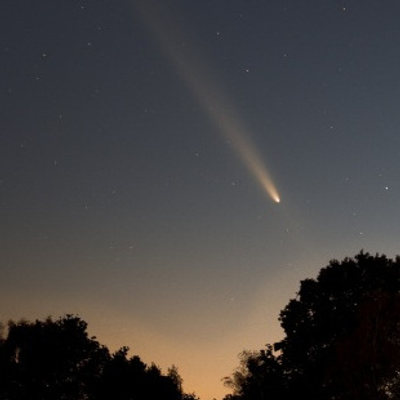
Hier das Ergebnis meines gestrigen Versuchs trotz durchziehender Wolken und starker Lichtverschmutzung den Kometen "C/2025 A6 (Lemmon)" abzulichten. Es handelt sich um einen Stack aus 64 Einzelaufnahmen a 3,2 Sek mit ISO 3200. Dabei habe ich die Kamera mit einem 135mm Objektiv (f=2.8) nicht nachgeführt.

Bin halbwegs erstaunt, dass man trotz der schwierigen Bedingungen den Ionenschweif vom Staubschweif unterscheiden kann.