 Unofficial PetaPixel Bot
TTArtisan’s $200 14mm f/2.8 Lens Shoots for the Stars https://petapixel.com/2025/08/22/ttartisans-200-14mm-f-2-8-lens-shoots-for-the-stars/ #aspherical #Equipment #ttartisan #ultrawide #News #14mm

Understanding Camera Lens Construction: What Every Photographer Should Know https://petapixel.com/2025/06/05/understanding-camera-lens-construction-what-every-photographer-should-know/ #chromaticaberration #asphericalelement #floatingelements #cooketriplet #Educational #doublegauss #paulrudolph #voigtlander #zeissprotar #zeisstessar #Technology #achromatic #anastigmat #aspherical #retrofocus #zeisssonar #angenieux #carlzeiss #primelens #schneider #coatings #elements #flourine #zoomlens #coating

 Ed van der Elsken
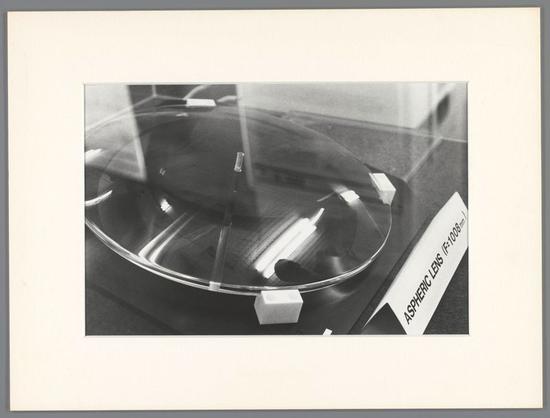
Asferische lens in een vitrine, Japan, Ed van der Elsken, 1985 - 1990
#Asferische #Japan #EdvanderElsken #ASPHERICAL #fotografie #photography #EdVanDerElsken

The Voigtlander Nokton 75mm f/1.5 is Coming to Canon RF Mount https://petapixel.com/2024/03/15/the-voigtlander-nokton-75mm-f-1-5-is-coming-to-canon-rf-mount/ #voigtlandernokton75mmf15aspherical #canonrfmount #aspherical #voitlander #Equipment #canonrf #rfmount #cosina #nokton #News

 petapixel (unofficial)
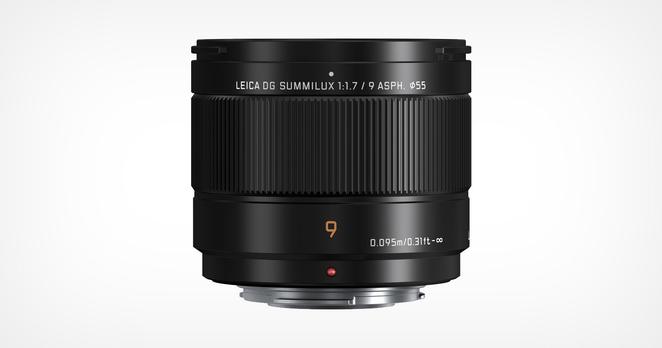
Panasonic Goes Wide and Fast with the Lumix G 9mm f/1.7 for MFT
#equipment #news #aspherical #leica #lumix #lumixgleicadgsummilux9mmf17asph #microfourthirds #panasonic #panasoniclumix #primelens #ultrawide #wideangle

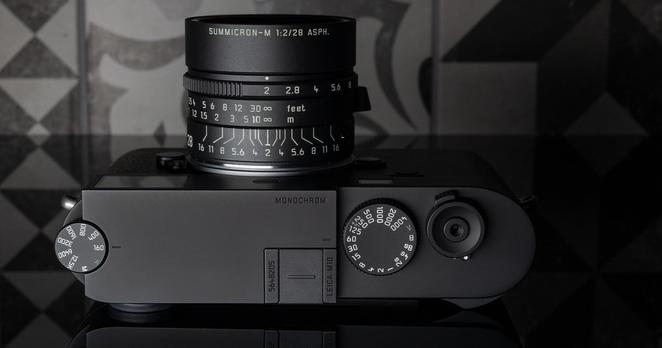
Leica Unveils the Limited Edition Matte Black Summicron-M 28mm f/2
#equipment #news #aspherical #leica #leicamatteblacksummicronm28mmf2asph #leicammount #limitededition #matteblack #mmount #specialedition #summicron
Cosina Unveils Voigtlander Heliar 40mm f/2.8 for L39 and VM-Mount
#equipment #news #aspherical #cosina #cosinavoigtlander #l39mount #leicascrewmount #rangefinder #rangefinderlens #vmmount #voigtlander #voigtlanderheliar40mmf28aspherical
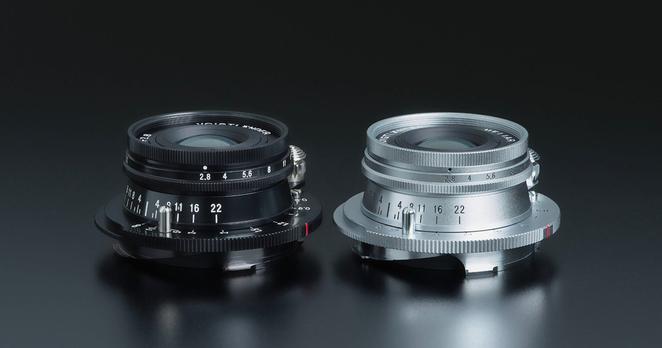
Cosina Unveils ‘Vintage Line’ Voigtlander 21mm f/3.5 for M-Mount
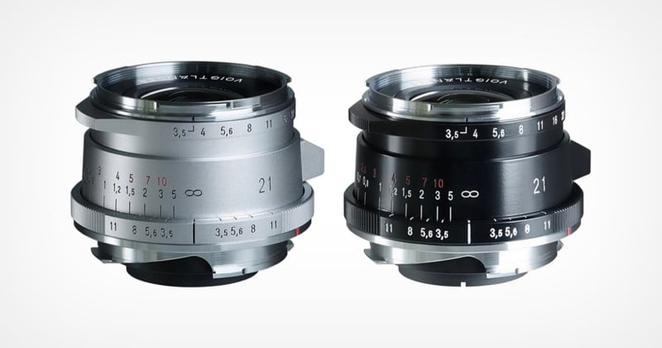
Cosina has announced a new ultra-wide lens under its "Vintage Line" for Leica M-Mount: the 21mm f/3.5 Color Skopar Aspherical lens. It updates a 2019 design reminiscent of the 1950s to one more akin to the 1970s.
Cosina describes its lens as a combination of an exterior that is reminiscent of the styling of a classic lens (which it says is considered to be a historic masterpiece) with modern photography performance expectations. The result is a finished product that Cosina says offers excellent optical performance that matches modern photography equipment but has the look and feel of a vintage lens.
The lens did have to make some concessions though. The company says that it was able to reach the levels of performance offered in this lens by suppressing the maximum aperture value to a "practical level." This resulted in a lens with high optical fidelity but in a casing that is also compact. Cosina says that it also designed the lens to maintain its image quality in both digital and film applications.
The 21mm f/3.5 is constructed of nine elements in eight groups and features a 10-bladed aperture diaphragm that offers an aperture range of f/3.5 through f/22. The lens interlocks with Leica M-mount rangefinders and has a close focusing distance of 0.5 meters. The front filter threading size if 39mm and the lens features an angle of view of 91-degrees.
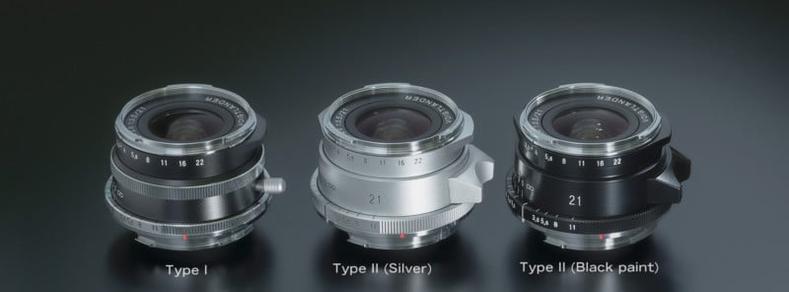
The lens will be available in three different variations: Type I, Type II in silver, and Type II in black. Type I is the classical design that Cosina says harkens back to the 1950s, while the Type II designs are more of what would be expected of the 1970s. The Type 1 has been available from Cosina since January of 2019, but the two new Type II designs are scheduled to become available by December of 2021. The new Type II versions feature a focusing knob that is more akin to what is found on modern first-party Leica M-mount lenses for rangefinder cameras and is much more intuitive to hold and focus thanks to how the lens knob nestles into the photographer's finger. While the original Type I design might be historically accurate to the period, the new Type II is likely better for practical use.
Below are a few sample images captured with the lens:
Cosina says that the Voigtlander 21mm f/3.5 Color Skopar Aspherical will be available for purchase by the end of the year for about $834.
#equipment #news #1970s #aspherical #cosina #cosinavoigtlander #film #leica #leicammount #mmount #vintage #vintageline #voigtlander #voigtlander21mf35colorskoparaspherical



 diyphotography (unofficial)
Aspherical elements are the reason why modern lenses are so good - DIY Photography
Whenever a new lens is announced, we always get a breakdown of the optical elements that make up the whole. So many elements in however many groups. It’s often followed by statistics about how many there are of different types of elements. Low dispersion, extra-low dispersion, aspherical, etc. But that last one, what does it […]
How Aspherical Lenses Fix Aberrations and Improve Sharpness
What is an aspherical lens and what does it do? Canon has shared a video that explains the problems engineers face in lens design and how the company solved them using aspherical lenses.
Canon recently celebrated the 50th anniversary of its aspherical lens technology through a new exhibit in its virtual Canon Camera Museum. The aspherical lens exhibition has multiple articles and videos on aspherical and fluorite lenses as well as interviews with project members who discuss the development of the EOS and EF lenses.
Canon says that aspherical lenses have long been known to effectively correct for the various types of lens aberrations that can occur in optical design as well as improve overall image quality. These days, aspherical elements are pretty ubiquitous and can be found in lenses ranging from entry through professional-level optics from a range of manufacturers.
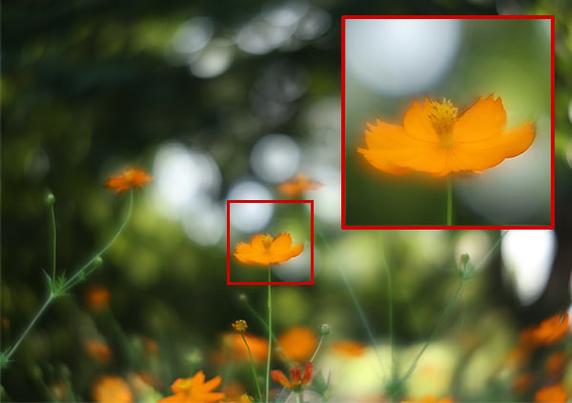
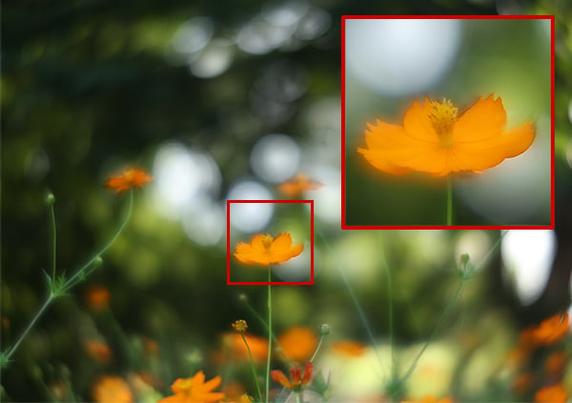
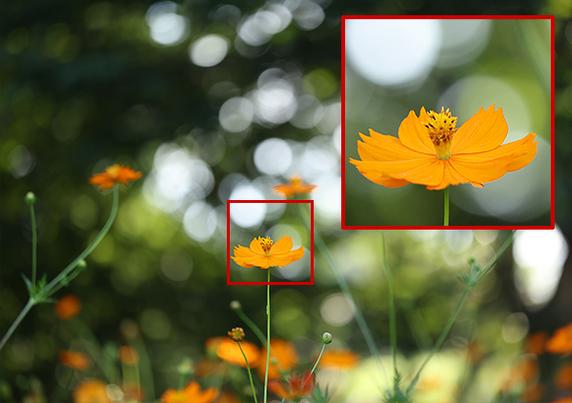
Below are two photo exapmples, one that is shot with a spherical lens and the other taken with an aspherical element:
Image shot with spherical lens element Image shot with aspherical lens element
Canon explains that conventional lenses have a curved surface that is like a slice of a sphere, hence the name "spherical" lens. There are issues with this design, however.
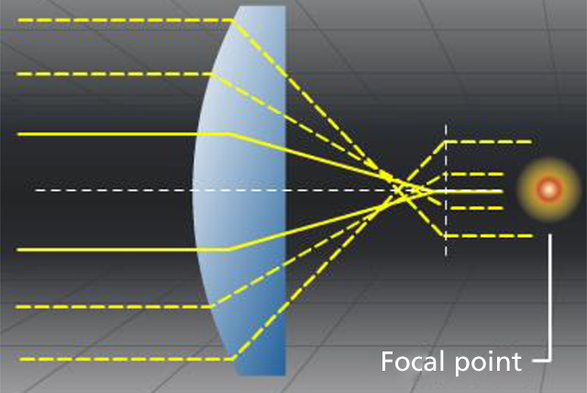
"Compared to light rays passing through the center of a spherical element, rays entering from its peripheries must travel a longer distance in order to reach the image plane, resulting in the light rays converging at different positions," Canon explains. "This causes an effect known as spherical aberration, where point light sources “blur” instead of being rendered as points."
Spherical aberration on a spherical lens element An aspherical lens element ensures light rays converge at the same position.
Spherical lenses also have issues with distortion.
Aspherical lenses were known to correct these issues, but even though the supposed benefits of aspherical lenses was known, manufacturing such lenses was considered extremely difficult for a very long time. Canon says that it was challenging to achieve the precision needed in order to control the curvature at the submicron level (1/10,000th of a millimeter). Aspherical lenses were so hard to make that they were referred to as "dream lenses."
Over half a century ago in 1971, Canon finally released an interchangeable lens for SLR cameras that included aspherical lens elements. Since then, the company has continued to refine processing methods and precision technology and says that it has been part of spearheading the constant improvement of image quality via aspherical lenses.
A great deal more information about aspherical lenses and Canon's implementation of them in its lineup over the years can be found in the special exhibition on aspherical lens technology in the digital Canon Camera Museum. Within, Canon also has a great explanation of the capabilities of fluorite glass. All the information and videos are free to peruse.
_Image credits: All images provided courtesy of Canon. _
#educational #equipment #technology #aberrations #aspherical #asphericallens #barreldistortion #canon #canonmuseum #chromaticaberration #distortion #lensdesign #pincushiondistortion #sharpness #sphericallens