 Chema Alonso
El lado del mal - LinkedIN + ChatGPT: El Captcha Cognitivo del Objeto Descolocado https://www.elladodelmal.com/2024/10/linkedin-chatgpt-el-captcha-cognitivo.html #GenAI #Captcha #ArtificialVision #LLM #ChatGPT #RedTeam #Linkedin


AI’s Potential to Transform the Visual Experience for the Blind #ArtificialVision
Hashtags: #chatGPT #AIforBlindness #EnhancingSight Summery: Envision, a smartphone app and Google Glass accessory, is integrating OpenAI's GPT-4 language model to provide visually impaired users with more detailed descriptions of their surroundings. The app, which originally launched in 2018 to read text in photos, has now incorporated GPT-4 to offer conversational responses and answer…
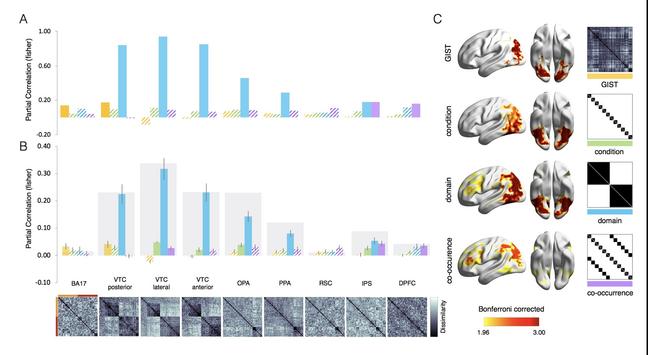

Author summary Computational object vision represents the new frontier of brain models, but do current artificial visual systems known as deep convolutional neural networks (DCNNs) represent the world as humans do? Our results reveal that DCNNs are able to capture important representational aspects of human vision both at the behavioral and neural levels. At the behavioral level, DCNNs are able to pick up contextual regularities of objects and scenes thus mimicking human high-level semantic knowledge such as learning that a polar bear “lives” in ice landscapes. At the neural representational level, DCNNs capture the representational hierarchy observed in the visual cortex all the way up to frontoparietal areas. Despite these remarkable correspondences, the information processing strategies implemented differ. In order to aim for future DCNNs to perceive the world as humans do, we suggest the need to consider aspects of training and tasks that more closely match the wide computational role of human object vision over and above object recognition.

 Cosmic Log
 Alan Boyle
 Tec
Tec Webappia
 Ben Timberlake