We’re Going Back

By Cliff Potts

Baybay City, Leyte, Philippines — May 4, 2026 — 07:05 AM PhST

Why This Moment Matters

There are moments in history when a decision does not belong to one nation.

It belongs to everyone.

This is one of those moments.

We’re going back to the Moon. Not as a flag-planting exercise, not as a Cold War rerun, and not as a national trophy case. This time, the goal is broader and more serious: to begin learning how humanity operates beyond Earth in a sustained way.

The program is called Artemis, and it represents the first real attempt in decades to move human presence off a single planet and keep it there (NASA, 2024).

Artemis II: The Door Reopened

That future is no longer theoretical.

Artemis II has already completed its mission.

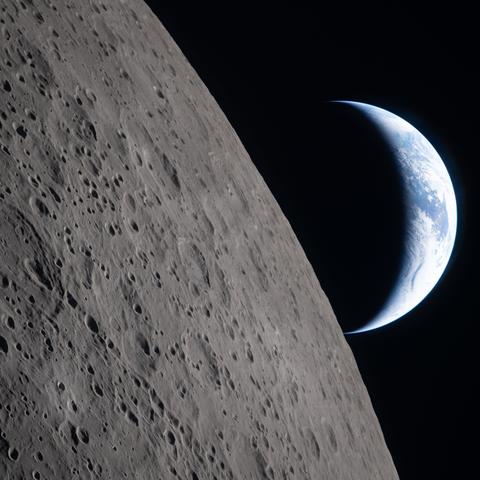
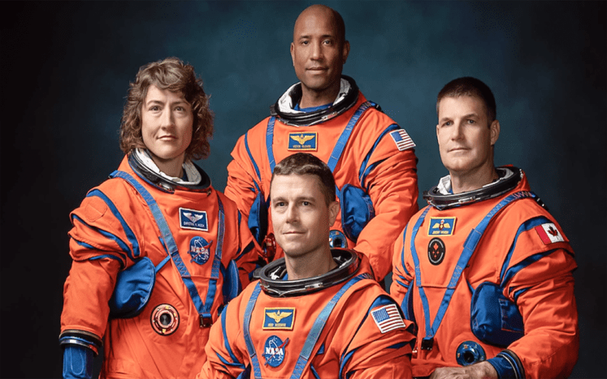
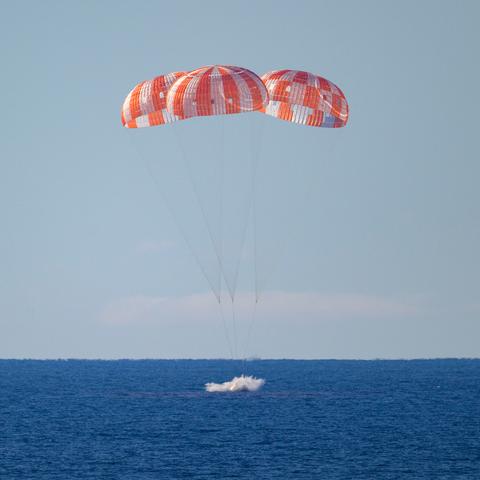
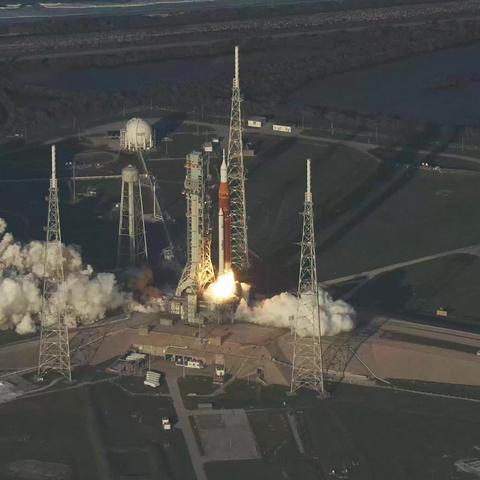
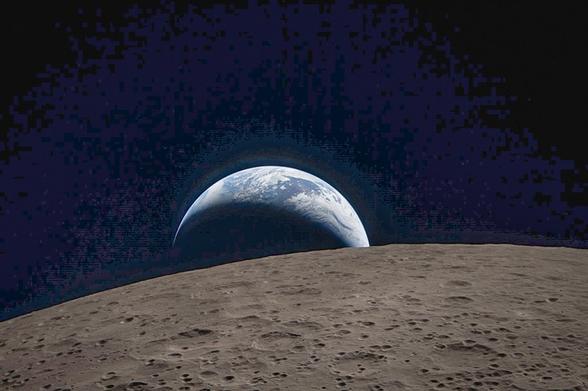
The crew launched aboard the Space Launch System rocket and traveled in the Orion spacecraft on a free-return trajectory around the Moon. They conducted system checks in deep space, tested life-support systems with humans aboard, evaluated navigation and communication at lunar distance, and captured high-resolution imagery of both the lunar surface and Earth from deep space (NASA, 2025).

They orbited the Moon, passed behind it, and returned safely to Earth.

No drama. No failure.

Just proof.

Proof that we can send humans back to lunar distance and bring them home again.

That single fact changes everything. The question is no longer whether we can reach the Moon.

The question is whether we will finish the job.

Artemis III: The Step That Counts

The next mission, Artemis III, is the one that matters most.

That is the mission intended to land astronauts on the lunar surface for the first time since Apollo. It is designed not just as a visit, but as the beginning of a longer-term effort to operate on the Moon, particularly near the south pole where water ice may exist in permanently shadowed regions (NASA, 2024).

Water means survival.

Water means fuel.

Water means the possibility of staying.

That is the shift from exploration to presence.

The Argument We Always Hear

Every time humanity reaches for something like this, the same argument appears.

Why go to the Moon when there are problems on Earth?

It sounds responsible. It sounds grounded.

It is also incomplete.

We heard this argument when the Apollo program ended. We were told resources should be redirected toward fixing conditions on Earth. That was a reasonable claim at the time.

But those problems were not solved.

They did not disappear when exploration stopped. Many of them remain, decades later, largely unchanged.

Stopping exploration did not fix Earth.

It only limited what we were willing to attempt.

The Cost Reality

There is another misconception that deserves to be addressed clearly.

Space exploration is not what is draining national budgets.

NASA’s funding represents a small fraction of total government spending, often less than one percent (Office of Management and Budget, 2025). Even significant increases in that budget would not materially alter broader fiscal priorities.

This is not an either-or decision.

We can address problems on Earth and continue exploring beyond it.

We have the capacity to do both.

What Exploration Actually Does

Exploration is not separate from life on Earth.

It feeds into it.

Technologies developed through space programs contribute to advancements in communications, materials science, navigation systems, and medical research. These benefits return to Earth and become part of everyday infrastructure over time (National Research Council, 2011).

But beyond technology, exploration changes perspective.

It expands what people believe is possible.

It reminds us that progress is still an option.

A Species-Level Decision

This is not about the United States.

It is not about prestige.

It is about whether humanity chooses to remain confined to one planet or begins the process of becoming something more resilient.

A species that exists on a single world has a single point of failure.

A species that learns to operate beyond it does not.

That is the long-term meaning of this effort.

Where We Stand

We have already returned to lunar orbit.

We have already proven the path.

Now comes the harder part.

Landing. Operating. Surviving. Returning.

None of it is guaranteed. Timelines may shift. Systems may fail. Political priorities may change.

But those are not reasons to stop.

They are part of doing something difficult.

The Choice

We have been here before.

We reached the Moon, and then we chose to stop.

Now we are at that same decision point again.

Do we continue forward?

Or do we turn back and tell ourselves, once again, that there are more important things to do?

History suggests that waiting does not solve those other problems.

It only narrows what we attempt.

Closing

We have already gone back.

Now we decide whether we finish what we started.

Not as one country.

As a species.

We’re going back.

References

National Aeronautics and Space Administration. (2024). Artemis program overview. https://www.nasa.gov/artemis

National Aeronautics and Space Administration. (2025). Artemis II mission details and objectives. https://www.nasa.gov/artemis-ii

National Research Council. (2011). Recapturing a future for space exploration: Life and physical sciences research for a new era. National Academies Press.

Office of Management and Budget. (2025). Historical tables: Budget of the U.S. government. https://www.whitehouse.gov/omb

If this work helps you understand what’s happening, help me keep it going: https://www.patreon.com/cw/WPSNews

For more from Cliff Potts, see https://cliffpotts.org

#ArtemisIIMission #ArtemisIIILanding #ArtemisProgram #futureOfHumanity #MoonExploration #NASAProgram #spacePolicy

| die Amerikaner sollen, müssen, unbedingt..

Fremder Leute Geld gibt sich einfach aus, eh?

| Toyota baut ja den Mondrover. Ich weiß nicht wieso die Autonation Deutschland da nicht...

Weil man auf dem #Mond nicht mit Verbrennern fahren kann, d'oh!

#Podcast #ReadyForLiftoff #ArtemisII #ArtemisProgram #Ard #Mediathek #Rant

https://www.ardsounds.de/episode/urn:ard:episode:d70a79647391b433/

Podcast: Artemis 2 ist zurück vom Mond! Hat die Mission unsere Erwartungen erfüllt?

Zwischen Euphorie und Realität: Die erste bemannte Mondmission seit über 50 Jahren ist erfolgreich zu Ende gegangen. In dieser Folge blicken wir zurück auf Artemis II – vom Luna Flyby über technische Tests, den Highlights der Mission bis hin zu kuriosen Momenten. Doch was bleibt von Artemis II für die Wissenschaft und die Gesellschaft? Und wie sieht die Zukunft des Artemis-Programms aus? Gemeinsam mit Uwe Gradwohl, Leiter der SWR-Wissenschaftsredaktion, sprechen wir über die Parallelen zu Apollo, die Rolle der ESA und die Frage, ob Artemis das nächste große Ding der Raumfahrt werden kann. Über die Hosts: Anne-Dorette Ziems ist freie Wissenschaftsjournalistin, TikTokerin und Buchautorin. Bei @annesnerdnight erklärt sie Raumfahrt so, dass alle sie verstehen. David Beck ist Wissenschaftsjournalist beim SWR und deckt dort everything science ab: Von aktuellen Beiträgen bis zum Hintergrund-Feature, von Mathematik bis Biochemie – am liebsten aber Raumfahrt. In dieser Folge: 0:00 Intro 1:35 Im Rückblick: Pannen & Highlights der Mission 10:11 Bilder, Rekorde, Wissenschaft 22:10 Der “Apollo-Effekt” heute 34:10 Der Beitrag der ESA 39:30 Die Zukunft von Artemis Links: NYT-Artikel über den Hitzeschild: https://www.nytimes.com/2026/04/09/science/nasa-artemis-ii-earth-return-heat-shield.html Earthset: https://images.nasa.gov/details/art002e009288 Hello, World: https://images.nasa.gov/details/art002e000192 Photo of Crew in Eclipse Glasses: https://x.com/NASA/status/2041534940635152433 Podcast-Tipp: Meilensteine – Alben, die Geschichte machten https://1.ard.de/SWR1_Meilensteine Redaktion und Mitarbeit: Kristina Koch, Anne-Dorette Ziems, David Beck, Fritz Espenlaub, Nina Kunze, Philip Artelt Kontakt: Wir freuen uns über Fragen und Kommentare an [email protected] Unterstützt uns: Wenn euch dieser Podcast gefällt, freuen wir uns über eine Bewertung auf eurer liebsten Podcast-Plattform. Abonniert „Ready for Liftoff!“ in der ARD Audiothek oder wo immer ihr eure Podcasts hört, um keine Episode zu verpassen. Und empfehlt uns gerne weiter!

ARD Sounds
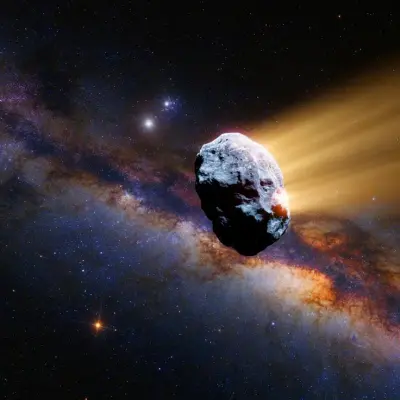
A comet gets destroyed by the sun, data centers endanger the Potomac River, and more science news
https://atlas.whatip.xyz/post.php?slug=a-comet-gets-destroyed-by-the-sun-data-centers-endanger-the-potomac-river-and-more-science-news
Humans circled the Moon again — and a comet paid the ultimate solar price. The week in science, ranked.
#artemisprogram #nasamoonmission #lunarexploration
A comet gets destroyed by the sun, data centers endanger the Potomac River, and more science news

Artemis II Crew Returns to Earth as PBS Documentary Brings Lunar Program to Public Screen The four astronauts who flew aboard Artemis II — NASA's first crewed lunar flyby mission in more than five de...

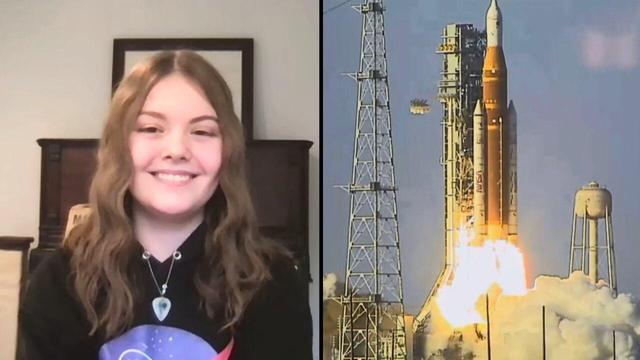
How the Artemis program is inspiring this aspiring astroscientist in Stittsville
Lucy Hambly, 17, is a space columnist for the website Stittsville Central and will study planetary science at the University of Toronto in the fall. She tells CBC's Rachelle Elsiufi what the Artemis II mission has meant for her aspirations.
https://www.cbc.ca/player/play/9.7162523?cmp=rss

Algunas preguntas que me apena responder

Queridos amigos de Lo Real Maravilloso, gracias a las bondades de nuestro grupo de WhatsApp, (en especial Ileana y María Elena); ayer pude disfrutar —en pleno apagón y sin señal televisiva— del feliz descenso de la misión espacial Artemis II, que desmontó el mito de la inaccesibilidad de la cara oculta de la Luna. Este logro me emocionó profundamente y, como es habitual, me llevó a formularme preguntas que busqué responder en las inteligencias artificiales más potentes a mi alcance.

Artemis II brilló por su positividad y logro histórico, pero representó un porcentaje ínfimo de la atención global.

¿Qué significó el feliz término de la misión Artemis II para la humanidad?

El descenso exitoso del 10 de abril de 2026 marcó un hito: el regreso tripulado a la Luna tras 54 años, desde Apollo 17. Los astronautas de Artemis II rompieron el récord de distancia alcanzado por Apollo 13, llegando a unas 253.000 millas de la Tierra. Este acontecimiento simboliza la cooperación internacional, el progreso tecnológico y el renovado espíritu explorador de la humanidad, que ahora sueña con una presencia permanente en la Luna y, eventualmente, en Marte.

¿Qué espacio ocupó en la web global este acontecimiento?

La triste respuesta es casi nula. El descenso de Artemis II generó un pico de noticias y consultas en tiempo real, pero representó solo una fracción mínima de la actividad global. Fue un evento inspirador, percibido como “contrapunto” frente a la guerra con Irán, las divisiones políticas y las crisis económicas. Se espera que, para finales de abril, quede relegado en la memoria digital.

¿Qué noticias reciben mayor atención en la red global?

La política y las guerras dominan el ciclo informativo: entre un 75 y 90% del volumen de noticias serias y consultas de actualidad. Los conflictos, las tensiones partidistas y las consecuencias económicas —como el precio del petróleo— ocupan la atención constante. Frente a ello, Artemis II fue apenas un respiro, una “buena noticia” temporal en medio de la turbulencia.

Reflexión final

La misión Artemis II nos recuerda que la humanidad aún es capaz de gestos de esperanza y unidad, aunque la vorágine informativa los diluya rápidamente. La Luna nos devuelve la imagen de la Tierra como fragilidad sagrada, y nos invita a mirar más allá de las guerras y divisiones, hacia un futuro donde la inteligencia y la admiración compartida se conviertan en dones.

Me entristece comprobar que lo que debería ser motivo de orgullo universal apenas ocupa espacio en la memoria digital. Sin embargo, sigo confiando en que, aunque los titulares pasen, la semilla de inspiración que deja Artemis II permanecerá en quienes creen en la posibilidad de un mañana distinto. Con esa mezcla de melancolía y esperanza, desde Lo Real Maravilloso les deseo a todo un feliz fin se semana en la certeza de que la humanidad tiene derecho a soñar.

Nota: Este es el enlace a nuestro grupo de WhatsApp:

https://chat.whatsapp.com/DBsjzoDfEbZ09ONJSxTt9p

#ArtemisProgram #LoRealMaravilloso #MoonExploration #NASA

Artemis II Splashdown Gives NASA Momentum in Renewed Moon Race

https://fed.brid.gy/r/https://www.nytimes.com/2026/04/10/science/moon-astronauts-success.html

Planeta Tierra, patria común y bendición de Dios.

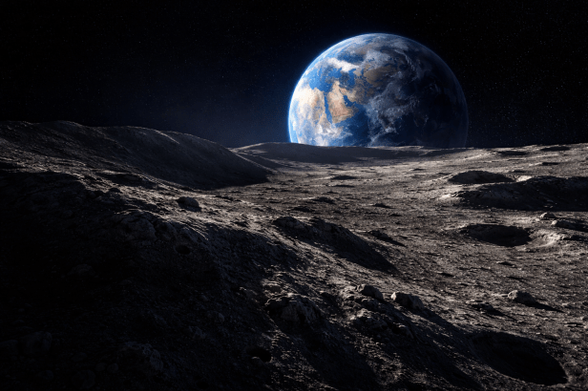
Hoy quiero compartir con ustedes una imagen que trasciende la ciencia y se convierte en símbolo de esperanza. Desde la Luna, la misión Artemis II nos regala la visión de nuestro planeta: una esfera azul suspendida en la inmensidad del Universo, frágil y hermosa, bendición de Dios que hemos recibido para cuidar y preservar.

En el marco del ambicioso Programa Artemis de la NASA, un instante extraordinario ha quedado grabado: un astronauta fotografiando el Planeta Tierra visto desde la inmensidad del Universo.

La Escritura nos recuerda en el Génesis: “En el principio creó Dios los cielos y la tierra” (Génesis 1:1). Esa afirmación bíblica nos devuelve al origen, a la certeza de que la Tierra no es fruto del azar, sino creación divina, confiada a nosotros como herencia y responsabilidad.

La Luna, con su superficie gris y marcada por cráteres, contrasta con la vitalidad de la Tierra. Ese contraste nos interpela: nuestro planeta es único, pero también vulnerable. Su belleza es inseparable de su fragilidad: basta un desequilibrio ambiental, una guerra o una indiferencia prolongada para que esa esperanza azul se vea amenazada. La fragilidad de la Tierra es también su grandeza, porque nos obliga a vivir con conciencia, gratitud y responsabilidad.

Preservar la Tierra no es solo un deber ecológico, sino un compromiso moral y espiritual. En ella habita nuestra historia, nuestra fe y nuestro futuro. Cada amanecer nos recuerda que la vida es una bendición de Dios y que nuestro planeta, esta esperanza azul, es un regalo que debemos proteger con amor y responsabilidad.

Nota: Este es el enlace a nuestro grupo de WhatsApp:

https://chat.whatsapp.com/DBsjzoDfEbZ09ONJSxTt9p

https://chat.whatsapp.com/DBsjzoDfEbZ09ONJSxTt9p

#ArtemisProgram #LoRealMaravilloso #MoonExploration #NASA