Hidden #biosphere discovered beneath world's driest hot desert
https://phys.org/news/2024-04-hidden-biosphere-beneath-world-driest.html

Persistent #microbial communities in #hyperarid #subsurface habitats of the #Atacama Desert https://academic.oup.com/pnasnexus/article/3/4/pgae123/7646996

"In the upper 80 cm of playa sediments, microbial communities were dominated by #Firmicutes. Below 200 cm, a different microbial community was discovered, dominated by #Actinobacteria... this community might have colonized the soil 19,000 years ago, before being buried by playa deposits"
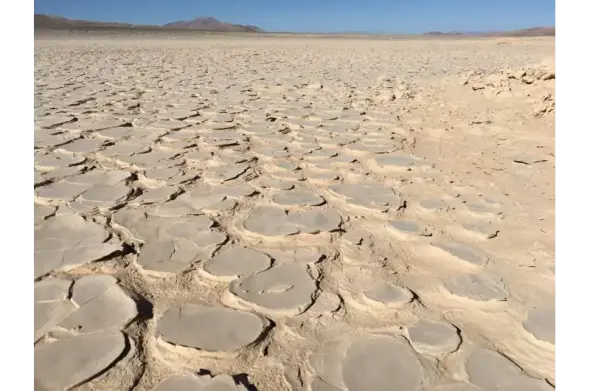
Hidden biosphere discovered beneath world's driest hot desert

In a finding with implications for the search for extraterrestrial life, researchers have discovered microbial life 13 feet below Earth's most inhospitable desert. The research is published in the journal PNAS Nexus.

Phys.org
Hidden biosphere discovered beneath world's driest hot desert

In a finding with implications for the search for extraterrestrial life, researchers have discovered microbial life 13 feet below Earth's most inhospitable desert. The research is published in the journal PNAS Nexus.

Phys.org
New NIOO publication: Harnessing regulatory networks in #Actinobacteria for natural product discovery. #regulatorynetworks #naturalproduct #biosynthesis https://doi.org/10.1093/jimb/kuae011
Harnessing regulatory networks in Actinobacteria for natural product discovery

Abstract . Microbes typically live in complex habitats where they need to rapidly adapt to continuously changing growth conditions. To do so, they produce

OUP Academic
Been outside inhaling the smell of #Petrichor .. overnight we had the first proper rain in about two months. Love how it's mostly tiny #actinobacteria that cause it and a reminder of how much goes on in #soil that we are barely aware of! https://earthsky.org/earth/what-is-smell-of-rain-petrichor/
Why you can smell rain | Earth | EarthSky

What you're smelling is petrichor – a pleasant, earthy scent that accompanies a storm's first raindrops. A weather expert explains where it comes from.

EarthSky | Updates on your cosmos and world
Lunaemycin, a new antibiotic extracted from moonmilk deposits

A study conducted by scientists from the University of Liège and the HEDERA-22 spin-off on moon milk—a mineral deposit found in caves and used for its curative properties—has led to the discovery of a cryptic compound active against bacteria that are multi-resistant to antibiotics. This discovery is the subject of a technology transfer and a publication in the International Journal of Molecular Sciences.

Phys.org
Lunaemycin, a new antibiotic extracted from moonmilk deposits

A study conducted by scientists from the University of Liège and the HEDERA-22 spin-off on moon milk—a mineral deposit found in caves and used for its curative properties—has led to the discovery of a cryptic compound active against bacteria that are multi-resistant to antibiotics. This discovery is the subject of a technology transfer and a publication in the International Journal of Molecular Sciences.

Phys.org