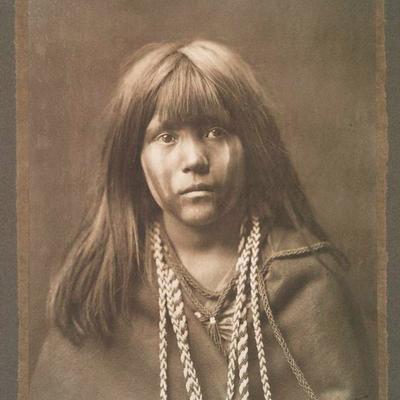
 Edward Curtis
After a tangi, Opape Marae, Bay of Plenty, 1982
gelatin silver print 291 x 305 mm - Auckland Art Gallery Toi o Tāmaki, purchased 1997
#OpapeMarae #BayofPlenty #Tāmaki #first #Matapihi #Kōtuia #marae #Māori #Whare #Photograph
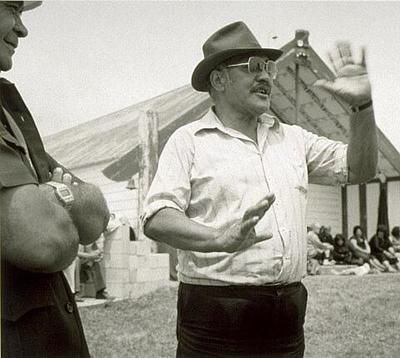
After a tangi, Opape Marae, Bay of Plenty, 1982
gelatin silver print 291 x 305 mm - Auckland Art Gallery Toi o Tāmaki, purchased 1997
#OpapeMarae #BayofPlenty #Tāmaki #first #Matapihi #Kōtuia #marae #Māori #Whare #Photograph

The well-curated life and meticulously ordered home of a university librarian belies the chaos of her insatiable curiosity and the challenge of discovering her tikanga. Words: Kate Coughlan Photos: Jane Ussher Kim Tairi is ready to chat, with an iPad to hand with notes prepared for her interview. Few people are that organised. Most wing it. “I’m a librarian, so I am a planner,” she says. Life for the Auckland University of Technology librarian (kaitoha puka) hasn’t always been so ordered. Her early years in Ōtepoti/Dunedin in the 1980s were anything but; the eldest of four, in a state house
Ata mārie e hoa mā. E inu ana au i te kaputī.
Morning friends. I am drinking a cup of tea.
🖤🤍♥️ #TeReoMāori #NZTwits #Whare
The word for Day 29 in English then Māori of #Museum30 #Storytelling #KōreroPaki
Charlie Moffat did a bit of storytelling or kōrero paki about this house... See more in our Central and Western Murihiku Southland Archive here: https://ehive.com/collections/202139/objects/1602393/eastern-bush-district-moffat-family-history
#History #Heritage #Aotearoa #NZ #GLAM #Museums #Archives #digipres #Ōtautau #Murihiku #Southland #Farming #FlaxMilling
#Waiau #MoffatFamily #Ōrawia
#CommunityCollaboration #Homes #Whare #RuralNZ #AgricultureHistory #War
#CentralAndWesternArchive
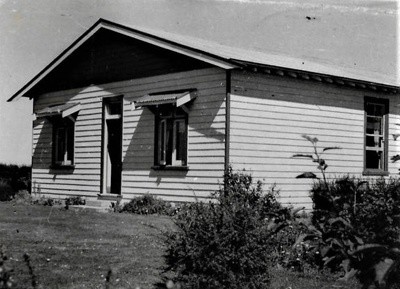

Photo of Norman & Matilda Moffat's home at their Eastern Bush property, at its second site after moving, the story of which can be seen below. This is the original McCall Homestead, which was on the property when Norman bought it. He and wife Matilda lived in this home at Eastern Bush all their married life, with successive family generations taking over both the house and also Sunnybrook farm itself, until very recently (2016). In relation to this particular house, grandson Lincoln Moffat recalls that: "Norman had it shifted up from near the original woolshed to the site in this photo. My dad (Charlie) grew up in this house. It is now known as 233 Otahu- Eastern Bush road. With help we cannibalised this house but then burnt it down in 1976. We then built a new house on the same site. The house pictured here had extensive gardens and I remember the roses being plagued by opossums. I met one of the McCall's sons once. James Hay McCall. He lived with his daughter in Timaru and he died at age 97." The Moffat family have a long-standing history the Central and Western Southland Murihiku district. Norman Edwin Moffat, Henry's Moffat's son, was to purchase a farm for himself at Eastern Bush, not far from his father's Ōrawia property. It was often commented by others and has been noted by family, that Norman was a great horseman. He used horses extensively to farm his property, as can be seen in entries of his horse teams in this archive. Norman's obituary in 1956, this recounts also, how Norman was the earliest farm to grow wheat in the district. Norman’s son Charlie Moffat, born in 1922 recalls some history of the family farm at Eastern Bush, in records faithfully kept by son Lincoln, who has graciously gifted copies of these, which are also in this archive. The property was named "Sunnybrook" farm and only recently sold out of the family after nearly 100 years. It was here Norman's family grew up. The property had been purchased off original settler John McCall from Scotland, who had ensured the farm was well maintained and provided with the best farm buildings money could buy, a large homestead and a six horse stable, also a woolshed and pigstye’s. Norman Moffat, who fought in WW1, being sent home an invalid in 1916, completed the purchase of the McCall property after his severe wounds had healed. First off, this particular house has quite a history. Charlie recounts how after Norman couldn't get his first car near the house which used to be situated down a steep hill, Norman and Matilda thought they would try and get the house moved. It was a solid home and well made, heavy and seemed almost impossible to move. The story of the eventual move has apparently become an "epic in the history of the family." After deciding that they would move it to the site where it sat for the rest of it's life, a track was made through the homestead's large orchards, a collection of post and wire fences and even traversing a gully which was said to be home to running water for much of the year, and finally up the steep hill to the new site which was chosen as a place the car could easily get to. Next, they consulted with Jimmy Wilson, who was then the local building contractor in Ōrawia and in business in quite a large capacity, having six qualified carpenters as well as a plumber and electrician employed by him. Jimmy stated that the house would first need to be sawn in half, with both the halves needing to be jacked up and put onto sledges for moving. It was obvious that the job was far beyond the ability of even Norman's prized Clydesdale Draught horse team (said to be the best in the area. So Jimmy thought a traction engine might be what was needed for the move. Luckily, Norman was friends with the 'local' threshing contractor, who was Tom Kennedy of Scott's Gap on the road towards Ōtautau. It was indeed fortunate that he had already been taken on to use this to thresh the local harvest in a couple of months, so was already engaged in the area. This great steam monster of a machine was made in England and was fitted up with "a powerful winch with about 200 yards of heavy wire rope." (200 yards was the equivalent of 182.88m.) It would have been around 1926/27 when this story of the house move took place, considering Norman bought his first car that would not make it up the hill to where the house was originally sited, sometime in 1925 and they decided to move after this. I note that in retelling the story, Charlie (Norman's son) thought that he was around 3 and his sister Grace 5, but those ages do not add to the other facts in the story, and we know that as children our perception of time and age is not normally well practised. Because time was short, the process had to kick into gear quickly. Norman and his man (farm worker) went into the pine plantation behind the house to quickly cut skids the correct length, then the men proceeded to the large stand of totara that were within the 150acres of native bush across the road and also took down a large number of piles for the house to be re-sited on. These had been specified by Jimmy Wilson as needing to be 56" (1.42m) long, so the plumber could install water pipes - something the house did not have previously. It is of note too, that totara was long the preferred wood for house piles as these lasted better than most. The family account mentions how both Norman, and his man, were expert axemen and that Norman loved to work in the bush. Of course, we know Norman had a long history of this. Once the piles were prepared, the work required now apparently reached a "frenzied" pace, with Jimmy Wilson and all his men coming to join in. It must have been quite the adventure! Charlie who would have been 4 at the time, tells the story of how himself, his older sister Grace who was about 6, and their mother Matilda moved into the hut on the property and there Matilda had to cook meals for not just the family, but also for the entire crew, who numbered about 12 men... on an open fire!! Goodness, we could not even imagine doing that now. It is also noted that as there was no way to travel easily back then, the men had to all sleep in the barn with the horses, but at least it was always dry in the loft and warm from the "great Clydesdales" below in their stalls. Jimmy Wilson the building contractor was said to be a "very kind man", was to loan his youngest son Stewart to Matilda to help care for the crew during the move of the house, which took about 2 months in total. He is said to have had to peel potatoes the whole time, what a job for a boy, who I am sure, would much rather have been helping with the building! And Norman is said to have had to cull sheep for mutton regularly and Charlie notes that despite the handicap of his right arm which had been damaged in the war, he excelled at this task, as everything else. When Tom Kennedy eventually arrived in the district for the harvest, with his great traction engine, the Moffat's house was sitting waiting sawn in half, with one of these halves already jacked up and sitting on the sledge. There were some anxious moments, as Tom realised he had to use the engines wire rope winch and dig in the front wheels, until he was able to get the almighty load moving, and continue until the rope was wound in. It is recalled that after "numerous shifts" the first half was finally sited at its new resting place, where the piles for it were already waiting. Then the second half had to be moved again in the same way, what a huge job! I will note here, that we have a photo of Tom Kennedy's threshing plant and traction engine that moved this house, and it will be added into this archive in another entry at some point in the future. This is the beauty of a community archive like this, in that it links up all of our districts history. I had originally thought, when sent the photo of this house above by the family, that this could not be the original McCall Homestead property, as it looked far too new, but it is indeed. Lincoln Moffat has informed me that the house had just been freshly repainted when this photo was taken. I doubt that many houses in the district have got such a fascinating history. Charlie Moffat also recalls some amusing accounts of farm life during the 1950s. He remembers his mother (Matilda) used to have about six dairy cows for the farm and house use close by, and one day when the pig got out of the sty, all six of the house paddock cows got up and followed said pig in a strange procession, with the pup also getting “into the act” too, apparently even dragging its own kennel along with the rest of the procession of farm animals, behind the last cow. Very hilarious! A dedicated citizen and community stalwart, Norman, who farmed on his original land at Eastern Bush, all his life, while adding further acquisitions to his land holdings, was able to pass this property on to his son Charlie, who then passed it on to his son Lincoln. Lincoln Moffat, the last of the family line to own Norman’s original farm holding also writes some reminisces of the family. “Henry was my great grandfather. Norman (I don’t remember him) my grandfather; he sold his farm at Orawia to go to fight for King and Country in WW1 where he was a machine gunner. He used to say he spent a winter shooting Germans. He was wounded by shrapnel in 1917 and his damaged arm was “set” in the most suitable position for working with Horses. He bought the 200 acres in Eastern Bush where our house (was) in 1919 from the McCall family. They had lost 2 sons in WW1 (NOTE: I have now found out it was only 1 son killed, another wounded) and Mr McCall was in his eighties. Norman was noted for his horsemanship which was essential in those days for both travel and farming. He married Matilda McDonald who came to Eastern Bush as a teacher around 1920. The Moffat and Mouat families farmed as neighbours for generations. My wife Anne & I (Lincoln) came into the family farm gradually, you could say and fully in 1984. We sold and moved off the property in March 2016.” NOTE: It is Lincoln Moffat, great grandson of Henry, who has kindly donated most of the stories, records and photos of the farm from the family, for this archive and we are indebted to him for saving this history, much of which was said to have been collected and collated by his father, Charlie (born Charles Norman Moffat in 1922.) Thank you to the Moffat clan for sharing your history with us all, I am sure many people will find it utterly fascinating. If you or anyone you know has any more information to share or accounts of the Moffat family during the years, on aspects of their farming or community life in the area, please do share in the comments section. You can do this by making a comment in the space provided under the image page.
The word for Day 28 in English then Māori of #Museum30 #Walls #Pātū
If the walls of the Eastern Bush Hotel could talk, they would sure tell some stories! See more in our Central and Western Murihiku Southland Archive here: https://ehive.com/collections/202139/objects/1564613/eastern-bush-hotel-store-post-office-mouat-ownership-1905-2004
#History #Heritage #Aotearoa #NZ #GLAM #Museums #Archives #digipres #Ōtautau #Murihiku #Southland #Farming #AccommodationHouse
#Waiau #MouatFamily
#CommunityCollaboration #Homes #Whare #RuralNZ #AgricultureHistory #Hotel
#CentralAndWesternArchive
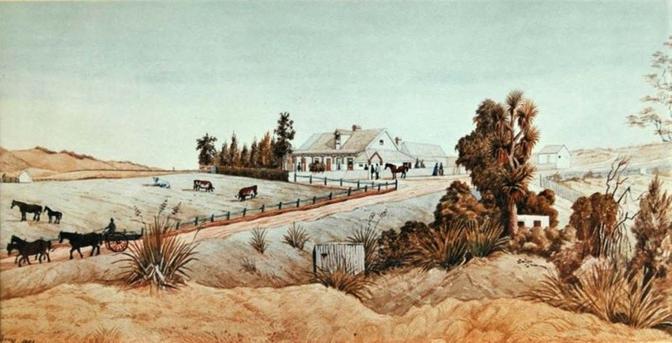

Eastern Bush Accommodation House/Hotel, Store & Post Office - Mouat: Photo of Accommodation House/Hotel painting done by C. Aubrey (1881). According to family records, Aubrey stayed at the Hotel with the Mouat's during 1881 while he painted their Accommodation House, in exchange for room and board. It is believed he was a remittance man and he made his living going around the country doing paintings. You can see photos of what is left of the Hotel under the archive entry no. CWA.004.100.10 The first Mouat to live and work at Eastern Bush, was Malcolm. He was also one of the earliest people in that district, according to much of the history that I have seen written. In his early days, Malcolm Mouat was reportedly an intrepid explorer of the Western Murihiku and Fiordland areas, and even has a lake named after him, Mouat Lake, which is west of Lake Poteriteri, nesting between the Princess and Cameron Mountain Ranges. See under 'Place Notes' below for a map link to this. Recorded by FWG Miller in his “West to the Fiords” book (which he used notes by WJ Mouat – Malcolm’s son, to write up some history on the family at Clifden and Eastern Bush), Malcolm Mouat was a Shetland Islander, who arrived at Murihiku Bluff in 1869 then proceeded by bullock wagon to Clifden, on the bullock track which was the only ‘road’. As Malcolm was an expert seaman, there he was tasked with the job of boating people, stock and supplies across the Waiau River. In Miller’s book, he states that Malcolm ferried sheep on the boat with their legs tied (presumably so they did not try to escape!), but cattle and horses swam behind the boat. Being made head shepherd about a year after arriving there, it is said Malcolm remained in this position for another nineteen years. Another record of a journey through Western Southland from 1889 by HW Potter, also mentions Malcolm Mouat and this is his own personal observations, stating that after calling for the boat, “In due course it reaches us and we are soon afloat and the way in which the boatman, Malcolm Mouat, handles the craft in the dark deserves commendation. We go some considerable distance down the stream; a vigorous pull across into an eddy brings us back almost opposite from where we embarked. Here we are cordially received by the manager, Mr Robert Tapper, Jnr.” When the land there was taken up by the Government for closer settlement, Malcolm also entered the ballot for land there, but missed out, as apparently that land was drawn out by another local settler, Scott. So as the story goes, Malcolm then purchased J Woods property ‘Woodlands’ off him instead, the year is said to have been 1891. Marrying Anna Bella Scobie, the daughter of the Eastern Bush Accommodation House/Hotel, Store and Post Office owner William Scobie (and wife) the following year, Malcolm purchased this property himself in 1905, (a fact which I have verified against legal land records) and the following year in 1906, Malcolm transferred this property into the name of his wife. In the intervening years, as the ‘Woodlands’ property was on the other side of the Waiau, the family had to get across the river to get to and from their home, which until the bridge was opened in 1899 (see separate entry for the Clifden Suspension Bridge), was a rather arduous affair. Neighbour Charlie Moffat, born in 1922 recalls some history of the Mouat family farm, in records faithfully kept by son Lincoln, who has graciously gifted copies of these to this archive. Charlie recalls that there was pretty much an unlimited supply of flax on the Mouat property ‘Braeview’ next door, and they employed a man, who he remembers as being Ossie Sheringham (unsure of exact spelling?), to cut the flax. He lived on what the Mouat’s called ‘The Farm’ in a cottage with his wife and had come out from England. This flax-cutter was employed by the Mouat’s for quite some years, from Charlie’s memory. He also recalls that the Mouat’s had some of the best land in Eastern bush, but it was largely undeveloped. My own guess is that their other occupations as Hotel and Store keepers, kept them busy. When Malcolm died in 1932, his wife continued on at the property with her sons, until Anna Bella herself, died in 1950. According to her will, she left the property in the hands of her three sons, William J (whose diary FWG Miller has listed as a reference for the family’s story), Malcolm Jnr., both of Eastern Bush, and Magnus Mouat at the ‘Woodlands’ property. Peter Begg’s recollections of the area as quoted in Miller’s book, cover the following points: “My first recollection of ‘Woodlands’ was that it was occupied by a Mr Manson, father of the well-known athlete and shearer, D Manson. Malcolm Mouat, a hardy Shetland Islander and for many years head shepherd on Clifden, married Miss Scobie and took over Woodlands, and a son owns the property.” The last Mouat the property was in the ownership of, was Stuart who farmed the property with his wife and family. They took great care to save the records of the Accommodation House/Hotel and there are many more photos and records to share on this with the archive, I have simply run out of time to get them all online at this point, so more later! If you or anyone you know has any more photos, information or accounts of the Mouat’s during the years, on any aspects of their business, farming or community life in the local area, please do share these in the comments section. You can do this by making a comment in the space provided under the image page. Please let us know if you have more records to add, they will add the heritage of the property.
The word for Day 26 in English then Māori of #Museum30 #Colleague #Hoamahi
A couple of colleagues or hoamahi of the Clifden Limeworks with their boiler. See more in our Central and Western Murihiku Southland Archive here: https://ehive.com/collections/202139/objects/1597951/clifden-district-business-industry-clifden-lime-works-company-ltd
#History #Heritage #Aotearoa #NZ #GLAM #Museums #Archives #digipres #Ōtautau #Murihiku #Southland #Farming #Limeworks
#Waiau #LaurieFamily #Ōrawia
#CommunityCollaboration #Homes #Whare #RuralNZ #AgricultureHistory #Clifden
#CentralAndWesternArchive


Photos of Clifden Lime Works Company machinery plant and vehicles: Photo 1: The wood-fired boiler mentioned in the historical account below. Photo 2: One of the Clifden Lime Works trucks & Harry Laurie, Jim's son. The Clifden Lime Works are well known by most who live or work in the area. However, the first person who is recognized as commercial working this site in most historical accounts, is James Nelson (Jim) Laurie of Ōrawia. It is recorded in the history of the area written by Ann MacGibbon, that in 1915, Jim started working the lime here with his traction engine he had purchased new, along with a J (Jack?) Chamberlain, but this was not where the current quarry is, it was near what was George Fowle’s house in the 1970’s, further along the gorge than the limeworks is now. In MacGibbon’s history, we are told that at this early stage, the men used the Burrell traction engine of Jim’s to operate a small devil crusher. (A photo of this traction engine can be seen on entry CWA.007.20 in this archive). The workers had to manually nap the lime into smaller lumps so they could process it for crushing. The property that was used for this operation was owned by the Hill’s at this time. As these operations were tedious and did not produce a high yielding result, the local farmers would snap up all that the small operation could make and as they were primarily operating the chaff-cutting contract operations, they could only extract the lime when they had no other work on. The MacGibbon account continues, by telling us how with regular payment instalments owning on the new engine, it was vital that the engine paid its way. Mr Chamberlain would ride off around the district obtaining what was owed by farmers for their lime, so as to meet the financial obligations. It has been recorded that on one such visit, while Chamberlain was out collecting cash for their operations, that he returned to find Jim Laurie laying in front of his tent, badly injured and cut up on the face after an accident grinding knives. It is said that the Ōtautau physician Dr Stewart was called out and travelled on his motorbike to check up on Jim. Dr Stewart got Jim stitched up and into the horsedrawn local ambulance, which delivered the injured man to Riverton Hospital, where Dr Trotter from there, took over his care. But from that day forward, Jim had nasty scarring on his face, which can be seen in a few photographs the family have of him from afterwards. The family have also verified having heard about this accident from their ancestors, and remember how Jim’s face was badly marked. Bonny (née Laurie) relates that: "Grandads (James Laurie) face was smashed at the Lime Works. From memory, I think it was a grinding wheel exploded??? He was taken to Riverton Hospital where they didn't expect him to live, and I always remember that disfigured face as a child." Another of her siblings also verifies the story that Jim was not expected to live and remembers being told how his face had ended up so disfigured, as the doctors at the hospital had not even expected him to live, so they just tried to save his life in the beginning and only after he survived, did they try to do surgery on his face. MacGibbon continues the story, to say that a year later in 1916, James (Jim) Laurie went into partnership with three other local men to form the first Clifden Lime Company, which had their Memorandum of Agreement and the Articles of Association agreed to at their first meeting on 6 October 1916 at the Durie’s boarding house at Clifden. Present at this inaugural meeting were: J Laurie, S Fowle, A Anderson, S Price and someone Scandrett. (NOTE: some of these names and/or initials are different in other reports). Apparently, being appointed manager for the new company at £5 per week, Jim Laurie was now elected to an official position. It was further agreed that the new elected Chairmain who was S Fowle, would be paid £5 per acre for lime rights and a further £1 per acre for “the privilege of taking lime from the property.” Secretary was voted as being Mr CE Borne, who interestingly is not mentioned as being present at the meeting?! Whereas John Fraser’s account of the district has quite different information to that recorded above. He claims that the Clifden Lime Works was started by Jim Laurie and Samuel Fowle on 19 October 1917. Then in Jim Laurie’s obituary from 1959, it tells us the story of how he started operations at the limeworks in 1915 with his traction engine, and his business grew to the point he took on partners of Sam Fowle, Alex Anderson and James Price, with the first lime company on this site formed to operate the very first lime company on the Fowle’s property, where it still operated at the time of his death. As there are two quite different accounts of the early history, it will take some investigation to sort out the correct history. Ann MacGibbon’s book tells us the early work at the limeworks site was accomplished with a large stationary boiler which was fired by wood. I was beyond excited to find what I believe is a photo of this machine in the Laurie photographic archive, which is shown above! While the machine may well have been stationary, it appears to have been fitted out with a great array of railway wheels, probably so that it could be moved around the site as needed. But you can see the boiler stack and the piles of wood at the back to feed the machine with fuel. It is further recorded how rock had to be first bored out with a hand auger that took the men all day to drill deep enough for a big shot of explosives to be used, which had to be napped by hand with just hammers and wedges. The price of lime at this stage was only £12.6s a ton. John Fraser’s 'Clifden Area Notes of Interest' history carries on with the information on the limeworks, telling us how the site’s lime was retrieved “predominantly by blasting and jaw crushers with much manual labour.” Fraser’s account goes on to tell us that a big day’s production was 30 tons, and how much of the lime was carted to the closest rail station in the day, which was Tūātapere, by the traction engine and trailer. He says the engine was meant to be taken over the Clifden Bridge by itself (20 ton limit) and how the 6-ton trailer with another 6 ton load was meant to be winched over afterwards. But, apparently Jack Chamberlain who has also been recorded in MacGibbon’s history book as working at the site, would drive the traction engine over the bridge “on the first pass using the early hours of the morning to his advantage.” Fraser retells the story of how when the works people would attempt to catch out the traction engine and trailer doing this, it had already passed over sometime earlier. But if you read entry no. CWA.007.20 of this archive, you will see that the ‘works people’ were well aware and already onto Jim Laurie for this! The Ōrawia district history book goes on to say how AW Rodger (of Birchwood) sold the limeworks an engine and trucks for £500, in September of 1918, and the company then put the price of lime up to £17.6s a ton “at the kiln”. It was claimed in this record that it was at this time that the Company was carting its lime to Tūātapere in the traction engine of Jim’s. The cost of a 12 ton load was said to be £15 a ton. However, I note here the 1917 complaint from the WCC about Jim’s excessive travelling around the district with his traction engine, largely the trips between Clifden and Tūātapere, so I am guessing this issue was rectified by this time, or that the Fraser timeline from above is more the more accurate version of events? The truck in the photo above could well be one of the original trucks provided by AW Rodger, according to someone who has dated parts seen on it. We are told in the same account from Ann MacGibbon’s book, that later on the Company used hard rubber tyred trucks to transport the lime instead of the traction engine, but this more modern technology would not have been available at the time we are talking about. Records in the MacGibbon history of Ōrawia, say that the Company increased its capital to £2,000 in 1919. Then in 1920, we are told that as the price of coal had increased so much, deliveries to neighbouring Tūātapere were ceased. It is also recorded here, that when the Ōrawia railway station was opened up in 1925, the Limeworks would cart three or four lorry loads of lime to there daily. Frasers account tells details of how the lime from the Clifden works was railed all over Southland for free, and that many shell and shark’s teeth fossils were found in the limestone. This sounds quite fascinating, but what a loss of historical knowledge of the past environment of our local area. Once again Jim’s obituary provides some more interesting details. Apparently there was a slump in the lime industry and the partners leased the plant out for a year, and during this time Jim went off to work at Messrs Hay and Vickerman, up at their Monowai based Diggers Hill sawmill, as the foreman there. They were said to be producing the timber specified for the Southland Electric Power Station building, which was totara. According to MacGibbon’s history, by 1925 the Company had installed new technology with electric machinery being used, and a new K B Crusher was also purchased in March of that same year. However, once again the Fraser account differs in dates, claiming that it was about 1935 when the site was electrified, which provided better light at night. Fraser also tells us how most of the lime was carted to crushers by trolleys on rails, and these would turn upside down at their destination, like the coal miners ones did. It carries on to tell us how the quarry would be kept around the same height as the crusher being used, so it prevented the need for power to run them, apart from the manpower to push them. John Fraser’s historical record then tells us that the limestone face at the quarry was mostly blasted using gelignite and how for quite some years, the men worked three shifts around the clock, and that the limeworks employed around 60 men and had two cook shops on the site. It carries on to inform us that the workers were living around the local district, some living in the Rabbit Board Cottages and others coming on foot or cycling in from Ōrawia. He suggests that a lot of the work at the lime quarry had occurred prior to the Cement Works at Ōrawia, which also employed a lot of people, but this account differs from that of Ann MacGibbon. We are told in the MacGibbon account that this early Company continued for some years, and is recorded as being voluntarily wound up in November 1936. So, I pick that this first company lasted from the early days of WW1, until nearly the start of WW2, that was quite a feat for those days. And, it is still operational, although in very different form, today (2022). The Ōrawia history by MacGibbon records that from 1936 until 1956, the Clifden Limeworks was run as a public company and Jas Chamberlain was installed as the works manager from its 1936 inception until 1949, when he transferred to the Totoroa Lime Works at Oamaru. An A Mathieson took over his position when Jas left. After this the next Quarry manager was Henry Pearce, with Ron Black following on from him. Then after that was Mr McMillan, followed by George Campbell then Jim Mills. However, I note that government records of the company tell a somewhat different story. They have the former Clifden Lime Company Ltd running from 1936 to 1946, with a change in ownership from 1947 to 1958, which is about when the Cement Works was said to have started. And, the historical NZ Companies Office background checks seem to back these different years up, as they have the company listed as changing ownership in 1947 also, which can be tracked in the information copied from NZ Companies Office below. The largest file I have seen of old records covers the years 1936 to 1970, which I believe will be about the time the Southland Cement Company Ltd closed down, but I have yet to verify this. I am wanting to buy a copy of this file so I can check the records for accuracy of this site and company history, but at a cost of $130, that is beyond the capacity of my volunteer labour on this community archive, without donations of time and money to take this further, if anyone can help. But then in 1951 a most terrible accident occurred at the site. In a nasty work accident where things went drastically wrong, three men were killed and two more escaped serious injury in a massive rockfall. The only news report I can find, from the Christchurch Press, leads with the headline, “Quarry Face Collapses, three men killed, bodies buried under tons of rock.” ------------------------------------------------------------------------------ The accident happened on 22 February 1951 and this story below was published on 23 Feb: “NZ Press Association. Invercargill, Feb 22. Three men were killed and two others had remarkable escapes when a fall of rock occurred at the Clifden Lime Company’s quarry this afternoon. Those killed were: Urich Bierwirth, Samuel Albert Payne and Alec McNaughton. The fall occurred without warning about 3.30pm. A rock face more than 60 feed high fell into the quarry where the men were working. Thousands of tons of rock came down. A mechanical shovel which Mr Bierwirth was driving was a complete loss. Two lorries, one of them driven by Mr McNaughton, were also buried under thousands of tons of rock. Mr Anthony Rohan was in another truck backed up to the face of the quarry when the fall occurred. He had the presence of mind to lie on the floor of the cab. The truck was badly damaged, but a steel covering over the cab saved Mr Rohan from death. Mr McNaughton jumped from his truck, but was buried under the falling debris. Mr Payne and Mr David Bungard were working at the top of the quarry face. Mr Payne fell and was buried under the slip. Mr Bungard fell down on top of the slip. Mr Bierwirth’s body was recovered early this evening from the wreckage of the shovel, after searchers had dug for about three hours. The search party was still looking for the other two bodies and was then expected to work throughout the night. Inspector J McKie, officer in charge of the Invercargill Police District, led the searchers. The men faced tremendous difficulties in trying to move rocks almost as big as houses.” (copied word for word from the Christchurch Press article, off PapersPast). ----------------------------------------------------------------------------- Those who lost their lives are now remembered below – if anyone has more information on them, I will happily add it in, as I would like to know more about them so more of a tribute can be made in their memories. The names below are taken off the inquest report which I am awaiting a copy of, some were spelled wrongly in the book or not written in full in the news: DEATHS: Bierwirth - Uric Barrett, 29, married, a mechanical shovel driver, lived at Reefton. McNaughton - Alexander Robert, (Alec) 46, single, lorry driver, lived at Clifden Payne - Samuel Albert, 45, widower with 2 children, quarry foreman, lived at Clifden. The men who escaped by a mixture of sheer luck and good management are recorded in the Orawia School and District history as being those below, but I am unsure of their full names: Rohan, Tony (Anthony – according to the news report) Bungard, Dave (David – according to the news report) According to Ann MacGibbon’s history, we are told how men and machines from the Winton Lime Works travelled to the scene to help the men clear up the mess. Police came from as far away as Invercargill, which matches the above news report, apparently along with the local Tūātapere Constable Skipworth, and Dr Eric Elder was also present, attending the accident. Les Bennet who was at school in Pukemāori, remembers hearing the loud rumble of the fall and he recalled the accident, which sent me searching for more information on it, as not much seemed to have been recorded in online searches or news articles available today, about this tragic event. I was told, but have not been able to confirm these facts yet, that the shocking tragedy let to new safety measures being employed across the board in quarrying/mining work, which is quite possible, but if I find any more new information on this or can verify that particular fact, I will update the record here. Hopefully the inquest report will shed some more light, as these usually carry recommendations. I note also that the Fraser account of the history also mentions the accident, but puts it in the late 1940’s. I can verify that this horrific accident was definitely in 1951, as I have found the inquest file, as noted above, and eagerly await the contents of its findings on this dreadful day. Apparently according to Fraser’s record, it was a face which had been made ready for blasting which came down prematurely, as it had been undermined too deeply and when it crashed, “it killed 3 or 4 people including Payne – the loader driver, and McNaughton.” He says several others who dived under trucks etc., had their lives spared, but they were not rescued for a day or two. I can verify that there were 3 men who lost their lives in the fall. Ann MacGibbon’s account tells us how the original Limeworks building that Jim Laurie had built was burned down and the building that was there in the 1970’s when the history was written, had been built by Sid Buckfield in 1952. This was developed to accommodate the more modern methods of extracting and supplying lime which had come about in later years. Apparently, according to the Ōrawia and district history of MacGibbon’s, in 1956, the name of the Public Company was changed from Clifden Lime to the Southland Cement Company and this company decided in 1957, to build a new Cement Works plant. They were said to have “canvassed Southland for shares and got the required amount and built the cement works at Orawia.” However once again, Public Company records tell a somewhat different story to this. They have the following account of the Clifden Limeworks Ltd: Overview: CLIFDEN LIME WORKS LIMITED is a NZ Limited Company from NEW ZEALAND. It was incorporated on 15 Jul 1947 and dissolved on 18 Apr 2012 and has the status: Removed. On searching through the current Companies Database, more details on this find is noted below, in the prior records of this company, showing the name and date changes of it: "Certificate of Incorporation CLIFDEN LIME WORKS LIMITED - 154751 NZBN: 9429040266718 This is to certify that H.F. LAURIE LIMITED was incorporated under the Companies Act 1933 on the 15th day of July 1947 and changed its name to CLIFDEN LIME WORKS LIMITED on the 27th day of November 1980 and was reregistered to become a company under the Companies Act 1993 on the 1st day of July 1997 and was removed from the register on the 18th day of April 2012." I do know that Harry (HF) Laurie had sold his transport business to Basil Jackson who then renamed it Western Haulage, and these parties were owners of the Clifden Lime Works Ltd, and both of these above companies were incorporated the same day. So ultimately, the plot thickens and I will have to do more research into the actual ownership over the years. It seems that DT Kings now own the Quarry at Clifden, which is backed up by their website: "Our Limeworks situated in Clifden have been operating for over 105 years. From this site we supply a range of different materials for a variety of jobs across Southland, such as: Lime - Used for agricultural purposes Naprock – Used on dairy lanes, forestry roads, tracks etc Big rocks – Great for flood protection Grey Rock - Roading" (the above is taken from DT Kings Clifden Lime Works website) Interestingly, the King's advertising logo used online, seems to indicate the correct date for the site’s establishment as a Commercial Lime Works operation, being 1915 when Jim Laurie is said to have first started there. Rob Hall is listed as the current Quarry Manager at the Clifden site, in 2022 when this history has been compiled. Carrying on further with the Limeworks and the Southland Cement story as per the account given by Ann MacGibbon, this tells us that the Company commenced their cement making operations in May of 1957 and production at the Quarry helped to dramatically increase production at the Limeworks site. There were apparently Government subsidies available for cartage at this stage of proceedings and so the limeworks operation prospered, carting hundreds of tons a day for the cement plant. But when these subsidies were removed, the demand fell off. The Cement Works were said to have been sold off to NZ Cement Holdings in February of 1968 and this company is said to have closed the plant around May of the same year. There will be other entries on the Cement Works in the archive in the future. Interestingly, the Hocken Library, who has the history of the Millburn Cement Company in its holdings, gives the following history: “One company, Milburn Lime & Cement Co. Ltd, dominated lime and cement production in Otago and Southland, The company changed its name to New Zealand Cement Holdings Ltd in 1964 (the head office moving from Dunedin to Christchurch in 1974), to Milburn New Zealand Ltd in 1987, and finally to Holcim New Zealand Ltd in 2001. Lime production was mainly centred at Milburn.” Rather fascinatingly, included in this history is the fact that over the years, the company absorbed many other local operations across the region, including the Southland Cement Co. Ltd (formerly Clifden Lime Co.) in 1968. This information ties in nicely with the above date of 1968 for closure. It does however, still not account for the fact that the Clifden Lime Co. seems to have only been removed from the company register in relatively recent years, this bears investigation. The account by MacGibbon informs us that with the Cement Works closed the Lime works still continued, but at a much reduced capacity. It says that Hec Woods who was still managing the limeworks in the early 1970’s, had been appointed in 1965/66. As the limeworks still had a contract but not much, Hec himself and Murray Laing, were the only ones still employed at the limeworks in the 1970’s. DT King’s, Western Haulage Co., South Freight Haulage, Herrick Bros, Bennet’s and Evan’s were all local freighting companies who used to cart lime from the works, as well as farmers using their own trucks. This concludes the history of the Clifden Lime Works at this stage, hopefully DT Kings can add more to the story, as I have contacted their General Manager to ask for help with this historical archive. More information about both the Clifden Limeworks will be added in due course. In the meantime, please do share your memories and stories of the business, the farms that used the lime from here and families or men involved in this long-standing local business. You can do this by adding a comment, at the bottom of this page under the images and information. Also, if you have any photos or info to share on any of this, can you please let us know, by using the contact details on this archive front page, or also leave a comment. Thanks. If anyone can identify the men in the wood-fired boiler on railway wheels photo please let us know, thanks. Also, if anyone knows what kind of truck this is or the year of it, too, that would be fabulous too.
 1.58m of awesomeness
 Central & Western Archive/GLAM