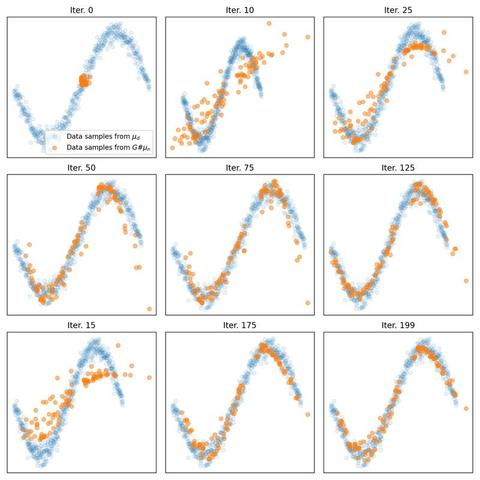
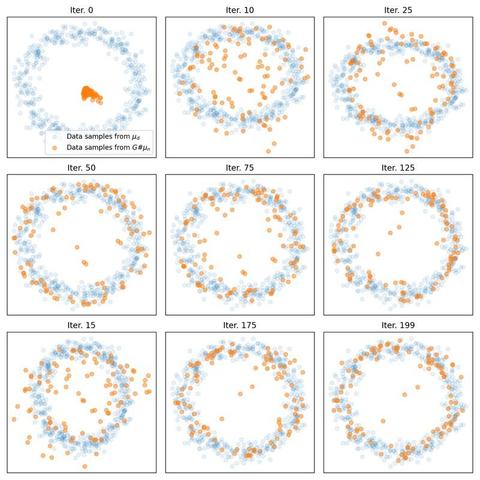
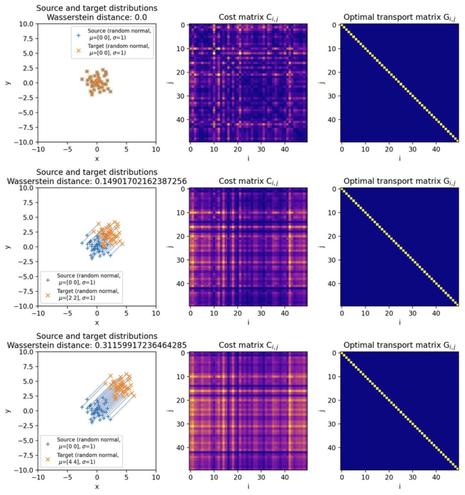
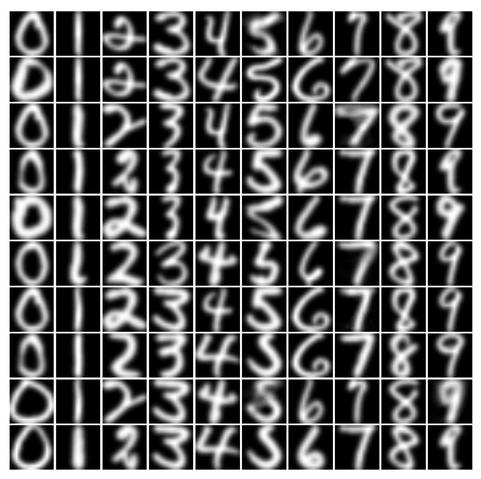
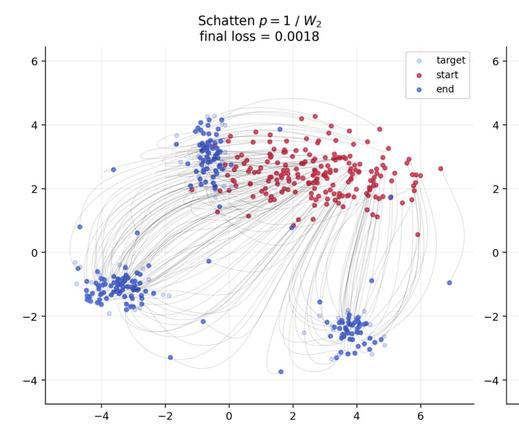
Following up on this, I also explored a more direct use of #WassersteinDistance in #WGANs: Instead of training a discriminator, the generator is optimized by explicitly computing the #OptimalTransport distance between real and generated samples. This turns the loss into the actual metric of interest and removes the adversarial setup, leading to a more direct and stable training signal. And we can generate cool animations, too ^_^

๐ŸŒ https://www.fabriziomusacchio.com/blog/2023-07-30-wgan_with_direct_wasserstein_distance/

#MachineLearning #Wasserstein

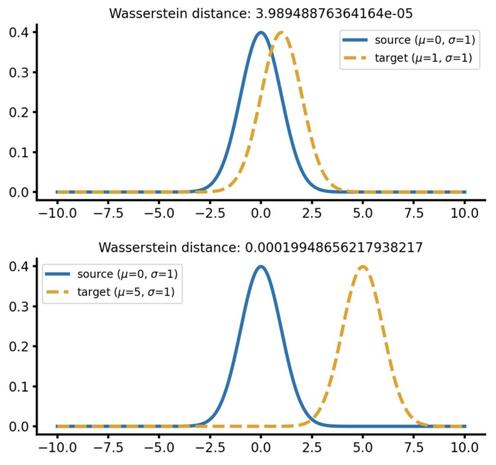
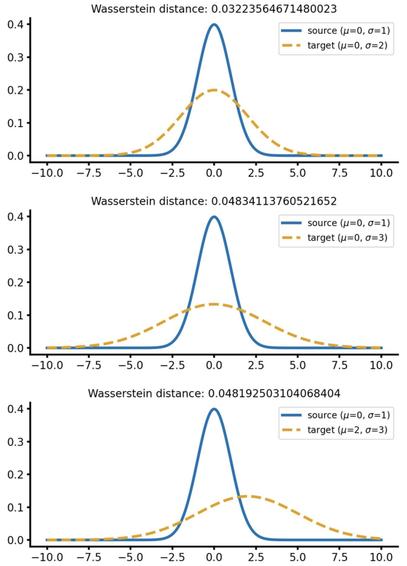
I actually wrote a short introduction to #WassersteinDistance and #OptimalTransport some time ago, if youโ€™re looking for a more intuitive entry point:

๐ŸŒ https://www.fabriziomusacchio.com/blog/2023-07-23-wasserstein_distance/

#Wasserstein

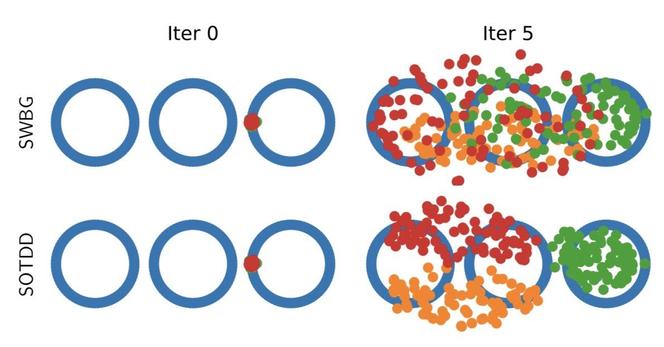
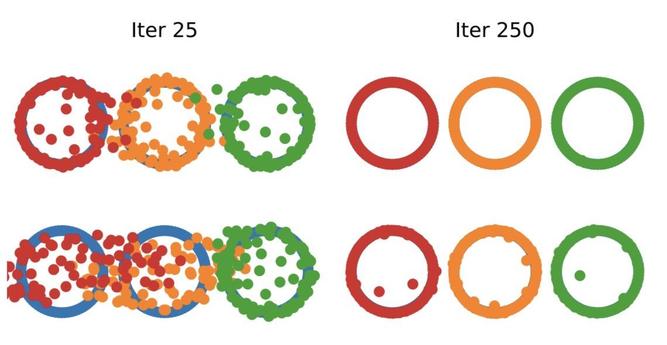
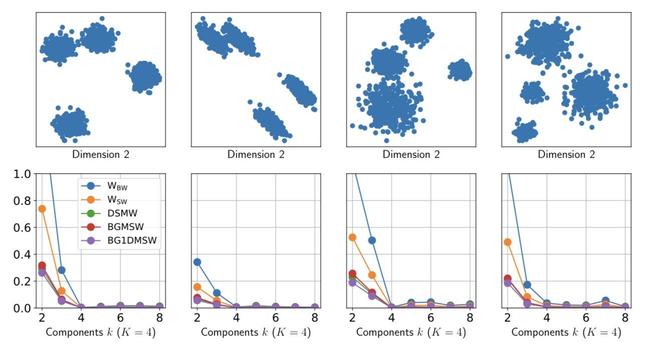
๐Ÿ“๐Ÿ“šNew study on #WassersteinDistance: Bonet et al. study #geodesic rays in #Wasserstein space and derive conditions for their existence. They show that #Busemann functions can be computed via #OT, with closed-form solutions for 1D and Gaussian cases. This enables efficient sliced distances for labeled datasets, closely matching classical metrics at lower cost and supporting dataset โ€œflowsโ€ for #TransferLearning.

๐ŸŒ https://openreview.net/forum?id=Xpt0HEC3fO

#OptimalTransport #MachineLearning

๐Ÿ“ New preprint by Gabriel Peyrรฉ: The paper introduces a new class of spectral #Wasserstein distances, linking #OptimalTransport with normalized #gradient methods. It shows that spectrally normalized #GradientDescent can be interpreted as a gradient flow in this spectral-W geometry, providing a principled bridge between #optimization dynamics and transport metrics:

๐Ÿ“„ https://arxiv.org/abs/2604.04891

#MachineLearning #WassersteinDistance