Banking-Trojaner Eternidade: WhatsApp-Wurm stiehlt Kontakte und Zugangsdaten

WhatsApp als Einfallstor für Schadsoftware

https://www.all-about-security.de/banking-trojaner-eternidade-whatsapp-wurm-stiehlt-kontakte-und-zugangsdaten/

#trojaner #whatsapp #schadsoftware #trustwave #imap

Eternidade-Trojaner im Umlauf: Warnung für WhatsApp-Nutzer

Erfahren Sie alles über den Eternidade-Trojaner und wie er WhatsApp-Nutzer mit Daten- und Konto-Diebstahl bedroht.

All About Security Das Online-Magazin zu Cybersecurity (Cybersicherheit). Ransomware, Phishing, IT-Sicherheit, Netzwerksicherheit, KI, Threats, DDoS, Identity & Access, Plattformsicherheit

🚨 Your inbox's invisible enemy: Sophisticated "Strela Stealer" malware is targeting European email users through fake invoices, using advanced techniques to steal Outlook and Thunderbird credentials. Learn how this threat operates and what you can do to protect your sensitive information.

#SecurityLand #CyberSecurity #EmailSecurity #Trustwave #StrelaStealer #Malware #Europe

https://www.security.land/new-malware-strela-stealer-targets-outlook-with-advanced-obfuscation-techniques/

New Malware "Strela Stealer" Targets Outlook with Advanced Obfuscation Techniques | Security Land

Trustwave uncovers Strela Stealer malware targeting Outlook and Thunderbird users in Europe with sophisticated obfuscation method.

Security Land
De opkomst van sys01 infostealer: een nieuwe dreiging voor facebook pagina’s en bedrijven

Met de toenemende afhankelijkheid van digitale platforms voor bedrijfsvoering, is de beveiliging van online activa belangrijker dan ooit tevoren. Een recent on

Tech Nieuws

Search & Spoof: Abuse of Windows Search to Redirect to Malware

Date: June 11, 2024
CVE: Not specified
Vulnerability Type: URL Redirection to Untrusted Site
CWE: [[CWE-601]]
Sources: SpiderLabs Blog

Synopsis

A phishing campaign leverages the Windows search protocol via HTML attachments to redirect users to malware, exploiting system vulnerabilities and user behavior.

Issue Summary

The campaign starts with a phishing email containing a ZIP-archived HTML file disguised as a routine document. Upon opening, the HTML file exploits the Windows search protocol to execute malicious commands. The file uses a <meta http-equiv="refresh" tag to reload the page and redirect the browser to a new URL, and an anchor tag as a fallback should the browser block the redirect.

Technical Key Findings

The attack uses the search: protocol to directly interact with Windows Explorer, directing searches to malicious servers. It involves parameters like query, crumb, displayname, and location, making the malicious activity appear legitimate. The attack concludes with the user being prompted to run a batch script disguised as a shortcut file.

![[Figure 5. Search window displaying results after invoking the search query..webp]]

Vulnerable Products

The specific vulnerability affects Windows systems that allow search-ms and search URI protocols to execute without adequate validation.

Impact Assessment

If exploited, this vulnerability can lead to unauthorized execution of malicious scripts, potentially compromising the user’s system and allowing further malicious activities, such as data theft or additional malware installation.

Patches or Workaround

Mitigation involves disabling the search-ms and search URI handlers by deleting associated registry entries with the following commands:

reg delete HKEY_CLASSES_ROOT\search /f
reg delete HKEY_CLASSES_ROOT\search-ms /f

Additionally, security updates for email scanners can detect and block such malicious HTML files.

Tags

#Windows #Malware #Phishing #URLRedirection #CyberSecurity #Cloudflare #IPFS #Trustwave

Search & Spoof: Abuse of Windows Search to Redirect to Malware

Trustwave SpiderLabs has detected a sophisticated malware campaign that leverages the Windows search functionality embedded in HTML code to deploy malware.

Ov3r_Stealer verbreitet sich über Facebook-Anzeigen

Eine neue Malware namens Ov3r_Stealer klaut Passwörter, leert Konten und Krypto-Wallets. Die Daten werden an einen Telegram-Bot übertragen.

Tarnkappe.info

"🛡️ Mitigation Tips Against Stealthy VBA Macros 📝"**

To protect against these stealthy VBA macros, consider disabling macros in Microsoft Office and restricting execution to trusted sources. 🚫📄

Educate users about the risks associated with enabling macros and employ robust email gateways for scanning attachments. 🎓📧

A YARA rule is also available to flag potential threats without relying on PDF header checks. 🚩🔍

key points:

Malicious Word Document in a PDF-like Header: The malicious Word document is concealed within a PDF-like header that contains the signature %PDF-1.7, typically associated with PDF files.

MIME Encapsulation of HTML Documents: Within the fake PDF structure, there is a MIME encapsulation of aggregate HTML documents (MHTML Web Archive) that contains an embedded Base64 encoded ActiveMIME object. ActiveMIME is an undocumented Microsoft file format often used to store VBA Macros.

Obfuscation Techniques: Various obfuscation techniques are employed to evade detection based on signatures. These include the use of a non-compliant MIME type, fragmentation of Base64 encoded strings, and URL percent-encoded strings to obscure links.

PDF Header Not Required: Interestingly, the embedded MHT document file doesn't actually require a PDF header. Any text preceding the MHT file allows Microsoft Word to open the document file and execute the malicious macro if enabled.

Evasion of Signature-Based Detection: This technique can evade signature-based detection systems that specifically scan for a PDF header. The analysis shows a significant difference in detection rates between samples with and without the fake PDF header.

Mitigation Advice: To protect users from such threats, the summary provides several mitigation recommendations, including configuring Microsoft Office to disable macros by default, restricting macro execution to trusted sources, educating users about macro risks, and using robust email gateways for scanning attachments.

YARA Rule: A YARA rule is provided to identify potential malicious macros embedded in files without conducting PDF header checking. This rule checks for specific strings and patterns within files to flag potential threats.

Source: Trustwave SpiderLabs Blog

Tags: #Cybersecurity #Mitigation #UserEducation #YARARule #Trustwave #SpiderLabs #EmailSecurity 🌐🔐🛡️

Stealthy VBA Macro Embedded in PDF-like Header Helps Evade Detection

A recent discovery by JPCERT/CC sheds light on a new technique of embedding a malicious Word document within a PDF file using a .doc file extension.

Rilide-Malware befällt Chromium-Browser und stiehlt Krypto-Coins

Die neue Rilide-Malware hat es auf Kryptowährungen von Nutzern Chromium-basierter Browser wie Chrome, Edge, Vivaldi oder Brave abgesehen.

Tarnkappe.info
Which was worse? Day after day waiting to learn the fate of those who were on the Russian submarine Kursk back in 2000? Or waiting to see what becomes of #Trustwave once Singtel finally announces that it is going to do something - anything - with it?

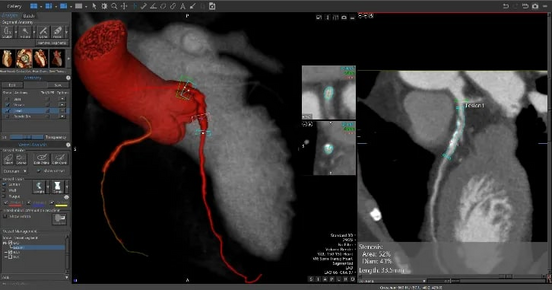
Reflected #XSS flaw in Canon Medical ’s Vitrea View could expose patient info

#Trustwave researchers discovered two XSS flaws in Canon Medical ’s Vitrea View tool.

https://securityaffairs.co/wordpress/136545/hacking/canon-medical-vitrea-view-xss.html

Reflected XSS bugs in Canon Medical ’s Vitrea View could expose patient info

Trustwave researchers discovered two XSS flaws in Canon Medical ’s Vitrea View tool that could expose patient information. During a penetration test, Trustwave Spiderlabs’ researchers discovered two reflected cross-site scripting (XSS) vulnerabilities, collectively as CVE-2022-37461, in third-party software for Canon Medical’s Vitrea View. The Vitrea View tool allows viewing and securely share medical images through […]

Security Affairs