 PPC Land
FYI: TV news beats social and AI on trust among high-value audiences, VAB finds: VAB survey: high-income households are 13x more likely to trust TV news than social media, and purchase intent rises among key advertiser-valued audiences. https://ppc.land/tv-news-beats-social-and-ai-on-trust-among-high-value-audiences-vab-finds/ #TVNews #SocialMedia #TrustInMedia #Advertising #HighIncomeHouseholds

ICYMI: TV news beats social and AI on trust among high-value audiences, VAB finds: VAB survey: high-income households are 13x more likely to trust TV news than social media, and purchase intent rises among key advertiser-valued audiences. https://ppc.land/tv-news-beats-social-and-ai-on-trust-among-high-value-audiences-vab-finds/ #TVNews #TrustInMedia #HighValueAudiences #SocialMedia #Advertising
TV news beats social and AI on trust among high-value audiences, VAB finds: VAB survey: high-income households are 13x more likely to trust TV news than social media, and purchase intent rises among key advertiser-valued audiences. https://ppc.land/tv-news-beats-social-and-ai-on-trust-among-high-value-audiences-vab-finds/ #TVNews #SocialMedia #TrustInMedia #HighValueAudiences #Advertising
 Zoomers of the Sunshine Coast 🇨🇦
The question: Will high-trust formats insulate them from misinformation, or does discovery on low-trust platforms create insurmountable risk?
Full research-backed deep dive:
🎧 Listen: https://www.buzzsprout.com/2405788/episodes/18017095
📖 Read: https://helioxpodcast.substack.com/p/why-gen-z-is-choosing-depth-over
Available for Broadcast on PRX https://exchange.prx.org/p/598865
Heliox: Where Evidence Meets Empathy Independent, moderated, timely conversations about things that matter.
Tag: @jesswildfire @NPR @CBC @TheConversation @EthicsInstitute
#MediaTrust #PodcastCulture #DigitalEthics #NewsLiteracy #GenZ #Misinformation #JournalismEthics #TrustInMedia #SocialMedia

🤔 Why Gen Z Is Choosing Depth Over Speed: Podcasts & Social Media - Heliox: Where Evidence Meets Empathy 🇨🇦
Please take a look at the corresponding Substack episode.There’s a story unfolding in the data that should give us hope, even as we navigate what feels like an increasingly fractured information landscape. It’s a story about choice, discernment, a...
 Brian Greenberg
⚠️ CADA radio secretly ran an AI DJ for 6 months — and nobody knew 🎙️🤖
The station’s show, “Workdays with Thy,” featured:
📻 4-hour daily broadcasts
🧠 An AI-generated voice modeled on a real human
🚫 No disclosure to listeners
The fallout:
💥 Audience trust eroded
🎭 Criticism over fake representation
⚖️ Growing calls for AI transparency rules
If audiences can’t tell real from AI — and companies don’t tell them — trust collapses.
#AIDJ #MediaTransparency #VoiceCloning #AIethics #TrustInMedia
https://www.theverge.com/news/656245/australian-radio-station-ai-dj-workdays-with-thy

 Jeder Institute
JEDER INSTITUTE’S ETHICAL STATEMENT ON LEAVING X (TWITTER)
At Jeder Institute, we are dedicated to fostering inclusive, ethical, and community-driven conversations that contribute to positive social impact.
Read the full statement here: https://www.jeder.com.au/social-media-ethical-statement/
#SocialMediaEthics #EthicalEngagement #DigitalResponsibility #CommunityIntegrity #OnlineAccountability #RespectfulCommunication #EthicalLeadership #TrustInMedia #TransparentPractices #InclusiveDialogue

 Miguel Afonso Caetano
"Rather than hope for a return of a more trusting public we should work for a more equitably sceptical one. Do not trust us. In fact, don’t easily trust anyone. Let doubt proliferate. Not the cynicism I spoke of earlier in this talk, but a well-calibrated scepticism. Journalism will always require some element of public trust – we will, for instance, continue to rely upon anonymous sources into the foreseeable future. But we should strive to minimise the extent to which we ask anyone to take us – or anyone else – at their word. In this way we address the questions of both credibility and credulity.
It follows that news organizations must adhere to our codes of ethics more scrupulously than ever before. Crucially, when we make mistakes we should not hesitate to own up to them. As Margaret Sullivan pointed out in a conversation the other day, only organisations that are devoted to getting it right will ever tell you when they got it wrong. In this regard, the definition of an untrustworthy news organisation is one that has never deemed it necessary to issue a correction.
How, you may ask, do we then inspire the public to believe what is being reported? Journalism should steal a page from the social sciences, where every source is documented, and the hard sciences where every finding must be replicable. In those arenas, showing how you derived your conclusions has long been a professional requirement. Every piece of significant journalism should be accompanied by a hyperlink with a caption that says “How this story was reported,” where a reader or viewer can find the documents, interviews and research that went into the story they just consumed."
 Techdirt [Unofficial]
Jeff Bezos’ Latest Gambit To Bring Back Trust In Media: Silence Editorial Cartoonists Who Call Out Your Sniveling Compliance

Jeff Bezos’ Latest Gambit To Bring Back Trust In Media: Silence Editorial Cartoonists Who Call Out Your Sniveling Compliance
Washington Post owner Jeff Bezos wants you to believe he’s on a noble mission to restore trust in media. His solution? Muzzling his own paper by blocking it from endorsing Kamala Harris in th…
 PsyPost
ChatGPT fact-checks can reduce trust in accurate headlines, study finds https://www.psypost.org/chatgpt-fact-checks-can-reduce-trust-in-accurate-headlines-study-finds/?utm_source=dlvr.it&utm_medium=mastodon #ChatGPT #FactChecking #AI #TrustInMedia #InformationAccuracy


 Artur Papyan
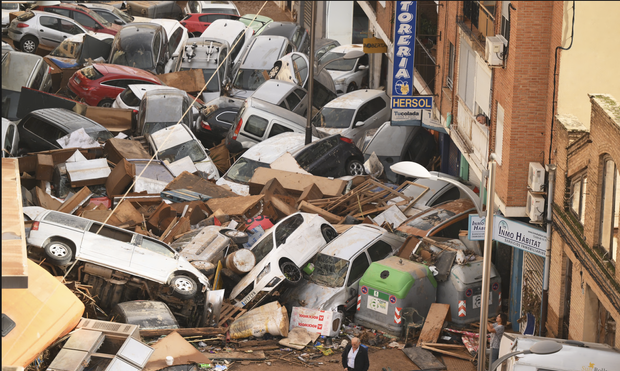
The rapid rise of AI-generated content is distorting our sense of reality. Recently, a genuine photograph of flood damage in Valencia was mistaken for an AI creation. This confusion highlights a growing issue: as AI content becomes more prevalent, our trust in real images is eroding. Additionally, the increasing reliance on AI-generated content could further degrade the quality of what we see on social media. 📸🤖 #RealOrAI #FloodsInSpain #TrustInMedia