 STEAM_Annie 🇬🇧
A really interesting #TheClimateQuestion this week on BBC World Service by @GraihaghJackson & Jordan Dunbar on #BBCSounds about China’s green revolution and whether solar farms and new coal power stations are a contradiction. https://www.bbc.co.uk/sounds/play/w3ct7038?partner=uk.co.bbc&origin=share-mobile

A really interesting #TheClimateQuestion last Sunday, on BBC World Service Radio, about rare earth metals mainly from China, and separately, the detection of methane in the atmosphere. #climate https://www.bbc.co.uk/sounds/play/w3ct7023?partner=uk.co.bbc&origin=share-mobile
Thank you so much #TheClimateQuestion , on BBC World Service radio, for answering my question about the carbon emissions of ships. Also, I learnt such a lot from the answers to the other people’s questions, about the home and the oceans. #climate

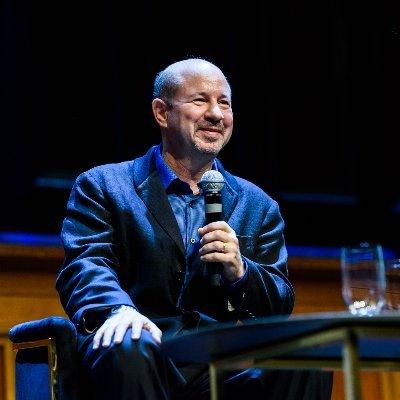 Michael E. Mann
"How is climate misinformation evolving?" | My interview with Jordan Dunbar for BBC's #TheClimateQuestion. Watch here: https://www.bbc.co.uk/sounds/play/w3ct5wsk?partner=uk.co.bbc&origin=share-mobile
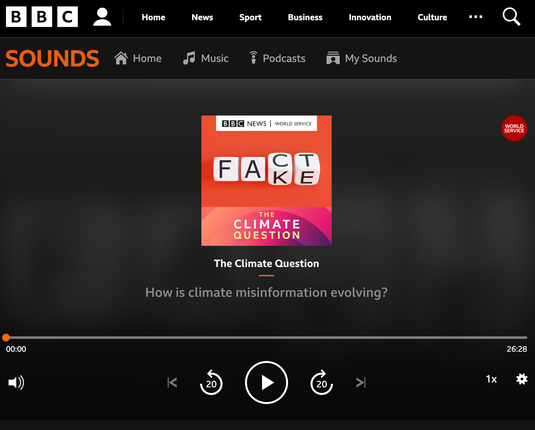

 Shradha Mukherjee
#Article: Your questions answered: Climate change for kids, solar power, music for plants by #TheClimateQuestion #BBC #BBCsounds #podcast #audio https://www.bbc.co.uk/sounds/play/w3ct5wrn
#ArticleSummary: "Graihagh Jackson is joined by her regular panel to answer climate-related questions from listeners. BBC climate editor Justin Rowlatt, Prof Tamsin Edwards of King's College London, and Dr Akshat Rathi, senior climate reporter for Bloomberg News, discuss telling children about climate change, solar panels, nuclear fusion and more. Plus, Graihagh finds out if playing music really helps plants to grow. If you have got a climate question, email us at [email protected]"
#Article: Yorkshire Puffin Festival is back Yorkshire Wildlife Trust holding its 5th annual puffin festival on Flamborough Cliffs on 1st and 2nd June 2024 #UK https://www.ywt.org.uk/news/yorkshire-puffin-festival-back
#ArticleSummary: "The Yorkshire Puffin Festival, organized by Yorkshire Wildlife Trust, celebrates one of the UK's largest puffin colonies on the cliffs from Filey to Bridlington. The festival, held on Flamborough Cliffs on 1st and 2nd June, offers various activities such as guided walks, boat trips, art projects, storytelling, games, and more for visitors to enjoy and learn about these iconic seabirds. Puffins, also known as 'sea parrots,' are recognizable for their colorful beaks and are a delight to watch as they return to the cliffs to raise their chicks during late spring. The festival aims to raise awareness about the decline of puffins globally and the importance of protecting their habitats and food sources. The event is supported by Yorkshire Coast BID and offers both pre-booked and drop-in activities for attendees to participate in."
By #www.smukher2.com #www.smukher2.eu #www.smukher2.co.uk #www.smukher2.org #www.smukher2.net #smukher2 to #Everyone:
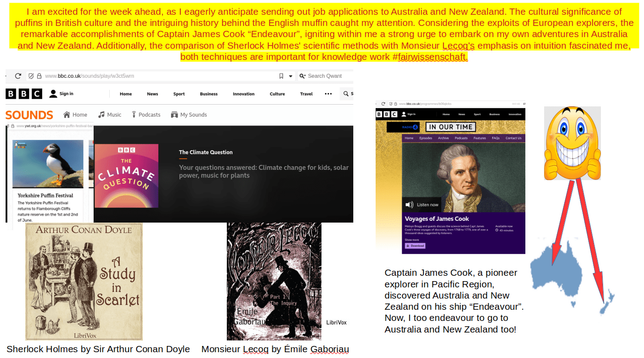
I am excited that tomorrow is Monday, the start of a new work week. This means there will be new jobs toapply to and hiring managers will look at my applications to Australia and New Zealand, the perfect places to quote John Keats its a "Nature Observatory" for me! I wanted my final post of today, #SundayFunday, to be about some nice, informative discussions about nature. Ergo, the article about Puffins and BBC Climate questions podcast -- unlike BBC iPlayer https://www.bbc.co.uk/iplayer which maynot be available globally (I have it cause I lived in UK), BBC sounds https://www.bbc.co.uk/sounds/podcasts is available globally (with or without login, but I login to keep track of podcasts and also to encourage them to keep up the good work, as more subscribers means they are doing good work) or you can get it on podcast players.
The English puffin bird is indeed native to the UK. The Atlantic puffin, also known as the common puffin, is a species of seabird that can be found in coastal areas of the North Atlantic Ocean, including regions around the United Kingdom. Puffins are known for their distinctive appearance with colorful beaks and penguin-like coloring. They hold a special place in British culture as iconic seabirds that represent the natural beauty of coastal regions. Their presence along the cliffs and islands of the UK has inspired artists, writers, and conservationists alike.
Contrary to popular belief, the English muffin did not originate in England. The inventor of the English muffin was Samuel Bath Thomas, a British expatriate who emigrated to New York City in the late 19th century. He created what he called a “toaster crumpet,” which later became known as the English muffin. The term “English muffin” was coined in 1894 and gained popularity in the United States. The consumption of English muffins in the UK reflects the country’s openness to culinary influences from around the world. The adaptation of this US bread product into British cuisine showcases how food traditions can evolve and blend across borders, although it was invented by a Briton in the US.
As everyone knows, North America was founded by Europeans such as Leif Erikson, a Viking explorer who arrived 500 years before Christopher Columbus in 1492. Other explorers and settlers who came to North America include Ponce de León in 1513, Hernando de Soto in 1539, Jacques Cartier in 1534, Sir Francis Drake in 1577, Samuel de Champlain in 1603, Henry Hudson in 1607, John Smith in 1607, and William Bradford and other Pilgrims who arrived on the "Mayflower" in 1620. For them, North America was the "American Experiment". For them indeed, North America was the "American Experiment", now as far as I am concerned "American Experiment (US not Canada) has failed". So I am venture to Australia and New Zealand, founded by another European Captain James Cook 1768 onwards.
(post continued in comments)
#ArticleSummary: "Graihagh Jackson is joined by her regular panel to answer climate-related questions from listeners. BBC climate editor Justin Rowlatt, Prof Tamsin Edwards of King's College London, and Dr Akshat Rathi, senior climate reporter for Bloomberg News, discuss telling children about climate change, solar panels, nuclear fusion and more. Plus, Graihagh finds out if playing music really helps plants to grow. If you have got a climate question, email us at [email protected]"
#Article: Yorkshire Puffin Festival is back Yorkshire Wildlife Trust holding its 5th annual puffin festival on Flamborough Cliffs on 1st and 2nd June 2024 #UK https://www.ywt.org.uk/news/yorkshire-puffin-festival-back
#ArticleSummary: "The Yorkshire Puffin Festival, organized by Yorkshire Wildlife Trust, celebrates one of the UK's largest puffin colonies on the cliffs from Filey to Bridlington. The festival, held on Flamborough Cliffs on 1st and 2nd June, offers various activities such as guided walks, boat trips, art projects, storytelling, games, and more for visitors to enjoy and learn about these iconic seabirds. Puffins, also known as 'sea parrots,' are recognizable for their colorful beaks and are a delight to watch as they return to the cliffs to raise their chicks during late spring. The festival aims to raise awareness about the decline of puffins globally and the importance of protecting their habitats and food sources. The event is supported by Yorkshire Coast BID and offers both pre-booked and drop-in activities for attendees to participate in."
By #www.smukher2.com #www.smukher2.eu #www.smukher2.co.uk #www.smukher2.org #www.smukher2.net #smukher2 to #Everyone:
I am excited that tomorrow is Monday, the start of a new work week. This means there will be new jobs toapply to and hiring managers will look at my applications to Australia and New Zealand, the perfect places to quote John Keats its a "Nature Observatory" for me! I wanted my final post of today, #SundayFunday, to be about some nice, informative discussions about nature. Ergo, the article about Puffins and BBC Climate questions podcast -- unlike BBC iPlayer https://www.bbc.co.uk/iplayer which maynot be available globally (I have it cause I lived in UK), BBC sounds https://www.bbc.co.uk/sounds/podcasts is available globally (with or without login, but I login to keep track of podcasts and also to encourage them to keep up the good work, as more subscribers means they are doing good work) or you can get it on podcast players.
The English puffin bird is indeed native to the UK. The Atlantic puffin, also known as the common puffin, is a species of seabird that can be found in coastal areas of the North Atlantic Ocean, including regions around the United Kingdom. Puffins are known for their distinctive appearance with colorful beaks and penguin-like coloring. They hold a special place in British culture as iconic seabirds that represent the natural beauty of coastal regions. Their presence along the cliffs and islands of the UK has inspired artists, writers, and conservationists alike.
Contrary to popular belief, the English muffin did not originate in England. The inventor of the English muffin was Samuel Bath Thomas, a British expatriate who emigrated to New York City in the late 19th century. He created what he called a “toaster crumpet,” which later became known as the English muffin. The term “English muffin” was coined in 1894 and gained popularity in the United States. The consumption of English muffins in the UK reflects the country’s openness to culinary influences from around the world. The adaptation of this US bread product into British cuisine showcases how food traditions can evolve and blend across borders, although it was invented by a Briton in the US.
As everyone knows, North America was founded by Europeans such as Leif Erikson, a Viking explorer who arrived 500 years before Christopher Columbus in 1492. Other explorers and settlers who came to North America include Ponce de León in 1513, Hernando de Soto in 1539, Jacques Cartier in 1534, Sir Francis Drake in 1577, Samuel de Champlain in 1603, Henry Hudson in 1607, John Smith in 1607, and William Bradford and other Pilgrims who arrived on the "Mayflower" in 1620. For them, North America was the "American Experiment". For them indeed, North America was the "American Experiment", now as far as I am concerned "American Experiment (US not Canada) has failed". So I am venture to Australia and New Zealand, founded by another European Captain James Cook 1768 onwards.
(post continued in comments)

 Grant
Grant.
Excellent appraisal of Cop28. Well worth a listen. ~27min
#Climate #ClimateChange #ClimateCrisis #ClimateDiary #Cop28 #BBC #TheClimateQuestion
https://www.bbc.co.uk/sounds/play/w3ct5bl2
.
" Why are climate scientists receiving abuse? "
Not surprising, given social media and the total mess that FB/X etc. are, as riled emotions = more cash.
An interesting listen on this subject on BBC Sounds - The Climate Question.
~27min listen
#Climate #ClimateChange #ClimateCrisis #ClimateDiary #Science #SocialMedia #ConspiracyTheories #BBC #BBCWorldService #TheClimateQuestion
 BBC World
Is the climate-busting idea of adapting cities so amenities can be reached within 15 minutes by foot or bike a good idea?
Find out on #TheClimateQuestion via @BBCSounds ⬇️
 Stephen McDonell
@bbcworldservice RT by @StephenMcDonell: Not everybody would look at the piles of waste rotting behind Tsangano market in Malawi and see an eco-friendly business opportunity. But Admore Chiumia had an idea - capture the gas from the rubbish and turn it into energy for locals More on #TheClimateQuestion ⬇️ https://nitter.hongkongers.net/bbcworldservice/status/1648302861942661121#m
BBC World Service (@bbcworldservice)
Not everybody would look at the piles of waste rotting behind Tsangano market in Malawi and see an eco-friendly business opportunity. But Admore Chiumia had an idea - capture the gas from the rubbish and turn it into energy for locals More on #TheClimateQuestion ⬇️
 Teemu Toppinen
@Piia Joo. Lähinnä #Spotify. Mm. #Filosofia (esim. #HistoryOfPhilosopyWithoutAnyGaps) #Ilmastokriisi (esim. #BBC #TheClimateQuestion) #Jalkapallo (”omasta” joukkueesta ja vähän muustakin, erit. #EFL) #Ukraina (#Ukrainecast); harvemmin myös #Musiikki #Historia jne. Pitäisikin miettiä joitain uusia kokeiltavaksi.