From boiling droplets to hydrogen storage, surface geometry matters.
A newly proposed carbon monolayer with engineered pores and lithium anchoring shows how nanoscale design can tune gas–surface interactions and molecular mobility.
🔗 https://pubs.acs.org/doi/10.1021/acs.langmuir.6c00476
#SurfaceScience #Nanotechnology #2DMaterials #HydrogenStorage #MaterialsResearch
Graphene may look “invisible” to water droplets at large scales, but at the nanoscale it quietly reshapes how water molecules align.
A new study reveals graphene acts like a charge mirror, redistributing electric fields without changing overall wettability.
🔗 https://phys.org/news/2026-04-graphene-mirror-droplets-dont.html
#Graphene #Wetting #Nanoscience #SurfaceScience #Water
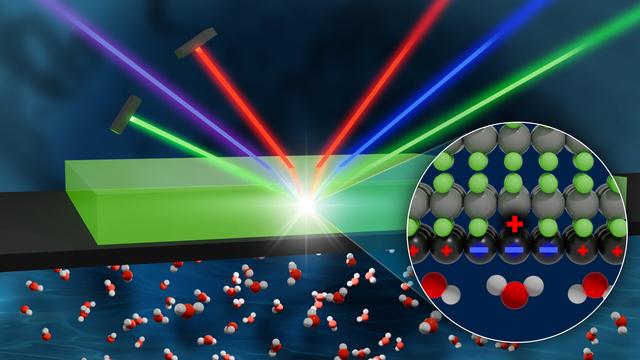
Graphene as a charge mirror: Why water droplets 'see' graphene—but don't show it
Research on graphene has made great strides in recent years. However, to fully harness its potential in applications such as desalination membranes, sensors, and energy storage and conversion, a deeper understanding of the interaction between graphene and water is required.
Engineered capillary materials and even natural structures like wood can sustain vapor levitation and self-propel on hot surfaces, expanding Leidenfrost physics beyond droplets.
🔗 https://www.nature.com/articles/s41567-026-03255-x
#LeidenfrostEffect #Biomimetics #Physics #MaterialsScience #SurfaceScience
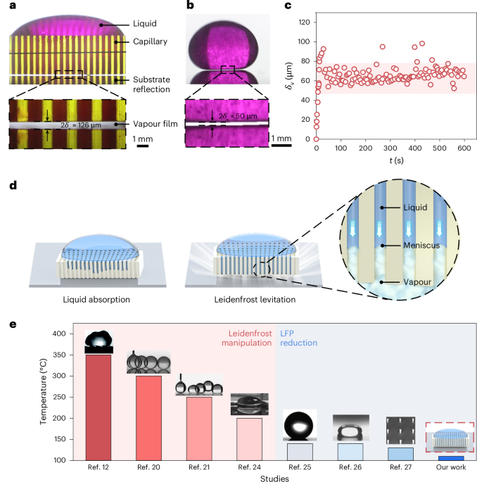
Capillary Leidenfrost effect - Nature Physics
If a surface is hot enough, a liquid droplet can develop an insulating vapour layer that makes it levitate above the surface, which is known as the Leidenfrost effect. A solid structure of liquid-filled capillaries is now shown to display this levitating effect at much lower temperatures.
From condensation to self-cleaning: electrostatically sprayed coatings trigger droplet jumping and limit water buildup.
Airflow and surface orientation also shape performance in cooling systems.
🔗 https://doi.org/10.1063/5.0312727
#Condensation #FluidPhysics #ThermalEngineering #SurfaceScience #HVAC
Dynamic surface tension control in molten aluminum shows a controllable 15–30% fluctuation under extreme loads, paving the way for better wetting and interface management in engineering processes.
🔗 https://www.nature.com/articles/s41598-026-37039-3
#MaterialsEngineering #SurfaceScience #MoltenMetal #PrecisionCasting #FluidMechanics
Evolution of surface tension in strained molten aluminum: a liquid–vapor interface study - Scientific Reports
As a key physical property determining the wettability, adsorption, and structural stability of liquid materials, surface tension is of great significance in material preparation and micro-nano processing. However, traditional methods often rely on chemical composition or temperature adjustments, and how to achieve dynamic control of surface tension under pure mechanical loads remains a frontier issue in surface physics and materials science. Especially under high-frequency extreme loads, the microscopic mechanism of the surface dynamics of molten metal is still unclear, and it is necessary to establish effective theoretical models and numerical methods to reveal it. In this case, we simulated the mechanical response characteristics of the molten aluminum metal surface system to the lateral mechanical cyclic load, and analyzed the steady oscillatory behavior of the cyclic load using the dynamic surface tension of the system. This paper demonstrates that under the 50 GHz high frequency and 5% high amplitude cyclic loading conditions, the average growth rate of the dynamic surface tension of the aluminum liquid can reach approximately 5%. The peak and valley values of the instantaneous dynamic surface tension can respectively reach 30% and 15% of the equilibrium surface tension, showing a controllable trend of significant increase in surface tension with the increase of the load. We applied the previously proposed method of quantitatively adjusting the surface tension under load action to the surface system of the aluminum liquid, and obtained the conclusion that the surface tension of the aluminum liquid can also be dynamically adjusted. This verifies the reliability and universality of this regulation strategy in metal liquids, and provides strong support for the generalized intrinsic frequency and damping constant correlation theory. The analysis of liquid layering clarifies the cross-scale correlation mechanism between macroscopic mechanical response and atomic-scale dynamics, providing new insights into the microscopic mechanism of surface behavior. The research results clarify the quantitative relationship between frequency, amplitude and the rate of surface tension change. This provides direct basis for the process optimization and parameter design of liquid aluminum in precision casting, additive manufacturing and microfluidic systems. By reasonably regulating the load conditions, active control of the surface tension can be achieved. This will enhance the scientificity and process controllability of system design in applications such as wetting adjustment, interface stability improvement and flow behavior optimization.
Researchers made an egg-roll-shaped capillary tube with inclined microplates. Liquids move directionally based on contact angles, opening new ways to control fluids in microchannels.
🔗 https://pubs.aip.org/aip/pof/article/38/3/032004/3381856/A-curled-open-capillary-tube-for-selective
#Microfluidics #Capillarity #LiquidTransport #SurfaceScience #PhysicsOfFluids
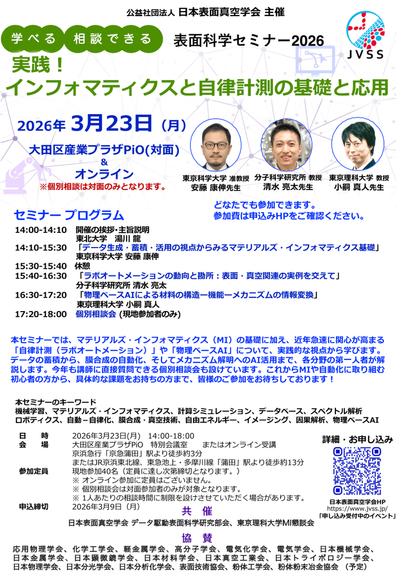
1月23日(金)13:00-17:20に、表面技術協会関西支部と日本表面真空学会
#JVSS 関西支部が『表面科学技術研究会2026』を開催。テーマは「PFAS規制の動向と代替技術の展望」。講演4件。大阪市城東区・大阪産業技術研究所およびオンラインにて。詳細は
https://www.jvss.jp/chapter/kansai/hyoumengijutsu2026/ に。
#Seminar #SurfaceScience #PFASDroplets on heated, textured surfaces – how do they move?
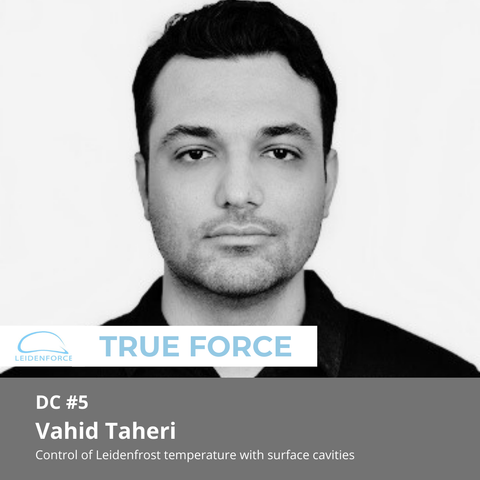
Vahid Taheri (DC#5) joins #LeidenForce to study how surface microstructures control droplet dynamics and the Leidenfrost temperature.
With Prof. Maria Fernandino (NTNU), @airbus & Université de Lille
🔗 Read more: https://shorturl.at/bNu4x
#HeatTransfer #PhD #SmartSurfaces #SurfaceScience
日本表面真空学会
#JVSS が『第16回 社会人のための表面科学ベーシック講座』をオンラインで開講。Google Classroom を用い、講義動画を配信。演習問題回答、講師への質問もオンラインで。12月1日(月)視聴開始、2026年1月11日(日)まで視聴可。申込締切11月26日。詳細は
https://www.jvss.jp/ja/activities/04/detail/00026.html に。
#BasicCourse #SurfaceScience LeidenForce
 Jisso News