How Raspberry Pis Were Used to Protect NASA Telescope Data

The Register explains how scientists used the power of Raspberry Pis saved data from the Super Pressure Balloon Imaging Telescope (SuperBIT). However, the cost saving is undeniable, as is the benef…

Adafruit Industries - Makers, hackers, artists, designers and engineers!

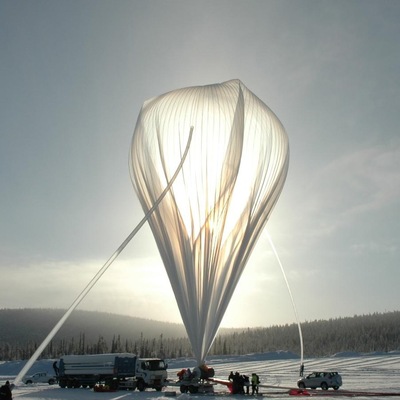
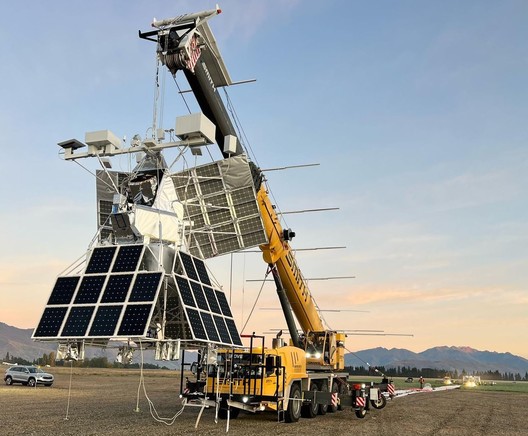
The Super Pressure Balloon Imaging Telescope SuperBIT launched in April on a high altitude balloon used a set of capsules which were planned to be released at intervals during the mission.

However it came down early so they dropped 2 capsules.

The telescope got destroyed on landing due to the parachute failed to release on landing.

The capsules used Raspberry PI 3B's with 5TB of SSD.

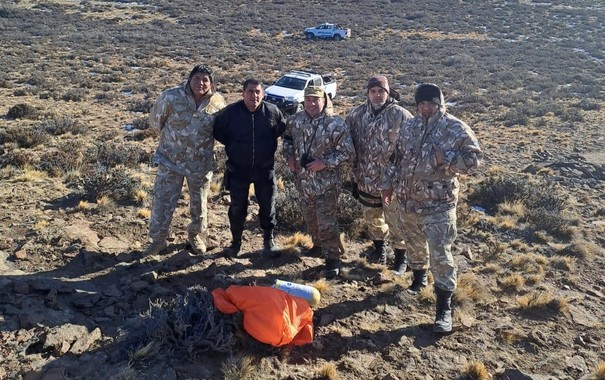
Both capsules were recovered.

https://www.theregister.com/2023/11/16/scientists_use_raspberry_pi_tech/

#raspberryPi #superBit #balloon #telescope #astronomy

Scientists use Raspberry Pi tech to protect NASA telescope data

Sneakernet for the stars?

The Register

An in-depth view of one of the systems that could be a key advance for future long-duration #balloon missions: data retrieval.

Last April, the #SuperBIT #telescope was launched from #Wanaka, New Zealand, to study Dark Matter.

Onboard were four DRS (Data Recovery System) capsules containing 5 TB solid-state data storage, plus a #GNSS receiver, #Iridium transmitter, and parachute. Two of them allowed to salvage data despite payload destruction at landing.

https://www.mdpi.com/2226-4310/10/11/960

Data Downloaded via Parachute from a NASA Super-Pressure Balloon

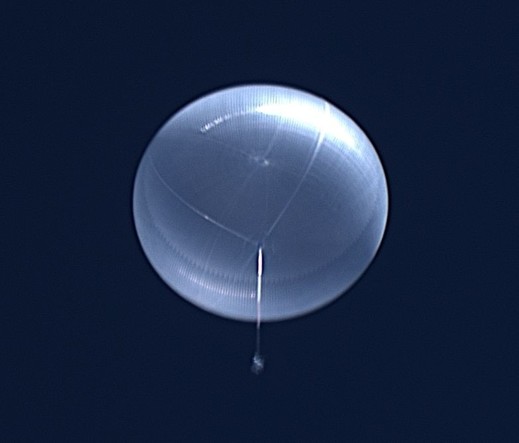
In April 2023, the superBIT telescope was lifted to the Earth’s stratosphere by a helium-filled super-pressure balloon to acquire astronomical imaging from above (99.5% of) the Earth’s atmosphere. It was launched from New Zealand and then, for 40 days, circumnavigated the globe five times at a latitude 40 to 50 degrees south. Attached to the telescope were four “drs” (Data Recovery System) capsules containing 5 TB solid state data storage, plus a gnss receiver, Iridium transmitter, and parachute. Data from the telescope were copied to these, and two were dropped over Argentina. They drifted 61 km horizontally while they descended 32 km, but we predicted their descent vectors within 2.4 km: in this location, the discrepancy appears irreducible below ∼2 km because of high speed, gusty winds and local topography. The capsules then reported their own locations within a few metres. We recovered the capsules and successfully retrieved all of superBIT’s data despite the telescope itself being later destroyed on landing.

MDPI

Can a Balloon Telescope Find Dark Matter? Follow the Team That Built SuperBIT for NASA

A mini-documentary about the recent adventure of Super-BIT telescope under a NASA Super Pressure Balloon

https://www.youtube.com/watch?v=sZXtyfdjbpY

#SuperBIT #Balloon #Telescope #Astronomy

Can a Balloon Telescope Find Dark Matter? Follow the Team That Built SuperBIT for NASA

YouTube

Hubble on a Balloon? NASA Begins an Iconic Mission Called Superbit - YouTube
https://www.youtube.com/watch?v=8bZj_QNO6nE

#Astronomy #Telescope #Superbit

Hubble on a Balloon? NASA Begins an Iconic Mission Called Superbit

YouTube

Da #SuperBIT al prossimo #UESO-SPB2, la bellezza di galleggiare guardando le stelle... #stardust @MarcoCasolino

https://www.stardust.blog/2023/04/la-tarantola-di-superbit/

La tarantola di SuperBIT

Nota anche come 30 Doradus, la Nebulosa Tarantola è una gigantesca regione (diametro di oltre mille anni luce, per capirci) di formazione stellare all’interno della vicina Grande Nube di Mage…

Stardust
APOD: 2023 April 27 - The Tarantula Nebula from SuperBIT

A different astronomy and space science related image is featured each day, along with a brief explanation.

SuperBIT liefert seine ersten wissenschaftlichen Aufnahmen | astropage.eu

Das Super Pressure Balloon Imaging Telescope (SuperBIT), das am 16. April 2023 mit einem Forschungsballon von Wānaka (Neuseeland) aus startete, hat seine ersten wissenschaftlichen Bilder dieses Fluges gemacht: der Tarantelnebel und die Antennengalaxien. Diese Bilder wurden mit einem Ballonteleskop in rund 33 Kilometern Höhe gemacht, was Wissenschaftlern erlaubt, diese Ziele von einer Ballonplattform in einer

astropage.eu
Neuer Fahnder für die Dunkle Materie. Ballon-Teleskop SuperBIT soll Selbst-Wechselwirkung der Dunklen Materie klären. #DunkleMaterie #SuperBIT #Teleskop #Astronomie #BallonTeleskop
https://www.scinexx.de/news/kosmos/neuer-fahnder-fuer-die-dunkle-materie/
Neuer Fahnder für die Dunkle Materie

Ein Mitte April gestartetes Ballon-Teleskop soll helfen, die Natur der Dunkeln Materie zu ergründen. Dafür kartiert das "SuperBIT"-Teleskop kollidierende

scinexx | Das Wissensmagazin

Eerste opnames van de SuperBIT ballontelescoop

De Superpressure Balloon-borne Imaging Telescope (SuperBIT) – een samenwerkingsverband tussen de universiteit van Durham, de universiteit van Toronto, de universiteit van Princeton en de NASA – werd op 16 april 2023 vanuit Wānaka in Nieuw-Zeeland gelanceerd.

https://www.kuuke.nl/eerste-opnames-van-de-superbit-ballontelescoop/

#antennestelsel #stratosfeer #SuperBIT #tarantula-nevel #telescoop

Eerste opnames van de SuperBIT ballontelescoop

De Superpressure Balloon-borne Imaging Telescope (SuperBIT) – een samenwerkingsverband tussen de universiteit van Durham, de universiteit van Toronto, de universiteit van Princeton en de NASA – werd op 16 april 2023 vanuit Wānaka in Nieuw-Zeeland gelanceerd.

Kuuke's Sterrenbeelden