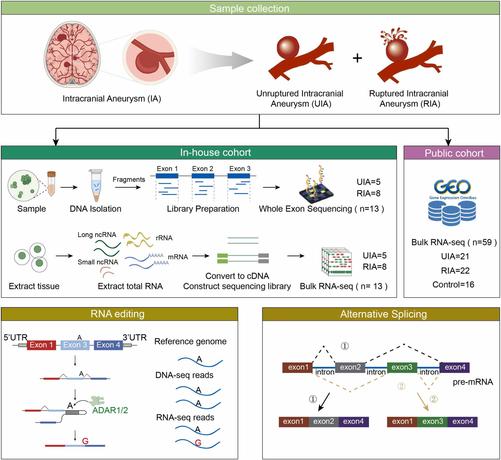
Swansea experts awarded £1.2 million for test that could transform stroke care

The three‑year project, led by Swansea University Medical School in partnership with Swansea Bay University Health Board and the Massachusetts Institute of Technology (MIT), aims to create the first accurate test to measure how blood clots break down.

Tackling a leading cause of death

Stroke remains the fourth leading cause of death in Wales. Current treatment involves administering powerful clot‑busting drugs, but doctors have no precise way of knowing the right dose for each patient.

Professor Karl Hawkins, who is leading the project, explained:

“A blood clot will form to stop bleeding, and eventually the body dissolves it. That process is called fibrinolysis. At the moment there is no accurate technique to quantify this process. Our approach, using rheology, allows us to pinpoint the exact moment a clot breaks down.”

Safer, more personalised treatment

The team hopes the test will act as a biomarker, helping clinicians predict how well clot‑busting drugs will work for individual patients. That could reduce the risk of dangerous side‑effects such as bleeding, while ensuring patients receive the most effective treatment.

Dr Suresh Pillai, Director of the Welsh Centre for Emergency Medicine Research at Morriston Hospital, said:

“These drugs cost around £600 a time and must be given within four and a half hours of symptoms. But every patient is different. We don’t know if we are over‑dosing or under‑dosing. If this test works, it would be groundbreaking. It would have a huge impact on how we manage patients.”

International collaboration

The project will draw on expertise from Swansea University’s Complex Fluids Research Group and MIT’s Professor Gareth McKinley. Initial work will test blood samples from healthy volunteers before moving to stroke patients at Morriston Hospital.

The aim is to develop a single test that can measure both clot formation and breakdown, paving the way for pharmaceutical companies to design safer, more effective medicines.

Looking to the future

Dr Pillai added that in the longer term, the test could even allow clot‑busting drugs to be given in the community rather than waiting for hospital admission.

“Every second matters in stroke care. If we can bring treatment closer to patients, the benefits for survival and recovery could be enormous.”

The £1.2 million funding has been awarded by the UKRI Engineering and Physical Sciences Research Council (EPSRC).

Related articles

#bloodClot #MassachusettsInstituteOfTechnology #MIT #MorristonHospital #Stroke #StrokeResearch #Swansea #SwanseaBayUniversityHealthBoard #SwanseaMedicalSchool #SwanseaUniversity #WelshCentreForEmergencyMedicineResearch
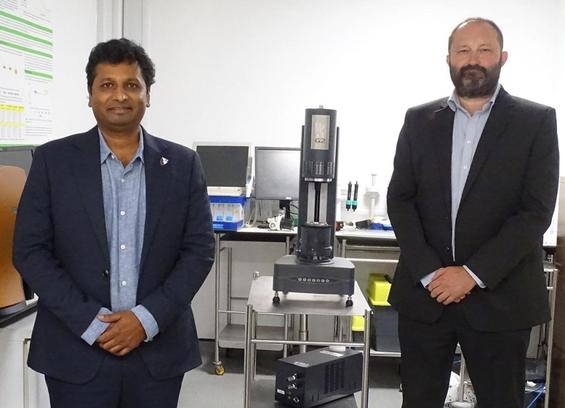
🧠 Could reprogramming RNA offer a new path to brain aneurysm therapies?

🔗 In-depth analysis of the RNA editing landscape in intracranial aneurysms and its potential role in alternative splicing. Computational and Structural Biotechnology Journal, DOI: https://doi.org/10.1016/j.csbj.2025.09.021

📚 CSBJ: https://www.csbj.org/

#RNAediting #IntracranialAneurysm #Neuroscience #Genomics #PrecisionMedicine #MedicalResearch #BrainHealth #StrokeResearch

'Perihaematomal Oedema Evolution over 2 Weeks after Spontaneous Intracerebral Haemorrhage and Association with Outcome: A Prospective Cohort Study' - a #Research article in the Karger: #Neurology and #Neuroscience collection on #ScienceOpen:

🔗 https://www.scienceopen.com/document?vid=b17f78eb-29c2-4985-9e5d-7e5bdb96e736

#CerebrovascularDiseases #Medicine #StrokeResearch

Perihaematomal Oedema Evolution over 2 Weeks after Spontaneous Intracerebral Haemorrhage and Association with Outcome: A Prospective Cohort Study

<p xmlns:xsi="http://www.w3.org/2001/XMLSchema-instance" dir="auto" id="d36007e318"> <b> <i>Introduction:</i> </b> We know little about the evolution of perihaematomal oedema (PHO) >24 h after ICH onset. We aimed to determine the trajectory of PHO after ICH onset and its association with outcome. <b> <i>Methods:</i> </b> We did a prospective cohort study using a pre-specified scanning protocol in adults with first-ever spontaneous ICH and measured absolute PHO volumes on CT head scans at ICH diagnosis and 3 ± 2, 7 ± 2, and 14 ± 2 days after ICH onset. We used the largest ICH if ICHs were multiple. The primary outcomes were (a) the trajectory of PHO after ICH onset and (b) the association between PHO (absolute volume at the time when most repeat CT head scans were obtained, and change in PHO volume at this time compared with the first CT head scan) and poor functional outcome (modified Rankin scale 3–6 at 90 days). We pre-specified multivariable logistic regression models of this association adjusting analyses for potential confounders: age, GCS, infratentorial ICH location, and intraventricular extension. <b> <i>Results:</i> </b> In 106 participants of whom 49 (46%) were female, with a median ICH volume 7 mL (interquartile range [IQR] 2–22 mL), the trajectory of median PHO volume increased from 14 mL (IQR: 7–26 mL) at diagnosis to 18 mL (IQR: 8–40 mL) at 3 ± 2 days ( <i>n</i> = 87), 20 mL (IQR: 8–48 mL) at 7 ± 2 days ( <i>n</i> = 93) and 21 mL (IQR: 10–54 mL) at 14 ± 2 days ( <i>n</i> = 78) ( <i>p</i> = <0.001). PHO volume <i>at</i> each time point was collinear with ICH volume at diagnosis (│r│ >0.7), but the change in PHO volume between diagnosis and each time point was not. Given collinearity, we used total lesion (i.e., ICH + PHO) volume instead of PHO volume in a logistic regression model of its association <i>at</i> each time point with outcome. Increasing total lesion (ICH + PHO) volume at day 7 ± 2 was associated with poor functional outcome (adjusted OR per mL 1.02, 95% CI: 1.00–1.03; <i>p</i> = 0.036), but the increase in PHO volume between diagnosis and day 7 ± 2 was not associated with poor functional outcome (adjusted OR per mL 1.03, 95% CI: 0.99–1.07; <i>p</i> = 0.132). <b> <i>Conclusion:</i> </b> PHO volume increases throughout the first 2 weeks after onset of mild to moderate ICH. Total lesion (ICH + PHO) volume at day 7 ± 2 was associated with poor functional outcome, but the change in PHO volume between diagnosis and day 7 ± 2 was not. Prospective cohort studies with larger sample sizes are needed to investigate these associations and their modifiers. </p>

ScienceOpen

What drains your brain during a stroke? A new study shows neurons burn out fast—but may still bounce back with timely rescue. #StrokeResearch #BrainHealth #Neuroscience

https://geekoo.news/when-the-brains-energy-fails-neurons-in-crisis/

When the Brain’s Energy Fails: Neurons in Crisis | Geekoo

Leipzig researchers have visualized how neurons lose energy during stroke-like events—and discovered the brain may still have a window to recover if energy can be quickly restored.

Geekoo
Groundbreaking study reveals migraines and non-traditional factors significantly increase stroke risk in adults under 50. Comprehensive screening crucial for prevention. #StrokeResearch #Healthcare