 omgeedigitech
Beyond Digestion: The Revolutionary Self-Healing Capabilities of Your Gut
Our digestive system is a marvel of biological engineering, performing an ongoing miracle of self-renewal and repair that often goes unnoticed. Perhaps the most astounding feat is the complete regeneration of the intestinal lining every 5-7 days – a process so rapid and efficient that it outpaces nearly every other tissue in the human body.
The Stomach: A Fortress of Digestive Power
The stomach is an extraordinary organ, designed to withstand the harsh acidic environment necessary for breaking down our food. Its architecture is a testament to evolutionary ingenuity, with specialized cells working in harmony to maintain a delicate balance between aggressive digestion and self-protection.
Discover the Wonders of Your Digestive System
The digestive system is a remarkable network that plays a crucial role in maintaining overall health and well-being. It begins with the mouth, where food is mechanically broken down and mixed with saliva, initiating the digestive process. As food travels down the esophagus to the stomach, it is further broken down by gastric acids and enzymes.
The small intestine is where the majority of nutrient absorption occurs, with its extensive surface area allowing for efficient uptake of vitamins, minerals, and other essential nutrients into the bloodstream. The remaining waste then moves to the large intestine, where water is reabsorbed, and the body prepares to eliminate what is no longer needed.
Understanding the complexities of the digestive system can empower individuals to make informed dietary choices, promote gut health, and appreciate the intricate processes that sustain life. By nurturing this vital system, we can enhance our overall health and vitality.
The Mucosal Barrier: Nature’s Shield
At the forefront of the stomach’s defenses is the mucosal barrier, a thick coating of bicarbonate-rich mucus that acts as a physical and chemical shield. This mucus not only provides a protective layer but also neutralizes acid, preventing damage to the stomach lining.
Cellular Sentinels
Beneath this mucus layer lies a single layer of epithelial cells, tightly bound together to form an impenetrable barrier. These cells are in a constant state of renewal, with stem cells located at the base of gastric glands rapidly replacing any damaged cells.
The Intestine: A Hub of Regeneration
While the stomach’s defenses are impressive, the intestine’s regenerative capabilities are truly revolutionary. Recent groundbreaking research from Harvard has challenged long-held beliefs about tissue regeneration.
The Dedifferentiation Discovery
Scientists have uncovered that mature intestinal cells possess a remarkable ability to transform into stem cells through a process called dedifferentiation. This finding overturns the previous assumption that only a reserve population of stem cells could replenish the intestinal lining.
A Cellular Shapeshifter
Imagine a fully grown tree suddenly shrinking back into a seed, ready to sprout anew. This analogy captures the essence of cellular dedifferentiation, where specialized cells revert to a stem cell-like state, capable of becoming any cell type needed for repair.
The Intricate Dance of Digestion
The digestive system’s self-healing prowess is complemented by its ability to adapt to our ever-changing nutritional needs.
Expanding and Contracting: The Stomach’s Flexibility
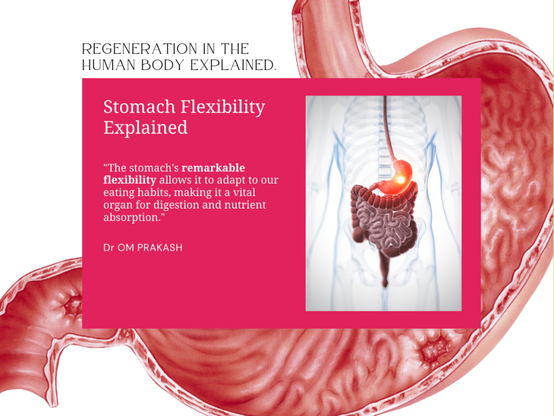
The stomach can expand to accommodate a large meal and contract when empty, thanks to its elastic properties and muscular walls. This flexibility allows it to efficiently process varying amounts of food.
Hormonal Harmony
A sophisticated network of hormones orchestrates the digestive process, signaling when to secrete digestive juices, when to feel full, and when to move food along the digestive tract. This hormonal ballet ensures optimal nutrient absorption and waste elimination.
Mouth: The starting point of digestion, where food is broken into smaller pieces with the help of teeth and saliva, initiating the digestion process.
Esophagus: A muscular tube that carries food from the mouth to the stomach through rhythmic contractions called peristalsis.
Stomach: A muscular organ that churns and mixes food with gastric juices, breaking it down into a semi-liquid form called chyme.
Small Intestines: The primary site of digestion and nutrient absorption, breaking down proteins, fats, and carbohydrates with the help of digestive enzymes and bile.
Large Intestines: Responsible for absorbing water and salts from undigested food, forming a soft mass called stool.
Rectum: Acts as temporary storage for stool until it is excreted from the body.Liver: Produces bile, essential for breaking down fats, and removes toxins from the blood.
Gallbladder: Stores and releases bile produced by the liver to aid in digestion.
Pancreas: Produces enzymes that help break down carbohydrates, proteins, and fats in the small intestines.
Implications for Human Health
Understanding these self-healing mechanisms opens up exciting possibilities for treating digestive disorders and beyond.
Regenerative Medicine Frontiers
The discovery of intestinal cell plasticity could lead to new therapies for inflammatory bowel diseases, short bowel syndrome, and even aid in cancer treatment.
Personalized Medicine Approaches
Researchers are exploring ways to leverage the body’s natural regenerative capabilities, potentially developing treatments tailored to individual patients’ needs.
Ongoing Research and Future Directions
The field of digestive system regeneration is rapidly evolving, with scientists continually uncovering new insights.
Organoid Technology
Researchers are now able to grow miniature versions of human intestines in the lab, called organoids. These tiny organs-in-a-dish are revolutionizing our ability to study digestive diseases and test potential treatments.
Revolutionary Organoid Technology
Recent advancements in organoid technology have enabled researchers to cultivate miniature organs that closely resemble human intestines. These organoids serve as vital tools for medical research, allowing scientists to study human biology and disease mechanisms in a controlled environment. By mimicking the structure and function of actual human tissues, these tiny organs provide insights into gastrointestinal disorders, drug responses, and potential therapeutic interventions. As this technology continues to evolve, it holds the promise of significant breakthroughs in personalized medicine and regenerative therapies. Explore the future of medical breakthroughs today!
Microbiome Connections
Emerging evidence suggests that the trillions of microorganisms living in our gut play a crucial role in maintaining digestive health and may influence the regenerative process.
Intestinal stem cells
Exploring the Microbiome
READ MORE EXPLORE MOREConclusion: Lessons from Our Inner Workings
The self-healing capabilities of our digestive system offer profound insights into the human body’s resilience and adaptability. As we continue to unravel the mysteries of cellular regeneration, we’re not just learning about digestion – we’re gaining valuable knowledge that could transform our approach to healing throughout the body.
This ongoing research reminds us that even in the face of damage or disease, our bodies possess remarkable capacities for renewal. It challenges us to think differently about health and healing, encouraging a more holistic view of the body’s interconnected systems.
As we marvel at the intricate dance of cells and signals that keep our digestive system in balance, we’re left with a sense of awe at the complexity and intelligence built into our very biology. The next time you enjoy a meal, take a moment to appreciate the miraculous processes occurring within, constantly working to keep you healthy and thriving.
#DigestiveHealth #GutRegeneration #GutScience #StemCellScience


 Matt Hodgkinson