 DecksDark
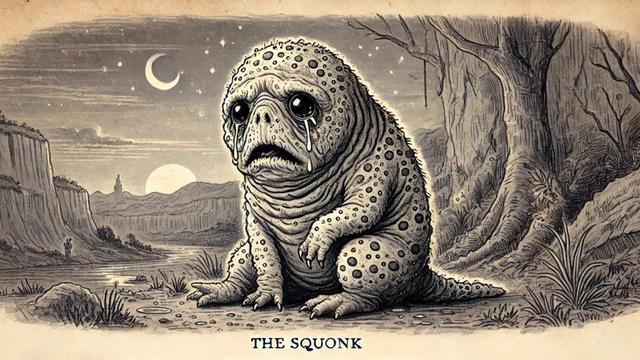
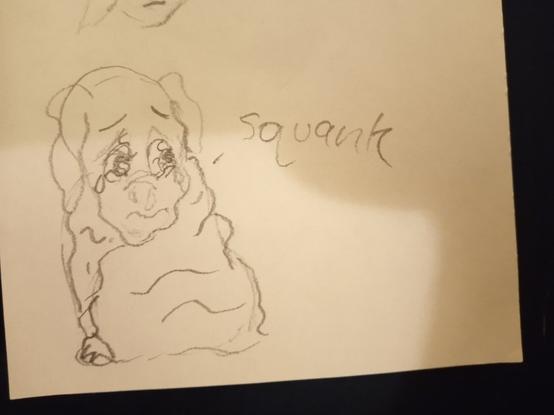
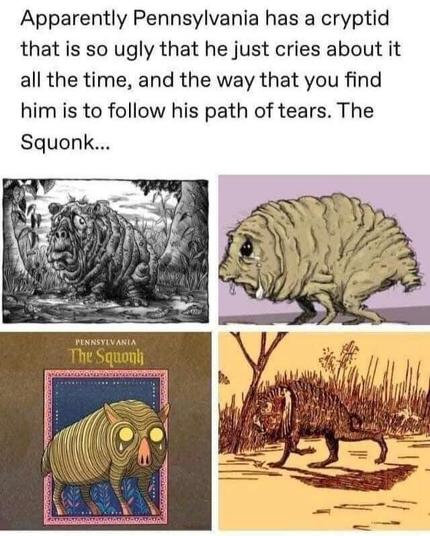
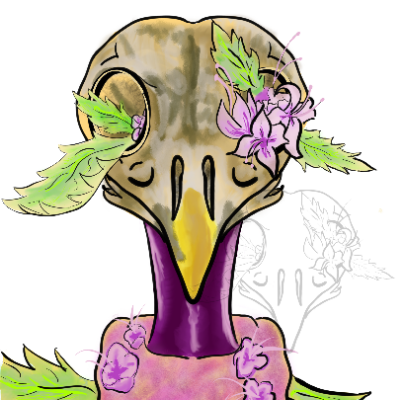
#Drawing of a #squonk for a oneshot I was prepping last year.
For context: A squonk is a #MythicalCreature known for being so hideous that it has to live in constant hiding
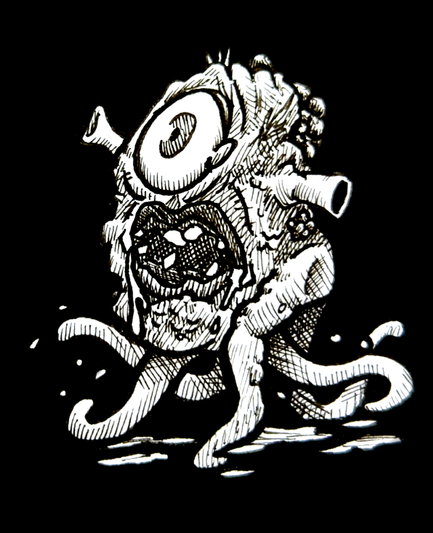
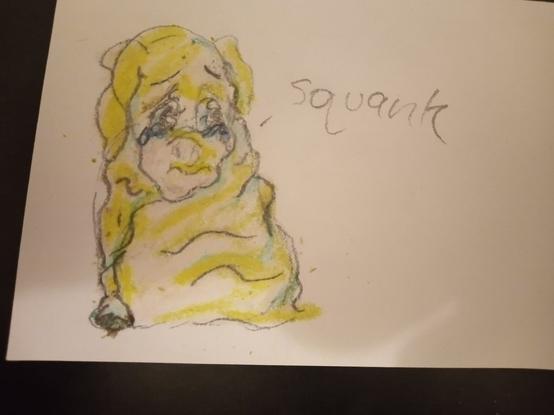
#Drawing of a #squonk for a oneshot I was prepping last year.
For context: A squonk is a #MythicalCreature known for being so hideous that it has to live in constant hiding
FPPC X HBK PRESENTS: BASSLINE BUNNIES DAY PARTY @ Lost Horizon - 05 Apr feat. Squonk
Fearsome cryptid creatures
In the era of reality TV and social media, the 21st-century version of cryptids evolved rapidly, fueled by a society-wide search for fun weird stuff, enchantment, and a connection to something bigger than oneself. “Cryptids” generally became more well-known and popular. They were readily fictionalized, exaggerated, and artistically distributed worldwide, beyond their original scope. The loosely defined concept of the cryptid as an unknown animal to be discovered (to replace “monster”, as coined in 1983) broadened in popular culture to include all kinds of mysterious creatures. While this expansion created consternation for the old school cryptozoology scene (and does TO THIS DAY for prickly Redditors), it is what it is. Language evolves. Time and context changes our views about mysterious creatures.
The “sharp line” fallacy of cryptids
Contrary to several outspoken cryptozoologists, there is no “sharp line” between mythical creatures, fantastical beasts, folklore creatures, and modern cryptids. They blend into one another through time and across the globe. At one time, even to today, some folks believed that various fantastical creatures, like unicorns, mermaids and dragons, are real animals that did once or still do exist. If witnesses say they see them, aren’t they potential “cryptids” (as ‘ethnoknown’ creatures)? If the cryptozoologist argues that they don’t represent real animals, how do they know? What if a real animal was the basis for the tale? The definitions in cryptozoology are “squishy” and imprecise for many reasons. The “sharp line” defining proper cryptids is a fallacy.
There are the critters that are very obviously supernatural or fiction: most cultures have legends of the undead, shapeshifters, spirit creatures, giants, or witches. We also have tall tales and stories that are meant to serve a social purpose, where the story about someone encountering strange things are held as “true” usually for a brief time (as a child, on a dark night, or as a warning or joke) before we recognize them as fiction. Here’s where we come to Fearsome Creatures.
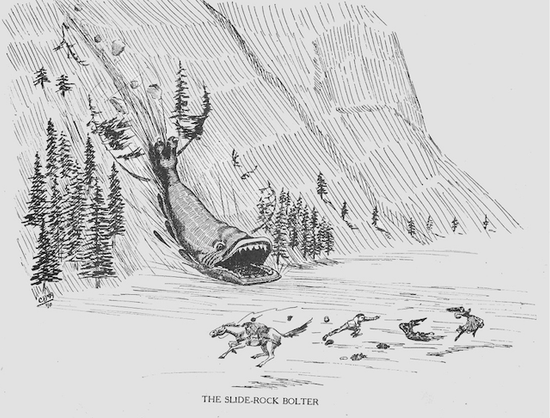
William Cox’s Fearsome Creatures of the Lumberwoods (1910) is a collection of tales told by lumber workers or hunter-trappers in the northern woods (“with a few desert and mountain beasts”) of the US and Canada. In the same vein, Henry Tryon’s Fearsome Critters (1939) has some overlap with Cox’s but includes a few new entries. These volumes gave us the Hodag, Squonk, Snallygaster, Slide-Rock Bolter, Hidebehind, Wampus Cat, Hoop Snake, and many more outrageous creations meant to be viewed as entertainment, not real beings.
From Cox’s Fearsome CreaturesIf we go by Wall’s proposed definition of cryptid of 1983, which was “a living thing having the quality of being hidden or unknown” – then Fearsome Creatures qualify. (In order to have an operational definition that everyone can clearly understand and follow, you had better be precise, or else.)
Thanks to the re-popularization of Fearsome Creatures/Critters in the Internet/Pop Cryptid age, you will find people saying that one of these is their “favorite cryptid”. The line has been crossed. There is no going back.
Proponents of zoo-cryptids (i.e., belief that the cryptid represents a real, undiscovered animal) reject (most) fearsome or mythological creature tales for obvious reasons – they do not represent real animals. However, this relies on the “sharp line” fallacy mentioned above. If a “cryptid” is believed by some people to be real but rejected by most others, how many people need to believe it real before we count it? Who is the judge?
Zoo-cryptids vs fearsome creatures
Ok, I hear you argue that everyone knows Fearsome Creatures were not intended to be taken as factual. Fair enough. But cultural interpretations are complex things. There are countless native stories of spirit creatures, like Japanese Yokai and Oni, and religious-based beings (angels, demons, etc.), that are respected as culturally “real” and valuable. Some people see hairy wildmen (like Bigfoot) and lake monsters this way, while others accept them as genuine hidden animals. The interpretation is subjective and variable. Part of the goal for early cryptozoologists was to demythify the tales of mystery creatures for zoological sake (zoo-cryptids). By in the 2000s, however, the myths clearly became more important than the zoology in mainstream culture. We now have para-cryptids (that have predominantly paranormal characteristics, also can be considered “zoo-form phenomena” if they appear superficially as animals), and folklore-cryptids (based on myths or folklore, like black dogs, unicorns, mermaids and fearsome creatures).
If we consider all the sub-categories of cryptids, this would allow for unrestricted study into the entire history of each creature, fiction and nonfiction, which is important for understanding. Maybe they represent real animals, spiritual beliefs, cultural fears, or all of them together. Those who are well-versed in cryptozoology should consider how indigenous lore about Cannibal giants, water cats, and little people have been used to justify the possibility of real cryptids. Are the antecedents of today’s purported zoo-cryptids cryptids themselves? It’s complex. Recognizing that complexity opens up new areas of research and understanding.
A modern bestiary
The presentation of Fearsome Creatures is not far removed from what was in the medieval bestiaries. These collections of marvelous creatures were popular in the 14th to 16th century, when we had little credible knowledge of what existed in other lands. The creatures described were absurd. We know that now – but to one who is ignorant of the natural world, how would they have known? Honestly, we see stunning levels of ignorance of nature now. People are prone to believe outrageous things.
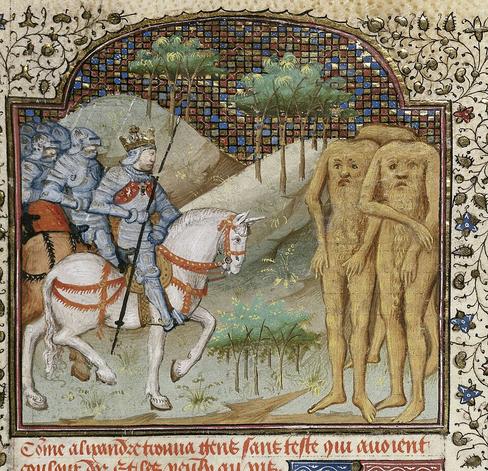
Alexander encounters the headless people (Blemmyes), 1445. By Master of Lord Hoo’s Book of Hours – Royal MS 15 E VI, Public DomainAudiences have loved accounts of the strange throughout history. Marvelous creatures were part of the storytelling and art in each time period, often including humor along with reverence, and maybe an underlying ethical lesson or warning.
The proliferation of cryptid tales, and the resurgence of old ones back into the mainstream are evidence that we adore these creature tales and don’t care if they are real or not – it’s fun to just imagine.
Accepting fearsome creatures as cryptids
I’ve been following the growth of cryptid town festivals for several years now. In many instances, the creatures that are celebrated as the mascot or icon is not considered a legitimately real creature, but is still respected as a story that embodies the town history, even if often not in the most respectable light. Here are some infamous examples:
Hodag – Rhinelander, Wisconsin’s infamous legend is commemorated by a statue at the Chamber of Commerce. It’s been the official town mascot since 1918. Modernly depicted as a stocky, aggressive, green-black, feline-frog-dinosaur mash-up with red eyes, huge claws, a spiny-ridged back, and fearsome saber-teeth, the Hodag’s origin is obscure. But it was part of Cox’s original Fearsome Creatures book. The Hodag legend was reimagined, and solidified, by storyteller and jokester Gene Shepard in the closing decade of the 1800s. Shepard brought various bits together from tall tales and Ojibwa legends, and, using wood, ox hide, and some accomplices, created a wondrous hoax. Everyone played along. It has its own town festival, but the Hodag traveling store can be found as a vendor at other cryptid town festivals. For more, see Wisconsin’s Homegrown and Beloved Monster.
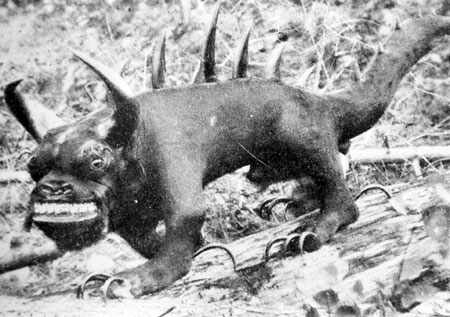
Squonk – It’s the hideous Pennsylvania critter that is so ugly, it disintegrates into a puddle of its own tears. The Squonk was in both Cox’s and Tryon’s books. This ridiculous tale is so popular, the Squonk has its own Squonkapalooza in Johnstown, PA – a town which, like Point Pleasant, had its share of disasters. You can find the squonk regularly labeled as a “favorite cryptid” by many who take pity on its dreadful existence.
Snallygaster – A creature from Maryland described as a one-eyed flying reptile with both a beak and teeth, as well as face tentacles, it rocketed to popularity in association with the Jersey Devil appearances in 1909. Some colorful local characters reported that the creature was back on the hunt. The local newspaper played along, warning that it might swoop down to carry off its victims, usually children, and drain their blood. The accepted origin story is that the creature derived from tales from German immigrants to South Mountain, around Frederick, MD. This creature, also from Cox’s tales, has a scandalous history featuring political slanders and violent racism. Yet, it’s got a museum, and is considered a cryptid favorite lately. For more, see this Pop Cryptid Spectator piece.
The SnallygasterConclusion
If someone says a fantastic creature is a cryptid, we can’t stop them. It is not possible to gatekeep popular language. There are many reasons why the term cryptid no longer applies in a narrow zoo-cryptid sense.
I’m inclined to accept an umbrella term of cryptids as encompassing zoo-cryptids, para-cryptids, and fearsome, folklore, fantastical and legendary creatures. In other words, to include anything people claim exists that isn’t officially recognized as genuine. As I explained, it’s too difficult to draw the line about what isn’t and isn’t a cryptid because people say they see or believe in all sorts of weird creatures for all kinds of reasons. Cryptids can be really weird, no one is suitable to judge what is too weird. I don’t, however, accept that the cryptid label is useful to describe mystery animals with the end goal of scientifically identifying them because you cannot know what they are until you find them.
The point I’m trying to make with the controversial inclusion of Fearsome Creatures in a cryptid framing is to recognize the importance of imagination, creativity, changeability, and ultimate cultural value of mysterious creatures (no matter what the explanation is). Technically, with none of the established/infamous cryptids discovered and “realized” in the 21st century, cryptids ONLY value has been cultural – in our stories, our art, as local symbols, commercial icons, or as social themes. In the cultural framing, the impact has been huge. We have a lot to gain to accept and study all cryptids, no matter your definition, in a cultural frame. No one is preventing research and opinions on how these creatures translate to zoological interests, or historic, or social, or psychological, etc. And it’s fine to keep referring to Fearsome Creatures as tall tales. The cultural evolution, and their increasing popularity, is out of our control.
This is part 9 of the 12 Days of Cryptids.
#12DaysOfCryptids #cryptids #fearsomeCreatures #fearsomeCritters #Hodag #snallygaster #Squonk #tallTales
The list of Cryptid Town Festivals keeps growing! More towns are celebrating their local monsters or cryptid creeps in a very public way. Summer and Fall 2024 brought us several new events to serve as evidence of the Pop Cryptid phenomenon across the US. Building on the success of the Mothman Festival, in particular, communities recognize the value of a monster mascot in their town. Cryptid-themed festivals often follow the general layout and activities made famous by Point Pleasant, with food trucks, vendors, music and speakers, attracting visitors and dollars to the town. Some cryptid attractions are more adult oriented with their beer gardens and grown-up cosplay. Others are family friendly with lots of kids events – because kids LOVE cryptids!
As shown in the examples below, the trend is very much about the storytelling and fun, and has little to do with the original aim of finding mystery animals new to science. We also see the term “cryptid” used ever more broadly and loosely to cover a wide array of weird beings.
Here are some of the latest Pop Cryptid events in small-town USA for 2024:
Green Eyes Festival
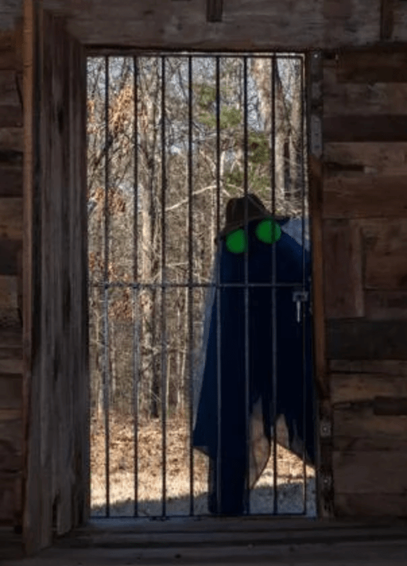
New this year is an event in honor of a Civil War era ghoul called “Green Eyes”. After being inspired by the local legend of a glow-eyed creature – more of a ghost than a mystery animal who reportedly prowls the Chickamauga, Georgia battlefield – the organizers used the template set by the world-famous Mothman Festival in West Virginia. The event caught the attention of community leaders. Very much in line with the phenomenon of Pop Cryptids, Chickamauga’s Economic Development and Events Director, Eric Pullen said, “I feel like this is going to create a new image for Chickamauga to a younger generation that primarily sees it as based on civil war history.” The first Green Eyes Festival, that honors the folklore and culture of Northwest Georgia/Southeast Tennessee, is Oct 5, 2024 and includes Green Eyes being awarded the keys to the city of Chickamauga.
Squonkapalooza
Johnstown, Pennsylvania hosted the second annual Squonkapalooza event to celebrate cryptids, particularly the ever-more popular Squonk. The squonk is a made-up creature first noted in the 1910 book Fearsome Creatures of the Lumberwoods by William T. Cox. The squonk is dog-sized and excessively wrinkly, warty and so ugly that it cries constantly and, if caught, will dissolve into a pool of tears. The squonk has been unofficially noted as the “state cryptid of Pennsylvania”, an accolade that would be up for vigorous debate! According to the news report, visitors to the festival this year did seem to consider the squonk as some kind of mystery animal, more akin to the traditional view of cryptids. Maybe they didn’t know the silly backstory. But, more likely, they are just experiencing the Pop Cryptid wave of interest in weird creature tales just for fun.
Bigfoot and the Gateway to the Mysterious
The previous month, some 40 miles or so west of Johnstown, Pennsylvania, Derry Borough mayor Grant Nicely issued a proclamation in August, 2024 to declare Bigfoot as the official cryptid of the borough. Bigfoot is a big deal to folks around Greensburg, Uniontown, and the Chestnut Ridge area. Cryptid sightings, and associated high strangeness, have been reported in the region for decades. In the past few years, thanks to social media and the increasing popularity of strange stories propagating online, the area has become a “a hub for those fascinated by the unexplained.” The proclamation now designates Derry Borough as “The Gateway to the Mysterious Chestnut Ridge” encouraging residents and visitors to explore its mysteries and drop some dough.
Flathead Lake monster sculpture
A sculpture of the Flathead Lake Monster was revealed at the Sacajawea Park in Polson, Montana in September 2024. The Polson Mayor, Eric Huffine, opened the ceremony to unveil the bronze statue, saying there are more than 100 years of stories and legends of the monster from Flathead Lake in Kalispell, also known as Flossie. They are very proud of their own beastie.
Have news of a cryptid festival or monument in your town? Contact [email protected]
https://moderncryptozoology.wordpress.com/2024/10/02/parade-of-cryptids-in-small-town-usa/
#Bigfoot #cryptidFestival #cryptids #Georgia #GreenEyes #lakeMonsters #mascots #monsterLegends #monsters #Montana #MothmanFestival #Pennsylvania #Squonk
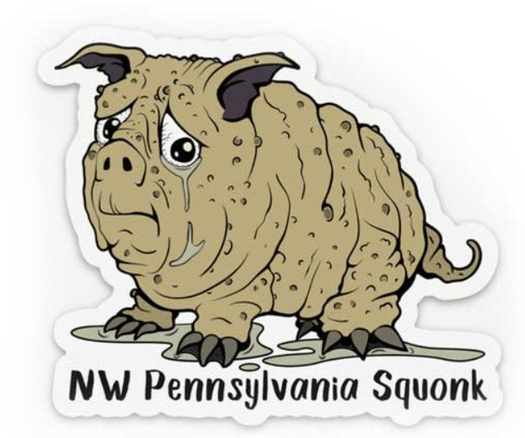
Hey folks! QD is putting out another cryptid project, this time on backerkit! Ever want your cryptids to hold hands in the form of cute enamel keychains? Maybe you want some conversation heart cryptid pins? Go check this project out, and share it w your cryptid buds!
https://www.backerkit.com/c/projects/queerly-departed/couple-me-cryptids-magnetic-pins/
#cryptids #cryptid #mothman #fresnonightcrawler #squonk #braxxie #flatwoodsmonster #jerseydevil #greyalien #greyaliens #bigfoot #jackalope #pins #enamelpin #enamelpins #enamelkeychain #keychain #merch #merchandise #smallartist #smallbusiness #shopsmall #shopsmallbusiness #queerlydeparted
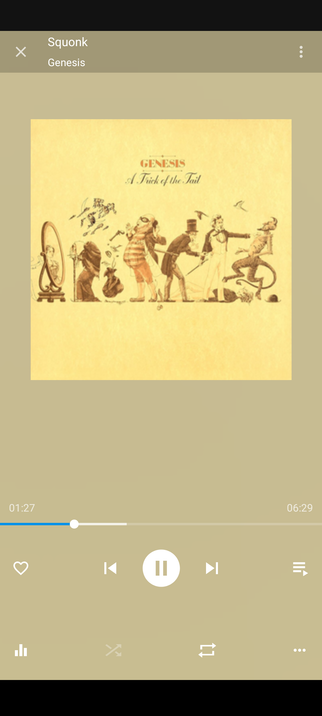
I’m psyched to share with you another round of #cryptid madness, this time zooming in on the #squonk, a legend immortalized in a Genesis song, forged from a pair of tall-tale books written by foresters.
https://tedium.co/2023/09/08/squonk-cryptid-origin-story/
new @tedium
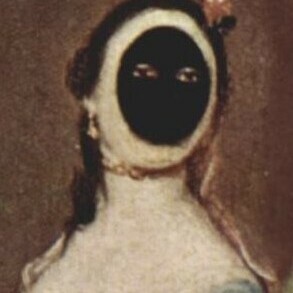
Happy Saturday. Beware the Squonk. (If anyone who sees this currently lives, or has lived, in Pennsylvania: is this really a thing? Inquiring minds *dearly* want to know.)
#HorrorFam #horror #Crytpid #Pennsylvania #Squonk @horror #MotherSuspiriasMorningMeme
 SESH.sx
 Modern Cryptozoology
 Peter
Peter 

 Baas moved again!
 SkullOwl
 Kenley Neufeld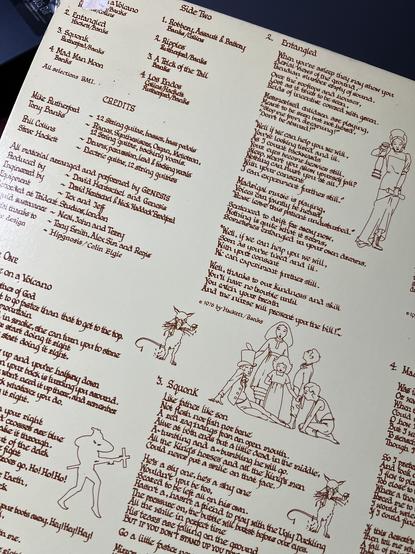
 Ernie Smith
 Mother Suspiria