https://greekreporter.com/2024/11/30/ancient-gold-coin-proves-fake-roman-emperor-real/ #archaeology #romanempire

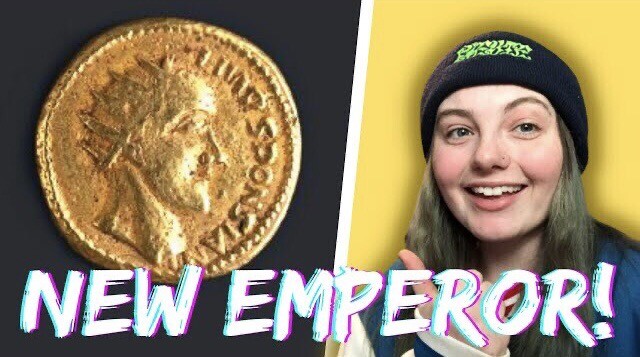
Have you heard? A new #RomanEmperor has been discovered! Previously thought to be fake, #Sponsian is now thought to have ruled over #Dacia when the province became isolated from the rest of the Empire! What do you think of him?
This article seems to thoroughly debunk the news about a Roman-era coin that was widely reported to be a "discovery" of a previously unknown emperor. Apparently the #sponsian coin is just a shitty forgery, possibly from the 18th century, claims this #numismatic analyst from Cambridge.
Do we have a new Roman emperor #sponsian / #sponsianus?
As for the current debate, I am more concerned with the notion of 'authenticity'.
some thoughts, short thread here:
https://twitter.com/WienandJohannes/status/1596528438143488001
@antiquidons #antiquidon #antiquidons #histodon #histodons #ancientworld #classics #antiquity #numismatics #archaeology
Love a bit of archeological news -- especially containing a mystery.
Gold coin proves 'fake' Roman emperor was real
#gold #coin #MissingEmperor #RomanEmperor #Sponsian #mystery #archeology
Lost Roman emperor long thought to be fake was real leader in time of chaos
#LostRomanEmperor
#Sponsian
#TimeOfChaos
#FakeCoin
#FakeCoinReal
#RomanCoin
#RomanEmperor
#FakeRomanEmperorReal
#1713Hoard
Researchers analyzed a set of coins found in 1713 considered by many experts to be fake, finding that they were authentic artifacts from Roman times.
#Artifacts
#Archeology
https://www.newsweek.com/roman-emperor-thought-fake-real-leader-sponsian-1761059
The reaction to the #Sponsianus story has been mixed. #Numismatists and others have raised concern that the conclusion may be an overreach. Do these #coins really "prove" the existence of an emperor named #Sponsian? The press has tended to take the announcement at face value, though some reporting includes comments from skeptics:
https://www.wsj.com/articles/gold-coins-ancient-rome-emperor-sponsian-11669229082
A newly-released study suggests that a small group of gold #coins long considered to be 18th-century fantasies may in fact belong to an otherwise unknown 3rd-century #Roman usurper named #Sponsianus. Reaction is mixed. The open access paper can be found here: https://journals.plos.org/plosone/article?id=10.1371/journal.pone.0274285
#numismatics #Sponsian #aureus
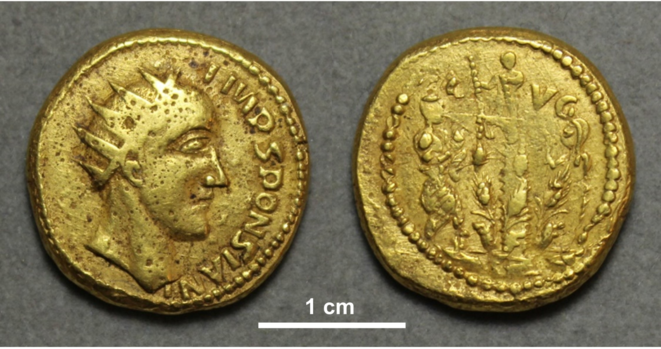
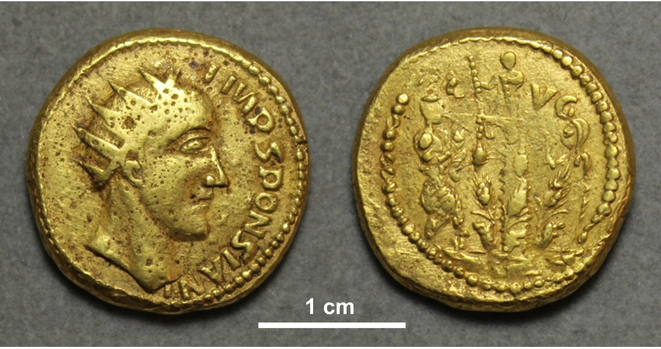
Image below courtesy Wikimedia Commons https://commons.wikimedia.org/wiki/File:Sponsianus_Aureus.PNG#globalusage
The ‘Roman emperor’ Sponsian is known only from an assemblage of coins allegedly found in Transylvania (Romania) in 1713. They are very unlike regular Roman coins in style and manufacture, with various enigmatic features including bungled legends and historically mixed motifs, and have long been dismissed as poorly made forgeries. Here we present non-destructive imaging and spectroscopic results that show features indicative of authenticity. Deep micro-abrasion patterns suggest extensive circulation-wear. Superficial patches of soil minerals bound by authigenic cement and overlain by oxidation products indicate a history of prolonged burial then exhumation. These observations force a re-evaluation of Sponsian as a historical personage. Combining evidence from the coins with the historical record, we suggest he was most likely an army commander in the isolated Roman Province of Dacia during the military crisis of the 260s CE, and that his crudely manufactured coins supported a functioning monetary economy that persisted locally for an appreciable period.