 Bryan King
Executing Faith when God Silent
2,850 words, 15 minutes read time.
The silence of God is not an absence of power; it is the ultimate test of your structural integrity. Most men crumble the moment they stop receiving emotional “hits” from their Sunday service or their shallow, sporadic prayer lives. They mistake the quiet for abandonment because they are spiritually infantile, addicted to the milk of comfort and incapable of the meat of endurance. If you are waiting for a voice in the wind to tell you to do what the Word has already commanded, you are a coward looking for a permission slip to stay stationary. Divine silence is a sovereignly ordained vacuum designed to reveal exactly what you are made of. It is the tactical pause where the King observes whether His soldier will hold the line or desert the post. Hope is not a warm vibration in your chest; it is a calculated, cold-blooded commitment to the last order you received. To execute faith when the heavens seem like brass is the mark of a man who has moved beyond the transactional “bless me” religion of the masses and into the realm of covenantal maturity. This isn’t about feeling God; it is about knowing God, and those are two very different metrics of reality. If you find yourself in a season of profound quiet, do not mistake it for divine apathy. It is a summons to the deep. It is the moment where the superficial layers of your “faith” are stripped away by the friction of reality, leaving behind either the bedrock of a true disciple or the dust of a religious pretender. You must understand that God’s promises are not suggestions, nor are they contingent on your emotional state. They are covenantal anchors forged in the fire of divine sovereignty, designed to hold a man steady when the world around him is screaming in chaos. To understand these promises is to stop negotiating with your excuses and start standing on the objective, unwavering Word of God. This exploration dissects the theological mechanics of biblical hope and the structural integrity of divine covenants, stripping away the sentimental rot that has infected the modern church’s view of “blessing.” We are here to exhume the ancient, masculine truth: God’s Word is a weapon for every season, but it only functions in the hands of a man who has killed his pride and submitted to the King.
Systematic Theology of Covenantal Certainty and Biblical Hope
The current theological climate has reduced the promises of God to a series of therapeutic affirmations, yet the Greek concept of elpis—hope—is not a feeling; it is a confident expectation based on the character of the Giver. In the technical framework of biblical hermeneutics, a promise is an extension of God’s immutable nature, meaning it is mathematically impossible for His Word to fail. When Hebrews 6:18 speaks of the impossibility of God lying, it establishes a formal, legal boundary for human existence: if God has spoken it, the reality is already settled in the heavens, regardless of the wreckage you see in your bank account or your broken relationships. You are currently drowning in anxiety because you have substituted the objective certainty of Sola Scriptura for the subjective whims of your own fluctuating moods. The season of struggle does not negate the promise; it tests the man to see if he actually believes the Sovereign Lord or if he is just playing a religious game. You must understand that biblical hope is built on the historical reality of the Resurrection—a hard, physical fact that redirected the trajectory of human history. If the tomb is empty, every promise of God is “Yes” and “Amen,” and your duty is to align your life with that gravity rather than asking God to align His kingdom with your comfort. This certainty is not rooted in your ability to “visualize” a better outcome or “manifest” your desires through some pseudo-spiritual positive thinking. It is rooted in the ontological reality of a God who exists outside of time and space, who has already seen the end from the beginning and has staked His very reputation on the fulfillment of His Word. When you doubt, you are not being “honest about your struggles”; you are being arrogant enough to believe that your circumstances have more power than the decrees of the Almighty. True masculine faith does not require a daily motivational speech from the pulpit; it requires a deep, abiding immersion in the technical reality of the text. You must treat the Bible not as a book of bedtime stories, but as a manual of engagement for a world at war with its Creator. Every time you open those pages, you are reviewing the terms of your enlistment and the guarantees of your Commander. If you haven’t seen a promise fulfilled, it’s not because God has forgotten; it’s because the timing of the Kingdom is geared toward your sanctification, not your immediate gratification. Most men fail here because they lack the spiritual stamina to wait on the Lord, opting instead for the cheap, immediate “wins” offered by the world. They sell their birthright for a bowl of temporary comfort, then wonder why they feel hollow when the real storms hit. You must cultivate a mind that is so saturated with the objective truth of God that the silence of the heavens sounds like a victory march rather than a funeral dirge.
Hermeneutical Integrity and the Structural Mechanics of Divine Faithfulness
True hope requires a rigorous commitment to the context of Scripture, moving beyond the “verse-picking” that characterizes the spiritually immature man who treats the Bible like a cosmic vending machine. The promises of God are often conditional, nested within a covenantal structure that demands a specific response: repentance, obedience, and the crucifying of the flesh. When a man claims a promise of peace while harboring secret sin, he is not exercising faith; he is practicing sorcery, trying to manipulate the Divine to bless his rebellion. The structural mechanics of faithfulness, as seen in the Abrahamic or Davidic covenants, demonstrate that God’s long-term objectives frequently involve the immediate pruning of the individual. This is the “fire” that modern men avoid at all costs. You want the “hope” of a harvest without the “blood” of the plow. You must realize that the “seasons” mentioned in Ecclesiastes 3 are not merely atmospheric changes but are sovereignly ordained periods of testing designed to strip you of self-reliance. Until you accept that God is more interested in your holiness than your happiness, his promises will remain a closed book to you, and your “hope” will remain a hollow shell of wishful thinking that shatters at the first sign of real pressure. This requires a level of intellectual and spiritual honesty that most men are unwilling to provide. You have to look at your life through the lens of divine justice before you can appreciate divine mercy. If you are ignoring the clear commands of God—if you are failing to lead your family, failing to work with integrity, and failing to kill the lust in your heart—then do not be surprised when the “blessings” seem out of reach. God is not your cosmic servant; He is your King. The covenantal framework is not a negotiation; it is an edict. When God promises to be with you, it is so that you can fulfill His purposes, not so that you can feel better about your mediocrity. The technical term for this is Pactum Salutis, the counsel of peace between the Father and the Son, which ensures that all things work together for the good of those who love Him. But “good” in the Greek sense is agathos—it is that which is intrinsically valuable and morally excellent. It doesn’t mean “pleasant.” Sometimes the “good” God has for you is the total destruction of your ego so that His strength can finally be made perfect in your weakness. If you cannot handle the silence, you cannot handle the weight of the glory that follows. A man who cannot stand in the dark is a man who will be blinded by the light. You must develop a hermeneutic of grit—a way of reading the Bible that looks for the hard duties as much as the soft comforts. Only when you have submitted to the “thou shalts” can you truly find rest in the “I wills.”
Practical Pneumatology and the Execution of Spiritual Endurance
The final test of a man’s understanding of God’s promises is his capacity for endurance in the face of apparent silence. James 1:2–4 is not a suggestion for a better life; it is a command to view trials as the necessary machinery for producing “perfect and complete” character. Your current state of spiritual lethargy is a direct result of your refusal to endure. You have been conditioned by a soft, consumer-driven culture to expect immediate results, but the Kingdom of God operates on the timeline of eternity. The promises are the fuel for the long war, not a shortcut to the finish line. If you are waiting for a “feeling” of hope before you act, you have already lost the battle. You hit your knees and do the work because the King has ordered it, trusting that the “hope” promised in Romans 5:5 is a supernatural deposit of the Holy Spirit that only comes to those who have been through the meat-grinder of tribulation and come out refined. Stop looking for a way out of your season and start looking for the strength to dominate it. The wreckage of your life will only be cleared when you stop acting like a victim of your circumstances and start acting like a son of the Most High God, who holds the universe together by the power of His Word. This is the practical application of pneumatology—the study of the Holy Spirit. The Spirit is not a “vibe” that makes you cry during a chorus; the Spirit is the Parakletos, the Advocate, the one who stands alongside the soldier in the heat of the fray. If you are disconnected from the power of the Spirit, it is because you have grieved Him with your cowardice and your compromise. Faith is not a static belief; it is a kinetic execution. It is moving forward when every physical sense tells you to retreat. It is speaking the truth when it costs you everything. It is leading your household when you feel like a failure. This kind of endurance is the only thing that produces “proven character,” and character is the only thing that produces a hope that does not disappoint. If your “hope” is disappointing you, it’s because it’s based on your own performance or your own expectations of how God “should” act. Real hope is a steel-toed boots kind of faith. It’s gritty, it’s ugly, and it’s relentless. It understands that the silence of God is often the forge of God. In the silence, He is working on the parts of you that no one else sees, the hidden foundations that will support the weight of the calling He has placed on your life. If you short-circuit this process by seeking worldly distractions or temporary relief, you are sabotaging your own future. You are trading a crown for a trinket. The man who executes faith when God is silent is the man who becomes unshakable. He becomes a pillar in the house of God, a source of strength for others who are still trembling in the dark. He knows that the promise is not a destination, but a declaration of the King’s intent. And the King’s intent never changes.
The Ontological Reality of Divine Presence in Desolation
We must confront the lie that spiritual “success” is marked by a constant sense of God’s presence. Some of the most significant work in the history of redemption was done in the pitch blackness of divine withdrawal. Consider the “dark night of the soul,” not as a poetic metaphor for depression, but as a strategic operation of the Holy Spirit to kill off your idolatry of religious experience. If you only serve God when you “feel” Him, you aren’t serving God—you are serving your own dopamine levels. You are a spiritual junkie looking for a fix, not a disciple looking for a cross. The ontological reality of God’s presence is not dependent on your sensory perception. Psalm 139 makes it clear: if you make your bed in the depths, He is there. The silence is a tool to determine if you love the Giver or just the gifts. This is the “meat-and-potatoes” logic of the faith: God is who He says He is, regardless of how you feel on a Tuesday morning when the bills are overdue and your body is failing. To execute faith in this state is to affirm the supremacy of God over the material world. It is a declaration of war against the nihilism of the age. Every day you choose to obey in the absence of an audible confirmation, you are dealing a death blow to the pride of the enemy. You are proving that the Word of God is sufficient. You are demonstrating that the covenant is unbreakable. This is where the “righteous anger” comes in—not at God, but at the weakness within yourself that wants to quit. You should be furious that you are so easily swayed by the shifting shadows of your own mind. You should be disgusted by how quickly you turn to screens, food, or status to numb the ache of the silence. That ache is a gift. It is the hunger pang of the soul, reminding you that you were made for a world that you haven’t fully seen yet. Instead of trying to satisfy it with garbage, use that hunger to drive you deeper into the disciplines. Fasting, prayer, study, and service—these are not “options” for the super-Christian; they are the survival gear for the man who wants to stay alive in the wilderness. If you are sleepwalking through a mediocre existence, the silence of God is His way of shaking you awake. He is stripping away the noise of your distractions so that you can finally hear the heartbeat of the mission. The mission doesn’t change because the weather does. You have been given your orders. You have been given the promises. Now, you must find the gutless-free resolve to execute them until the King returns or calls you home.
The core thesis of this life is simple: God’s promises are the only objective truth in a world of lies, and your failure to trust them is a failure of your own character. There is no middle ground. You are either standing on the rock of covenantal certainty or you are sinking in the sand of your own ego. The urgency of this moment cannot be overstated. You are running out of time to be the man God commanded you to be. Take the steel of these promises and hammer them into the foundation of your daily existence. Stop whining about the season you are in and start asking God for the discipline to survive it and the wisdom to learn from it. The hope of the Gospel is not a safety net; it is a war-cry. If you claim to follow Christ, then live like His Word is more real than the air you breathe. Get off the sidelines, kill your excuses, and start walking in the authority that was bought for you with blood. The silence is not an exit; it is an entrance into a deeper level of command. If you can’t hear Him, it’s because He’s already told you what to do. Now go and do it. The King is watching, and the clock is ticking.
Call to Action
If this study encouraged you, don’t just scroll on. Subscribe for more bible studies, share a comment about what God is teaching you, or reach out and tell me what you’re reflecting on today. Let’s grow in faith together.
D. Bryan King
Sources
- Lumen Fidei (The Light of Faith) – Holy See, 2013
- The Theology of the Covenants – Monergism, 2021
- Strong’s Greek 1680: Elpis – Bible Hub, 2024
- The Nature of Biblical Hope – The Gospel Coalition, 2020
- What is a Covenant? – Ligonier Ministries, 2018
- The Immutability of God – Faith Baptist Theological Seminary, 2015
- God Cannot Lie – Desiring God, 2019
- What are the promises of God? – Got Questions Ministries, 2022
- What is the Abrahamic Covenant? – Crossway, 2019
- Encyclopedia of the Bible: Hope – Bible Gateway/Zondervan, 2010
- The Covenant of God with Abraham – Answers in Genesis, 2017
- The Meaning of Hope in the Bible – Biola University, 2012
- What does it mean that God is faithful? – eBible, 2023
- The Power of Hope – Dallas Theological Seminary, 2014
Disclaimer:
The views and opinions expressed in this post are solely those of the author. The information provided is based on personal research, experience, and understanding of the subject matter at the time of writing. Readers should consult relevant experts or authorities for specific guidance related to their unique situations.
#biblicalAuthority #biblicalCovenants #biblicalEndurance #biblicalFoundation #biblicalHermeneutics #biblicalHope #biblicalManhood #biblicalPromises #biblicalTruth #ChristianBlogForMen #christianCharacter #ChristianGrit #ChristianIdentity #ChristianMasculinity #ChristianMentor #ChristianResilience #covenantOfGrace #covenantalCertainty #covenantalTheology #divineFaithfulness #divineProvidence #divineSilence #divineSovereignty #enduranceInTrials #enduringFaith #faithAndLogic #faithExecution #faithUnderPressure #GodSPromises #GodSWord #hermeneutics #immutabilityOfGod #leadingYourFamily #masculineFaith #masculineSpirituality #ObjectiveTruth #overcomingAnxiety #overcomingMediocrity #powerOfTheHolySpirit #prayerAndFasting #religiousDiscipline #seasonOfWaiting #SolaScriptura #sovereignLord #spiritualArmor #spiritualDiscipline #spiritualEndurance #SpiritualGrowth #spiritualLeadership #spiritualMaturity #spiritualSanctification #spiritualWalk #spiritualWarfare #SystematicTheology #theSilenceOfGod #theologicalDepth #theologyForMen #theologyOfSuffering #trustInGod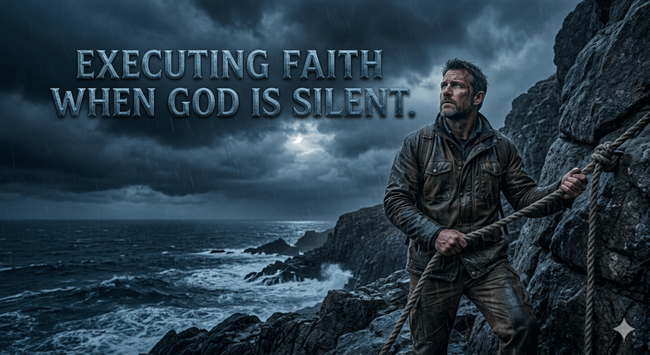

 SpiritualKhazaana
 Osas Osi Music AI
 Bernardo Dainese