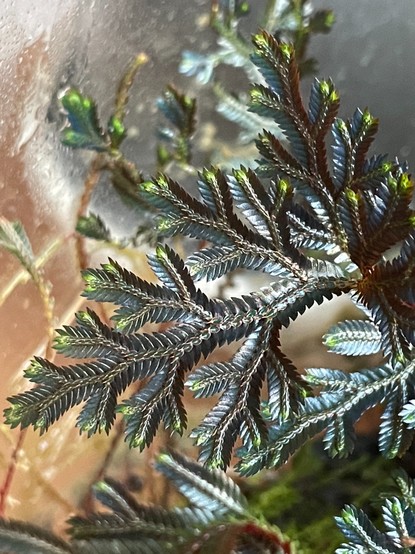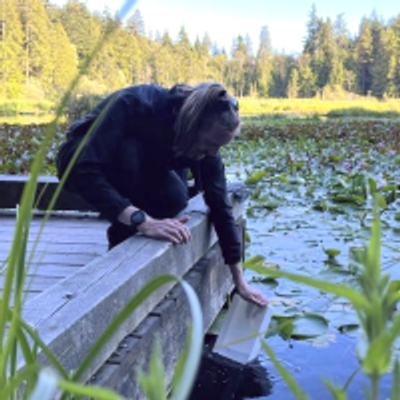
Selaginella wallacei (Wallace's spikemoss) is one of the more common plants I most like to spot in the wild. A member of the lycophytes, this spore-bearing plant is part of the oldest group of vascular plants, with members represented in the fossil record as early as 425 million years ago.

#selaginella #spikemoss #lycophyte #plant #inaturalist #plantphotography #macro #macrophotography #okanagan #similkameen #britishcolumbia #canada
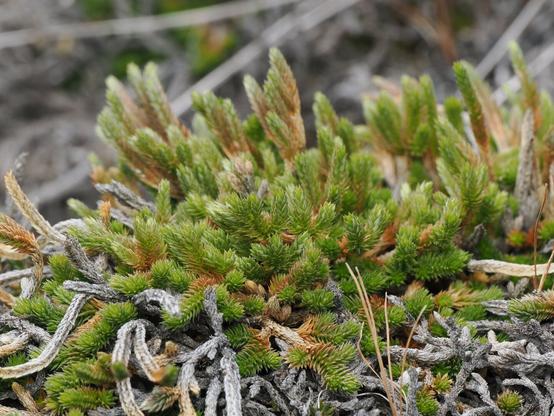
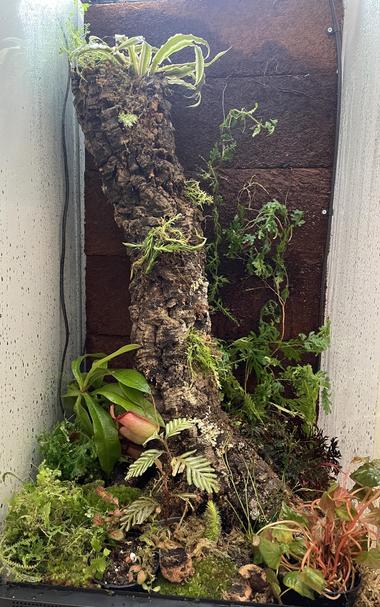
Terrarium mission accomplished (I hope) #Huperzia #Selaginella #clubmoss #spikemoss #lycopod

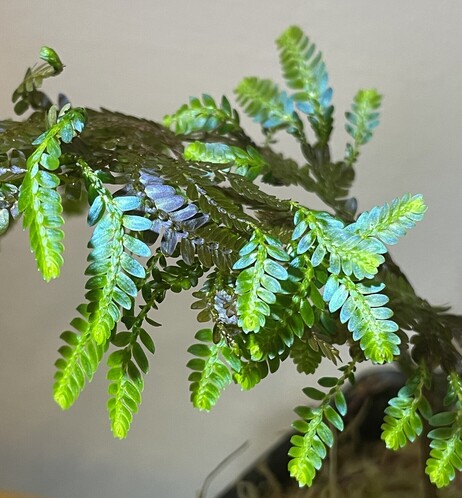
I treated myself to a little eBay auction a couple of weeks ago and bought a peacock spikemoss (Selaginella wildenowii - my seventh species). It has lamellar structures in the upper cuticle of the leaf that cause thin-film interference (like a soap bubble, or an oil spill in a puddle) that make it flash blue iridescence at particular angles.

#Selaginella #Spikemoss #Lycopod #Iridescence

Despite appearances, these two water lovers are, from what I can tell, not actually true #mosses.

I believe the one on the left is (probably) a patch of thallose #liverwort, most likely #Lunularia spp.

And on the right is (again, probably) a shaggy clump of #spikemoss, most likely #Selaginella spp.

Of course we still love them anyway.

Also, I plead excited amateur status here, so true moss experts please correct any of my (likely) taxonomic errors 🤓.

#Mosstodon

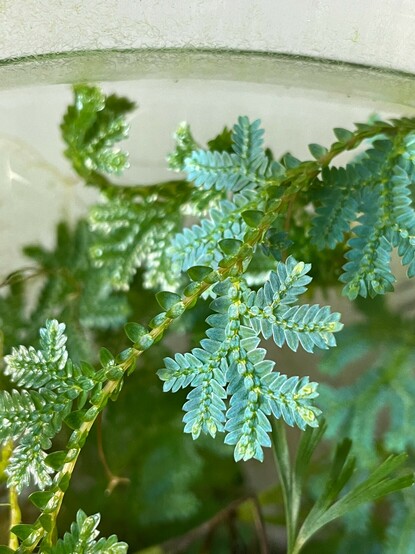
Two of my favourite spikemosses: Selaginella uncinata (peacock spikemoss) and Selaginella erythropus (no common name: I call it octarine spikemoss after Pterry). Both have iridescent leaves due to thin-film interference in the cell wall (S. uncinata) or the stacked thylakoids of the chloroplasts (S. erythropus) but the latter's leaves also have a lot of red pigment, so the iridescence is more difficult to capture in a photo. Easy to grow in a terrarium. #Selaginella #lycopod #spikemoss #clubmoss