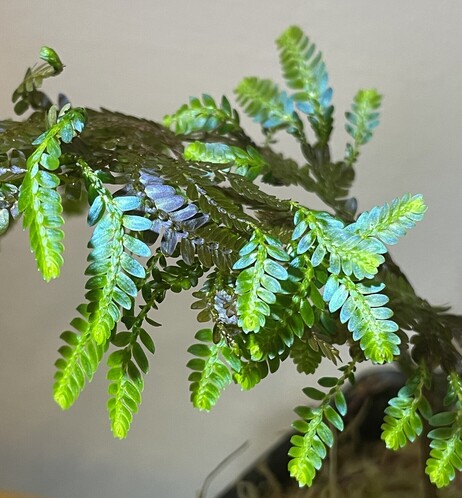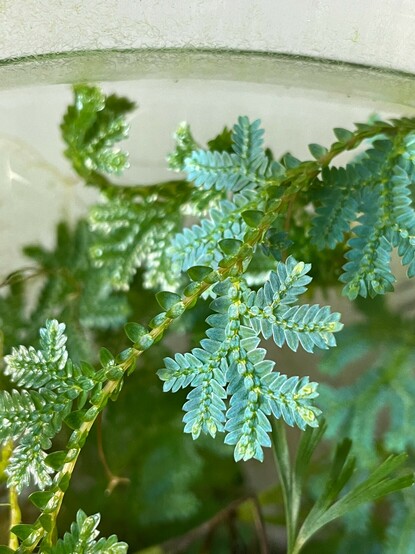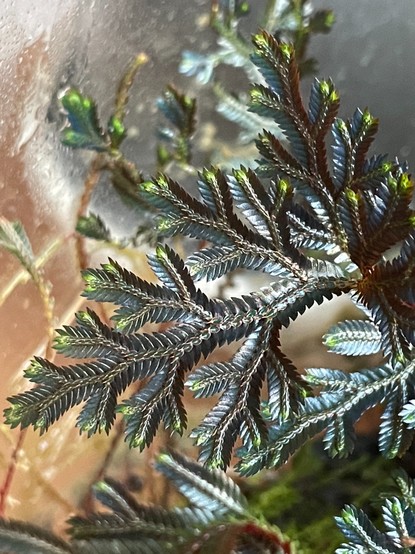
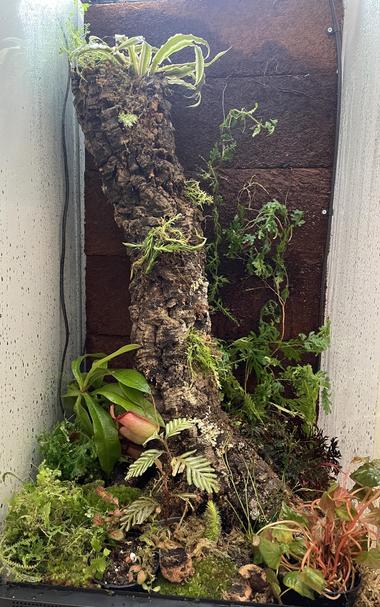

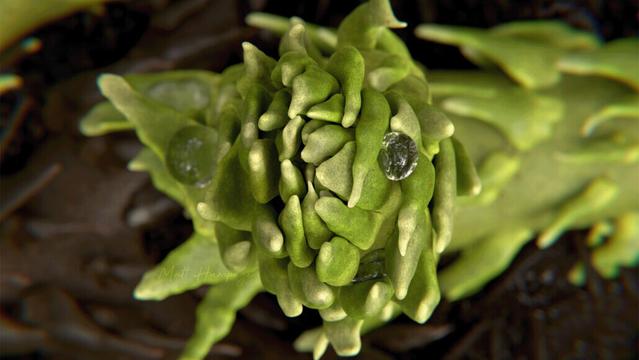
Terrarium mission accomplished (I hope) #Huperzia #Selaginella #clubmoss #spikemoss #lycopod

A 407-million-year-old #plant’s leaves skipped the usual #Fibonacci spirals
https://www.sciencenews.org/article/fossil-plant-leaves-fibonacci-spirals

Leaves and #sporangia developed in rare non-#FibonacciSpirals in early leafy plants https://www.science.org/doi/10.1126/science.adg4014 by Holly-Anne Turner et al.

"#Lycopod leaves evolved separately from leaves in other types of #plants, but some modern #lycopods do exhibit Fibonacci spiraling. That suggests the spiraling patterns may have evolved separately in different lineages of plants"
A 407-million-year-old plant’s leaves skipped the usual Fibonacci spirals

Most land plants living today have spiral patterns involving the famous Fibonacci sequence of numbers. But an extinct, ancient plant did not.

Science News

I treated myself to a little eBay auction a couple of weeks ago and bought a peacock spikemoss (Selaginella wildenowii - my seventh species). It has lamellar structures in the upper cuticle of the leaf that cause thin-film interference (like a soap bubble, or an oil spill in a puddle) that make it flash blue iridescence at particular angles.

#Selaginella #Spikemoss #Lycopod #Iridescence

Two of my favourite spikemosses: Selaginella uncinata (peacock spikemoss) and Selaginella erythropus (no common name: I call it octarine spikemoss after Pterry). Both have iridescent leaves due to thin-film interference in the cell wall (S. uncinata) or the stacked thylakoids of the chloroplasts (S. erythropus) but the latter's leaves also have a lot of red pigment, so the iridescence is more difficult to capture in a photo. Easy to grow in a terrarium. #Selaginella #lycopod #spikemoss #clubmoss