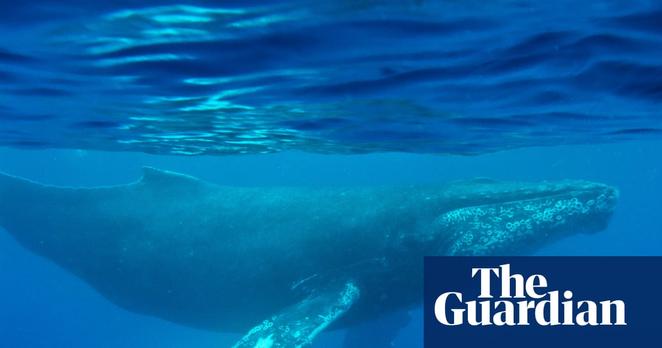
Oldest-known #whaleSong recording provides new insight into #ocean #sounds
Recording of #humpback #whale from 1949 could also provide new understanding of how the huge animals communicate

https://www.theguardian.com/environment/2026/mar/16/oldest-known-whale-song-recording-ocean-sounds

#science #ecology #soundscapeEcology #marineBiology #historyOfScience

Oldest-known whale song recording provides new insight into ocean sounds

Recording of humpback whale from 1949 could also provide new understanding of how the huge animals communicate

The Guardian

4-Feb-2026
Elusive beaked #whales off the #Louisiana coast may sometimes be diving right to the #seafloor, finds new 3D acoustic technology which accurately pinpoints their locations using their #echolocation clicks
https://www.eurekalert.org/news-releases/1114393

#science #SoundscapeEcology #ecology #marineBiology #mammals

Elusive beaked whales off the Louisiana coast may sometimes be diving right to the seafloor, finds new 3D acoustic technology which accurately pinpoints their locations using their echolocation clicks

Elusive beaked whales off the Louisiana coast may sometimes be diving right to the seafloor, finds new 3D acoustic technology which accurately pinpoints their locations using their echolocation clicks

EurekAlert!

3-Feb-2026
A #hearing test for the world’s rarest sea #turtle
Little is known about how sensitive the Kemp’s ridley #seaTurtle is to human #noise.

https://www.eurekalert.org/news-releases/1114627

It's a relatively recent discovery that turtles use #acoustic #communication, I remember covering it in this feature on #soundscapeEcology and #evolution: https://proseandpassion.blogspot.com/2022/12/soundscape-evolution.html

#science #ecology #marineBiology #ocean #noisePollution

A hearing test for the world’s rarest sea turtle

In JASA, researchers evaluate the hearing sensitivity of a group of Kemp’s ridley turtles to understand their vulnerability to human-caused noise. To evaluate their hearing range, the researchers placed noninvasive sensors on the turtles’ heads and measured the electrical signals transmitted along their auditory nerves. They played sounds ranging 50-1,600 hertz and found that the turtles could hear best at around 300 hertz. Their hearing started to decline at higher frequencies.

EurekAlert!

18-Sep-2025
Decoding a decade of #grouper grunts unlocks spawning secrets, shifts

https://www.eurekalert.org/news-releases/1098711

#science #ecology #marineBiology #SoundScapeEcology

Decoding a decade of grouper grunts unlocks spawning secrets, shifts

Each winter, red hind groupers gather under the full moon, grunting low-frequency calls to attract mates and defend territory. But a 12-year underwater audio archive – one of the most extensive ever for a reef fish – reveals those calls are changing. Courtship sounds are fading, aggressive grunts are surging, and spawning patterns are shifting – potential signs of deeper population changes. These underwater signals aren’t just fish talk – they’re vital clues, helping scientists track change simply by listening.

EurekAlert!

3-Sep-2025
Wading through the noise: new #audio tool pinpoints #river species
New research led by Griffith University has developed a publicly available tool to help scientists uncover what’s really going on beneath the surface of our rivers, using #sound.

https://www.eurekalert.org/news-releases/1096370

#science #ecology #SoundScapeEcology

Wading through the noise: new audio tool pinpoints river species

When people think of nature sounds, they likely imagine birds singing at dawn or frogs calling after rain. But beneath the surface of our rivers is a whole soundscape that most of us have never even thought to listen to – until now. New research led by Griffith University has developed a publicly available tool to help scientists uncover what’s really going on beneath the surface of our rivers, using sound. "The problem is that listening-in is not as simple as it sounds,” said lead researcher Katie Turlington, a PhD candidate at Griffith’s Australian Rivers Institute. "Scientists drop waterproof microphones into rivers to record what is happening underwater; but in just one day, a single recording could capture tens of thousands of sounds, and manually analysing them could take a trained professional up to three times longer than the recording itself.” The new tool, developed by Ms Turlington and the research team, was developed in R, a free program for analysing data where users upload a folder of audio files and sorts through the sometimes vast volumes of audio without the need for hours of manual work. It scanned recordings and detected sections from Warrill Creek, Kalbar (about an hour’s drive south-west of Brisbane) that contained sound, and grouped similar sounds together, streamlining the process of identifying what is in the audio. "It can even detect sounds that become masked by the constant noise of flowing water, which often makes recordings from rivers harder to analyse,” Ms Turlington said. "When tested in South-East Queensland streams, the tool correctly identified nearly 90 per cent of distinct sounds, faster and with far less effort than manual analysis." The tool is free and didn't require advanced coding skills from the user, it worked with datasets of any size, could be adapted to any type of ecosystem, and Ms Turlington hoped it could change the way we monitored freshwater health. "By listening to rivers, researchers can track changes in biodiversity, detect signs of disturbance, or even discover new species,” she said. "And because sound can be recorded day and night, in remote or murky waters, it offers a low-impact way to track changes in aquatic ecosystems. “We’ve only just started to explore freshwater sound; making this tool publicly available and free means more people can get involved, ask questions, and hopefully make new discoveries.” The study ‘A novel protocol for exploratory analysis of unknown sound-types in large acoustic datasets’ has been published in Methods in Ecology and Evolution.
EurekAlert!
Scientists tune in to the surf’s hidden signals

Along the coast, waves break with a familiar sound. The gentle swash of the surf on the seashore can lull us to sleep, while the pounding of storm surge warns us to seek shelter. Yet these are but a sample of the sounds that come from the coast. Most of the acoustic energy from the surf is far too low in frequency for us to hear, traveling through the air as infrasound and through the ground as seismic waves.  Scientists at UC Santa Barbara have recently characterized these low-frequency signals to track breaking ocean waves. In a study published in Geophysical Journal International, they were able to identify the acoustic and seismic signatures of breaking waves and locate where along the coast the signals came from. The team hopes to develop this into a method for monitoring the sea conditions using acoustic and seismic data.

EurekAlert!
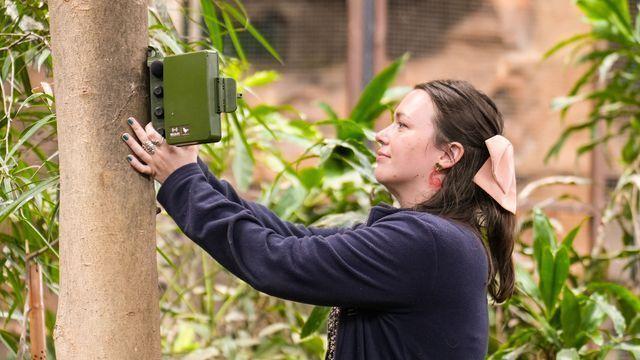
Zoos Could Be a Zone for High Impact Soundscape Research
Experts call for greater collaboration between bioacoustics researchers and zoos to boost impact and aid conservation
#Biodiversity #Soundscapes #SoundscapeEcology
https://www.technologynetworks.com/tn/articles/zoos-could-be-a-zone-for-high-impact-soundscape-research-402890
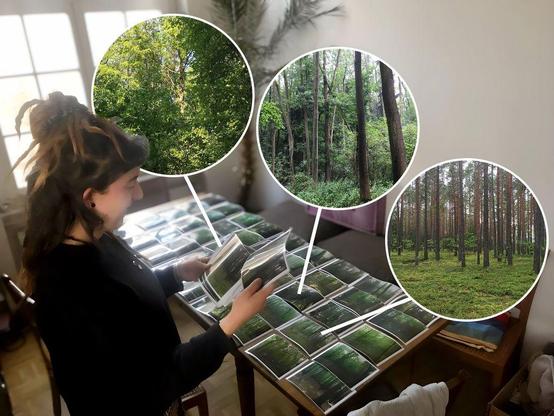
People can accurately judge biodiversity through sight and sound

People’s intuitive perception of biodiversity through visual and audio cues is remarkably accurate and aligns closely with scientific measures of biodiversity. This is according to new research published in the British Ecological Society journal, People and Nature.

EurekAlert!
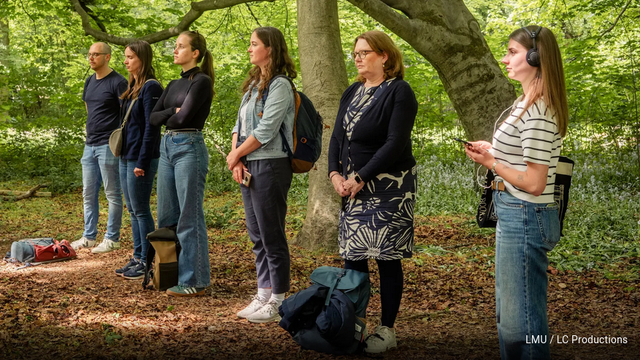
Exploring the urban soundscape
"Take a walk through the city and contribute to research at the same time: Residents of Munich now have the opportunity to do just that through guided soundwalks in the neighborhoods of Au, Neuperlach, and Harlaching. CitySoundscapes...is looking for curious citizens willing to explore their city in a new way—and help lay the groundwork for concrete ways to improve life in the city"
#Soundscapes #SoundscapeEcology #Biodiversity #SoundWalks
https://www.tum.de/en/news-and-events/all-news/press-releases/details/exploring-the-urban-soundscape