 Dyalog
#APLQuest 2015-02: Write a function that takes a numeric vector and returns the length of the longest streak of positive growth (see https://apl.quest/2015/2/ to test your solution and view ours).

 Centre for Population Change
CPC-CG member Professor Ann Berrington will discuss #partnership and #fertility trajectories, drawing on #data from the 1970 #British #Cohort Study (#BCS70), as part of the #UCL #Quantitative #SocialScience and Centre for #Longitudinal Studies seminar series.
Weds 26 Nov | 13:00-14:00 | Hybrid
#sequenceanalysis #logisticregression #trajectories #wellbeing #birthcohort #lifecourse #childhood #mentalhealth #quantitativesocialscience #population #demography

 SMT
SMT Sequence Analysis Association
Join us next week, Oct Thursday, 17, 4 pm CET, for the next #SequenceAnalysis webinar! We’ll learn about two social-policy work-in-progress papers from @kunlee.bsky.social on retirement pathways & @mischewu.bsky.social on employment trajectories around childbirth and parental leave policies.
You can find the zoom link to join, as well as the rest of our autumn program here: https://sequenceanalysis.org/webinars/
 Brendan Halpin
In my mailbox this morning: https://www.centre-lives.ch/fr/bibcite/r...
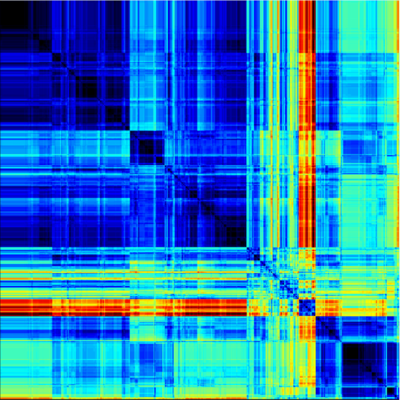
Matthias Studer et al exploring clustering of pairwise distance matrices (i.e., sequence analysis) of very large datasets (example 180k lifecourses). Bootstrapping, medoids, measures of cluster stability. #Rstats #SequenceAnalysis
I implemented Time-Warp Edit Distance in Stata over 10 years ago. It's also available for R in TraMineR.
Slowly, it's getting use. I decided to write a note on how it compares to Optimal Matching, Hamming distance, and the Longest Common Subsequence measure, and how its stiffness and gap parameters affect it:
https://brendanhalpin.net/blog/posts/parameterisingtwed/
#sociology #sequenceanalysis #stata #rstats
Edit: typo in URL
Parameterising TWED
Time Warp Edit Distance (TWED) is a measure for comparing categorical time-series such as life-course sequences, that is designed to recognise similarity that may be displaced in time. It is similar to Optimal Matching distance in implementation, but can be thought of as locally compressing and stretching the time dimension, whereas OM deletes and inserts elements. TWED, OM and a range of other sequence comparison tools are implemented for Stata in my SADI package (see Appendix: code).
I've updated my SADI repository of #Stata code for life-course sequence analysis to cope with Stata 18.
No major changes, but if you are using Stata 18 it is worth updating:
. net from https://teaching.sociology.ul.ie/sadi
. net install sadi
. net get sadi
Then run distances.do to test.
#lifecourse #quantmethods #datascience #sequenceanalysis #sociology
 Demographic Research
Based on ESS_Survey data Jana Klímová Chaloupková explores home-leaving pathways among young adults in 29 countries. The long-term solo-living pathways are associated with being in education and high SES background. #SequenceAnalysis #LeavingTheParentalHome
📄 https://www.demographic-research.org/volumes/vol48/3/
📄 https://www.demographic-research.org/volumes/vol48/3/

 Hannes Hauswedell
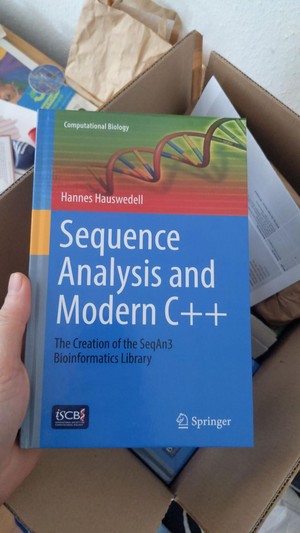
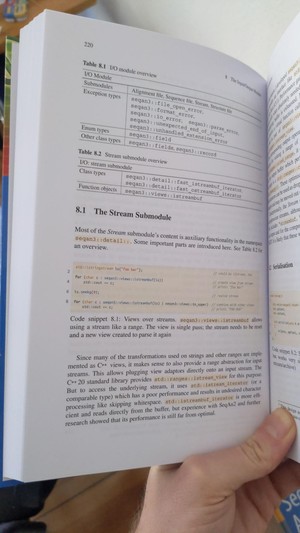
📘 Finally, the book is available 📘
“Sequence Analysis and Modern C++”
#bioinformatics #cplusplus #SequenceAnalysis
https://link.springer.com/book/10.1007/978-3-030-90990-1#about