Welcome 2026
After last weekend’s main drain backup it turned out the plumbing wasn’t finished with us yet. Thursday afternoon the shower in the basement bathroom we’ve been using for the past month while our main bathroom remodel takes its sweet time, decided to leak. And it wasn’t one of those slow drip, drip leaks. But we can fix leaky faucets!
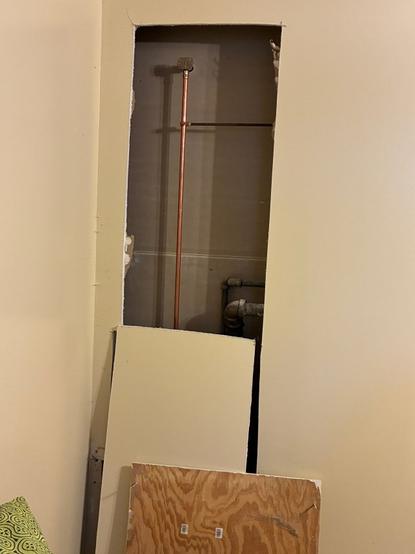
It turned out the plumbing was original to our 1952-built house and there are no longer tools and parts to fix it. So we had to call a plumber. He had to replace the shower/tub fixtures, but in order to do that, he had to cut a door-sized hole in the wall of the adjacent bedroom to access the pipes. He then had to replace the steel pipes with copper ones. And now we have new basic shower/tub fixtures and a large hole in the wall. But no more leak!
James and I do not have the tools or know-how to do drywall, so eventually we will need to hire a handyperson to come and do it for us. Since this is a guest bedroom and it is winter and people do not come visit Minnesota in the winter, especially our southern California and New Mexico family members, we can wait until spring or summer to have the wall repaired.
Meanwhile, my main bathroom remodel is not yet done. It is getting close though and I expect it will be completed this week. The tile is done and looks oh so pretty. The grab bars and folding shower chair are mounted. Now we just need a shower door, shower fixtures, a toilet and sink. And of course, with all the new and shiny, I’m looking at the medicine cabinet and wrinkling my nose because it is showing its 25-year-old age. And of course, new paint on the walls is going to need to happen too. When we contracted for the project we both naively thought the rest of the bathroom would not need changing. At least these things we really can do ourselves.
We had vegan black-eyed peas and pumpkin quesadillas on New Year’s Day. They can also be made with sweet potato or another winter squash. Last year we used butternut. Such a tasty meal! I got the recipe a couple years ago from the Washington Post and sadly it is trapped behind a paywall. However, if it is a recipe you are interested in, let me know and I can email it to you, I just can’t post it online.
Eating black-eyed peas on New Year’s Day is supposed to bring good luck. It’s a tradition from the southern part of the United States. My mom is from Oklahoma and grew up having to eat them on New Year’s, but scoffed at the tradition, along with a lot of other southern cultural things, as an adult. Her mom, my Granny, always had to have them, however. Due to a stroke that left her paralyzed on the left side of her body, she lived the last ten years of her life in a nursing home. My mom always had to go to the grocery store and buy a can of black-eyed peas to take to her otherwise she would never hear the end of it. Since Granny couldn’t cook, I assume my mom opened the can and Granny just ate them. I was generally still in my pajamas after sleeping in on New Year’s Day, and was never present for the eating of the black-eyed peas. I just remember my mom grumbling about silly superstitions.
Because of this, I never ate any until I started growing them in the garden several years ago. We tried them out in hoppin’ John and a few other dishes, but not until I came across the quesadilla recipe did we settle on our own “traditional” way to eat them on New Year’s Day. Do I believe that they bring me good luck? No, especially since after we ate them the basement bathroom leak happened. Is it a fun way to honor traditions and ancestors and have a tasty meal in the process? Absolutely!
We ended up with some extra cooked black-eyed peas and James was trying to figure out what meal he might add them to. He’s going to be making split pea soup and thought he could add them to the soup. What did I think about that? I shrugged, seemed like it would be fine.
He continued kitchening in silence, and then suddenly asked, “Do you think it will kill the green peaness?”
“What?!” I exclaimed, and scowled a little.
If you are wondering about my response, say “kill the green peaness” out loud.
James looked at me a bit confused. Then I re-ran what he said in my head and saw the jar of green split peas on the counter. Then I started laughing. Then he realized what I thought he said and started laughing too. I laughed so hard I had tears streaming down my face. We are still laughing about it. And now, of course, kill the green peaness has become a thing.
There’s snow on the ground and will be for several months yet, but I ordered my garden seeds! I posted my list last week, and now you can all roll your eyes or giggle because yes, it changed. But I have a good reason!
I was planning on ordering from four different places and remembered Sand Hill Preservation Center in Iowa. They are an heirloom seed place I bought sweet potato slips from a few years ago. I did not get a good sweet potato harvest but that is no fault of theirs. Their product was good, my growing was not because I refused to put down black plastic around the plants to keep the soil at the really warm temperature they like. Surely a sunny spot and some straw will be just fine? Well, since the sweet potatoes weren’t much larger than ping pong balls, the answer was no.
But I recalled that they have lots of really interesting garden seeds I had never seen anywhere else. So I browsed their website to see if I might be able to consolidate my seed order. Why yes, yes I could.
I still had to order from three places, but Sand Hill prices are so good, I was able to shift around some of what I was ordering from the other two places and overall spend much less on seeds and shipping. Of course I had to throw in two additional seeds packets! I added caraway to the order so I will have a supply for sourdough pumpernickel bread making. And I added an interesting herb I had never heard of before called beetberry.
Beetberry, Bitum capitatum, is a member of the amaranth family. The leaves can be eaten raw as a salad green or cooked, and are highly nutritious. The tiny red berries that follow the interesting looking flowers are high in anti-oxidants and can be used to make jams or desserts. The plant also has anti-inflammatory medicinal properties. Even better, it is an annual native to most of North America.
Only two additions, but good ones you have to agree! One of the delightful things about Sand Hill other than their variety and great prices, is that they have no online ordering. I had to download an order form, fill it out, print it off, and send it through the mail with a check. This is likely one of the reasons why their prices are so good. I don’t mind at all that the whole process takes a bit longer because none of the seeds I am getting from them will need to be started indoors until March.
Seeds all done. Next I need to write out my planting calendar.
My two week’s vacation is drawing to a close and it is back to wage work tomorrow. In spite of the topsy-turvy bathroom remodel and plumbing problems, it has been a wonderful and relaxing break. I managed to read 84 books in 2025, more than I ever have before. If you are interested in poking around, check out my LibraryThing list. It says 90 but that’s because it also includes several books I chose to not finish. And there are charts and graphs too if that sort of thing floats your boat, though I’m not certain of their accuracy.
I had some fun on my vacation sorting books on my bookshelves. And I made progress on my attic project too. All the carpet is up. Now I’m filling in the seams on the plywood floor which will then get sanded and painted with primer and then painted with floor paint. Little by little!
I hope your 2026 is off to a good start. Please send good thoughts that I will not have any additional plumbing issues for a very, very long time!
#atticCarpetProject #bathroomRemodel #beetberry #blackEyedPeas #Granny #holeInTheWall #NewYear #plumbing #SandHillPreservationCenter #seedCatalogs #splitPeaSoup
ICE in Minnesota
Oh my friends, ICE has arrived in Minneapolis and the greater Twin Cities metro. They are driving around unmarked SUVs threatening and intimidating people. Contrary to the lies spewing from the President’s mouth, the state is not overrun by Somali gangs, they do not commit most of the crimes, and 91% of them are U.S. citizens, many of them born and raised here, with the remaining 9% having visas, green cards, or protected refugee status. Sure, it’s possible some are here illegally, but if so, they are negligible in number.
Minneapolis is a sanctuary city. The mayor declared city property off limits for ICE to use as staging. A Target store right across the street from the police station that was set on fire during the George Floyd unrest, allowed ICE to use their large parking lot for staging and as a result has seen a drop in business and crowds of protesters. Our Chief of Police publicly announced that if any city police officer sees an ICE agent breaking the law and/or using excessive force, the police officer is to arrest the ICE agent and if they do not, the police officer will be fired.
Area businesses, nonprofits, and community groups have been preparing for the eventual arrival of ICE for months by passing out “know your rights” information and holding information sessions, offering free trainings on how to stay safe and how to be an observer, and creating rapid response phone numbers and teams of people. Now they are handing out whistles, following ICE SUVs around the city, patrolling schools, daycares, houses of worship, and neighborhoods. There are protests at the airport (deportation flights) and protests outside the ICE facility nearby.
I am so proud of my neighbors and city! I wish I could be part of a response team, but I don’t have the means to do that. I do, however, have one of the rapid response hotline numbers on one-touch dial on my phone so I can report something if I see it. My bike commute takes me right by a Somali and East African rich neighborhood and apartment complex so I am keeping alert.
So far there have been no big raids like in Chicago. And local news is reporting that 19 people have been arrested, but that is only the number that ICE has disclosed, there is no information about how many have been detained and released or are in custody awaiting deportation.
As for the lies regarding Somalis involved in the Feeding our Future nutrition aid scandal, there is zero evidence that they sent money to terrorist groups. Also, they have been tried and sent to jail. Apparently if they were white pedophiles or rich white men who stole millions of dollars, they’d be pardoned by the President, but since they have black and brown skin, well, that means that all Somalis and people with black and brown skin are criminals.
Please send out good thoughts to Minnesota, the Twin Cities, Minneapolis and our immigrant neighbors. And if you can, contact your elected representatives and demand they do something to stop ICE operations across the country.
One of the students at the university where I work told me about Jesse Welles the other day. Oh my, he is good. So please enjoy this clip from his recent performance on Stephen Colbert, “Join ICE”
https://www.youtube.com/watch?v=61I4hlig78w&list=RD61I4hlig78w&start_radio=1
Times like these it is still important to find joy. This has been a frigid cold week with dustings of snow nearly everyday. Thursday I biked home in the cold and snow and a wicked headwind with gusts that nearly stopped my forward motion at times. I was so tired there were moments I wanted to pull over, get off my bike, lay down in the snow and cry. But I made it home where James had a hot and delicious dinner ready, and then we had a restful evening.
Friday I felt so much better and the bike commute to and from work was so amazing that it reminded me that biking in winter can be absolutely magical.
But then James told me a rabbit has gotten into the garden. Rabbit has nibbled a few tips off the cherry bushes and they are now surrounded with wire mesh to keep them safe. Today I figured out where Rabbit got into the garden. James has repaired the breaches—there were two—but now we have to get the critter out! You would think getting the rabbit out in winter would be easy since there are fewer places for them to hide, but it is almost harder because James and I have to give chase through the snow.
Ethel and Sia will not walk on snow which means their garden wandering days are done for now. We’ve turned the heat on in the coop a few nights and days, and even when the heat is not on, they spend a good amount of time in there. Can’t day I blame them!
In sourdough news, I can happily report that using a kitchen scale has turned out to be freaking amazing! The pumpernickel sourdough bagels are not going to win a beauty contest, but, wow, did they taste good!
Today I made multigrain sandwich bread. I have made this a couple times before using the estimated cups and tablespoons measurements in the recipe, but this time I used the more precise grams measurements and the loaf is the best one ever!
Why did I resist getting a kitchen scale for so long? I had no idea it would make such a big difference. Now I will never go back!
Over the long Thanksgiving weekend I enjoyed a slow and thorough perusal on the Fedco and Seed Savers Exchange catalogs. So much “new” veg I’d like to try and grow! I’m always conflicted between whether to grow a lot of a few things or a little of a lot of things. I swing wildly back and forth from year to year. This year I’m swinging towards a lot of some things and a little of a few things. Maybe one day I will find the magical middle.
#bikeCommuting #ice #jesseWelles #pumpernickelBagels #rabbits #seedCatalogs #sourdough
Seed for Thought
Saturday’s mail brought the first of the season’s seed catalogs. And Saturday night it snowed. The snow was just a sugar coated dusting, but it was a reminder that winter is coming—eventually—because it is forecast to be as warm as 59F/15C by next Saturday.
But today is gray and very windy and below freezing, a perfect reason to lose myself for a little while in the seed catalog. Yes, yes, I know, the garden just finished up and James picked all the collards Friday and has them fermenting—collard kraut! It’s a thing!
My internet recipe searches told me collard kraut used to be very popular across the southern United States and some people say it is even better than sauerkraut. James has ours fermenting with some garlic and crushed red pepper. I’ll let you know how it comes out.
This is the first year I’ve ever grown collards in the garden, and they’ve been a great success. Not only did they grow well, but we enjoyed eating them too. The small leaves made it fresh into salads and as they got bigger they’d get sautéed with onions and eaten as a side dish or combined with other things like tofu scramble, lentil eggs, curry, or soup. The variety I grew was “yellow cabbage” and came from a Minnesota seed company called North Circle Seeds. I asked James whether he liked the collards enough to grow them again next year, and he said that while it took him a little while to figure out how to use them and get used to cooking with them, he did indeed like them and we should definitely grow them again. Noted!
I also grew Swiss chard for the first time this year and we liked that too. I grew “bright lights” and the plant stalks and leaf vein colors ranged from golden yellow to bright red. We generally ate the leaves while they were small, chopped up in salads, which added some lovely color. The bigger leaves sometimes ended up in a stir fry. This will also make it into next year’s garden. Yum!
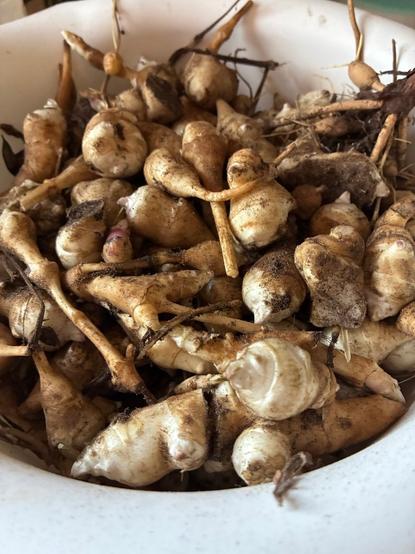
Tasty and nutritious!It’s sunchoke digging time! I dug up the first bowl Saturday afternoon just from one small area in the chicken garden. There are sunchokes in the chicken garden because last year I was silly enough to plant two roots along the outside of the chain link fence thinking—actually I don’t know what I was thinking. At the end of last season I dug up half a bowl of huge roots and thought, there, I’ve got them all. Yeah, right.
This year I had even more sunchokes growing along the fence outside and inside the chicken garden. So I dug and I dug and I didn’t worry about pulling out runner roots I came across because I am sure in spring I will discover that they have spread even more.
The sunchoke patch in the main garden is enormous. There will be more bowls to come as James has time to preserve them and I have time to dig and as long as the ground is not frozen. In spring when the ground thaws I will be able to dig up more, and there will be more, because I will find out as they pop up where all the runner roots have gone to this growing season. It’s a good thing we like them.
My turn for Reaping What She Sows: How Women are Rebuilding Our Broken Food System by Nancy Matsumoto came up on Friday. So far I’ve read the first chapter, “Black Mutual Aid, From the Rural South the Urban Northeast,” and it is fantastic.
As with everything in U.S. history, Black farmers have been, and continue to be, discriminated against. You can read a very good and succinct history in this September 2019 Atlantic article (gift link), The Great Land Robbery: The shameful story of how 1 million black families have been ripped from their farms.
Matsumoto tells pieces of this history in her storytelling about a number of women farmers who have created cooperatives, training and helping Black farmers acquire land, seed, and fair prices through a cooperative distribution network. The women and their stories are inspiring and full of lessons on how to support regenerative farming outside a white-supremacist agri-capitalist system.
Matsumoto is familiar with cooperatives. Her Japanese grandparents were interred during World War II and her grandfather helped create a cooperative network in the internment camps. This network became the second largest consumer co-op in the United States. Given the political and economic situation in the United States currently, I suspect we will be seeing more cooperatives and mutual aid societies popping up all over the country in the coming years.
Throughout history women have been the seed keepers, carefully saving and preserving seeds from season to season and generation to generation. A few years ago I read a wonderful novel called The Seed Keeper by Diane Wilson. It is the story of a current day Dakota woman who is gifted a cache of seeds saved by her ancestors when they ran from being attacked by U.S. troops. It is a story of healing and renewal. I was reminded of this novel while reading the first chapter of Reaping What She Sows because one of the women she profiles is a seed keeper and works for Truelove Seeds, an heirloom seed company that offers culturally important seeds.
Of course I had to look at their offerings, and wow! If you want to read more about the company, The Sierra Club has a great article about them, The Preservation of Culture Begins With a Seed I am definitely going to try and grow green striped cushaw squash! And they also have Korean hong-gochu peppers so I can make kimchi and even collard-chi next year.
The next chapter of the book is about rebuilding the grain economy. Looking forward to learning even more!
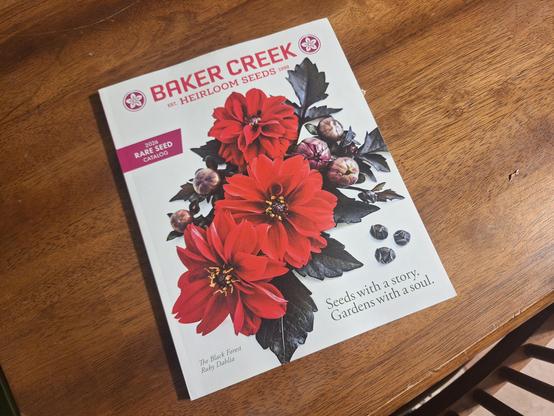
While I am on the subject of seeds, I have been a fan of Baker Creek Heirloom Seeds and bought seeds from them many times through the years. But in the last few months I’ve found out that as wholesome as they advertise themselves to be, this is not the case. In 2019 they invited a white supremacist to speak at their spring planting festival. After much uproar, they uninvited him, but issued no statement of apology or anything that I was able to discover. I have also heard that they steal seeds from indigenous peoples and then rename them and don’t acknowledge where they really came from, though I am unable to find direct confirmation of that. However, just last year the tomato they had on the cover of their catalog turned out to be a recently released GMO variety they sold as non-GMO. They said their seed came from France and they tested it and the results were inconclusive. Nonetheless, they pulled it from their stock and destroyed all the seeds.
Along with just discovering Truelove Seeds, I learned a few months ago about Native Seed Search and there is also Bertie County Seeds I just found out about. I generally buy seeds from Fedco who tell you exactly where the seeds come from (corporate grower, independent farmer, etc) and also credit and pay indigenous communities for their seeds. There is also Seed Savers Exchange. And then, as I mentioned earlier, North Circle Seeds, a small independent Minnesota seed company that sells varieties that will grow in my climate.
I guess I am getting a lesson in seed keeping and seed companies that I hadn’t thought much about before. Seeds are more than hybrid, open-pollinated, heirloom, GMO, organic. It’s important to know their origins and to make sure the people who have stewarded them are acknowledged and compensated. For some reason I always believed this was the case, but it turns out to be otherwise.
#collardKraut #collards #cooperatives #firstSnow #NorthCircleSeeds #seedCatalogs #seedKeepers #seedSaving #seeds #sunchokes #swissChard #TrueloveSeeds
Garden Dreaming
Autumn was long and warm, and then suddenly it was over. Upper 30sF one day and the next 20F with single digit wind chill. My body was not ready for such a drastic change. Mid-morning at work I’d get ravenously hungry. What’s going on? And then I remembered, oh yeah, biking in the really cold weather takes more energy. At night James and I would fall into bed, exhausted. I’m not sure I’ve completely acclimated yet, but I’m getting there.
Before the cold hit we managed to finish all of our outdoor chores and get the chicken coop winterized. On the last truly nice weekend day we even managed to meet a friend for breakfast. And now I am ready to draw inwards and slow down, hibernate a little.
Thanksgiving at my house this last Thursday was a quiet affair, just James and I. James made our “traditional” vegan meal of enchiladas and pumpkin pie. The pumpkins we grew in the garden this year. The variety is naked bear, a pepita pumpkin that is also sweet enough for pie, an uncommon 2-in-1! I grew Lady Godiva one year and got several huge pumpkins full of delicious pepitas. James tried cooking the pumpkin flesh and it was so bland that no amount of spice could save it. Sadly, naked bear is an f-1 hybrid, but I saved a few seeds anyway and we’ll see how they grow out.
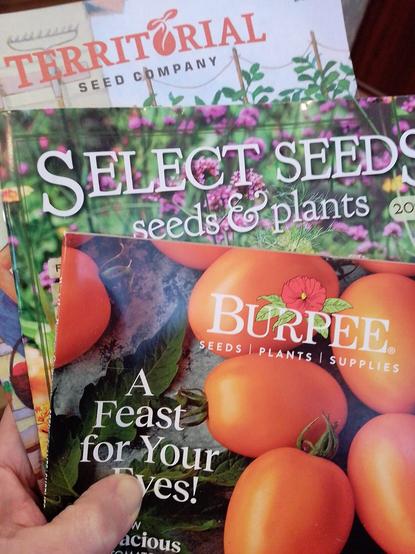
The seed catalogs began arriving several weeks ago. I planned on saving them and not looking at them until Thanksgiving. How long do you think that plan lasted?
I must say, I was pretty proud of myself for making it an entire 24 hours before tearing through the first arriving catalog. The second one I managed to make it a couple hours. The third one, I took it out of the mailbox and immediately started paging through it.
But even though I looked through them all sooner than I had planned, I still sat down Friday morning and looked through them all again, going to the websites and creating my wishlists as though I had all the garden space and time for working in it in the world.
After lunch it was time to look reality in the face. I began to whittle things down. Then I compared prices across seed companies. And then I whittled some more. I saved so many seeds last year that I was’t planning on buying much this year. But I recently decided that I want to include more herbs and medicinal plants in the garden, and that plumped up my seed list significantly. It plumped so alarmingly that it has taken some deep thought about what, exactly, I am hoping to accomplish.
With the help of some kind folks on Mastodon, the Plants For a Future database, and Midwest Medicinal Plants, I decided to cut out everything that used only roots and bark or that required tinctures made with alcohol. We are a sober household and making medicine with vodka is a hard no. That still left quite a few plants for teas and salves.
Next I cut out ones that are potentially invasive, take up large amounts of space, or prefer moist areas—something my sandy soil cannot offer. That still left a lot. So then I decided to favor plants that could grow in shade or part shade, had culinary and medicinal uses, are easy to grow, or just had pretty flowers attractive to pollinators. And that did the trick. In a year’s time, I can get seeds to some of the ones I cut from my list this year.
In addition to food, herbs, and medicine, James is reading a book about night time critters and asked if we could grow some flowers for moths. After doing some research I came up with a list and will be getting seeds for moonflower, evening stock, evening primrose, and nicotiana.
I’ve not placed any orders yet, it’s still early. And I may cut a few more things from my list. I was going to try growing collards and Swiss chard but do I want to do both? And if I only do one, which one? I have zero luck with beets, will I have better luck with chard? I also have zero luck with cabbage. Will I have better luck with collards? I suppose there is only one real way to find out.
Also, I can’t decide whether I want to try growing long beans. Has anyone grown them? Are they worth it for more than their unusualness?
While the weather outside is frigid, spending my long holiday weekend garden dreaming has been lovely. Once I finalize my seed list, I will be sure to post it here.
On a side note, I am very behind in replying to kind comments y’all have made. I will endeavor to catch up on that in the next few days!
Reading
Quote
“To name the world as gift is to feel your membership in the web of reciprocity. It makes you happy—and it makes you accountable. Conceiving of something as a gift changes your relationship to it in a profound way, even though the physical makeup of the “thing” has not changed. A woolly knit hat that you purchase at the store will keep you warm regardless of its origin, but if it was hand-knit by your favorite auntie, then you are in relationship to that “thing” in a very different way: you are responsible for it, and your gratitude has motive force in the world. You’re likely to take much better care of the gift hat than of the commodity hat, because the gift hat is knit of relationships. This is the power of gift thinking. I imagine if we acknowledged that everything we consume is the gift of Mother Earth, we would take better care of what we are given.”
~Robin Wall Kimmerer, The Serviceberry, page 22-23
Listening
Watching
James’s Kitchen Wizardry
James has been making magic these last couple of weeks. We’ve had spaghetti squash chow mein, and of course our Thanksgiving enchiladas and pumpkin pie (best vegan pumpkin pie recipe ever from Vegan Pie in the Sky). And week before last he made up a recipe for what he called a cookie cake: chocolate cookie on the bottom, peanut butter cookie in the middle, and chocolate chip cookie on top. Mmmmm
#collards #longBeans #medicinalHerbs #mothGardening #pumpkins #seedCatalogs #swissChard
@iamgaarden Excellent! I just love these lists! They're better even than #SeedCatalogs lol
Dear gardeners, please don't @ me
The world of printed seed catalogs (200+ still exist) and mail ordering seeds for your garden. How quaint, I didn't realize all of this still existed! 🌱
https://www.newyorker.com/magazine/2023/03/20/what-we-learn-from-leafing-through-seed-catalogues
#February 1, 1904
#OTD S.J. Perelman, American #Humorist, is born.
In his #Book '#Acres and Pains' (1943), Sidney wrote his transformation fr/ a city #Lazybones to #Country squire. He also shared the relatable frenzy caused by #SeedCatalogs:
"The children need a #Pumpkin for #Halloween & let's have plenty of #Beets. We can make our own lump sugar!
Then someone discovers the #Hybrids: the #Onion crossed w/ a #Pepper or a new vanilla-flavored #Turnip that plays the 'St. James Infirmary Blues.'"
And so it begins...