Usually, “spilling tea” implies gossip—secrets let slip, truth laid bare. But in this case, it’s neither funny, juicy, nor dramatic. It’s devastating. The breach of Tea, a verification-first dating app designed for women and nonbinary users seeking safety and authenticity, wasn’t just another leak in the
Okay:
Universal Basic Cybersecurity. *
For every organisation, the people through the government provide the means (not money but tools, knowledge and information) to have basic information security in place.
This as a response to the “Security Poverty Line” and the abysmal state of information security, especially (but certainly not exclusively) amongst the SMEs.
*) you can probably guess why I don’t pitch it as “Universal Basic Informationsecurity”. Also, just “Security” doesn’t work, because that is (rightly) used in the discourse around UBI. If it is confused with Universal Background Checks, that’s just a happy little coincidence.
#ShowerThoughts #UniversalBasicCyberSecurity #UBC #SecurityPovertyLine #infosec #CyberSecurity
#UBI
@wendynather @caseyjohnellis
Excellent episode.
"Security is the protege child of quality" 🙂
#SecurityPovertyLine was revisited.
Opposed to general poverty, it can't be solved by simply throwing money at it.
As you know, I've been talking about the #SecurityPovertyLine for over ten years now, and I'm always learning new things that add to my thinking on it. In my work with the National Academy of Sciences committee on cyber hard problems, I got to hear a presentation from @fuzztech that really opened my eyes.
It seems that US law enforcement is also below the security poverty line. Really. They struggle with protecting their own infrastructure (which includes huge amounts of digital data that now has to be stored as evidence for, like, forever -- as innocent people are still being exonerated decades later), and they also struggle with being able to help victims of cyber-enabled crime.
This presentation (which starts at 4:20 in the video) is open to the public, and I believe it needs more attention, as this problem affects not only SMBs, but also the very fabric of society. Have a look:
As you may know, one of the concepts I’ve been talking about for more than a decade has been the #SecurityPovertyLine. I’m thrilled to see organizations like @CommonGoodCyber starting to address it, and I’ll be leading a breakout discussion at the workshop in DC next week. Some of the panel sessions will be streamed (@reitinger, tell me if I’m mistaken), but the breakout sessions will not, as we roll up our sleeves and try to get work done. We must address the root causes of #CyberPoverty if we hope to protect everyone from attacks and promote #CyberCivilDefense.
What is the #SecurityPovertyLine? (Or #CyberPovertyLine, depending on your style) @Tarah and I talked about it and its effect on SMBs and the #MSPs who support them.
https://www.youtube.com/live/OoD2gKSXaOQ?si=cw43jsJrFkVzDP20
https://www.linkedin.com/events/7134283943507369984/comments/
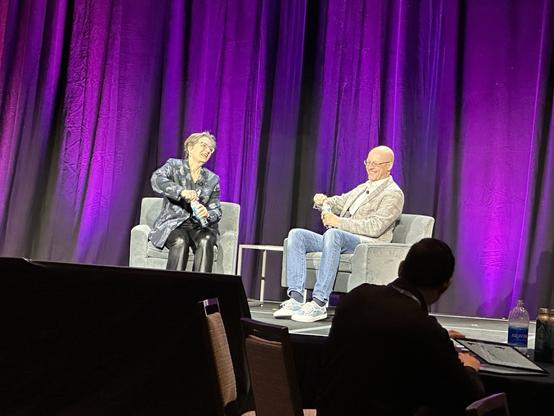
When @Tarah invites you to speak in public with her, YOU SAY YES! Come hear us discuss the #SecurityPovertyLine on November 30th.
We'll spend 45m discussing the Security Poverty Line and how it applies to managed service providers. There's a huge challenge in the US with new regulations hitting small businesses. They often require information security controls, cyber insurance, and complex vendor assessment processes. Then, small businesses turn to their MSPs, often with time pressure, and sometimes without much understanding of the security issues at stake. We're here to answer questions, help the community, and get a little mad right alongside you. Join us! Profanity and sharp humor may be utilized. You have been warned. Our guest this week is Wendy Nather, Head of Advisory CISOs at Cisco Hosted by Tarah Wheeler, CEO of Red Queen Dynamics