 13
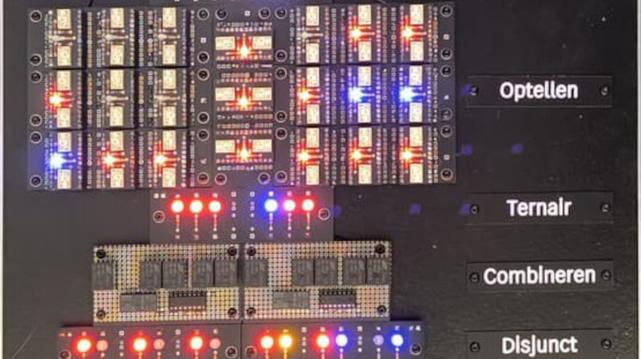
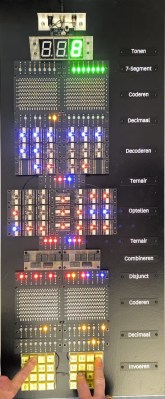
13Relays Run This Balanced Ternary Adder https://hackaday.com/2026/03/15/relays-run-this-balanced-ternary-adder/
#Computerhacks #Relay #Relaylogic #Relays #Ternary #Ternarycomputer
#Computerhacks #Relay #Relaylogic #Relays #Ternary #Ternarycomputer
Relays Run This Balanced Ternary Adder
https://fed.brid.gy/r/https://hackaday.com/2026/03/15/relays-run-this-balanced-ternary-adder/
This toot https://fosstodon.org/@interlisp/115122557055111398 led me via a reference to Edmund C. Berkeley (as coauthor with L. Peter Deutsch of "The LISP Implementation for the PDP-1 Computer", March 1964 and author of "Giant Brains, or Machines that Think", 1949) to the 1950 2-bit relay computer Simon and then to Harry Porter's Relay Computer:
https://www.youtube.com/watch?v=tsp2JntuZ3c
By eighteen minutes in, if you can follow along, you'll understand how ALU function codes are selected.
I've never seen such a succinct explanation of a computer.
[Edit: the 3-bit ALU function codes are later wrapped in 8-bit opcodes, which trigger loads and selects from the data and address buses. This is exposition at its finest!]
#computerarchitecture #relaylogic #vintagecomputing #retrocomputing

Returning to the Z80 ALU core implemented in relays. The first task is to redo the relay symbols. Kicads default generic relay shows the solenoid repelling the contacts, rather than attracting them. It's messing with my head.
In the image I've update the two symbols on the left. The rest are still defaults.
(PS Kicad only has a generic symbol for the single pole relay. I extended this to create the tow and three pole versions).

Hackaday Links: November 12, 2023
#hackadaycolumns #hackadaylinks #astronauts #calculator #cruise #iss #layoffs #niceroundnumbers #relaylogic #satellite #spacewalk #tire #tools #unixepoch #wagonwheel #wheel #wheelwright #hackaday
-- Delivered by RssEverything service
Relay Logic Nixie Tube Clock Checks All The Boxes
There are a few words in the electrical engineering lexicon that will perk any hardware hacker’s ears. The first of course is “Nixie tubes” with their warm cold war era ambiance and nostalgia inducing aura. A close second is “relay logic”. Between their place in computing and telecom history and the way a symphony of click and clatter can make a geek’s heart go pitter patter, most of us just love a good relay hack. And then there’s the classic hacker project: A unique timepiece to adorn our lair and remind us when we’ve been working on our project just a little too long, if such a thing even exists.
With those things in mind, you can forgive us if we swooned ever so slightly when [Jon Stanley]’s Relay Logic Nixie Tube Clock came to us via the Tip Line. Adorned with its plethora of clicking relays and set aglow by four Nixie tubes, the Relay Logic Nixie Tube Clock checks all our boxes.
[Jon] started the build with relay modules that mimic CD4000 series CMOS logic chips. When the prototype stage was complete, the circuit was recreated on a new board that mounts all 55 Omron relays on the same PCB. The result? A glorious Nixie tube clock that will strike envy into even the purest hacker's heart. Make sure to watch the video after the break!
[Jon] has graciously documented the entire build and even makes various relay logic boards available for purchase if you’d like to embark on your own relay logic exploits . His site overflows with unique clock projects as well, so you can be sure we’ll be checking those out.
If you feel inspired to build your own relay logic project, make sure you source genuine Omron relays, especially if your Relay Computer Masterpiece takes six years to build.
Thanks to [Daniel] for sending this our way. Got a cool project you’d like to share? Be sure to send it in via the Tip Line.
#clockhacks #hardware #clock #cmoslogic #led #nixie #nixietubes #relay #relaylogic #relays

 Amin Girasol
 Bread80
 Andro Abhi
 hackaday unofficial