Albion – It Was In The Month of May I Review By Mystikus Hugebeard

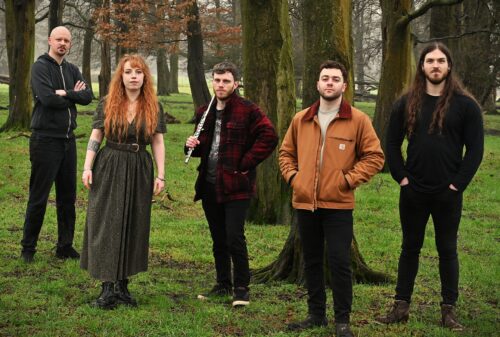
Sorry, but I can’t resist: It was in the month of May that I sat down to review the newest album by the British folk-rockers Albion, titled It Was In The Month of May I.1 This gaggle of self-declared whippersnappers blew this reviewer away with their 2024 album Lakesongs of Elbid. What started as an unassuming filter piece grew on me more and more to the point it made my (and my co-conspirator Killjoy’s) end-of-year list. Albion’s timeless, joyful folk-rock music has enjoyed constant rotations in the Hugebeard tower since then, and so a new album has been a hotly anticipated affair. Now that it’s in our hands, has Albion continued their trend for quality?

For those unfamiliar with Albion, they play a flute-heavy, wistful sort of progressive folk-rock that draws an obvious comparison to Jethro Tull and reminds me a great deal of Big Big Train. For those a little more familiar, it’s worth mentioning that It Was In The Month of May has somewhat toned down the already limited metal crunch that graced Lakesongs of Elbid. Rest assured, this is no criticism, as this album remains energetic and adventurous in all the right ways. The opening prelude, “Mis Mai,” followed by the first true foray into the album’s essence, “The Green Knight,” demonstrate Albion’s sonic strengths right out of the gates. “Mis Mai” highlights the dulcet pipes of Joe Parrish-James as he lathers the song’s Welsh lyrics in decadent velvet, while “The Green Knight” starts the album in usual Albion fashion with grandiose flute melodies explored atop galloping guitar strumming.

What I love about Albion’s music, and what they maintain in It Was In The Month of May, is a sense of effortlessness. The music is fun, it’s accessible, it’s breezy, it’s comfortably warm and full of well-crafted little moments so crisp and yet so obvious it almost makes you wonder how no one else thought of it first. The pub-rock verse of “Down With The Hero” and the epic call-and-response between the flutes and guitars in the middle of “Calan Mai” come especially to mind. In the album’s longer songs, Albion are quite eager to just let the music run free through the meadow in spacious explorations of riffs and solos, but it never feels aimless. The melodies of “The Green Knight” and “Eldest” in particular see the guitars and flutes bounce merrily along in an endless up-and-down like the rolling hills stretching before you as you prepare for adventure. The closer, “Calan Mai,” is the longest at ten minutes, but even at its most unrestrained, the song’s melodies wield graceful finality in a way that always feels satisfying.

It Was In The Month of May is almost 20 minutes shorter than its predecessor, Lakesongs, which makes for an overall cleaner listening experience. However, the album’s pacing does waver a little by over-saturating the latter half with lower-energy tunes. I really quite love “Hymn to Elbereth,” as it has this gently twisting nature to it that happily makes me think of Glass Hammer, but it’s misplaced between the otherwise pleasantly acoustic “She Is The River” and the ballad “Cherry Hill,” making for an overly languid sequence of songs. “Cherry Hill” in particular leans a bit too heavily on chorus repetition for its six-minute runtime. Still, the album ends on the right note with “Calan Mai,” and there are no other noteworthy structural issues or damaging patterns affecting the album. However, I simply must mention the “la-da-da’s” and “doo-do-do’s” in the chorus of “Down With The Hero.” I don’t mind vocalizations at all and they work perfectly well as little interstitial passages like in “Eldest,” but I find it to be a heavily misguided choice for them to carry the chorus of the album’s most upbeat song.

It Was In The Month of May is warm, adventurous, inviting, and once again, and I simply cannot stress this enough, extraordinarily British. While this album never gripped me quite like Lakesongs of Elbid did, the final word on this review is nevertheless one of eager positivity. Albion is a band I tend to think of no matter the musical flavor I’m looking for, and It Was In The Month of May only furthers that trend. This is music that is just so pleasant to listen to, no matter the day, and there are some damn good bangers to be found here for any fan of folk, British rock, or prog.

Rating: Good!
DR: 8 | Format Reviewed: FLAC
Label: Self-Release
Websites: official | facebook | bandcamp
Releases Worldwide: May 26th, 2026

Killjoy

In the year 2021, I unexpectedly became acquainted with the debut EP of a very special folk rock group from England. The potential that Albion showed on Pryderi was immediately obvious, and I longed for more. My wish was granted in 2024 by the whopping 70-minute full-length debut Lakesongs of Elbid, for which my esteemed colleague (and now review partner), Mystikus Hugebeard, wrote a splendid filter piece. Albion has wasted no time since then, here to regale our ears again with cheery tunes. It Was in the Month of May seeks to honor the magical time of year when spring sunsets and will soon cede to warmer temperatures.

Albion’s music is wholesome for the soul, whispering to the part of human consciousness that yearns for carefree meadows and being in nature. They primarily achieve this through the exquisite pairing of flute and guitars (both acoustic and electric). This, of course, invites comparisons to Jethro Tull,2 although Albion perhaps hews a bit closer to folk music. Take, for example, the beautiful acoustic guitar fingerpicking and Welsh singing3 in “Mis Mai.” Further, Albion plays a more modernized style of rock than Jethro Tull. “Down with the Hero” is a rousing, ultra-catchy pub rock number and the guitarwork in “The Green Knight” is elaborate, sounding like a slightly slower and proggier Dark Forest. The way that Albion harmoniously blends the old with the new is genuinely refreshing.

It Was in the Month of May similarly succeeds in striking a balance between humble and epic. In both the quiet and upbeat moments, there is an air of unassuming regality. Therefore, it makes perfect sense that Albion composed a pair of songs about Tolkien’s characters Tom Bombadil and his wife, Goldberry. “Eldest (Tom Bombadil)” contains gorgeous guitar and flute swells evoking endless verdant hillsides, as well as a Celtic folk-influenced jig reminiscent of Tuatha de Danann or Braia. “She Is the River (Goldberry)” is entirely acoustic and percussion-less (save for hand claps), with sunny guitar strumming and pleasantly poetic lyrics. Continuing with Tolkien subject matters, “Hymn to Elbereth” features vocal harmonization by Joe and Rhiannon Parrish-James which is as fair as the elves who Frodo, Sam, and Pippin overheard singing these very words in The Fellowship of the Ring. Rhiannon adds her voice to Joe’s at various other times throughout the record, and I would love to hear her take center stage in the future.

Overall, It Was in the Month of May is sharper and more focused than its predecessor. As much as I loved Lakesongs of Elbid, opening with a 9-and-a-half minute instrumental track didn’t help it find its footing. “The Green Knight,” the first full song here, isn’t much shorter but its structure is more disciplined, never wavering from its gallant, galloping theme. The other 8+ minute songs, “Eldest (Tom Bombadil)” and “Calan Mai,” also mostly justify their lengths, although the latter feels a bit meandering towards the end. But the larger issue with “Calan Mai” has to do with the track that precedes it. “Cherry Hill (Maya II)” hits like a lullaby, which might have been okay if it were 3 minutes instead of 6, so it ends up stifling the momentum leading into the ornate concluding track. I do appreciate that, with a total runtime of 52 minutes, It Was in the Month of May is easier to listen to in one sitting.

It Was in the Month of May is great for drifting away and forgetting one’s troubles for a while. The uplifting compositions are easy on the ears while offering bountiful details to uncover during return visits. “Cherry Hill (Maya II)” is the main thing holding it back from unqualified greatness. That said, if Albion continues refining their songcraft at this pace, the next album will surely shatter our score safety counter. So, kick back and enjoy time outside with loved ones. It Was in the Month of May is an excellent way to ring in summer in the Northern Hemisphere.

Rating: 3.5/5.0

#2026 #30 #35 #Albion #BigBigTrain #Braia #BritishMetal #DarkForest #FolkMetal #FolkRock #GlassHammer #ItWasInTheMonthOfMayI #JethroTull #LakesongsOfElbid #May26 #ProgressiveRock #Pryderi #Review #Reviews #TuathaDeDanann
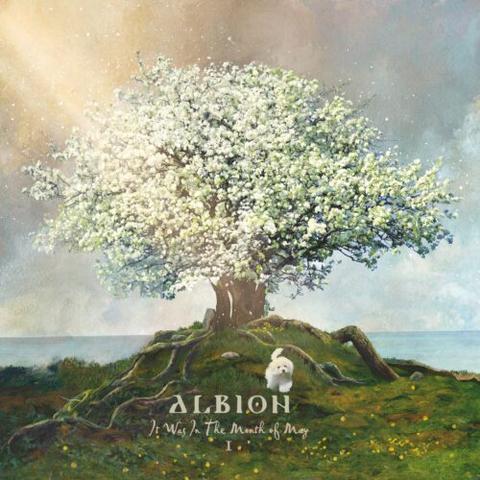
Bran the Blessed

In Welsh, he’s called Bendigeidfran or Bran Fendigaidd, literally meaning “Blessed Cow.” The name “Bran” in Welsh is usually translated as crow or raven.

Bran is a literal giant, like Goliath of David & Goliath fame, & king of Britain in Welsh mythology. He shows up in several of the Welsh Triads. But his most significant role is in the Second Branch of the Mabinogi Branwen ferch Llyr. He’s a son of Llyr & Penarddun. He’s the brother of Branwen, Manawydan, Nisien, & Efnysien.

The Irish king, Matholwch, sails to Harlech to speak with Bran the Blessed, high King of the Island of the Mighty, & to ask for the hand of his sister, Branwen, in marriage. Thus forging an alliance between the 2 islands.

Bran agrees to Matholwch’s request. But the celebrations are cut short when Efnysien, a half-brother of Bran & Branwen, brutally mutilates Matholwch’s horses, angry that his permission wasn’t sought in regard to the marriage.

Matholwch is deeply offended until Bran offers him compensation in the form of a magic cauldron that can restore the dead to life. Pleased with the gift, Matholwch & Branwen sail back to Ireland to reign.

Once in Matholwch’s kingdom, Branwen gives birth to a son, Gwern. But Efnysien’s insult continues to rankle among the Irish. Eventually Branwen is mistreated, banished to the kitchen & beaten every day.

She tames a starling & sends it across the Irish Sea with a message to her brother, Bran. The common starling, also often referred to as the “Welsh starling” is the type of starling she used.

Bran, being an actual giant, waded across the Irish Sea to rescue her with his brother, Manawydan, & a huge myriad of warriors, mustered from the 154 cantref of Britain following in ships. A cantref is a medieval Welsh land division, like a county. The word comes from “cant” (a hundred) & “tref” (town). The idea that a cantref contained about 100 settlements or dwellings.

The Irish offer to make peace, & build a house big enough to entertain Bran. But they hang 100 bags inside. The bags were thought to have flour in them. But actually containing armed warriors.

Efnysien, suspecting treachery, reconnoitres the hall & kills the warriors by crushing their skulls. Later, at the feast, Efnysien, suspecting treachery, reconnoitres the hall & kills the warriors by crushing their skills.

Later, at the feast, Efnysien, getting into his feels, again, murders Gwern by burning him alive. A vicious battle out. Seeing that the Irish are using the cauldron to revive their dead, he hides among the Irish dead/corpses & is thrown into the cauldron by the unsuspecting enemy.

He destroys the cauldron from within, sacrificing himself in the process. Only 7 men survive the conflict. Among them: Manawydan, Taliesin, & Pryderi fab Pwyll, the prince of Dyfed. Branwen having died of a broken heart.

The survivors are told by a mortally wounded Bran to cut off his head & to return it to Britain. For 7 years, where they are entertained by Bran’s head, which continues to speak. They later move on to Gwales (often identified with Grassholm Island off Dyfed) where they live for 80 years without perceiving the passing of time.

Eventually, Heilyn fab Gwyn opens the door of the hall facing Cornwell & the sorrow of what had befallen them returns. As instructed, they take the now silent head to the Gwynfryn, the “White Hill” (thought to be where the Tower of London is now), where they bury it facing France, so as to ward of invasion.

King Bran was sitting on the rocky shore at Harlech when he saw 13 ships over at the horizon coming from Southern Ireland. Soon, the boat men came to shore declaring the fleet belonged to the Irish Lord Matholwch who came seeking Bran’s sister Branwen’s hand in marriage.

Of course to Bran, this union made sense. Someone worthy of his sister had come forth. Their union would bring a powerful alliance for the 2 kingdoms. Bran willingly welcomed King Matholwch of Ireland ashore & gave him some really great hospitality. The wedding was set at the coast to Aberffraw.

All this had to be set inside specially erected tents since no house could accommodate the giant King Bran. Soon after all the wedding & celebration took place Bran’s half-brother, Efnysien, returned to Wales & was puzzled to see a lot of foreign horses stabled.

He asked whom the horses belonged to & was enraged to find his sister had been given away without his consent. In his anger, he maimed all the Irish horses by cutting their lips back to their gums, their ears down to their skulls, eyelids to eyeballs, & their tails to their butts.

Matholwch’s courtiers advised him to see this as a calculated insult from the Welsh & was in the end coaxed to head back home in offense/deep resentment. Bran sent his best messengers to attempt to sway Matholwch.

He sent with them a stick of solid silver as tall as himself & as thick as a finger along with a plate made of gold the circumference of his face. He also offered to replace every horse that was maimed & begged Matholwch to see his family dilemma, Bran couldn’t execute his own brother.

He begged to meet with the Irish king face-to-face so that he might make a humble apology. The 2 kings met again. However, during the meeting Matholwch expressed his feeling that Bran’s compensation was too small.

Bran couldn’t stand for that, so he offered Matholwch a magic black cauldron that could bring the dead back to life on the condition they couldn’t speak. Matholwch was astounded by this great gift & forgot all the unpleasantries that had come before. The next morning, the fleet of 13 ships left for Ireland with Branwen & Matholwch, side by side.

At 1st sight, the Irish loved their new queen. They brought many gifts to the castle celebrating Matholwch & Branwen’s marriage. In due time, Branwen gives birth to a son named: Gwern. The realm rejoiced once again.

A few years have passed. The counselors began to reflect on the maiming of the horses once again. they believe that Matholwch hasn’t acted like a man. They probed him to take out this injustice on his wife, Branwen.

The council made him expel Branwen from his court. They force her to work in the kitchen. She was relentlessly bullied by the cook. She was stared at by the kitchen boys, who even boxed her ears. This mistreatment continues for 3 years. In that time, Branwen had been taming a starling to take her mind off things. (Anyone getting Cinderella vibes?)

One day, she fastened a letter to the starling meant for her brother, Bran, pleading for help. The bird eventually makes its way to Wales! The bird dove from the sky during 1 of Bran’s legislative assemblies.

When Bran read Branwen’s letter, it made him feel despair but then fury. He then declares war on the Irish to exact revenge to his sister. Bran led ALL his armies down the shore to Ireland. Everyone on the Irish shore saw Bran wading through the water ahead of the fleet, because no ship could carry him.

The Irish ran across the river Shannon & barred the way from the sea. So the ships couldn’t go up the river. Just before Bran’s troops landed, they saw the Irish had destroyed the bridge & blocked the river.

At that very moment, Bran said, “The man who would lead his people must first become a bridge.” He then positioned himself across the river, so that his troops could march across. Matholwch’s men seeing the Welsh advance successfully, said they would atone for the injustice done to Branwen by ensuring the kingship of Bran’s nephew, Gwern.

That alone didn’t satisfy Bran. So they offered to build him a house that would fit his massive body. Bran only accepted Branwen’s plea, for she feared bloodshed. The house the Irish built however was a trick.

As they had hid 100 soldiers inside bags throughout the home instructed to jump out at the feast & kill the nearest Welshman. They didn’t factor in Efnysien, who arrived at the house to inspect it, suspecting foul play. He went around & crushed the skull of every man hidden inside a bag.

Soon after the great feast took place & Gwern went around charming his new-found relatives from Wales. Efnysien complained that the boy didn’t greet him. Then suddenly grabbed the boy by his heels & cast him head 1st into the huge fire.

Branwen, in a craze, tried to leap into the fire, Bran stopped her knowing she would die too. He then protected his sister from the fight that broke out escorting her outside the house. The Welsh had the advantage until the Irish brought out their secret weapon: the black cauldron that could reanimate the dead.

Efnysien seeing the great trouble he had brought his country men, he decided upon 1 last act of valor. He hid himself in the bodies of the fallen Irish. When the cauldron attendants came along & threw him in, he spread his body out in all directions. This shattered the cauldron but he sacrificed himself in the process.

During the great fight, Bran took a fatal blow to the foot. As he lay in his deathbed, he gave his men these last instructions: “Cut my head off & take it to London. Eventually, you must bury it in the state on the White Hill of London, turning my head towards France.” White Hill of London is supposedly where the Tower of London now stands.

Ceremonially, they cut off Bran’s head & left Ireland. When they returned to Wales & Branwen had time to contemplate all that had happened, she died there on the spot of a broken heart. The men buried her where she fell & continued on their quest for London.

One-Time Monthly Yearly

Make a one-time donation

Make a monthly donation

Make a yearly donation

Choose an amount

$1.00 $5.00 $10.00 $1.00 $5.00 $10.00 $5.00 $10.00 $15.00

Or enter a custom amount

$

Your contribution is appreciated.

Your contribution is appreciated.

Your contribution is appreciated.

DonateDonate monthlyDonate yearly

#Bendigeidfran #BlessedCow #Bran #BranFendigaidd #BranTheBlessed #Branwen #BranwenFerchLlyr #Britain #Cantref #Cauldron #Dyfed #Efnysien #France #Giant #Goliath #GrassholmIsland #Gwales #Gwern #Harlech #HeilynFabGwyn #Ireland #Irish #IrishSea #IslandOfTheMighty #KingDavid #KingMatholwch #Llyr #London #Mabinogi #Manawydan #Nisien #Penarddun #Pryderi #PryderiFabPwyll #RiverShannon #SouthernIreland #Starling #Taliesin #TowerOfLondon #Welsh #WelshFolklore #WelshMythology #WelshStarling #WelshTriads #WhiteHill

Rhiannon

She’s a female figure in Welsh mythology. She’s a protagonist of the Mabinogi, in its First & Third Branches.

In the Mabinogi, Rhiannon is a strong-willed ruler, a lady of the courts, & a devoted mom. She’s intelligent, politically strategic, famed for her sophisticated conversation & striking looks, as well as her wealth & the generosity of her gifts, especially to minstrels.

In the First Branch, Rhiannon chooses Pwyll, prince of Dyfed (Southwest Welsh), as her consort. Breaking her contract with Gwawl, another prince. Her choice employs 2 hudiaul enchantments: an uncatchable horse, & an almost unfillable bag.

With Pwyll, she had a son named Pryderi. She endures tragedy when her newborn kid is kidnapped. She’s accused of infanticide. She’s cleared, later, when the kid is found. Pryderi inherits the Lordship of Dyfed.

In the Third Branch, Rhiannon as a widow marries Manawydan, the usurped heir of the British royal family. She has further trials & adventure with him, her son, & his wife, involving various enchantments. Chiefly the desolation of all Dyfed, 7 years of vengeance by Gwawl’s magician friend, Llwyd.

The Adar Rhiannon/Birds of Rhiannon also tell about her paradoxical enchantment power: far yet near, living & dead. They originally appear both in the Mabinogi & Culhwch ac Olwen. She’s associated, strongly, with horses. So is Pryderi, her son. The mom & son are frequently depicted as mare & foal. Sometimes she sits on her horse in a calm, stoic way.

Rhiannon first appears at Gorsedd Arberth, an ancestral mound near 1 of the chief courts of Dyfed. Pwyll, the prince of Dyfed, accepted the challenge of the mound’s magical tradition to show rywedawtl, a marvel, or else deal out blows.

e

But Rhiannon always remains ahead of them. Though her horse never does more than amble. On the 3rd day, he finally follows her himself & doesn’t do any better. He finally appeals to her to stop him. Rhiannon chided him for not considering this before.

THen tells him she’s sought him out to marry him. Because she preferred Pwyll to her then-current fiance, Gwawl ap Clud. Pwyll gladly agrees. But at their wedding feast at HER dad’s court, an unknown man asks Pwyll to grant him a request. He does it without asking what it is first.

The unknown man was Rhiannon’s spurred ex-fiance, Gwawl & his request was Rhiannon. Rhiannon admonishes Pwyll a 2nd time for his rash promise. But gives Pwyll a way out. She holds a 2nd wedding feast for Gwawl.

Rhiannon stationed Pwyll’s men outside in the orchard. She instructs Pwyll you come into the hall cosplaying as a beggar, humbly as king Gwawl to fill a certain “small bag” with food. Rhiannon enchants the bag couldn’t be filled by “normal” means.

Gwawl is persuaded to step into the bag to control its magic. Which means Pwyll could trap Gwawl in the bag. Pwyll’s men rushed in & surround the hall. they then beat & kick Gwawl while he’s trapped in the bag.

To save his life, Gwawl is forced to give up Rhiannon completely. He also had to give up his revenge. Rhiannon marries Pwyll. THen she goes to Dyfed as its queen. After 2 years of marital bliss, Pwyll’s nobles start to pressure him for an heir.

He refuses to “set aside” Rhiannon for being barren. And voila, in the 3rd year of their marriage, their son was born. On the night of his birth, the newborn disappears while in the care of 6 of Rhiannon’s maids, who were sleepy.

Terrified of receiving capital punishment, the maids unalived a puppy & smear its blood on Rhiannon’s sleeping face. In the morning, they (the maids) accuse Rhiannon of infanticide & cannibalism.

Rhiannon gets advice from her advisers. She offers to undergo a penance. Pwyll us again urged to put Rhiannon aside. Pwyll refuses & sets her penance instead. Rhiannon’s penance was that she must every day by the gate of the castle, at the horse block, to tell her story to travelers.

She also had to carry travelers on her back. Few accepted this offer though. As the story ends Pwyll maintains Rhiannon’s state as his queen. Their son was found by Teyrnon, the Lord of Gwent-Is-Coed (South-Eastern Wales).

He found the baby by his door after trying to protect his horse who’d just given birth. He & his wife claimed the baby boy as their own, naming him: Gwri Wallt Euryn (Gwri of the Golden Hair).

The kid grew up at a superhuman pace with a big affinity for horses. Teyrnon, who once served Pwyll as courtier, recognizes the kid’s physical resemblance to his bio dad. Teyrnon returns the kid to his family.

After being reunited with Rhiannon, the kid is formally named, in the traditional way, via his mom’s 1st direct words to him: Pryderi. Eventually, Pwyll dies. Pryderi rules Dyfed, marrying Cigfa of Gloucester.

One-Time Monthly Yearly

Make a one-time donation

Make a monthly donation

Make a yearly donation

Choose an amount

$1.00 $5.00 $10.00 $1.00 $5.00 $10.00 $5.00 $10.00 $15.00

Or enter a custom amount

$

Your contribution is appreciated.

Your contribution is appreciated.

Your contribution is appreciated.

DonateDonate monthlyDonate yearly

#AdarRhiannon #BirdsOfRhiannon #BritishRoyalFamily #Canwelwl #CigfaOfGloucester #CulhwchAcOlwen #Dyfed #FirstBranch #GorseddArberth #Gwawl #GwawlApClud #GwentIsCoed #GwriOfTheGoldenHair #GwriWalltEuryn #Llwyd #Mabinogi #Manawydan #Minstrels #Pryderi #Pwyll #Rhiannon #SouthEasternWales #Teyrnon #ThirdBranch #Wales #Welsh #WelshMythology

Memberships

Visit the post for more.