Recent Solar adventures

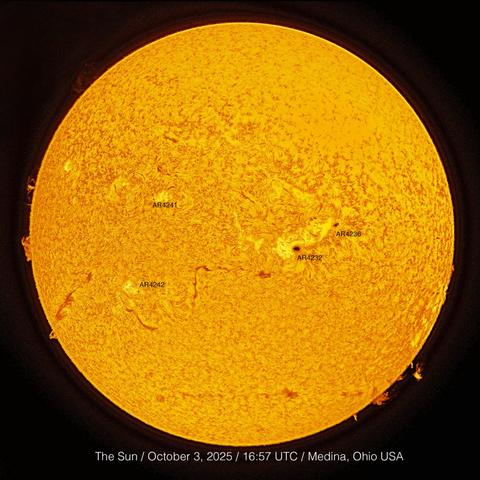
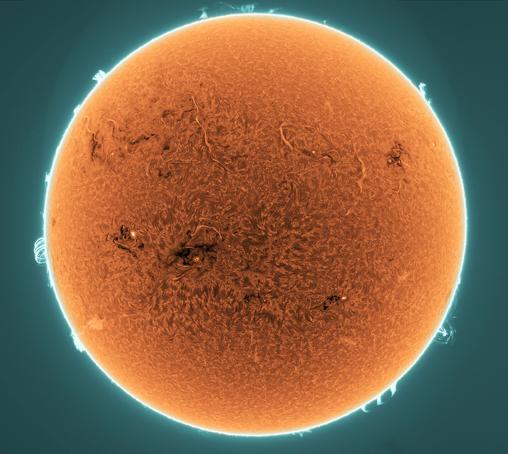
A full-disk image of Sun, as recorded in hydrogen-alpha light. Visible are two large sunspots, several serpentine filaments, and prominences that appear around the star’s limb. Credit: Stella-Luna Observatory / James Guilford

October 3, 2025 — We had been having quit a lot of trouble lately, recording data and reproducing images of Sun with prominences. There was some early success but even those images were a struggle to produce. Taking a look at suggested camera settings found in an article on solar imaging, one thing stood out — gain! We had nudged the camera’s gain setting upward and that’s not helpful and certainly not recommended; the setting should be very low or even zero! A few adjustments in data capture parameters was all it took to make a big difference in image processing and results!

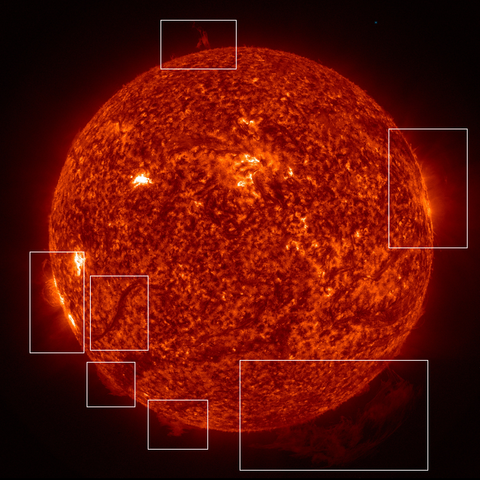
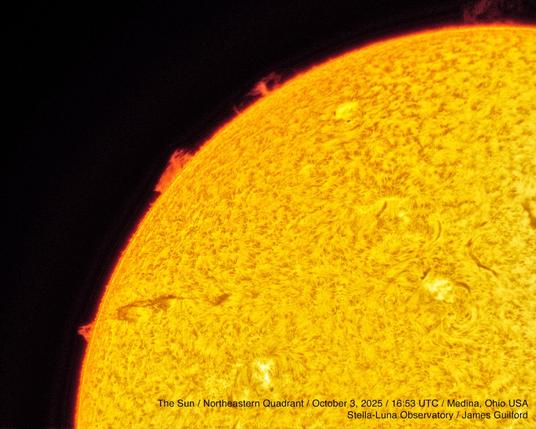
Sun’s northwest quadrant, as recorded in hydrogen-alpha light. Visible are several filaments, as three prominences appear along the star’s limb. The “peach fuzz” appearance of the edge of the solar disk is caused by the presence of innumerable spicules or small prominences.

We’re very pleased with Barlow-boosted views, shown here, though we’re still having some issues with achieving even lighting across whole-disk views — just can’t seem to get them tuned right with the Coronado SolarMax III. Visual observing was also very good, especially with the TeleVue 10mm eyepiece. October 3 conditions: Clear sky, temperature of 74°F, light southeast wind.

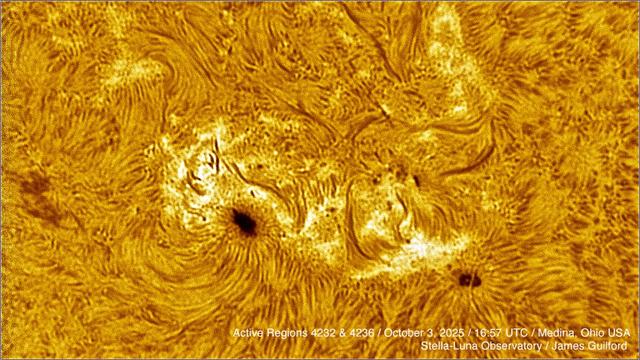
A close-up view of two large sunspots, as seen in hydrogen-alpha light. Solar plasma follows the intense and curved lines of magnetic force to highlight the turmoil in the vicinity of the spots.

#2025 #astronomy #astrophotography #chromosphere #hydrogenAlpha #prominences #solar #sun #sunspots

High-tech Silhouette, by Tom Williams

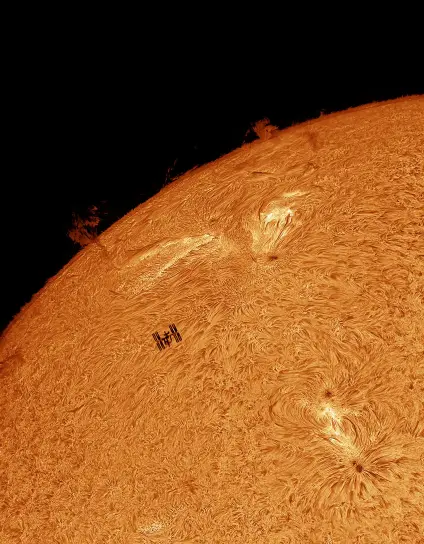
This H-alpha image of the sun features the silhouette of the International Space Station transiting the eastern solar limb. Crossing the field of view in just 0.2 seconds, ISS transits of the sun are particularly rare from any one location on Earth. The sun was active and a prominence can be seen right next to the station’s transit location.

@photography
#atrophotography
#Sun
#ISS
#prominences

APOD: 2024 June 15 - Prominences and Filaments on the Active Sun

A different astronomy and space science related image is featured each day, along with a brief explanation.

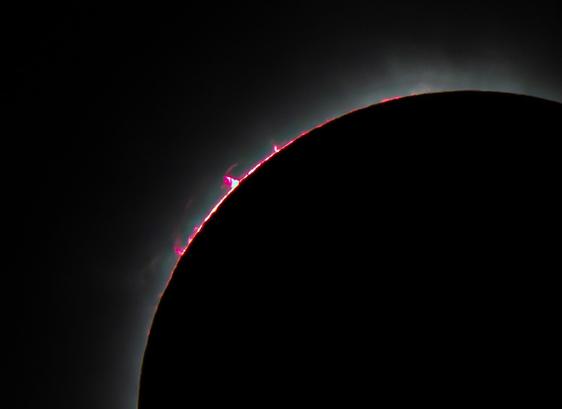
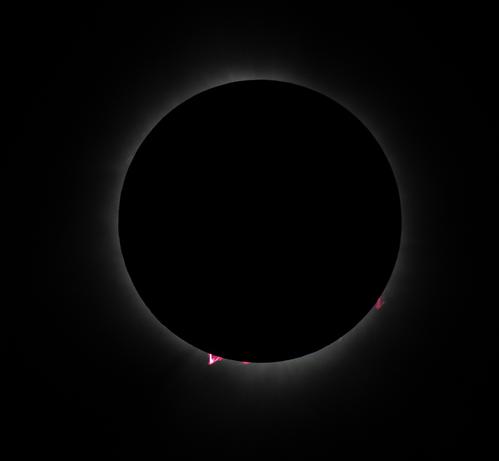
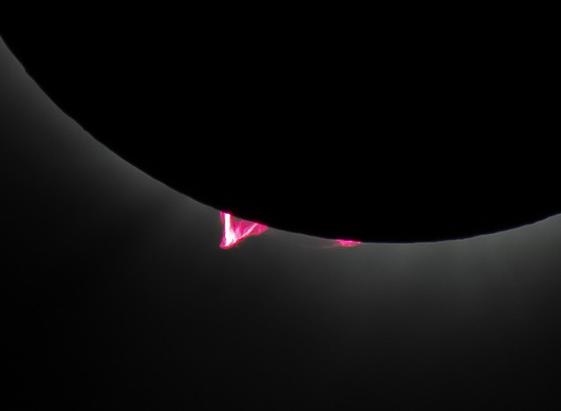
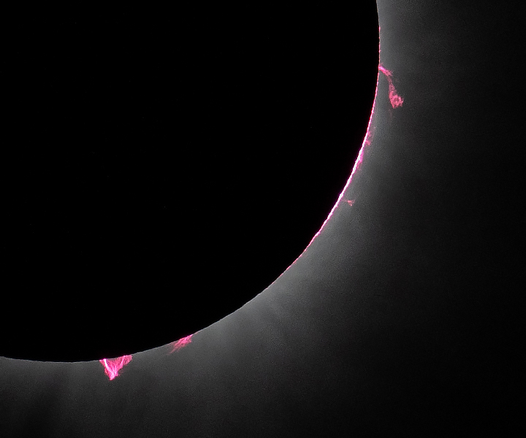
The fun continues now with a look at the prominences visible during the event. They were outstanding during totality to the unaided eye, very bright and pink. Photos have a difficult time showing the dramatic range in brightness. These are from a D850 and 500mm lens.

#Nikon #D850 #Eclipse #astronomy #Pittsburg #NH #solareclipse #prominences

During totality, glowing loops of plasma called #Solar #Prominences could be seen extending into the corona.

https://www.nasa.gov/image-article/what-solar-prominence/

What is a solar prominence? - NASA

What is a solar prominence?

NASA
@geerlingguy WOW! 🔥 literally!   so cool 👀
#protuberanzen #prominences
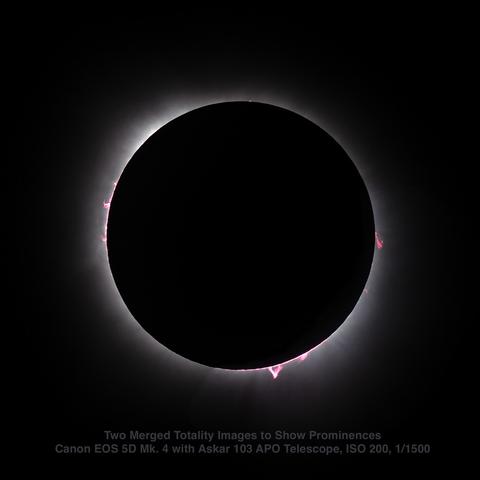
In this picture, I grafted together portions of two of my totality images to display the day's solar prominences to their best advantage. As Moon moved across Sun, some proms were covered while others were exposed so, in this case, two photos are better *as* one. #eclipse #prominences #solareclipse #solareclipse2024 #astrophotography
My pastel sketch of #totality during yesterday's #TotalSolarEclipse. I wasn't there to see it in person this time, but I used the amazing photo shared by Tom Kerss (with permission) as a reference image. The #corona looked so different yesterday than it did when we saw the 2017 eclipse because we were in solar minimum then and near solar maximum now. There were several lovely #prominences visible too #AstronomySketching #SunSketch
@FredericPaletou yes indeed! that translates to a central #wavelength of about 656 nm. The #filter that I used (6.5 nm wide) is intended for #deepsky objects. Still gives more detail than no filter. #Solar #prominences need much more expensive bandpass filters, typically just 0.2 nm wide.

Full disk solar image from a week ago.

Was a spectacular clear day but somewhat compromised by smoke from north western Canada (I'm on the far east coast!).

Some #prominences are faintly visible. My solar processing still needs work :=)

#Autostakkert, #IMPPG and #GIMP for processing and colourization. 70% of 1000 frames stacked.

#Solar #Filament