 _noelamac_
If anybody tells you that „1.5C is within reach“ or „alive“ or similar, please don’t laugh at them but show them this graph.
Source: https://www.unep.org/resources/production-gap-report-2023
If anybody tells you that „1.5C is within reach“ or „alive“ or similar, please don’t laugh at them but show them this graph.
Source: https://www.unep.org/resources/production-gap-report-2023
#ProductionGap leads to #EmissionsGap
"To get on track for the internationally agreed target of 1.5C, 22bn tonnes of CO2 must be cut from the currently projected total in 2030, the report said. That is 42% of global #emissions and equivalent to the output of the world’s five worst polluters: China, US, India, Russia and Japan."
The UNEP Production Gap report on Australia’s🇦🇺 disconnect on #climate targets and #fossilfuel expansion
UN SecGen: “governments are literally doubling down on fossil fuel production; that spells double trouble for people and planet”
#ClimateCrisis #UNEP #Australia #UNEP #ProductionGap
https://takvera.blogspot.com/2023/11/production-gap-2023-report-australias.html
The "#ProductionGap" sounds like it's an inevitable thing that we can only measure helplessly, but the truth is that it is related to the "#SubsidyGap":
The world spends about $500 bn a year subsidizing the profits of #FossilFuel companies. This is five times what the global climate fund is looking for: only $100 bn a year. The rest could be redirected to clean energy, public transit, climate justice, all that.
It's a CHOICE we make.
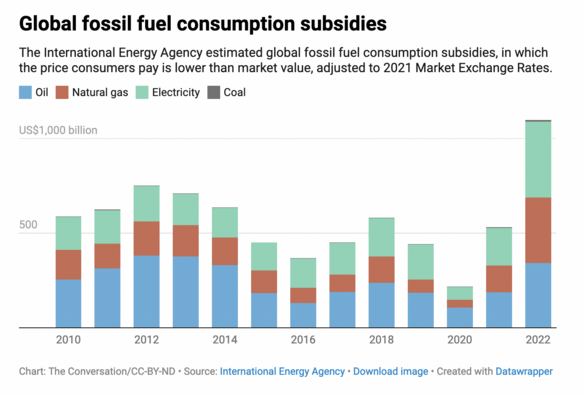

Many countries still plan to increase fossil fuel production in the coming years and are offering big subsidies. Negotiators have their work cut out for them when the COP28 climate summit begins.
The importance of government policy:
"Whereas the International Energy Agency projected that we’d hit peak fossil-fuel use in 2030, the U.S. Energy Information Administration came to a very different conclusion: It saw demand for fossil fuels rising through at least 2050. The difference between the two agency’s models is how they treat #GovernmentPolicy."
#ProductionGap
https://www.theatlantic.com/science/archive/2023/11/climate-change-policies-contradictions/675967/
Taken together, government plans and projections would lead to an increase in global coal production until 2030, and in global oil and gas production until at least 2050. This conflicts with government commitments under the Paris Agreement, and clashes with expectations that global demand for coal, oil, and gas will peak within this decade even without new policies.
#ProductionGap #ClimateChange #ClimateCrisis #FossilFuel
Read. more: https://www.productiongap.org/2023report/#R1
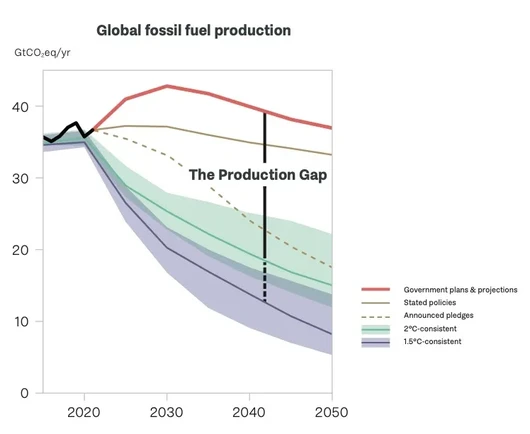

Global fossil fuel production in 2030 is set to be more than double the levels that are deemed consistent with meeting climate goals set under the 2015 Paris climate agreement, the United Nations and researchers said on Wednesday.

 CelloMom On Cars
 John Englart

 Marcel

 wolf maahn
 Carbon Tracker