 Kyanite Labs
Before you give an agent a task, give it a boundary.
Readable files, writable paths, allowed commands. Start small, expand with receipts. Open permissions are the slowest way to learn what broke.
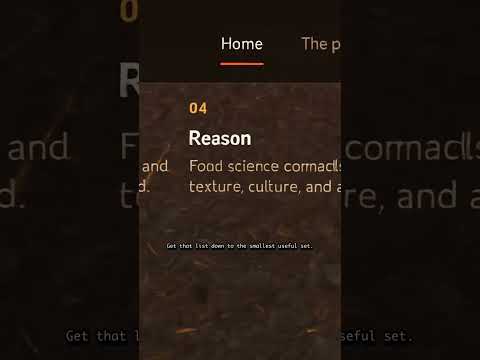
Before you give an agent a task, give it a boundary.
Readable files, writable paths, allowed commands. Start small, expand with receipts. Open permissions are the slowest way to learn what broke.
Letting an agent drive your screen is not the same as trusting it.
Supervision and replayable receipts are what keep computer use from becoming liability.

Letting an agent drive your screen is not the same as trusting it.
Supervision and replayable receipts are what keep computer use from becoming liability.
A tool earns trust in the moment it fails.
Name the blocker, keep the receipt, and make the next safe action obvious.

A demo can look magical. Production needs boundaries.
The real system is permissions, receipts, failure modes, and the next safe action.

RT @MiniMax_AI: Ein beeindruckendes tiefgehendes Gespräch des @togethercompute-Teams über den Einsatz von MiniMax M3 in der Produktion. M3 mit seinem 1-Millionen-Kontextfenster, nativer Multimodalität und der MiniMax Sparse Attention erfordert echte Arbeit an paged decode, Index-Scoreing und multimodaler Vorverarbeitung, um es effizient zu gestalten. So sieht eine Partnerschaft an der Frontierspitze aus🤝. Together AI (@togethercompute) x.com/i/article/206189124776… — https://nitter.net/togethercompute/status/2061894792020197881#m
mehr auf Arint.info
#AIInfrastructure #MiniMaxM3 #MultimodalAI #ProductionAI #SparseAttention #TogetherAI #arint_info
Single-provider LLM dependency is a production risk
When Anthropic cut off OpenClaw's Claude API access mid-deployment, 40,000 production tools faced sudden failure. The lesson: abstraction layers with fallback routing matter more than chasing model benchmarks. The multi-provider code examples are solid, but the real insight is cultural—treat your LLM vendor like any other critical infrastructure, not a replaceable commodity.
LangChain’s CEO warns that raw model quality isn’t enough for production‑ready AI agents. He stresses the need for smarter context handling, reasoning harnesses, and compression techniques to turn LLMs into reliable tools. Curious how to bridge the gap? Read on for the full take. #LangChain #AIAgents #ProductionAI #ContextCompression
🔗 https://aidailypost.com/news/langchain-ceo-says-model-quality-alone-wont-deliver-production-ai

NVIDIA just poured $150 M into Baseten, accelerating Jensen Huang’s shift to an inference‑first strategy. The funding will boost GPU‑powered AI inference pipelines, making production‑grade models easier for enterprises to deploy. Curious how this changes the ML landscape? Read on. #AIInference #NVIDIA #Baseten #ProductionAI
🔗 https://aidailypost.com/news/nvidia-puts-usd-150-m-into-baseten-backing-jensen-huangs

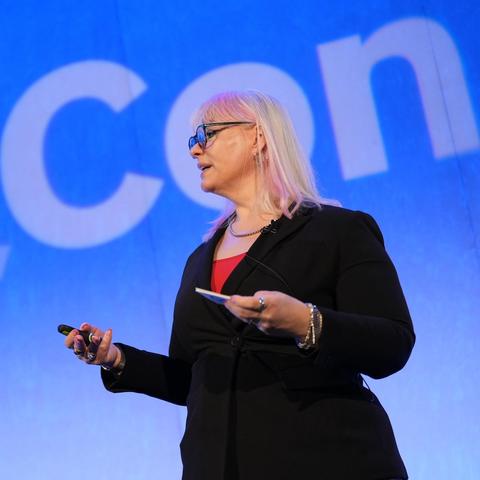
AI agents are moving to production. At QCon AI New York, practitioners from OpenAI, LinkedIn, Google, Walmart & MITRE share real lessons from building agentic systems at scale.
🔗 See the full QCon AI schedule: https://bit.ly/43Jvelw
 Arint - SEO+KI
 Techino (inactive)
 AI Daily Post
 QCon Software Conferences