Pop Cryptid sightings – the Cryptid Cup and Abominable Ball

There is NO DOUBT that cryptids are mainstream. They are equated with mystery, monsters, places, and fun. They are utilized for tourism and commerce as related merchandising has exploded. Thanks to sympathetic and empathetic views of “the other” (who does not conform to natural or social norms), we have created a new social space for cryptids to flourish. With cosplay options, you can even BECOME the cryptid.

This week I found a few items of note in the Pop Goes the Cryptid model. It’s a continuation of the Pop Cryptid Spectator series that I did last year.

The Cryptid Cup

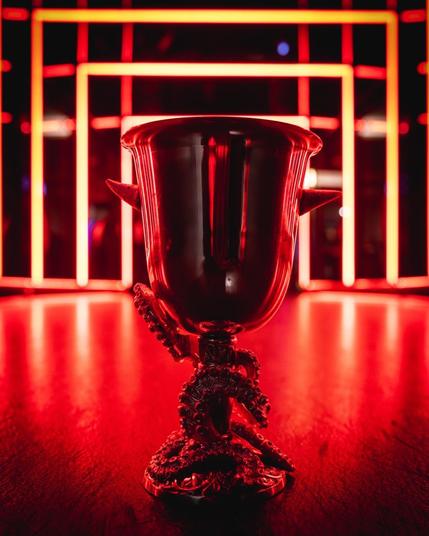
Two NHL teams vie for the unofficial “Cryptid Cup” each time they play. The New Jersey Devils and the Seattle Kraken are both named after popular cryptids. Inside the Rink called the December 2024 matchup between the NJ Devils and Seattle Kraken the first edition “Cryptid Cup”. But that was wrong, it existed at least in 2023 when the fictional cup was devised by the teams’ social media promoters. Since then, the cup has been passed between the teams depending on who wins. Each year, when the teams face each other (twice a year), the “Cryptid Cup” comes up. This framing tends to enhance the legends attached to the names of each team, as if they need that.

Many sports teams are names after cryptid legends. The NJ Devils are one of the oldest to have adopted their local cryptid.

I have a hang up with the Kraken, though. First, the lore does not easily condense into the idea of a giant cephalopod. It’s much more complex than that. It’s unfortunate that the legend has been oversimplified to the point of losing most of its charm, but that’s typical with commodification and marketing. Second, they have a crappy logo. They could do so much better! Then again, neither team has capitalized on the ability to create an awesome logo. And their poor mascots! The promotional departments for these teams need to earn their pay and churn out some better monster merch.

What happens when some other NHL team nabs a cryptid name? We almost had the Utah Yeti! It’s just a matter of time.

The Abominable Ball

Beginning with town festivals, cryptids are used as themes for many town events now. Now, here is a copyable concept – the cryptid ball. Dress up like your favorite cryptid and dance ’til you’re dead. The Abominable Ball Cryptid Dance is coming up in Harrisonburg, Virginia.

The event features East Coast synth musicians and some themed drinks, Yeti or Not and a Mothman Mocktail. One of the organizers said, “I love the idea of yetis, abominable snowmen. I think cryptids were a fun one, especially being here in the Appalachian Mountains.” And he noted he was going to dress up in a home-made Wendigo costume.

Yikes, that’s a bit too much egregious cultural appropriation. It’s not cool to pretend to be a cannibalistic supernatural monster that represents starvation and death in another culture that you are totally unfamiliar with. That’s always a problem with creatures from native lore that have been commodified. Also, the idea that cryptids are special to Appalachia is also messed up. Birthed from the manufactured “Spooky Appalachia” modern creepypasta trend (the promoted concept that the forests of the mountainous eastern US are enchanted, haunted, and dangerous), it’s unfortunate that the new lore is weak and contrived. Oh well, that is also part of the Pop Cryptid model – when things get popular, they just aren’t the same quality as the original; they are designed to be marketable and consumable.

The bottom line is that cryptids as a concept is untethered from the mid 20th century idea of cryptids as a zoological phenomenon. They are 100% cultural – like all monsters.

Cavetown Cryptid

Here is a new video by the band Cavetown embracing cryptid queerness – a very modern take on cryptids.

https://www.youtube.com/watch?v=ZW-99zcGMu8

Send Pop Cryptid tips via emails to popcryptid(at)proton(dot)me.

#AbominableSnowmen #CryptidCup #cryptids #NewJerseyDevils #popCryptid #PopGoesTheCryptid #SeattleKraken https://sharonahill.com/?p=10760

The crazy mixed-up meaning of Mothman

From its origins in 1966, Mothman has been viewed as a cryptid, an alien, a spirit, an angel, a demon and more. Originally thought of as a single entity, sightings basically ceased a year later, after the Silver Bridge collapse. The subsequent book by John Keel in 1975 boosted Mothman’s popularity again and expanded the tale in wild new directions. Since then, the Mothman legend continued to evolve in popular culture and lore.

I came across this video – a comedy sketch featuring Mothman as “the most confusing cryptid”. Why is Mothman confusing? Because it’s a mishmash of decades of stories that blended larger narratives about monsters, aliens and general paranormality. What began as a scary encounter with what was initially described as a really large bird, it lives on 60 years later as one of the most iconic Pop Cryptids.

https://www.youtube.com/watch?v=UqBMrvZ0-o0

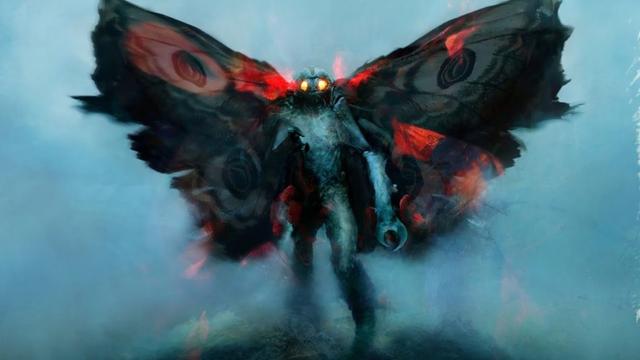
In the video, “Daniel” transports Mothman in through his phone line and asks him, “What’s your deal?” because it’s all very confusing to him. Mothman lore portrays the creature as a mysterious red-eyed winged humanoid that chases people and eats dogs, a spooky man-moth that appears from another dimension as an omen of disaster. In modern popular culture, Mothman is also depicted more like a fantasy character, or a dark and menacing figure, or a sexy mystery guy. It’s no wonder we can’t decide if it’s threatening or not. Mothman is many things to many people.

I’ve been interested in the various faces and roles of Mothman for a while. This video showed that other people are noticing the same thing – how very confusing and flexible the concept of Mothman is.

What is a mothman?

Mothman has been depicted across its history in several distinctive ways. As noted, witnesses initially reported a frightening hybrid entity with birdlike features, possibly a mutant associated with pollution from an ammunitions dump. The inappropriate comic book name given by a journalist early on nudged and shaped its popular and media images over the next six decades. The two people who originally formed Mothman into the iconic figure it is today were Fortean writers Gray Barker, and John Keel. The latter wrote The Mothman Prophecies that was turned into a movie 27 years later. The high quality movie not only added to the lore but charged up the legend for another go-round, even bigger than before. Both authors’ writings built up the key articles of strangeness surrounding the legend that remain today, including UFOs, Indrid Cold, the connection to bridges, and foreshadowing of events. By the late 1970s, Mothman was a representation of “high strangeness” – a series of seemingly related, inexplicable happenings. The malleable entity, or ambiguous cryptid, featured in subsequent paranormal-themed media, video games, internet legends, and, importantly, a town festival. All of these added more twists to the Mothman biography.

Much of the lore mentioned in the video coalesced later and built up slowly. For example, the locals did not associate the creature with the Silver Bridge tragedy at first. They were also experiencing a UFO flap at that time. Keel was instrumental in eventually linking up all the points into that weird narrative when the sum became greater than the parts. People remembered seeing the Mothman near the bridge the night of the disaster, and the Mothman became inextricably attached to that tragic narrative. Later, Mothman was loosely connected to other tragedies, but the evidence for Mothman appearances in Chicago/Lake Michigan, Russia and other places associated with catastrophes is very poor and is likely entirely imagined, based on its modern reputation as a harbinger of doom.

Is Mothman a cryptid?

Whether Mothman qualifies as a cryptid or not is an evergreen argument on cryptid forums. The debate is never resolved. Many followers of old school cryptozoology reject Mothman as a cryptid because the entity is tightly tied to the paranormal and high strangeness aspects of its history, which disqualifies it from serious discussion as a possible undiscovered animal that can be scientifically classified. Yet, modern cryptid fans love Mothman, even to the point of fetishizing him/her/them/it. (I am completely bamboozled in using a pronoun here.)

The current fandom considers “cryptids” to be “any creature that some claim is real but has no supporting scientific evidence of existence.” In that aspect, Mothman clearly is a cryptid. I could argue that the original sighting of the creature in November 1966 in Point Pleasant, West Virginia (next year is its 60th anniversary) could have been considered an unknown animal – a very large and unusual bird. In fact, it was originally described as “The Bird”, a “bird-like” creature, or a “man-sized bird” in the original eyewitness accounts. It was also said to be light colored (flesh or gray), not black, which is a modern standard. However, musings on its origin very quickly got wrapped into UFO discussions and various other anomalous and esoteric concepts that Keel promoted.

Like it or not, Mothman is a cryptid because word definitions and culture changes to fit our needs. Unlike the dispute about Pluto being a planet, there is no official council that has the authority to rule on cryptid matters. The popular majority rules. Apparently, the world needed a spooky flying humanoid legend with a distinctive name.

Part of the study of mysterious creatures must include consideration of the social aspects, the folklore, the spread of sightings, and the evolution of the stories. Cryptozoology is based on stories about the unknown, which makes it inevitably prone to inclusion of strangeness. This brings me to Mothman’s place as a Pop Cryptid.

Mothman as Pop Cryptid

No one now cares if Mothman was initially a weird or out-of-place bird encounter. I have not seen any modern researchers pursuing the idea of catching or confirming an animal that would fit that description. Its origin as a bird-man-hybrid is almost entirely lost. (Instead, it’s firmly linked to moths, which were in no way part of its origin story.)

Mothman’s cultural cachet is its different meanings embraced by a diverse fandom of multiple ages and interests. Mothman is depicted as scary, sinister, sexy, secretive, supernatural, cute, cuddly, and queer. Its ambiguity allows communities to embrace the monster for their own needs.

It’s become one of the world’s most notable cryptids due, in no small part, to the fact that it was promoted as the spirit of Point Pleasant. The descendants of those who lived through the first flap and the tragedy of the bridge collapse, decided to honor the monstrous symbol by making it the town mascot. Shockingly, this paid off in spades, bringing visitors to the town from all over the world. More come each year, and it shows no signs of slowing.

Mothman is mainstream. Mothman themed merch is ubiquitous. Point Pleasant’s museum and festival was the template for other towns to adopt their own local cryptid, no matter how flimsy and fantastical its origin story was. The answer to what Mothman represented in 1966 hardly matters at all in comparison to what people use it to represent 2025.

Unifying?

Is Mothman a unifying cryptid (as concluded in the video)? Yes and no. As a cryptid, it remains divisive because of its esoteric connections and roles as a harbinger of doom, a magical entity, and an ultraterrestrial. You will still find those who reject it as worthy of any study because it’s just so outrageous. It is now viewed way more as a globe-hopping bad omen and fantasy creature than as a zoological organism. But it’s too popular to ignore. It has brought together a new younger audience who see it as fun and socially useful. That’s culturally important. That the Mothman has been able to pull so many wide-ranging audiences together under one large wingspan is remarkable. Many fans are clearly able to hold the complex lore in their head (or pick the version they like best) and even evolve new aspects all the time. That’s how story telling works.

My biggest disappointment related to Mothman is that there is no historical biography written about it. I desperately want a qualified history writer to pull all these crazy pieces together so we can see and experience the Mothman phenomenon in a thoughtful way. Yet no one has done this. It would be quite a daunting task to accomplish, collecting everything to be considered about the man, the moth, the legend.

I suspect that the Mothman fan club would have less interest than I do in having the complex threads untangled and in the open for inspection. They seem to appreciate the mysterious, ambiguous, playful, menacing, multifaceted Mothman in all his messiness.

#cryptid #cryptids #Cryptozoology #highStrangeness #IsMothmanACryptid #legend #Mothman #popCryptid

https://sharonahill.com/?p=10475

Mothman Festival organizers say it was the biggest crowd yet

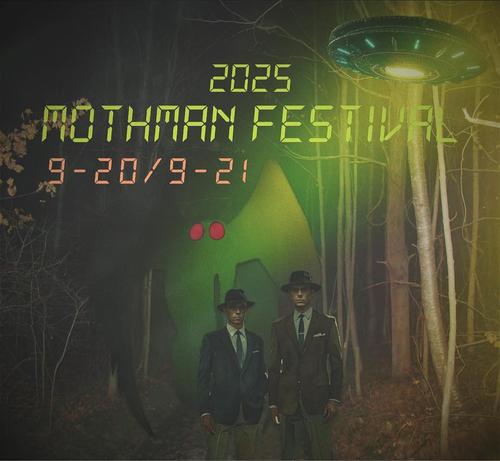
Organizers of the Mothman Festival in Point Pleasant, West Virginia stated that thanks to a combination of nice weather and cryptid popularity, the 2025 event this past weekend drew the biggest crowd ever. One news site reported that the average attendance is 10-15 thousand people. If this was the biggest crowd (for the entire weekend), then that must be over 15K. Just note that there are no tickets sold, so the crowd is estimated. And, event organizers have a habit of exaggerating their counts for publicity. But there is no doubt that the Mothman Festival is the top cryptid town festival that served as the model for a dozen others. Expanding to a long weekend, the event is known worldwide and draws people from international destinations to hit West Virginia just to be at the Festival.

When it began back in 2002, the Mothman Festival was only one of a few town festivals that existed to celebrate a local monster. Other longer-running festivals include Bigfoot Daze in Willow Creek, California which is decades old (since the 1960s!!!), but I’m not sure if it was continuous. The success of the Mothman Festival, which draws a plethora of paying customers to a small town with few other means to attract dollars, has acted as a template for other small town festivals such as Albatwitch Day and Squonkapalooza in Pennsylvania, the Van Meter Visitor Festival in Iowa, and the Ol’ Green Eyes Festival in Georgia. Popular cryptids promoted as the mascot of a small town is a winning formula.

2025 Mothman Festival in Point Pleasant, WV

Why are cryptid festivals drawing big crowd?

Many factors come together to explain the growing popularity of these cryptid festivals. Here are the big ones:

  • The internet has made cryptids incredibly popular. It’s a unique draw for all ages and genders.
  • People crave a sense of enchantment or mystery in the world, or they enjoy the paranormal themes and spooky tones of these events.
  • Free family events are desirable – people want to get out and have some weekend fun.
  • Small-town sentiment is high because it feels anti-corporate, home-grown, and wholesome. Customers like spending money to support local businesses. They want small towns to thrive.

I expect these festivals will continue to expand to other towns and grow in attraction for a few more years. Paranormal topics consistently wax and wane in interest over decades. Right now, cryptids are money-makers. As the population (that is paying attention right now) ages out, the festivals may diminish. The saving grace for these particular events, however, is that they provide the town with long-term value. There will always be those interested in visiting places with an enduring legend – if that legend is skillfully marketed.

#CryptidTownFestivals #Mothman #MothmanFestival #popCryptid #popCulture #smallTownMonsters #WestVirginia

https://sharonahill.com/?p=10381

Pop Cryptid Spectator 20

Hi and welcome to the 20th, and last, edition of PCS. In nine months, this idea has run its course because, frankly, I can’t keep up. Everything is Pop Cryptid. I’ve certainly proven my point – the term “cryptid” now means “any weird and hidden creature”. In popular culture, it is rarely referred to in the context of a scientific effort to discover new species. I mean, when the President is referred to in this context, it’s game over.

That’s not to say that I won’t be writing about such topics in the future. I’ll certainly post more and on Modern Cryptozoology. But this PCS project is tapped; I’m moving on. Before I do, there are a few more things to $ay. So here goes.

In this final edition:

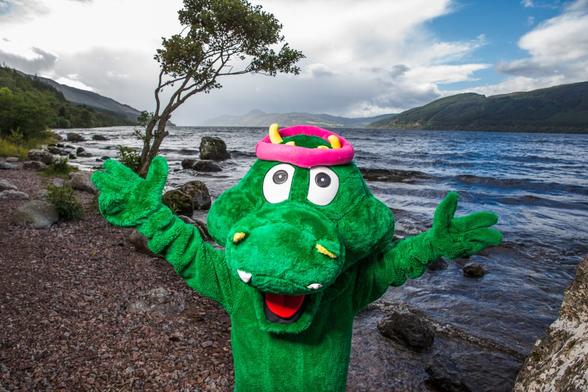
  • Nessie, Jr. Another cute cryptid movie
  • Faking Bigfoot
  • Champ at the Museum
  • Mothman says, “You Matter”
  • Cryptids overexposed

Nessie, Jr – Another cute cryptid movie

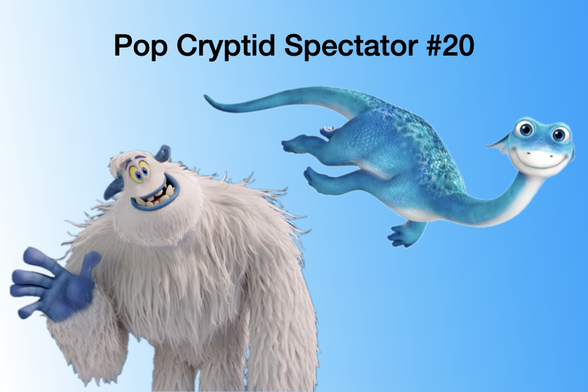
There’s a new movie on the way that will influence how small children think about lakes and the Loch Ness Monster. It’s called Nessie, Jr. and it appears to be another cutified cryptid depiction in the same family-friendly vein as several other past movies – Harry and the Hendersons, Smallfoot, Abominable, Pete’s Dragon, The Water Horse, Baby: Secret of a Lost Legend, etc. It’s fine. I don’t have a problem with it. It’s just so… meh.

But speaking of fiction…

Faking Bigfoot

I wrote a piece on the performance art dude who displayed a fake Bigfoot at the NY state fair as real. It really didn’t go over well with serious Bigfooters, who said this guy was “ruining” Bigfoot research. Nah, the ‘footers do that part on their own – with their awful TV shows, in-fighting, and efforts to gain attention for terrible evidence. Bigfoot hoaxes have been around since the very beginning. In fact, cryptid tales are chock-full of hoaxes to the point where you are hard-pressed to sift through the chaff to find any wheat. Yet, the hoaxes themselves are quite interesting and very much a pop cryptid phenomenon. It’s not about finding the creature, it’s mostly about hope of finding it in what we like to imagine is a world that still holds mystery. And, unfortunately, it is an awful lot about people thinking you found it and usually making bank from that. Check out this short review of a book on how the media created Nessie. By the way, I don’t know how much money this Bigfoot Remains joker pocketed from the gaff, but the gimmick has already been mostly forgotten. We’re so used to such hoaxers.

Champ at the Museum

The monster of Lake Champlain now has its own exhibit. Both Port Henry, NY and Burlington, VT have tributes to Champ as they vie for the official place of the creature. Now Burlington has another attraction besides the Champ memorial and the Lake Monsters team mascot. They have a dedicated spot in the museum. The shore-side Echo Leahy Center at Lake Champlain is perfectly situated to promote the beast. The kiddie-themed gift shop was already full of toys depicting Champ as a cute cryptid. It’s logical they would capitalize even more as well as offering an opportunity to draw kids into learning about the lake’s natural history. I haven’t seen the exhibit because it just opened, and I was there last year. But the museum follows the template of Loch Ness, and other cryptid-themed real and pop-up “museums” that draw in those interested in the topic. And they sell merch.

Do you sense a theme? I’m afraid that I’m pretty jaded on the pop cryptid theme as it relates to cashing in. But that’s the American way these days. Gosh, it’s all so predictable and boring…

Mothman says, “You Matter”

In more rather misappropriate uses of pop cryptids, Mothman is pictured on informational material regarding mental health distributed by a West Virginia police department. This seems cool but using an imaginary creature that was also known as an omen of doom seems slightly clueless. While the project director says that distributing the material at the WV State Fair has let them connect to average people, the “friendly cryptids letting them connect with kids and create conversations”. Ok, sure. But, if people know the story about how Mothman was related to one of the most tragic events in WV history, the collapse of the Silver Bridge, they might struggle with the message “You matter”. Maybe I’m overthinking it…

West Virginia leads all states in the in commodification of their town mascots, like Mothman, Sheepsquatch, Veggie Man, and the Flatwoods Monster.

Cryptids overexposed

I don’t know… it seems to me the mystery is all gone. Cryptids are everywhere. They aren’t hidden anymore. They are losing their mystique. As I’ve noted in other places, cryptids, being copyright-free, are easily adapted for use in consumer products and logos. As the pop cryptid model spreads, where cryptids are seen as fun emblems or symbols, you can bet you’ll see their use increasing.

New Mexico indoor football team reveals new name: New Mexico Chupacabras

For more on the crossover between cryptids and sports teams, see here.

Here are more cryptid related stories from the past month from my main blog:

The pop cryptid trend would not be icky if it wasn’t for the blatant overexposure and twisting of the concepts so that the original ideas behind them are now totally lost. In a way, this is what the Bigfooters hated about the NY State fake Bigfoot. It was disconnected from their vision and version of what a cryptid is. It mocked their view. Such things disregard the impact of the rich folklore and history by appealing to the casual fan and consumer who just know the stories from comics, games, mass distribution movies and Reddit groups. I can’t help but feel these depictions for the mass market are shallow and pathetic. Many people agree. I’m not sure it’s all that different from depicting other animals in anthropomorphic, cute, or exaggerated ways. This has also always been the way of things. It just took a longer time for beloved cryptids to become familiar enough to use in this way.

Another Bigfoot action figure, this one more pointy and menacing than usual Bigfoots. The Skookum.

I’ve learned a lot in the few years that I’ve been examining cryptids in this new frame. I think it’s been highly useful, even if many cryptozoology-minded viewers thought it was dumb or reacted indignantly to what seemed like a cheapening of their belief system. I apologize if you felt aggrieved but, let’s face it, it’s NOT reasonable to view traditional cryptozoology as a useful field of study. You are not going to have success finding new species that correspond to Bigfoot, Nessie, Yeti, etc. However, you have a good chance of success in marketing these creatures’ images and talking about them in cultural terms.

A current wrap-up of trends

Some of the other trends I’ve seen lately:

  • The #CryptidTok trend is far quieter than it was 2 years ago. It’s still a lot of AI and people performing knowledge (which isn’t knowledge, but stuff they got from other bad videos). I’m not sure how influential this is except for low-value content creators. Maybe people are tired of hearing the same wikipedia-derived info over and over again.
  • Weird Appalachia – This genre continues to grow as we see with the prevalence of West Virginia/Pennsylvania/Ohio/Kentucky cryptid content and the marketing of their location-specific monsters. The popular idea now is that the land is haunted and the eldritch creatures or spirits take the form of not-deer, dogmen, shapeshifters and such that are called “cryptids”. It’s a fun and useful idea.
  • Town festivals feature speakers who spread new stories as “lore” making it sound more credible than it is. But they aren’t asking any actual folklore or cultural experts, just popular content creators, personalities or artists. This is disappointing and a missed opportunity – I hope it changes.
  • The continued gap between original cryptozoology concepts and the current state of things. There is very little solid work being done that produces credible knowledge worthy to be published. Instead, self-styled cryptozoology is still self-published books, YouTube, websites, and facebook posts. This is low value stuff that gets a short bump in interest but does not last.
  • Increased use in all forms of merchandising and commercial representation. This means more fiction, movies, promotion, branding, etc. using cryptids.
  • Growing popularity of “fearsome creatures” (fictional beings made up as old lumberjack tales such as the squonk, slide-rock bolter, hodag, snallygaster, etc. or indigenous/native stories such as the wendigo, skinwalker, La Llorona, etc.), “creepypasta” creatures (invented monsters from digital storytelling such as Slenderman and the rake), and AI generated monsters. These manufactured beings have nothing in common with traditional cryptozoology but are becoming the best known “cryptids”.
  • Overhyping of bad evidence. The “sightings” are just as bad as ever. They are either nothing, obvious hoaxes, or AI generated. There is nothing worth paying attention to here. Yet, people click because it’s fun and they really want to believe.

All those trends say something important about cryptids. I’ve gotten the message – fun cryptid are great but serious interest in the complex folklore, the socio-economic and cultural effects, and the overall phenomena of cryptid encounters is unimportant to the masses. They want the scary, cute, funny, neatly packaged and easily digested popular fluff. But there are still several followers of “scientific” cryptozoology that only want a serious zoological (or supernatural) take on this subject and get angry with a lesser, “fluffier” treatment.

My view is the same as before – there is no value in an effort to search for mystery creatures as new species. It has not been successful and it CAN’T be, considering the modern times in which we exist. New species discovered by zoologists aren’t cryptids, even if they have the occasional help of citizen scientists. The contrived methodology of Heuvelman’s cryptozoology isn’t relevant. However, I’m all for expanding the field into relevant areas of anthropology, cultural studies – folklore, art, media, socio-economic, etc., psychology, wildlife biology, data science, etc. that will provide endless opportunities to research and analyze interest in cryptids. This was my position when I first envisioned the pop cryptid model and it applies just as much as ever. It’s likely to happen on its own.

For more, content and a fuller explanation of Pop goes the Cryptid, visit the subpage.

This has been the Pop Cryptid Spectator. My work here is done. Thanks for indulging me. Keep sending links and messages.

Now back to my regular blog.

Peace out, Bigfoots

#Bigfoot #cryptids #cryptidtok #Cryptozoology #Mothman #Nessie #popCryptid #PopCryptidSpectator #popCryptids #popCulture #WeirdAppalachia

https://sharonahill.com/?p=10328

Pop Cryptid Spectator 19

Hello everyone. Welcome to a rundown of the most important pop cryptid information from the last month. Sure, there were a handful of poor Bigfoot and Nessie sightings, but those are so common that I hardly pay attention to them anymore. They don’t hold much value and fall off the radar in a week or so. My interest is in the social use of cryptids and the changing scope from potential zoological creatures to consumer and cultural examples. Those examples are sticking around.

In this edition:

  • Cryptids are the new coal
  • Build a Mothman XL
  • The Naga of Golden Gate Park
  • Delta academic symposium chooses cryptid theme
  • Bigfoot gets its own emoji
  • Rochester Lion has Disappeared
  • Encyclopedia of Confused Cryptids

Cryptids are the new coal

Recall in PCS 11, I included the story of the Vegetable Man, a bizarre hyperlocal legend from Fairmont, West Virginia. This year’s Veggie Man festival in mid-July was another rousing success. This remarkable quote came from a participant who wore the cryptid costume, Greg Popovich:

“I firmly believe cryptids are the new coal,” Popovich said. “They’re fantastic for West Virginia tourism and I just wanted to come out and show my support.”

The “new coal” refers to West Virginia as the heart of Appalachian coal country. Coal isn’t king these days for Appalachia. But cryptids might be. West Virginia eight cryptid festivals, including the top one in the eastern US, and a model for all the rest – the Mothman festival. He is saying that cryptids are bringing in the money to the state. Now, that’s an exaggeration, for sure, and it ignores all the negatives that came with coal mining and now the tourists. It indicates that the communities want to have their own emblematic characteristic. The cryptids of each town have become the genius loci – or spirit of place unique to that location. Once the concept is monetized, it will stick around, and probably proliferate. This we have seen as pop cryptids are alive and well in the consumer landscape. Here is the PDF of that paywalled article.

Build a Mothman XL

The original Mothman at Build-a-Bear was really popular. So, they decided to cash in on an even bigger one. People are buying, even though it will cost you $128. Not very original.

https://www.tiktok.com/@buildabear/video/7524726506917006606?_r=1&_t=ZT-8xzVYtwa9Lq

In other Mothman media – a new horror movie is in the works. This one looks to stick to the legend, the horror “creature feature” theme, and add modern effects. Director Austin Birtch said, “I think audiences are going to love seeing this throwback creature feature that honors a familiar legend with a fresh spin – especially as audiences show renewed appreciation for practical effects and character-driven storytelling.”

The Naga of Golden Gate Park

A giant metal sculpture of the Naga, a supernatural water serpent from Asia, has been installed in Golden Gate Park in San Francisco. The creature is an obvious spectator draw. It will eventually be lit up in a stunning display. Naga lore is rich and ancient in Asian cultures, where it may be depicted as a human-snake, a snake with many heads, or a dragon.

Delta academic symposium chooses cryptid theme

Arkansas’ Department of English, Philosophy and World Languages has selected “Monsters, Cryptids, and the Monstrous” as the theme for their April 8-11, 2026 Delta Symposium. The event features presentations of scholarship and creative work that focuses on the Mississippi Delta area history and culture. I’m betting the Fouke Monster makes an appearance! Cryptid scholarship and monster studies are becoming a big deal as recognition grows regarding the importance of folklore and creature tales in society.

Bigfoot gets its own emoji

It’s about time! We have a ghost, aliens and flying saucers, and a dragon. Now we have a Big Hairy Monster. Curiously, it’s not been called Bigfoot, leaving it open to being a Yeti, Yeren, Skunk Ape, Almas, or any of the dozens of tall, bipedal, ape-like beings we all know and love. Of note, when you expand the emoji, it’s blurry, because of course it is.

Rochester Lion has Disappeared

If you were following along at my blog, you saw I was keeping track of the Rochester, New York mountain lion search. After the initial few days, the only additional sightings were from photoshopped marketing posts on Facebook for the local business. There was no further info on cat. My guess? It was someone’s pet. They lured it back home and kept the secret. But, who knows, maybe it will show up if it’s journeying around the east, looking for friends.

Encyclopedia of Confused Cryptids

I’ve done a review on a book from last year. It’s another cryptid encyclopedia – Bigfoot to Mothman: A Global Encyclopedia of Legendary Beasts and Monsters by Margo Demello, who is an anthrozoologist. If you are going to write an encyclopedia on a topic, you should be an expert. But this book is all over the place. It’s clearly about cryptids, as stated in the preface, yet half of it clearly isn’t about cryptids – it’s about legendary and magical monsters. It’s all very confusing but is a good example of how modern media is deliberately mixing Bigfoot and Wendigo. The second half of the book is “extinct, invented or mythical creatures similar to cryptids” including Cerberus, the Fresno Nightcrawler, the quagga, and the selkie. [What the actual hell do these have in common?]. Way to really mess with the idea of a “cryptid”. There are a many serious problems with this book. Check out the very short review here.

Thanks for reading.

Please continue to send me links to interesting news and content. I really appreciate that. Email sharon(at)sharonahill.com.

For more, click on Pop goes the Cryptid landing page. Make sure you subscribe to my posts – it’s always free and I don’t send annoying spam. 

Pop Cryptid Spectator is also available on Substack. Please share this with cryptid fans you know!

Pop Cryptid Spectator Pop Cryptid Spectator 18

Pop Cryptid Spectator 18

Pop Cryptid Spectator 17

Pop Cryptid Spectator 17

Pop Cryptid Spectator 16

Pop Cryptid Spectator 16

Pop Cryptid Spectator 15

Pop Cryptid Spectator 15

Pop Cryptid Spectator 14

Pop Cryptid Spectator 14

Pop Cryptid Spectator 13

Pop Cryptid Spectator 13

#ANaturalHistoryOfSeaSerpents #AdrianShine #AICryptids #coati #cryptid #Cryptozoology #LochNess #mermaid #merpeople #Mothman #mothmanPlushies #Ogopogo #popCryptid #PopCryptidSpectator

https://sharonahill.com/?p=9726

Pop Cryptid Spectator 18

Hi, everyone.

The Pop Cryptid Spectator is about the proliferation of depictions of cryptids in popular culture. In particular, these depictions are outside the context of the original, and serious, concept of cryptozoology as a specialized branch of zoology.

I realize this is a very niche topic. First, you have to know about cryptozoology. Then, you have to have some concept about how it was framed in its early inception. Finally, you have to be aware of, and interested in, the modern cryptid landscape, which exploded with new and imaginative ideas. Cryptids are EVERYWHERE today. And their presence in popular culture rarely has anything to do with a scientific endeavor to find a mystery animal unknown to science.

That calculation results in a tiny population of people that is going to get the gist of this specific newsletter. If you are one of them, thanks for coming along with me on this journey.

There are self-styled cryptozoologists and even scholars writing about these topics that don’t see the subject through the lens of pop cryptids. Even they aren’t catching this vibe. It’s still important for me to document the pop cryptid concept, since it helps me understand what’s happening in real time and tease out the reasons why cryptids are so popular these days, both commercially and socially. As always, I’m here to deliver examples of this popularity with each edition.

Through the pop cryptid lens, the creatures called “cryptids”, as defined and redefined continually through products of our society, transcend the idea of a “hidden animal” to be identified by zoological science. This is no longer the primary goal. Instead, the pop cryptid model shines a light on the many other purposes and goals. It’s important to document these cultural ideas because they can affect how we identify with the places we live or visit and our beliefs and our immediate environment. Cryptids are used in the stories we tell to convey important messages about ourselves and how we see the world. They reflect our fears and our relationship with the nature or the beyond-nature. The stories also play a huge role in tourism and media products. Let me illustrate…

In this edition:

  • Jersey Devil is a Cryptid of the Moment
  • Cryptid AI vlogs
  • SpiracyCon goes heavy on cryptids and Christian commentators
  • What’s with the “archiness” of water monsters?
  • Monster Festivals Season – Thank the Mothman
  • In Research Of… The Mothman Prophecies deep dive
  • Pop Cryptid trivia

Jersey Devil is a Cryptid of the Moment

One can reasonably argue that the Jersey Devil (JD) is not a cryptid because it was viewed as a folklore creature, a mass panic event, or, in reality, a political smear campaign, instead of an animal to be discovered. However, JD clearly ranks as a top pop cryptid. It’s a fantastic creature and I love it. Reactor magazine has a lovely article about how a current book of poetry, a play, and a comic about the Jersey Devil have arrived to show it is still beloved. The three very different ways of utilizing the same subject show how versatile JD is. The writer remarks that it is “a combination of the Jersey Devil’s unique qualities and vague history that make it so appealing to writers and storytellers right now.”

Cryptid AI vlogs

I wrote a new piece for Modern Cryptozoology about the sudden proliferation of cryptid vlogs on visual social media platforms.

Starting in June 2025, video blog shorts have been materializing daily featuring cryptids rendered with amazing realism. They are meant to be humorous, with the cryptids pointing the phone cam at themselves and their friends, making jokes, and showing the viewer what it’s like to be their best selves. They talk, sing, demonstrate life skills, discover cool things, and even interact with people. Check out the piece here.

SpiracyCon goes heavy on cryptids and Christian commentators

I just want everyone to take a look at the header for SpiracyCon. This is really something!

This conspiracy conference promises “a world of intrigue and revelation!” “With a wide variety of speakers—bold investigators, daring theorists, and passionate truth-tellers… this event promises to challenge everything you think you know.” You wouldn’t expect cryptids to feature so prevalently – maybe UFOs and JFK. But, the dogman/werewolf, Bigfoot, and Mothman imagery is concerning when the content is advertised as “a thrilling mix of talks and discussions that dive deep into topics like government cover-ups, unexplained phenomena, and forbidden knowledge.” The term “truth seekers” is mentioned several times.

Of the content creators on the speakers list of 19 so far, 16 have “Christian” or Biblical studies in their bio. The other 3 might just not say it out loud, but clearly know this is an event with a seriously militant Christian vibe. Four mention Bigfoot research or cryptids in general. More than a few bios are downright terrifying in an evident personality disorder kind of way. If you know anything about the insane conspiracy ideas such as aliens as demons, Bigfoot as Nephilim, and Satanic allegations against one’s political enemies, you can bet what will be mentioned here will be even worse.

I would not be the least bit comfortable in such a crowd. However, it is not new that ideas about cryptids are popularly blending with the supernatural and occult, government coverups, and End Times Biblical stuff. Some people go hard core. Take this as a wake-up call – not all cryptid fans are in it for the fun.

What’s with the “archiness” of water monsters?

Charles Paxton and Adrian Shine have a new journal article out examining the “sticky” cultural image of water monsters depicted with “arches” of their long, serpentine bodies out of water. The conclusion of the article is that only very few eyewitness reports describe these “arches” in contrast to the very many media, art, and consumer imagery that does.

The more common description of “humps” (showing no space between the flesh and the water), while not examined in this article, is treated in Shine’s book A Natural History of Sea Serpents where he argues that the appearance of humps are frequently the result of natural wakes or waves on calm water. There is no related trend of eyewitnesses reporting “arches” even though the common pop-cultural depiction of, say, Nessie, shows these. This conclusion contrasts with other evidence that clearly suggests that pop-cultural depictions of cryptids influence eyewitness reports of seeing them. So, this is an intriguing finding.

It’s important to emphasize that NO vertebrate animal can move in a way that creates vertical “arches”, not even snakes. The best nature can do is a series of surface breaches just on the surface, such as when dolphins or porpoises travel in a line. Therefore, if a witness reports “arches” instead of humps, they can fairly be deemed to be mistaken to some degree.

A closing note on this, the BBC had a write-up where they got things confused regarding arches vs humps. People definitely see humps, but not arches.

Monster Festivals Season – Thank the Mothman

Town monster festival season continues: The Grafton monster festival, in its second year as one of several cryptid festivals located in West Virginia, was a huge success, and Port Henry, New York will hold its 40th Champ Day at Lake Champlain in early August.

Several other events coming in later summer and fall are ramping up to attract more visitors than ever as previous visitors tell their friends and families and word spreads via social media. Typically, these festival feature vendors, bands, and speakers. The speakers are frequently content creators, or associated with a TV show, what we colloquially call “para-celebs”. It used to be ghost hunters who got all the attention; but this social cachet is now rubbing off on cryptid investigators. If you visit one in your area, let me know how it was by emailing me!

Why do we have cryptid town festivals multiplying and growing every year? Mothman. Several new festivals, such as for Ol’ Green Eyes, Albatwitch, Grafton, Van Meter, and more, are spun from the template of Point Pleasant’s Mothman Festival.

In Research Of… The Mothman Prophecies deep dive

Here is a fantastic two-parter podcast that you must check out. Jeb Card and Blake Smith of In Research Of… go step by step through The Mothman Prophecies (2002) film. They compare the book to the movie and discuss aspects of the film and the phenomenon that you will certainly not have heard before. Instead of the usual Wikipedia-referencing shallow cryptid podcast, indulge with two extremely well-versed commentators sharing their thoughts on Mothman, movies, John Keel, and pop cryptids.
Part 1 https://inresearchof.libsyn.com/s04-bonus-the-mothman-prophecies-part-1
Part 2 https://inresearchof.libsyn.com/s4-bonus-the-mothman-prophecies-part-2

The Mothman festival, one of the most popular cryptid town festivals in the world, was almost certainly a result of this movie. And, remember, without the Mothman festival, there would probably not be the plethora of other monster festivals worldwide that we have today.

Pop Cryptid trivia

See if you can answer this movie trivia question.

What actress has appeared in TWO movies as a cancer-stricken wife of a man who embarks on a personal journey involving a cryptid?

Debra Messing. She played Mary Klein in The Mothman Prophecies (2002) and Thea Linnea Pyle in The Dark Divide, a 2020 movie based on the memoir Where Bigfoot Walks: Crossing the Dark Divide by Robert Pyle. While neither movie was primarily about the cryptid aspect, I thought this was an interesting commonality.

Thanks for reading.

Please continue to send me links to interesting news and content. I really appreciate that. Email sharon(at)sharonahill.com.

For more, click on Pop goes the Cryptid landing page. Make sure you subscribe to all the posts – it’s always free and I don’t send annoying spam. 

Pop Cryptid Spectator is also available on Substack. Please share this with cryptid fans you know!

Pop Cryptid Spectator Pop Cryptid Spectator 20

Pop Cryptid Spectator 20

Pop Cryptid Spectator 19

Pop Cryptid Spectator 19

Pop Cryptid Spectator 17

Pop Cryptid Spectator 17

Pop Cryptid Spectator 16

Pop Cryptid Spectator 16

Pop Cryptid Spectator 15

Pop Cryptid Spectator 15

Pop Cryptid Spectator 14

Pop Cryptid Spectator 14

#BigfootMuseum #cryptid #ElCuero #FresnoNightcrawler #GeorgiaBigfootHoax #hoax #lakeMonsters #Nahuelito #PuebloMysteryCreature

https://sharonahill.com/?p=9756

Pop Cryptid Spectator 17

Hello everyone. Welcome to the 17th issue of Pop Cryptid Spectator featuring cryptids in mainstream popular culture.

As I scroll through news feeds, I keep an eye out for examples of pop cryptids. They are NOT hidden, they are ubiquitous, making their appearance known every day in movies, TV, games, social media, folk culture, and consumer culture. I’ve collected more examples over the past few weeks. I’ll never be short of them!

In this edition:

  • Bear Lake monster marker
  • Join the cryptid crawl
  • Cryptids as sports icons
  • New York Times Monster Quest Strands puzzle
  • Blue Ridge Hunting game features Appalachian cryptids
  • Seeking Mothgirl
  • Another fake Bigfoot promo video
  • Nessie Quest 2025 is a bust

Bear Lake monster marker

A Utah State University student headed a project to give Bear Lake its own official cryptid commemorative sign. The Bear Lake monster, a typical Nessie-like creature legend common to dozens of lakes in North America, is the subject of Utah’s first “Legends & Lore” sign. According to the USU press on the unveiling of the sign, the modern legend began in 1868, when Joseph C. Rich, a local Mormon writer, popularized a tale that was likely adapted from Shoshone oral traditions via a letter to the Deseret News. Rich later admitted that the story was fiction, but that never stood in the way of a good monster story. The co-opting of a Native legend of a spirit animal to fuel a story about a potentially dangerous lake creature is a ploy used over and over again. The older legends add credibility, but are used without proper context. The newly revamped tale catches on.

People will see what they believe. The Bear Lake monster’s disparate descriptions range from sea serpent-like, to resembling plesiosaurs, mosasaurs, crocodiles, or large fish. It’s clearly imaginary, which actually gives it limitless flexibility in the current culture.

Certain lakes are particularly prone to reports of lake monsters thanks to a combination of popular cultural depictions and wakes on the lake that are mistaken for humped creatures. The surfacing of large fish or the occasional swimming mammal will also do wonders to propel the legend. The USU write-up was clear that there is no real undiscovered animal in the lake; instead, the sign celebrates the value of community that is evident in their beloved shared story of the monster. Melissa Anderson, the grad student who won the grant to erect the sign, expressed this very pop cryptid sentiment:  

“Whether the story of the Bear Lake Monster is true or not, there’s truth in its impact, which is really awesome,” Anderson said. “And I think monsters are fun.” 

Join the cryptid crawl

In PCS 16, I mentioned a cryptid crawl taking place in Ohio. Up popped another one in Lancaster, PA! The Tales from the Shadows weekend event features cryptid and paranormal activities in the downtown area aimed at families and in support of small businesses. The cryptid crawl features popular legendary creatures included Pennsylvania’s own Squonk, a top pop cryptid these days. The crawl encourages participants to visit locations around town to collect stickers and, when complete, to receive a commemorative prize. Look for this type of community event to catch on.

Cryptids as sports icons

In PCS 4 and 5, I linked to the saga of the Utah Hockey Club trying and failing to obtain the name “Yetis” for their team. There are many North American sports teams that use cryptids as team names or as their mascots. Check out this article I wrote back in 2024 with several examples and some background on why cryptids are so popular in this role. I recently updated the article with the addition of a football club from Texas called the Chupacabras. Of course, there is an awesome logo!

New York Times Monster Quest Strands puzzle

Forteans and cryptid fans rejoiced on June 4 as the NYT “strands” puzzle featured a cryptid theme. What a stellar example of how cryptids have hit the mainstream! “Cryptids” was the “spangram” word.

Blue Ridge Hunting game features Appalachian cryptids

A new 3D graphics video game joins a growing list of games that invoke Appalachian folk horror as a theme for an immersive and spooky experience. The Blue Ridge Hunting game uses the trope about seeing something in the woods, but no one believes you or doesn’t want to hear about it. (“No, you didn’t.”) While you aim to hunt the monsters, they are hunting you. So, don’t be too noisy….

Blue Ridge Hunting allows you to team up with your friends to investigate some of the most infamous cryptids said to haunt the Appalachian region. Players can utilize various tools to collect evidence and track down creatures. Income from successful hunts can be invested in new equipment – but be careful! Creatures are always listening and looking; utilize proximity voice chat and your radio for communication, but be careful not to attract too much attention…

In a way, I rather like that idea. People walking in the woods need to stop talking so loudly, hooting and hollering. Just listen, you may hear something.

Seeking Mothgirl

Are you getting the gist that cryptids are huge in gaming? If you don’t like camo-wearing, gun-wielding games, you might enjoy Lost Records: Bloom & Rage where you go looking for the Moth Girl via a theme within the game called Capturing the Cryptid. The Moth Girl cryptid is a cutified version of Mothman. Various versions of a “moth girl” can be found in art, cosplay, and fiction. Cute versions of cryptids are a predominant theme of pop cryptids.

Another fake Bigfoot promo video

It’s a thing, now, for outdoor companies in the US west to stage “Bigfoot” sightings for tourism promotion. Sometimes they do it live for tourists passing by. Other times, they stage a cheap stunt for social media promotion. That’s what was done in late May for Colorado River Expeditions. They put someone in the standard Bigfoot suit:

And made them pose for the camera. See for yourself in this video by ParaBreakdown:

https://www.youtube.com/watch?v=1mtGC1Ymjn4

Nessie Quest 2025 is a bust

The annual Nessie Quest weekend in May, bringing hundreds of people together in person and online to search for the mystery cryptid, turned up zero evidence this year. It seems a bit silly after all these decades to keep trying to find scientific evidence when Nessie is obviously far more valuable as a legend. But the event is a good ploy for people to play pretend scientists. This year, there wasn’t even blurry footage of waves to speculate about. The best that the news media could find was an image of a pike eyeing some bait. The Glasgow media spun this in the most optimistic light possible by saying “experts hunters” (how can you be an expert if you’ve never gotten a creature?!) say the large fish would serve as food for a large predator. Sure, sure.

Thanks for reading! Send comments, questions, or suggestions to sharon(at)sharonahill.com. If you want to send some cryptid plushies or other merch, or books to review, email for my physical mailing address.

For more, click on Pop goes the Cryptid landing page. Make sure you subscribe to all the posts – it’s always free and I don’t send annoying spam. 

Pop Cryptid Spectator is also available on Substack. Please share this with cryptid fans you know!

Pop Cryptid Spectator Pop Cryptid Spectator 16

Pop Cryptid Spectator 16

Pop Cryptid Spectator 15

Pop Cryptid Spectator 15

Pop Cryptid Spectator 14

Pop Cryptid Spectator 14

Pop Cryptid Spectator 13

Pop Cryptid Spectator 13

Pop Cryptid Spectator 12

Pop Cryptid Spectator 12

Pop Cryptid Spectator 11

Pop Cryptid Spectator 11

#AICryptids #cryptids #cryptidtiktok #folklore #hoax #LochNessMonster #Nessie #nightmarefuel #TheSasqualogist #VeggieMan #WestVirginia

https://sharonahill.com/?p=9679

The mythical world of Safari Ltd cryptids

Listen, I am not a toy collector, I don’t buy toys. But these Jersey Devil and Mothman cryptid models from Safari, Ltd, Mythical Realms creatures line are wicked and delightful. Let me show you.

Firstly, and importantly for my Pop Cryptid framework, the Mythical Realms line has four of the world’s most popular cryptids (Bigfoot, Yeti, Mothman, and the Jersey Devil) in a collection with unicorns/pegasus, armored dinosaurs, gnomes, mermaids and even a “Halfling”. It is perfectly and culturally acceptable to lump these entities together as “mythical”.

I’m not going to talk about the Bigfoot model because it’s straight-up dull. Bigfoot’s aim is to blend into the woods. And so does the monster model. If you drop it in the dirt, you will not find it again. The Yeti is better because it looks like a video game Yeti, all blue-white and ripped. But I’m not much of a fan of this look because it is so entirely off the mark from the origin stories, which, in my view, tell of a rare bear.

The Mothman, however, was born wildly scary. Eyewitness accounts don’t include reliable specific details. The original accounts, however, aren’t actually moth-like, but the idea of a “mothman” is what really counts. It’s not thought of as a zoological creature (though it could have been a case of mistaken ID, as with most cryptids). It carries significant fantastical baggage thanks to John Keel. Therefore, extreme versions of Mothman are fair game. Safari has a black version and a bizarre but fascinating glow-in-the dark version. I like them both. Safari’s take on Mothman includes book-like abs, which make no biological sense, the characteristic red eyes, and moth-y antennae (used for catching scents in the air). Two-toed feet and three-fingered “hands” plus the fantasy-based ribbed wings (dragon- or demon-like, with no analog in nature as they are not formed from phalanges, flaps, or feathers) give it a totally “mythical” quality.

Let’s be clear: when people still say they see “mothman” anywhere from West Virginia to Chicago, they aren’t seeing a creature as depicted here. This Mothman is concocted to be ultimately and sensationally spooky.

The Safari, Ltd. object that really caught me and reeled me in, however, was the Jersey Devil. Everything I said about Mothman doubly applies to this creature. It’s depicted with a hairy but ripped human torso, and similar dragon wings unconnected to human arms with three clawed fingers and an opposable clawed thumb. The ridiculously implausible legs begin with a human thigh, knee, and calf, that then develop into horse ankles, extra long pastern bones, and ends in cloven hooves. The back is ridged, extending into a scaly tail, ending in a tuft of fur. Crazy! The head is the best part, however – extra thick and horse-like with ribbed curved goat horns, and horse nose/lips, but straight blunt, perfectly occluded teeth revealed by a masterful snarl (my favorite detail). It’s an entirely unnatural devilish mashup of, like, four different animals plus our idea of a stylized dragon. It’s glorious. Someone buy this for my birthday!

The Jersey Devil is probably my favorite cryptid. I’m not sure why, but I think the monstrous and incredible mixture of features along with its sheer unreality have much to do with it. The JD is so fun; the traditional origin story of the monstrous birth and subsequent forest haunting lacks grounding in reality. Without any restrictions on biology, the tall tale aspect allowed creativity to run wild. Perhaps that’s why I love this toy’s depiction so much, too – it’s absurd. And who would argue!? There is no question that this not a real animal; it’s a supernatural story. There is no zoology involved. The “mystery” will remain forever. We shall never see one IRL, so it gleefully lives on in our imagination.

Thanks to the Monster Toy Blog who reviewed the JD model. Check it out here.

#collectables #cryptid #JerseyDevil #Mothman #popCryptid #toys #Yeti

https://sharonahill.com/?p=9852

Pop Goes the Cryptid

This is my Pop Cryptid project, where I explore the transition of cryptozoology from the original scientific ideas about “hidden animals” to the 21st century social media and consumer landscape. LA…

Sharon A. Hill

Pop Cryptid Spectator 15

Hello and welcome to the 15 edition of Pop Cryptid Spectator – a newsletter solely meant to indulge my interest in the subject of cryptids in popular culture. If you’re reading it, that’s awesome; I appreciate it. It’s important to me to document changes in the thinking about mysterious animals over modern times. It’s not just some weird fringe subject, it’s mainstream now. The modern stories and events associated with mysterious animals reflect societal views and the different agendas of subgroups involved in the topic. This edition does go a bit heavy on the traditional view of cryptozoology, where people are interested in finding a real animal behind the rumors of existence. But, things will go off the rails, as everything has in this wacky 21st century. Thanks for joining me on this kooky trip.

In this edition:

  • Florida Bigfoot Conference review
  • Sasquatch heads around town
  • AI cryptids: Faked Nessie sightings
  • AI cryptids: Fake Yeti photo circulating
  • AI Fake Coelacanth News
  • Mokele-mbembe and Creationists’ corruption
  • Cryptid media: The Cryptid Factor podcast

Florida Bigfoot Conference review

Amanda from Swell Entertainment attended the Great Florida Bigfoot Conference in Ocala a few weeks ago and posted a video review. I found several parts interesting but also, there was a lot of the same old thing that always happens with cryptid conferences (vs conventions which are more fan oriented). However, conferences usually suggest a more serious audience but cryptid events in general seem to be leaning more towards merchandise sales and para-celebrity attractions, with almost no scholarly presenters (maybe because there are so few).

For example, Amanda says there was considerable time given to the audience to supply content. That is, there was a panel discussion that was mostly audience questions, and there was a big session of testimonials where people were encouraged to tell their (sometimes long and rambling stories). Often, these events get one or two big name speakers from TV shows to draw fans. The quality of content is hit or miss.

Amanda didn’t have a strong background in Bigfoot information. This can be an advantage or disadvantage for a fair review. The advantage is that she had fresh eyes on the content and was unimpressed by the quality of much of the evidence presented, the over-reliance on eyewitness testimony, and poorly documented physical traces (like footprints). Additionally, she noted the drama that took place regarding a certain skunk ape researcher (if you know, you know – I know), who felt he should have been the main draw at this and previous events. Not only do these events not invite scholars (who are mostly going to be skeptics), they also have much ado about internal squabbles re: claiming areas, ideas, and even evidence, for themselves. All of this shows how “zoology” based cryptid research is unscientific. She even noted that very few presenters had a scientific background, and there was considerable fringe talk regarding conspiracies, government coverups, and even obvious nonsense about pseudoarchaeology and Roswell’s alien bodies. None of this is at all surprising.

From her comments, and from my past experience from such events, it seems that this event really leans into an agenda that transcends Bigfoot as simply a mystery to be solved. Going by the popularity of UAPs and eccentric ideas about nature, a portion of Bigfoot audiences will buy into scary concepts without foundation, where belief and personal testimony outweigh scientific evidence and critical evaluation. That’s not rational, that’s religion.

https://www.youtube.com/watch?v=mTiOZXToRk8

Sasquatch heads around town

Moving on to a more lighthearted, and very “pop cryptid” story, Seattle artist Henry is on a mission to paint 1000 Sasquatch faces across the city. He loves to create his cartoon, friendly-fanged version of the big guy and thinks it’s a nice way to connect the community with a common theme. He is still taking requests for locations on his website https://www.henry.art/1000-murals.html, if you have a spare space that needs a furry face.

AI cryptids: Faked Nessie sightings

I really didn’t anticipate that so many cryptid stories in the news would roll back around to AI. But with this slop taking over the internet and making that technology less useful every day, this is the way it’s going. The Loch Ness Centre has to consider that every photo they get purportedly of Nessie might be AI generated. In past decades, photo editing and hoaxes was a likely possibility, but now, the photos can be not only heavily manipulated through AI, but created entirely from prompts, not even needing some real event as a basis. The Centre has had to employ a team of consultants to examine the visual evidence for this kind of humbuggery.

Actually, the easier route is to not accept this kind of evidence at all. The odds are overwhelming that any image is not going to show anything worthwhile. Evidence needs to be far better than that.

AI cryptids: Fake Yeti photo circulating

For this story, I’m trying not to despair because the content is so blatantly fake that it should be obvious to anyone. But people still are circulating it as evidence of the Yeti. It’s so popular that Snopes.com had to put up a debunk of it. It began with an AI generated photo appearing on X (which I always call Xitter, pronounced “shi-ter”) showing a weird bear-like creature next to a man. It got over a million views. Within a few weeks, the image was being circulated on TikTok as evidence of the Yeti. This is not the first time that AI has been used to fool people with photo evidence of a hairy giant and other cryptids. The internet is making us stupid. I just hope most people see this as a form of modern art/commentary, and not real.

AI Fake Coelacanth News

And, finally, on the AI front, is the fake news circulated this week that a coelacanth (a cryptozoologist’s favorite red herring for mystery monsters that may still exist) was found off the coast of California. I wrote a separate post about this which you received if you are subscriber. It’s a depressing state of affairs when news media will simply regurgitate fiction as fact without checking. But this is a warning that it’s happening all the time and we need to be aware. Be SKEPTICAL! Check the sources.

Mokele-mbembe and Creationists’ corruption

In the past few PCS editions, I’ve mentioned the growing popularity of neodinosaurs (a term that was coined by Fortean and OG cryptozoology commentator Ivan Sanderson). In particular, the mokele-mbembe stories are showing up on media sites documenting the resurgence of belief by locals that a brontosaurus-like creature still exists in the Congo basin in Africa. A new piece from New Lines mag continues the story by emphasizing the connection of this tale to those trying to disprove evolution. The article packs a punch. I have to share a quote:

Mokele-mbembe is the Congo Basin’s bigfoot. Or that’s what it’s become, anyway — a cryptid. Nobody is sure when the myth originated, but it was born among the basin’s communities, who passed it down as an oral tradition. Locals tell me the myth was spiritual at first — a metaphor, perhaps, for humankind’s delicate relationship with the land. But today, nobody can say with certainty what exactly it meant because foreigners long ago twisted it well beyond recognition. 

“Congolese people originally believed mokele-mbembe was a spiritual being, not a real dinosaur,” Oyange told me last year. “But that all changed when the white man came to Africa.”  A confluence of European colonial expansion into Africa and the birth of paleontology gave rise to a version of mokele-mbembe that was a literal, flesh-and-blood, swamp-dwelling reptilian beast. Tales passed around by explorers, missionaries and colonial functionaries became warped by notions from Victorian literature and emerging science.

Take. Note. It is perfectly clear that the idea of a living dinosaur in the Congo was a manufactured myth. Unfortunately, it is still heavily promoted by a few backwards thinkers who insist that the Bible is a science book. And, worse than that, the locals now believe the modern myth. Similarly, the ideas of lake monsters and many other cryptids, especially Bigfoot, were linked to native stories by white people even where there was originally no strong similarity to the creature in the folklore. In time, the oral traditions merged with modern media depictions and the distinction between the two is lost, even to the point where modern Natives will equate their ancient tales to the manufactured media version of the creature. There have been several studies showing that when you go back to the original native tales of supernatural creatures, they do not resemble the exaggerated named cryptid of today. This article is worth a read.

Cryptid media: Cryptid Factor podcast

And now for something completely comedic. I have been listening to The Cryptid Factor when it was a radio show that turned into a podcast. I can’t remember the year I first heard it but I think it was 2008 or 2009. It was one of the earliest cryptid-related podcasts, though I use that term “cryptid-related” loosely. It’s more “cryptid-themed”. It wasn’t always easy to keep up. There were long breaks between episodes. For example, they are officially up to episode #106 in the 17 years that the show has been in existence. That’s 6.23 episodes per year. However, I forgive them because it’s hosted by TV and movie actor Rhys Darby, whom I first knew from one of my favorite shows, Flight of Conchords. Rhys is a busy guy, even appearing on the special X Files series event in 2016 as a cryptid himself. So the podcast crew couldn’t always manage a regular schedule. In the past 5 years, I gave up listening because I figured it was defunct. Instead, interest was surging on the pop cryptid wave! When I resubscribed a few months back, I realized that their fandom had expanded. Rhys and his cohosts now regularly promote the show, it’s on YouTube and they have a Shopify merch site! Clearly, hanging on to the brand through the lean times paid off. If you search for “cryptid” on BlueSky or Instagram social media feeds today, you’ll get Rhys as part of the results!

Like I said, the show is more comedic than anything. It’s all about having fun and being very silly. After all this time, I’m still not sure what the crew really believe or disbelieve but it doesn’t matter (since I have a liking for New Zealand accents). They have a genuine interest, but still not too much in depth knowledge, about cryptids and related subjects. I do credit Rhys for introducing me to the concept of the Taniwha (a mysterious creature of New Zealand that sort of serves as the catch-all monster, like the Bunyip of Australia). Even though the main purpose of the podcast appears to be an excuse for a trio of zany friends to make jokes and humorous sound effects, talk about their international travel, and “weekly” weird news stories, occasionally, some cryptid content is included. I love it. The Cryptid Factor was totally part of the Pop Cryptid scene before it even began!

Thanks for reading! Send comments, questions, or suggestions to sharon(at)sharonahill.com. If you want to send some cryptid plushies or other merch, or books to review, email for my physical mailing address.

For more, click on Pop goes the Cryptid landing page. Make sure you subscribe to all the posts – it’s always free and I don’t send annoying spam. 

Pop Cryptid Spectator is also available on Substack. Please share this with cryptid fans you know!

Pop Cryptid Spectator Pop Cryptid Spectator 14

Pop Cryptid Spectator 14

Pop Cryptid Spectator 13

Pop Cryptid Spectator 13

Pop Cryptid Spectator 12

Pop Cryptid Spectator 12

Pop Cryptid Spectator 11

Pop Cryptid Spectator 11

Pop Cryptid Spectator 10

Pop Cryptid Spectator 10

Pop Cryptid Spectator 9

Pop Cryptid Spectator 9

Pop Cryptid Spectator 8

Pop Cryptid Spectator 8

Pop Cryptid Spectator 7

Pop Cryptid Spectator 7

Pop Cryptid Spectator 6

Pop Cryptid Spectator 6

Pop Cryptid Spectator 5

Pop Cryptid Spectator 5

Pop Cryptid Spectator 4

Pop Cryptid Spectator 4

Pop Cryptid Spectator 3

Pop Cryptid Spectator 3

Pop Cryptid Spectator 2

Pop Cryptid Spectator 2

#1 #2 #AICryptids #Bigfoot #BigfootHuntersDie #cryptid #cryptidFake #cryptidTVShow #giantOwls #GodzillaSighting #GoogleEarth #HoodCryptids #OutThereCrimesOfTheParanormal #popCryptids #scryptids #Skinwalker #TheCryptidFactor #Wendigo

https://sharonahill.com/?p=9171

Rumors of Existence: newly discovered, supposedly extinct & unconfirmed

Pop Cryptid Spectator 13

Hello and welcome to the Pop Cryptid Spectator no. 13.

In this edition:

  • The crypt-illogical slip into the irrational
  • News people don’t know their animals
  • AI cryptid articles – It’s how stuff works
  • Cryptid merch: Squishables Mothman series
  • The Hebridean Mermaid
  • Ogopogo float may sink
  • Cryptid Media: More podcasts

The crypt-illogical slip into the irrational

I focus very much on the present, popular, news and views of cryptozoology, but when I look at traditional cryptozoology, I find that the most cogent writing clearly points in the direction of today’s Pop Cryptids. For example, Adrian Shine appeared on the latest episode of Monster Talk to discuss his lifelong research into sea serpents, and lake monsters claims in Scotland in his new book A Natural History of Sea Serpents. In this interview, Shine shares his wisdom gained from synthesizing decades of careful observation, and this is enlightening.

Among the wise things he said so eloquently, he noted that cryptozoology was a way to rationalize monsters. At its time of inception, that made sense: cryptozoology attempted to remove the magical aspects about mystery creatures, and apply science to the process of discovering amazing new animals. But, as he also says, hidden animals require lost worlds. We have very few of these “lost worlds” left, and people aren’t exploring them due to our natural limits (such as the ability to spend time in the deep ocean). If there are animals, there, they aren’t cryptids, they are just new to us. Therefore, that negates the formation of lore about them that defines a cryptid.

We aren’t going to find a Yeti or Nessie because it is clear after all these centuries that the stories were not reflecting real animals as collectively described, but a monstrous interpretation fed by cultural factors and confirmation bias. Current monster hunters will disagree but I’m being logical, here. The scientific evidence for real cryptids has not improved.

Today’s shift back to seeing cryptids as less zoological is, in a way, rational – in a cultural sense. As people attempt to create an alternate world of magic and mystery, adding cryptids to the fantasy environment makes sense. The colorful world of pop cryptids is what we get from that reconstruction. The cryptids don’t make zoological sense, but they make cultural sense.

As I wrote in a review of Shine’s book in PCS 7, A Natural History of Sea Serpents is a fantastic book and I could listen to Adrian Shine talk all day long, he’s astute and articulate. I deeply appreciate his careful research that helps me see old cases in a new light, find the through-lines of this complex subject, and understand the wider view.

Meanwhile, I hate to admit, the cryptid content that mostly appears in media – made by amateur researchers, people seeking an alternative reality, or just jokers – is not high quality (with only a few rare exceptions). It’s not even very creative. But because cryptids are a mainstream thing now, anything goes. And anything, no matter how poorly done, how ridiculous, or how misleading, will get clicks. See the following two examples.

News people don’t know their animals

You can bet that the “mystery animal” videos that get shown on the local news reports are going to contain some cringeworthy comments by the reporters. TV news anchors read what’s been written for them and respond and ad lib based only on whatever background info them have. They usually don’t know anything about a natural subject. One sad side effect of Pop Cryptids is that many now know the names of local cryptids and throw them out there as “possibilities”. In the process, they reveal shallow knowledge of the lore and history of the creature, and ignorance of the local wildlife. These three news personnel from Pueblo, Colorado speculate on what this animal is from a dark and grainy video. At least they recognize the red eyes may be a camera artifact, but one suggests it’s a chupacabra. In a broadcast on another station, the pair of presenters also give ridiculous opinions (such as it’s a person dressed up). The Colorado wildlife officials said it might be a raccoon with mange.

Not a chupacabra.

My initial thought is that it’s a coati, an animal found as far north as Arizona and sometimes kept as a pet. It’s not unusual to see coati in unexpected places. It’s unclear what it’s doing in Colorado, but it’s only a “cryptid” is the loosest interpretation of the word. Meanwhile, mystery mongering sites like Coast to Coast AM promoted this story with a sensationalist headline. This kind of treatment is really disappointing and leads to the audience being misinformed or alarmed. There is no good excuse for such awful framing of an interesting animal story.

AI cryptid articles – It’s how stuff works

I have mentioned AI generated cryptids several times in this publication – videos, photos, and monsters that came from AI image-generation apps. But now I’m starting to notice that AI-written articles on cryptids are becoming a common thing. Several “infotainment” sites quickly generate pieces to capitalize on a trending news story or subject. Cryptids are one of those topics. The popular site How Stuff Works revealed just how their stuff works, by using AI to produce a recent article on the Loveland Frog. This article followsr news coverage for the frogman’s festival in March. The content is unoriginal, just more AI slop we have to wade through.

Squishables Mothman series

Squishables are sold in many toy and gift stores across the country. Their newest series of cuddly plushies is an array of fun Mothman critters. My favorite is the Rosy Maple mothman (genius!) – modeled after the stunning yellow and pink rosy maple moth (Dryocampa rubicunda). I remember the first time I saw a rosy maple moth and could not believe it was real! And now it’s a variety of mothman. Check out the other varieties.

The Hebridean Mermaid

A woman who pretends to be a mermaid landed a gig promoting a new BBC series about mermaid tales and folklore around the waters of northern Scotland. Looks like a cool topic for programming!

Many people “become” mermaids by donning tails and learning how to dance underwater. If you aren’t aware of how popular indulging in mermaid fantasy is these days is, you can check out a series on Netflix called MerPeople. It’s an eye-opener.

https://www.youtube.com/watch?v=Q7hUc8HVSFk

Old-school cryptozoologist-types reject mermaids as cryptids, calling them “fantasy” creatures. But this take is proof of how the idea of ‘cryptids’ is selective and changes over time. There are undoubtedly cases in the centuries gone by, and even now in non-Western news reports, of people who say they have seen mermaids. It’s no joke. Although many faked videos attempt to capitalize on that belief, most are poorly done hoaxes.

Remember in 2012, there was a huge hubbub about Mermaids: A Body Found aired on the Discovery Network. There was NO doubt that more than a few people who knew nothing of nature accepted that Mermaids: A Body Found was a science show about real mermaids.

Are mermaids cryptids? Absolutely. They are legendary, culturally known, and we have plenty of documented claims asserting they really exist, and some that claim they had been captured. There is no line between cryptids and folklore/fantasy creatures now. It’s all the same concept.

Ogopogo float may sink

The City of Kelowna, B.C. has had a parade float for decades. The most popular design for the float has been that of the local Lake Okanagan monster, Ogopogo. According to The Kelowna Courier, for more than 50 years, the float has featured various representations of Ogopogo. Back in 2016, there was an idea to highlight other tourism opportunities of Kelowna with the float. That didn’t go over well, and after a public outcry, the town’s beloved cryptid was restored. Now the float requires repairs and the city council determined they just can’t afford the steep price tag. So, Canadian parades will be without Ogopogo for a time.

Cryptid Media: More podcasts

Here’s another podcast recommendation. Check out Squaring the Strange episode no 250 – Cryptids go Pop! where I was invited to discuss my interests, and this publication, with Ben and Celestia.

For some deep dives, check out the Bigfoot two-part episode and the Loch Ness Monster three-part treatment from the Mythillogical podcast – a well-researched tour through the folklore aspects of these two cryptids. If Charles and Crofty are reading, feel free to message me if you need help with North American pronunciations.

Thanks for reading! Send comments, questions, or suggestions to sharon(at)sharonahill.com. If you want to send some cryptid plushies or other merch, or books to review, email for my physical mailing address.

For more, click on Pop goes the Cryptid landing page. Make sure you subscribe to all the posts – it’s always free and I don’t send annoying spam. 

Pop Cryptid Spectator is also available on Substack. Please share this with cryptid fans you know!

Pop Cryptid Spectator Pop Cryptid Spectator 12

Pop Cryptid Spectator 12

Pop Cryptid Spectator 11

Pop Cryptid Spectator 11

Pop Cryptid Spectator 10

Pop Cryptid Spectator 10

Pop Cryptid Spectator 9

Pop Cryptid Spectator 9

Pop Cryptid Spectator 8

Pop Cryptid Spectator 8

Pop Cryptid Spectator 7

Pop Cryptid Spectator 7

Pop Cryptid Spectator 6

Pop Cryptid Spectator 6

Pop Cryptid Spectator 5

Pop Cryptid Spectator 5

Pop Cryptid Spectator 4

Pop Cryptid Spectator 4

Pop Cryptid Spectator 3

Pop Cryptid Spectator 3

Pop Cryptid Spectator 2

Pop Cryptid Spectator 2

Pop Cryptid Spectator 1

Pop Cryptid Spectator 1

#1 #chupacabra #cryptid #Cryptozoology #deathOfAUnicorn #popCryptid #reddit #rollerCoaster #scientific #seaSerpents #Skinwalker #Wendigo

https://sharonahill.com/?p=9144

S04E26 - A Natural History of Sea Serpents with Adrian Shine - MonsterTalk

We’re delighted to get to talk with Adrian Shine, who has worked for decades to raise awareness about Loch Ness and investigated the legendary creature said to inhabit the dark waters of that deep Scottish lake.  He’s written a new book about Sea Monsters and their connection to the Loch Ness Mystery which releases April 1st, 2025.  A Natural History […]

MonsterTalk