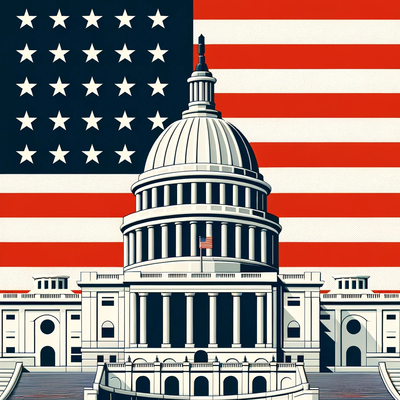
When Post-Truth President Donald Trump Lies, Diplomacy Dies.


Article republished by Jerry Alatalo | March 26, 2026

(Source: MiddleEastMonitor.com)

[Editor’s note: “As the Gaza Genocide continues under the thin veneer of a ‘Board of Peace’ and the war on Iran is fueled by manufactured ‘imminent threats,’ the world is left with a chilling realization: when a President lies, diplomacy doesn’t just die—it is replaced by a permanent state of transactional violence. For the people of the Middle East, from the ruins of Tripoli to the streets of Tehran and the rubble of Gaza, the ‘Truth’ is not a political debate; it is a matter of survival.” (Dr. Mustafa Fetouri is a Libyan academic and freelance journalist. He is a recipient of the EU’s Freedom of the Press prize.) Please share this article/information far and wide. Please feel free to share your thoughts in the comments. Thank you very much. Peace.]

***

When Presidents Lie, Diplomacy Dies: The Global Cost of Post-Truth Under Trump

by Dr. Mustafa Fetouri

March 26, 2026

Lying is as much a part of statecraft as it is of human nature. History is littered with deceptions—some confessed, others concealed—employed by politicians for everything from survival to conquest. In the fragile balance of war and peace, a well-timed lie has often been dismissed as a ‘necessary evil’ meant to de-escalate tensions or provide a face-saving exit from the brink of conflict.

In our hyper-connected era, a political lie’s shelf-life has plummeted. With facts weaponized in real-time, leaders find it increasingly impossible to build sustainable agendas on foundations of falsehood.

Donald Trump appears to be the exception to this rule of political gravity—not once, but more times than one can recall. By appearing to believe his own fabrications, he forges ahead with policies based on ‘alternative facts’ even as they are exposed in real-time.

This creates a structural paralysis for diplomacy; when the architect of foreign policy is untethered from objective reality, diplomacy loses its primary function as a tool for de-escalation. In the current war on Iran, this becomes a compounding crisis as the public remains largely uninformed of the conflict’s ‘why.’ Meanwhile, career diplomats and ad-hoc envoys are trapped in an impossible position: unable to walk back his statements or openly correct them, they are left to navigate a geopolitical minefield guided by a map of falsehoods issued from the highest echelon of power.

READ: Trump prefers peace but ready to ‘unleash hell’ in Iran: White House

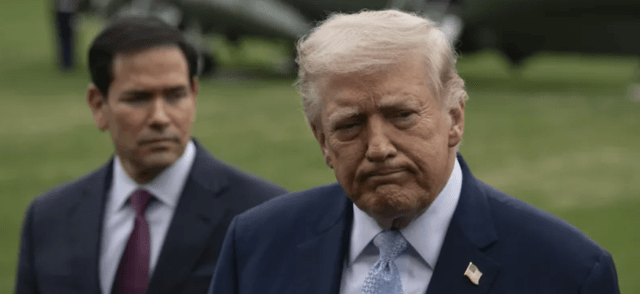
The cost of this ‘post-truth’ diplomacy is most visible in the justifications for the war on Iran. President Trump repeatedly claimed military action was a response to an ‘imminent threat’ and an accelerating nuclear program, yet the U.S. intelligence community has declined to endorse this. During congressional testimony, Director of National Intelligence Tulsi Gabbard notably sidestepped the ‘imminent threat’ claim, stating instead that such ‘determinations’ are the President’s alone.

Furthermore, while the administration cites preventing a ‘global catastrophe’ as a primary goal, the war was launched even as indirect negotiations were underway in Oman to prevent that very disaster. This disconnect peaked this week when Trump’s claims of ‘major points of agreement’ were immediately dismissed  by Tehran as ‘fake news.’

When a war is sold on a foundation of ‘alternative facts’ and non-existent negotiations, any diplomatic exit disappears, leaving allies confused and the public led into a conflict where the ‘why’ is a moving target.

This pattern of defying political gravity is equally entrenched in the administration’s domestic agenda. To justify radical environmental rollbacks, Trump has marketed an ‘Energy Dominance’ built on statistical fallacies, recently claiming U.S. oil output—already the world’s highest—could soon triple. This ignores both physical and economic reality. Despite such rhetoric, the current Strait of Hormuz crisis serves as a stark reminder that global market forces and geopolitical volatility—not White House decrees—dictate the actual price at the pump.

By labeling climate change the ‘greatest con job ever’ during his 2025 UN address, Trump effectively silenced scientific consensus to pave the way for fossil fuel expansion. When ‘alternative facts’ become the official ledger for the national economy, diplomacy dies at home; the public is left to pay for a reality that exists only in the Commander-in-Chief’s rhetoric.

Trump’s current ‘post-truth’ maneuvers are not an aberration; they are the evolution of a long-standing tradition of manufactured consent. One need only look back to the 2003 invasion of Iraq—the ‘Big Lie’ that launched a thousand ships on the back of non-existent WMDs.

It was a masterclass in black sarcasm: a superpower ‘liberating’ a nation by destroying it, guided by intelligence that was not just wrong, but effectively invented. Today, twenty-three years later, the irony remains as dark as the smoke that once covered Baghdad. Millions of Iraqi civilians paid for those ‘alternative facts’ with their lives, while the country itself has been pushed beyond the point of repair—a permanent monument to the cost of a lie that everyone in power eventually admitted, but no one was ever punished for.

READ: Hebrew media: Iran sets five conditions to end war with US and Israel

This cynical playbook was refined again in 2011 during the intervention in Libya. Major media networks and politicians pumped out unverified reports of ‘thousands killed and raped’ and ‘Viagra-fueled atrocities’ to trigger the UN’s ‘Responsibility to Protect.’ Yet, as subsequent investigations by the UK Parliament and human rights organizations later revealed, the threat to civilians was wildly overstated to justify a predetermined goal of regime change. In both cases, the ‘alternative fact’ served as the perfect lubricant for war.

Today, as the Trump administration uses similar tropes of ‘imminent threats’ to justify the war on Iran, the world is witnessing a grim repeat of history. When the highest echelons of power treat the truth as a disposable inconvenience, diplomacy doesn’t just fail—it is murdered to make room for the next profitable conflict.”

The cumulative weight of these historical deceptions—from the phantom WMDs of Iraq to the manufactured atrocities of the 2011 Libyan intervention—has led us to a terminal point in international relations. We are no longer merely dealing with ‘political spin’; we are witnessing the total devaluation of truth as a diplomatic currency. When the world’s leading superpower treats facts as subjective ‘alternatives,’ it effectively bankrupts the very language of negotiation.

For nations in the Global South, and particularly across the Middle East, the ‘Western’ call for human rights or democratic transition is no longer heard as a moral imperative, but as a cynical prelude to the next ‘regime change’ operation.

By the time the truth finally emerges from the rubble of a destroyed state, the architects of the lie have already moved on to their next profitable fiction, leaving behind a world where diplomacy has no ground left to stand on.

The ultimate cost of this ‘post-truth’ era is not just the erosion of trust, but the physical destruction of the human beings caught in the gears of these ‘alternative facts.’ As the Gaza Genocide continues under the thin veneer of a ‘Board of Peace’ and the war on Iran is fueled by manufactured ‘imminent threats,’ the world is left with a chilling realization: when a President lies, diplomacy doesn’t just die—it is replaced by a permanent state of transactional violence.

For the people of the Middle East, from the ruins of Tripoli to the streets of Tehran and the rubble of Gaza, the ‘Truth’ is not a political debate; it is a matter of survival. Until we restore a shared reality where facts are once again the baseline of international engagement, the only language left to speak will be the language of conflict. The ‘Global Cost’ is a future where no one is an honest broker, no treaty is worth the paper it is written on, and the only certainty is the next manufactured war.

OPINION: Board of Peace is a tactical smokescreen for war in Iran and Gaza

The views expressed in this article belong to the author and do not necessarily reflect the editorial policy of Middle East Monitor.

#BoardOfPeace #GazaGenocide #Iran #IranWarCrimes #PoliticalDeception

From inspiring personal journeys to edge‑of‑your‑seat thrillers, Solihull Publishing offers captivating books for every reader. Dive into unforgettable stories and discover your next great read: https://solihullpublishing.com/books

#SolihullPublishing #Uphill #BiologicalDeception #ArtOfDeception #PoliticalDeception #BookLovers #MustRead #ReadersMagnet #ThrillerReads #Inspiration

Part 2: Unveiling the Seven Seals of Revelation: A Journey Through Prophecy

2,803 words, 15 minutes read time.

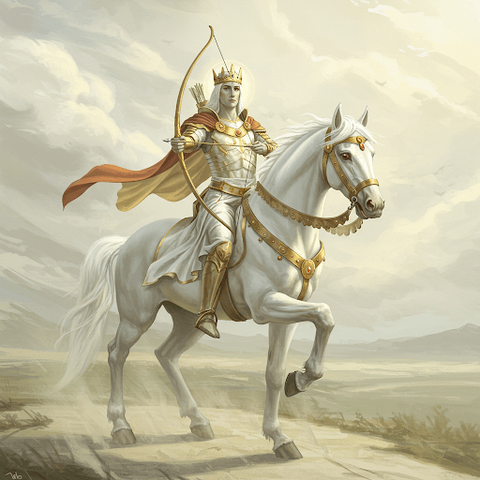
Image Source: The AI Pixel Prophet

First Seal: The White Horse (Revelation 6:1–2)

We’re continuing our journey through the profound and often unsettling prophecies of Revelation. Having established the foundational context of the Seven Seals, we now turn our attention to the opening act of this apocalyptic drama: the First Seal. This initial unveiling, described in Revelation 6:1-2, sets the stage for the subsequent judgments and offers crucial insights into the nature of the end times. It begs a critical question: what exactly does this striking image of a white horse and its crowned, bow-wielding rider signify? Is it a harbinger of righteous victory, or does it mask a more sinister form of conquest? Understanding the symbolism of the First Seal is paramount, as it lays the groundwork for comprehending the escalating events that follow.

Unveiling the Vision: The Biblical Portrait of the First Seal

Turn with me to Revelation 6:1-2: “I watched as the Lamb opened the first of the seven seals. Then I heard one of the four living creatures say in a voice like thunder, ‘Come!’ I looked, and there before me was a white horse! Its rider held a bow, and he was given a crown, and he rode out as a conqueror bent on conquest.” Even in its brevity, this passage is packed with potent imagery. Let’s break down the key elements we’re confronted with:  

First, we encounter the White Horse. The color white often carries connotations of purity, holiness, and victory within biblical symbolism. Think of the armies of heaven riding white horses in Revelation 19. However, as we’ll explore, this association isn’t always straightforward and can be used deceptively.

Next, we have the Rider. This figure is not unarmed; he holds a bow, a weapon of warfare, suggesting an intent to engage and overcome. Furthermore, he is given a crown, signifying authority, dominion, and the right to rule or exert power. This isn’t a rogue figure; he is operating with a degree of legitimacy or granted authority.  

Finally, the rider’s mission is explicitly stated: he “rode out as a conqueror bent on conquest.” This speaks of an aggressive expansion, a drive for domination, and a desire to bring others under his sway. The very essence of this initial seal is one of advancement and subjugation.  

Deciphering the Symbolism: Two Dominant Interpretations

The symbolism of the White Horse and its rider has been a subject of considerable debate and interpretation among theologians and scholars. Two primary perspectives stand out, each with compelling arguments:

On one hand, a positive interpretation posits that the rider on the white horse represents Christ himself or the initial spread of the gospel. Proponents of this view often point to the parallels with Revelation 19, where Christ returns on a white horse leading the armies of heaven in righteous victory. The color white, in this context, reinforces the purity and triumph of Christ and the power of the gospel to overcome spiritual darkness. The “conquest” is then seen as the spiritual victory of the Christian message as it goes forth into the world.  

However, a strong negative interpretation argues that the White Horse symbolizes deception, false peace, and potentially the spirit or precursor of the Antichrist. This view highlights the fact that while the horse is white (suggesting purity or peace), the rider wields a bow but notably lacks arrows. This absence could imply a conquest achieved not through open warfare, but through diplomacy, manipulation, or subtle deceit. Think of the historical adage, “peace at any price.” Furthermore, this interpretation draws a direct connection to Jesus’ own warnings in Matthew 24:4-5, where He cautions His disciples about the rise of false messiahs who will come claiming, “I am the Christ,” and deceive many. The initial period before the true tribulation might be characterized by a deceptive sense of peace and security, masking a more insidious form of spiritual or political conquest.  

Grounding the Prophecy: Historical Echoes and Enduring Patterns

To truly grasp the impact of the First Seal’s imagery on John’s original audience and its enduring relevance, it’s crucial to delve deeper into the historical and cultural landscape of the first century and beyond:

In the first-century context, the vivid image of a bow-wielding rider on a horse would have immediately resonated with the prevalent military realities and anxieties of the time. The Parthian Empire, located to the east of the Roman Empire, was a significant and persistent threat. Their armies were renowned for their highly mobile cavalry, particularly their archers who could unleash devastating volleys of arrows even while feigning retreat – a tactic that often confounded Roman legions. Historical accounts from figures like Plutarch and Crassus’ disastrous campaign in 53 BC vividly illustrate the Roman fear and respect for Parthian military prowess. This immediate association would have imbued the rider with a sense of potent, external power capable of swift and decisive conquest. Furthermore, the bow itself, while a standard weapon of war, could also symbolize distance and a less direct form of engagement, perhaps hinting at influence from afar or even psychological warfare. The lack of visible arrows in some interpretations could then be linked not just to deception but also to a power that doesn’t need brute force initially, but rather exerts control through other means like economic leverage or cultural influence.

Beyond the Parthian context, the Roman Empire itself was built on conquest and the projection of power through military might, often initially presented as bringing “peace” and “order” to conquered territories – a Pax Romana enforced by legions. This internal Roman dynamic, where conquest was often cloaked in the language of civilization and stability, could also subtly inform the imagery of a rider appearing in a seemingly positive light (white horse) but ultimately embodying a force of domination. The reigns of various Roman emperors, some of whom initially promised prosperity and justice but devolved into tyranny (think of Caligula or Nero in the latter part of the first century), could have served as contemporary examples of leaders who rode in on a metaphorical “white horse” of popular support only to unleash darker realities.

Looking across the vast expanse of history, the First Seal’s symbolism tragically recurs in various forms. Consider the rise of charismatic political leaders throughout the ages who initially captivated populations with promises of national glory, economic prosperity, or social justice, only to consolidate power and unleash periods of intense oppression and conflict. Think of the initial allure of certain ideological movements – from revolutionary fervor promising liberation to nationalist movements promising unity and strength – that, in their pursuit of their vision, have led to widespread suffering and the suppression of individual freedoms. The “white horse” of these movements often represents the initial utopian promise, the seemingly noble goals that mask the darker, more authoritarian tendencies that emerge as they gain momentum. Data on the human cost of 20th-century totalitarian regimes, for instance, starkly illustrates how ideologies promising a “better future” can, in practice, result in unimaginable devastation.

Furthermore, the concept of soft power in modern geopolitics offers another lens through which to view the First Seal. Nations and entities can exert influence and achieve a form of “conquest” not necessarily through military might, but through cultural dominance, economic leverage, and the spread of their values and ideologies. This subtle form of influence, while appearing less overtly aggressive than a traditional military conquest, can nonetheless lead to the subjugation of other cultures and the erosion of local autonomy – a modern echo of a rider advancing on a seemingly benevolent white horse.

By weaving in these historical threads, potential data points (even if qualitative in this context), and broader historical concepts like the nature of empires and the allure of ideologies, we can enrich our understanding of the First Seal’s multifaceted symbolism and its enduring relevance beyond its immediate first-century context.

Unpacking the Theology: God’s Sovereignty and Our Need for Discernment

Regardless of whether the white horse and its rider symbolize the initial advance of the Gospel or the subtle creep of deceptive powers, the opening of the First Seal resonates with profound theological truths that demand our careful consideration:

Firstly, the act of the Lamb, Jesus Christ, opening this initial seal hammers home the unwavering reality of God’s absolute sovereignty. This isn’t a distant, uninvolved deity allowing chaos to reign. Instead, the very One who sacrificed Himself for humanity holds the authority to initiate these end-time events. This signifies that even the forces of conquest, whether through military might or insidious deception, operate within the boundaries of His ultimate plan. Think about it: the most powerful human empires, the most cunning ideologies – none can ultimately thwart God’s purposes. This theological bedrock offers both comfort and a sobering perspective. It reminds us that history isn’t a random series of accidents, but a narrative unfolding under divine orchestration. Even in times of apparent turmoil and the rise of seemingly unstoppable forces, believers can anchor themselves in the assurance that God is not surprised, nor is He powerless. His sovereignty extends not just to the grand sweep of history, but to the minute details, ensuring that His ultimate justice and redemption will prevail. This understanding challenges us to view current events not with panic, but with a discerning eye, seeking to understand where these events might fit within God’s larger narrative.

Secondly, the First Seal serves as a clear marker: the beginning of God’s apocalyptic judgments. It’s not an isolated incident but the first tremor before a major earthquake. This initial act sets in motion a sequence of escalating events, each subsequent seal unleashing greater tribulation and revealing more of God’s righteous response to a world in rebellion. This isn’t about a vengeful God arbitrarily punishing humanity, but rather the unfolding consequences of sin and the necessary purification before the establishment of His perfect kingdom. Consider the weight of this initial judgment. It’s a stark reminder that actions have consequences, both on an individual and a global scale. The opening of this seal signifies that God’s patience, while enduring, is not infinite, and that a time of reckoning is appointed. For believers, this should instill a sense of urgency regarding our own lives and our witness to a world heading towards these realities. It’s a call to live with intentionality, knowing that we are living in the shadow of these prophetic realities.

Finally, the inherent ambiguity surrounding the rider’s true nature – the tension between interpretations of righteous advance and subtle deception – functions as a potent and timeless call to discernment for believers. We are explicitly cautioned against superficial readings of events and urged to look beyond mere appearances. The “white horse” can be alluring, promising victory or peace, but its true nature and the intentions of its rider must be critically examined through the lens of Scripture and the Spirit’s guidance. This demands intellectual honesty, a commitment to studying God’s Word diligently, and a reliance on spiritual wisdom. In a world saturated with competing narratives and charismatic leaders offering simplistic solutions, the ability to discern truth from falsehood is not a luxury but a spiritual imperative. We must ask tough questions: Does this align with God’s character as revealed in Scripture? Does it point people towards Christ, or does it subtly draw them away? Does it offer true and lasting peace, or a fleeting illusion? The First Seal challenges us to cultivate a mature faith that isn’t easily swayed by compelling rhetoric or outward appearances, but is grounded in the solid foundation of God’s unchanging truth. It calls us to be like the Bereans, who “examined the Scriptures every day to see if what Paul said was true” (Acts 17:11).

Navigating Today’s Landscape: Practical Lessons for Modern Men

The ancient imagery of the First Seal isn’t confined to dusty biblical scrolls; it shouts from our newsfeeds and echoes in the halls of power. It bleeds into the headlines chronicling the rise of charismatic political leaders promising national renewal, the subtle influence of pervasive social ideologies offering utopian visions, and the relentless march of technological advancements heralded as the key to human flourishing. As men navigating the complexities of the 21st century – a landscape riddled with information overload, competing ideologies vying for our allegiance, and the constant hum of societal change – the lessons embedded in this initial prophetic vision are strikingly relevant:

The Call to Discern Counterfeit Peace: One crucial takeaway is the absolute necessity for men to develop a keen eye for the false allure of peace or salvation that marginalizes or outright rejects Jesus Christ and the enduring truth of the Gospel. History and the present day are replete with movements promising utopian futures through human ingenuity or political maneuvering. Like the deceptive gleam of the “white horse,” these ideologies can initially appear attractive, offering solutions to societal ills or paths to personal fulfillment. However, a discerning mind, grounded in biblical truth, must question their ultimate foundation and trajectory. Do they elevate humanity above the divine? Do they offer a lasting peace rooted in righteousness, or a temporary truce built on compromise with ungodly principles? As men seeking genuine and eternal solutions, we must be wary of any “white horse” that doesn’t ultimately lead to the foot of the cross.

The Unshakeable Anchor of Scriptural Truth: In an era defined by fluid morality and the constant barrage of subjective opinions, our unwavering commitment must be to Scripture as the ultimate source of truth and wisdom. Intimate familiarity with God’s Word equips us with the critical framework needed to differentiate between authentic guidance and persuasive deception. Like a seasoned engineer relying on precise blueprints, we must allow the Bible to be our standard, shaping our understanding of the world and informing our decisions. This requires consistent study, prayerful reflection, and a willingness to submit our own understanding to the authority of God’s revealed will. Without this anchor, we risk being tossed about by the waves of popular opinion and the seductive whispers of the “white horse” ideologies that promise much but deliver little.

The Mandate for Critical Engagement with the World: Finally, the First Seal compels us to move beyond passive observation and engage thoughtfully and critically with the political and social currents shaping our world. We must exercise profound discernment when evaluating movements and leaders who promise swift solutions or herald an era of unprecedented peace and progress. The initial appeal of the “white horse” can be powerful, tapping into our innate desire for a better future. However, responsible manhood demands that we look beyond the surface charisma and examine the underlying principles, potential long-term consequences, and alignment with biblical values. Are these movements rooted in genuine transformation and justice, or do they mask a lust for power or a disregard for God’s design for humanity? We are called to be both compassionate and discerning, engaging with the world with open eyes and a commitment to truth, always measuring human claims against the divine standard.

Conclusion

The First Seal, with its enigmatic rider on a white horse, presents us with a critical choice: to discern between genuine victory and deceptive conquest. Whether it represents the initial advance of the Gospel or the subtle rise of deceptive forces, its opening signifies the commencement of God’s end-times judgments and issues a timeless call for vigilance. As men striving for truth and understanding, we must heed this warning, anchoring ourselves in the unwavering truth of Scripture and discerning the spirits at work in our world.

Having navigated the initial enigma of the white horse – a symbol fraught with possibilities of both triumph and treachery – we stand at the precipice of even more dramatic revelations. The opening of the First Seal has set in motion a chain of events that will shake the very foundations of human existence. Now, prepare yourself as we delve into the next stage of God’s unfolding prophecy. Brace yourself, because in our next installment, the chilling reality of the Second Seal will be unleashed: a fiery red horse tearing across the landscape, bringing with it the brutal and devastating specter of war. This isn’t just history; it’s a prophetic glimpse into a future that demands our understanding. Don’t miss out as we confront the raw power and stark warnings embedded in the fiery arrival of the red horse.

What are your thoughts on the symbolism of the White Horse? Share your insights in the comments below. And remember to like, subscribe, and share this exploration with other men seeking to understand the deeper truths of Revelation.

D. Bryan King

Sources

Disclaimer:

The views and opinions expressed in this post are solely those of the author. The information provided is based on personal research, experience, and understanding of the subject matter at the time of writing. Readers should consult relevant experts or authorities for specific guidance related to their unique situations.

Related Posts

#AntichristSymbolism #apocalypticLiterature #BibleProphecyForMen #BibleStudy #biblicalInterpretation #biblicalProphecy #BookOfRevelationStudy #BowAndCrownSymbolism #ChristAsConqueror #ChristSVictory #ChristianTheology #ConquestInRevelation #DeceptionInRevelation #DeepDiveRevelation #DiscerningDeception #divineJudgment #EndTimesBible #endTimesProphecy #Eschatology #ExpertBibleStudy #falseMessiahs #FalsePeace #FirstOfSevenSeals #FutureEvents #GodSPlan #InterpretingProphecy #LambOpensSeals #LastDays #MaleAudienceTheology #MeaningOfRevelation #modernProphecy #ParthianEmpire #PoliticalDeception #PreparingForEndTimes #ProphecyAndCurrentEvents #ProphecyStudy #PropheticInterpretation #PropheticSymbols #RelevanceOfRevelation #religiousDeception #Revelation6 #RevelationCommentary #RevelationExplained #RevelationFirstSeal #RiderOnWhiteHorse #RomanHistory #SevenSealsMeaning #signsOfTheEndTimes #spiritualWarfare #SpreadOfGospel #SymbolismOfWhiteHorse #TheologianExplainsRevelation #theology #TribulationPeriod #UnderstandingBibleProphecy #UnderstandingRevelation #UnlockingRevelation #WhiteHorseMeaning #WhiteHorseRevelation
The AI Pixel Prophet on Instagram: "The First Seal Unveiled: A powerful white horse and its enigmatic rider emerge from the swirling mists of time. Is this a harbinger of righteous victory, or a subtle deception?"

0 likes, 0 comments - theaipixelprophet on April 11, 2025: "The First Seal Unveiled: A powerful white horse and its enigmatic rider emerge from the swirling mists of time. Is this a harbinger of righteous victory, or a subtle deception?".

Instagram

Part 1: Unveiling the Seven Seals of Revelation: A Journey Through Prophecy

2,067 words, 11 minutes read time.

Image Source: The AI Pixel Prophet

Bible Verse T-Shirt
Affiliate Link

Journey Through Prophecy and Grasp God’s Sovereign Plan for a World in Transition

Gentlemen, let’s be honest. We live in a world that often feels like it’s spinning out of control. From geopolitical tensions to personal uncertainties, the questions of what the future holds and where it’s all heading are never far from our minds. For those of us who engage with the Judeo-Christian narrative, the Book of Revelation stands as a powerful, albeit complex, text that attempts to answer these very questions. At its core lies the enigmatic sequence of the Seven Seals – a series of divine pronouncements that set in motion the climactic events of the end times. What do these ancient symbols, penned by the exiled apostle John on Patmos, truly mean for us, here and now? How do they illuminate a divine strategy for a world grappling with its own mortality and the yearning for ultimate justice?

This isn’t your Sunday school rendition of Revelation. This blog series, “Unveiling the Seven Seals of Revelation: A Journey Through Prophecy,” is a deep dive into a pivotal section of Scripture. We’re not just skimming the surface; we’re going to unpack the layers of meaning, explore the historical context, and wrestle with the theological implications of each seal. Think of it as equipping yourself with a critical understanding of a prophetic roadmap – not to fixate on sensationalism, but to gain a mature perspective on God’s sovereignty and our place within His unfolding plan. Let’s get started by establishing a solid foundation: what exactly are these Seven Seals?

Confronting the Sealed Scroll: Unveiling God’s Strategic Intent

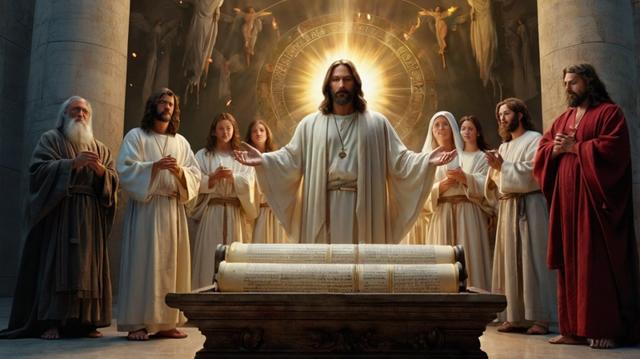
Imagine a high-stakes drama unfolding on a cosmic stage. The scene opens in Revelation chapter 5, where John witnesses an awe-inspiring vision of God the Father, enthroned in glory, holding a scroll secured by seven seals. This isn’t just any document; it represents God’s comprehensive and authoritative blueprint for judgment and redemption – His strategic intent for the culmination of human history and the restoration of all things. The weight of this moment is palpable: a powerful proclamation echoes, asking who is worthy to open the scroll and break its seals (Revelation 5:2). The gravity of the situation intensifies as no one in heaven or on earth or under the earth is found worthy to open the scroll or even to look inside. It is at this point that John experiences a deep and uncontrollable weeping, overwhelmed not only by the apparent impossibility of God’s plan being revealed and enacted (Revelation 5:4), but also by the potential implication that all the sacrifices, the preaching, the establishment of the early church – the very work he and the other disciples had poured their lives into – might ultimately be in vain if God’s ultimate purpose could not move forward. This underscores a fundamental truth: humanity, in its fallen state, cannot fully grasp or execute God’s ultimate purposes on its own terms.

It is then that hope emerges. One of the elders comforts John, proclaiming the worthiness of Jesus Christ, the Lion of the tribe of Judah, the Root of David, and crucially, the Lamb who was slain (Revelation 5:5-9). He alone is deemed worthy to take the scroll and initiate its unsealing. This dual imagery speaks volumes. The Lion embodies His kingly authority and conquering power, while the Lamb signifies His redemptive sacrifice – the very foundation upon which God’s plan is built. His worthiness isn’t arbitrary; it’s earned through His victory over sin and death, positioning Him as the singular mediator between a holy God and a fallen humanity. As Christ begins to break these seals, a cascade of apocalyptic events is triggered, each seal revealing a distinct phase in the unfolding narrative that will ultimately lead to His triumphant return and the establishment of His eternal reign.

Situating the Prophecy: Understanding the Broader Landscape of Revelation

To truly grasp the weight and significance of the Seven Seals, we need to situate them within the broader literary and theological context of the Book of Revelation. The book commences with John’s encounter with the resurrected and glorified Christ, followed by specific messages directed to seven churches in Asia Minor (Revelation 1-3). These messages address their immediate challenges, offering both stern warnings and vital encouragement. Following this, John is “in the Spirit” transported to the heavenly realm (Revelation 4), where he witnesses the transcendent majesty and absolute holiness of God on His throne, surrounded by a celestial court. This powerful scene provides the necessary backdrop for the introduction of the sealed scroll in Revelation 5.

The scroll held by God symbolizes His ultimate dominion and ownership over all of creation – a dominion fractured by sin, leading to chaos and alienation. However, through the atoning sacrifice of Jesus Christ, the Lamb of God, this lost inheritance is reclaimed. His exclusive worthiness to open the scroll signifies His divine authority to execute God’s plan for the restoration of creation and the final judgment of those who oppose His will. It’s crucial to recognize the structural integrity of Revelation, which unfolds through three interconnected cycles of judgment: the Seven Seals, the Seven Trumpets (which emerge from the seventh seal), and the Seven Bowls (unleashed later in the narrative). Understanding this progressive structure allows us to perceive the escalating nature of God’s intervention in human history and the unwavering trajectory towards His ultimate victory.

A Tactical Overview: Charting the Course of the Seven Seals

As the Lamb initiates the opening of the seals, a sequence of events unfolds, each laden with symbolic significance. While subsequent blogs will dissect each seal with precision, a preliminary overview will provide a strategic framework for our understanding:

First Seal – The White Horse: This seal unleashes a rider on a white horse, often interpreted as representing conquest, the assertion of power, and potentially a deceptive guise of peace. Some theological frameworks connect this to the initial rise of ideologies or the spirit of antichrist gaining global influence.

Second Seal – The Red Horse: With the breaking of the second seal, a fiery red horse emerges, and its rider is granted the authority to eradicate peace from the earth, ushering in widespread conflict and bloodshed. This seal speaks to the escalating cycles of violence and warfare that will characterize the end times.

Third Seal – The Black Horse: The opening of the third seal reveals a black horse and its rider wielding a set of scales, symbolizing economic scarcity and profound hardship. This points to a future marked by famine and severe economic disparities, where basic necessities become exorbitant and inaccessible for many.

Fourth Seal – The Pale Horse: The fourth seal unleashes a pale or ashen horse, whose rider is ominously named Death, with Hades trailing closely behind. This seal signifies widespread mortality on a catastrophic scale, resulting from the combined forces of war, famine, disease, and the predation of wild beasts. It paints a grim picture of significant human loss.

Fifth Seal – The Cry of Martyrs: This seal shifts our focus to the heavenly realm, revealing the souls of those who have been martyred for their unwavering faith in Jesus. They are depicted under the altar, their voices rising in a poignant cry for justice. This seal underscores the reality of persecution faced by believers and God’s ultimate promise of vindication.

Sixth Seal – Cosmic Upheaval: The breaking of the sixth seal triggers dramatic cosmic disturbances – a cataclysmic earthquake, the sun turning black, the moon becoming blood-red, and stars plummeting from the heavens. These terrifying events serve as undeniable signs of God’s wrath and a powerful display of His absolute sovereignty, compelling even the ungodly to acknowledge His power.

Seventh Seal – The Silence of Anticipation: The opening of the seventh seal is marked by a profound silence in heaven, lasting for approximately half an hour. This pregnant pause signifies a moment of solemn anticipation, a breath held before the next wave of divine judgments – the unleashing of the seven trumpets. It underscores the immense significance of the events about to unfold.

Why This Matters Now: The Contemporary Relevance of Prophecy

For many, the Book of Revelation and its vivid imagery can feel distant and disconnected from the realities of our daily lives. However, understanding the Seven Seals offers critical insights that hold profound relevance for men navigating the complexities of the 21st century. Firstly, these prophecies underscore God’s unwavering sovereignty over the trajectory of history. Despite the apparent chaos and the pervasive presence of evil in the world, the seals reveal that God remains firmly in control, orchestrating events according to His ultimate purposes. This understanding provides a bedrock of assurance for believers, knowing that history isn’t a random series of events but is moving inexorably towards God’s appointed culmination.

Secondly, the Seven Seals serve as a potent warning. While the precise timing of these prophetic events remains a subject of ongoing theological debate, the underlying principles of divine judgment, the inevitability of tribulation, and the ultimate consequences of rejecting God are timeless and demand our serious consideration. Engaging with these prophecies compels us to examine our own lives, to ensure our values and actions align with God’s will, and to cultivate a state of spiritual preparedness for whatever the future may hold. This isn’t about succumbing to fear, but about fostering a sense of urgency and a deepening commitment to our faith.

Finally, the unfolding narrative of the Seven Seals ultimately points towards the definitive triumph of God and the glorious return of Jesus Christ. Even amidst the depicted turmoil and suffering, there is an undeniable undercurrent of hope – the unwavering promise that evil will not have the final word. For believers, this provides an unshakeable anchor in the midst of life’s inevitable storms, reminding us that God’s justice will ultimately prevail and His kingdom will be established in its fullness.

Charting Our Course: What Lies Ahead in This Series

Over the course of this blog series, we will embark on a rigorous and detailed examination of each of the Seven Seals. In each installment, we will meticulously analyze the specific biblical descriptions, unpack the rich layers of symbolism employed by the apostle John, consider pertinent historical contexts that may illuminate their meaning, and critically engage with the profound theological implications of each seal. Our objective extends beyond mere academic analysis; we aim to extract practical wisdom and actionable insights that resonate with the challenges and opportunities faced by contemporary men in their daily lives. We will strive to connect these ancient prophecies with the tangible realities of our modern world, encouraging thoughtful introspection on our spiritual posture and our role within God’s grand narrative.

As we navigate this complex and often debated prophetic text together, I encourage you to approach it with intellectual rigor, an open mind, and a spirit of prayerful discernment. The Book of Revelation, while containing dramatic and sometimes unsettling imagery, is ultimately a message of hope, perseverance, and the ultimate victory of our Lord. May this series deepen your understanding of God’s Word, fortify your faith, and inspire you to live with intentionality and confident anticipation of His return.

Deciphering the Seven Seals isn’t just about understanding ancient prophecies; it’s about gaining a clearer perspective on the trajectory of our world and the unwavering sovereignty of God. It’s about equipping ourselves with knowledge that speaks to the big questions we face as men. Join us in the upcoming installments as we dissect each seal, starting with the enigmatic First Seal and the imposing figure of the rider on the white horse. Together, we’ll unpack the layers of meaning and discover the enduring relevance of God’s unfolding plan for our lives today.

If you found this initial exploration thought-provoking and valuable, help us get this perspective out to more guys. Hit that like button below, subscribe to our newsletter for future insights and in-depth analyses in this series, and share this with the men in your circle who are also seeking a deeper understanding of these critical biblical truths. Your engagement helps build a community of men who are serious about understanding God’s Word. Let’s journey through these prophecies together.

D. Bryan King

Sources

Disclaimer:

The views and opinions expressed in this post are solely those of the author. The information provided is based on personal research, experience, and understanding of the subject matter at the time of writing. Readers should consult relevant experts or authorities for specific guidance related to their unique situations.

Related Posts

#AntichristSymbolism #apocalypticLiterature #BibleProphecyForMen #BibleStudy #biblicalInterpretation #biblicalProphecy #BookOfRevelationStudy #BowAndCrownSymbolism #ChristAsConqueror #ChristSVictory #ChristianTheology #ConquestInRevelation #DeceptionInRevelation #DeepDiveRevelation #DiscerningDeception #divineJudgment #EndTimesBible #endTimesProphecy #Eschatology #ExpertBibleStudy #falseMessiahs #FalsePeace #FirstOfSevenSeals #FutureEvents #GodSPlan #InterpretingProphecy #JourneyThroughProphecy #LambOpensSeals #LastDays #MaleAudienceTheology #MeaningOfRevelation #modernProphecy #ParthianEmpire #PoliticalDeception #PreparingForEndTimes #ProphecyAndCurrentEvents #ProphecyStudy #PropheticInterpretation #PropheticSymbols #RelevanceOfRevelation #religiousDeception #Revelation6 #RevelationCommentary #RevelationExplained #RevelationFirstSeal #RiderOnWhiteHorse #RomanHistory #SevenSealsMeaning #signsOfTheEndTimes #spiritualWarfare #SpreadOfGospel #SymbolismOfWhiteHorse #TheologianExplainsRevelation #theology #TribulationPeriod #UnderstandingBibleProphecy #UnderstandingRevelation #UnlockingRevelation #WhiteHorseMeaning #WhiteHorseRevelation

The AI Pixel Prophet on Instagram: "The Lamb Triumphant: Jesus Christ, worthy to open the scroll and fulfill God's plan. This image depicts the powerful scene from Revelation 5, where Jesus Christ, the Lamb who was slain, stands at the center of the throne, ready to open the seven seals. His presence is radiant, surrounded by elders and angelic beings, signifying His authority and the fulfillment of God's plan for redemption."

0 likes, 0 comments - theaipixelprophet on April 17, 2025: "The Lamb Triumphant: Jesus Christ, worthy to open the scroll and fulfill God's plan. This image depicts the powerful scene from Revelation 5, where Jesus Christ, the Lamb who was slain, stands at the center of the throne, ready to open the seven seals. His presence is radiant, surrounded by elders and angelic beings, signifying His authority and the fulfillment of God's plan for redemption.".

Instagram
Trump Is Attacking Biden With Lies—and Getting Away With It

When will the Democrats learn to fight back?

The New Republic
Lindsey Graham is lying for Trump. And it shows the real issue with the Republican party

The South Carolina senator has provided an unusually straightforward demonstration of how right-wing populism justifies itself

The Independent