 Roland Maurice
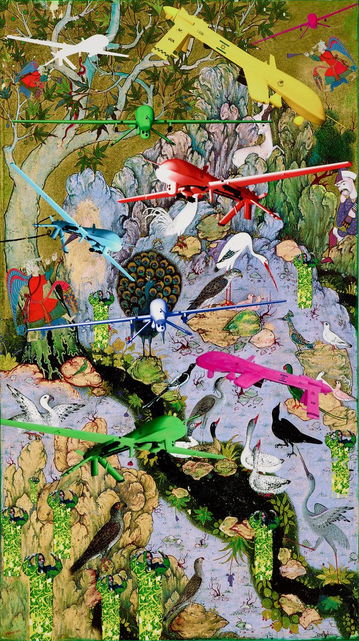
Birds of Paradise by Laila Shawa, 2012 (mixed media and photography on canvas)
#LailaShawa #contemporaryart #art #politicalart #persianminiature
#LailaShawa #contemporaryart #art #politicalart #persianminiature
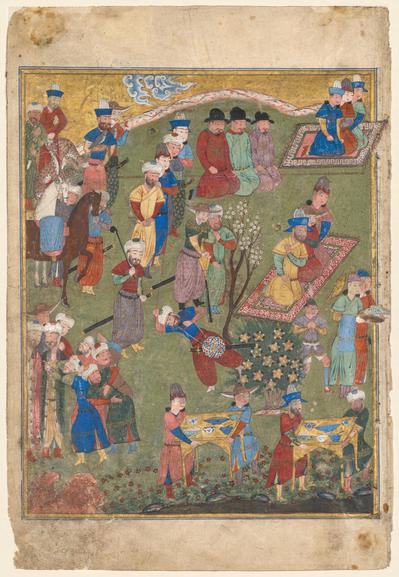
A lush banquet unfolds in "Royal Reception in a Landscape," showcasing Persian grandeur with engaged figures, foreign diplomats, and the complexities of courtly life. What stories might be hidden in this vibrant feast?
#ArtHistory #ClevelandArt #PersianMiniature #Shahnama
https://clevelandart.org/art/1956.10.a
Isfandiyar's fierce battle against Arjasp unfolds in vivid detail, blending drama and beauty. The delicate garden contrasts starkly with the fury of the fight, captivating viewers with every brushstroke. What emotions does this scene evoke for you?
#ClevelandArt #PersianMiniature #Shahnama
https://clevelandart.org/art/2013.314
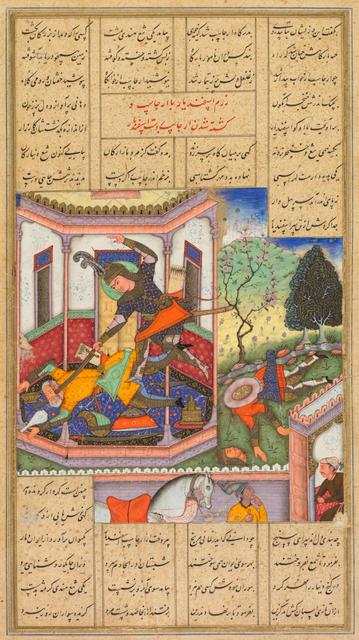

This illustrated scene occurs early in the narrative of Isfandiyar, who is destined to serve as king of Iran with Rustam as his champion. The episode describes Isfandiyar’s quest for vengeance against the tyrant Arjasp of Turan, who had defeated his father in battle and taken his sisters captive. Isfandiyar disguised himself as a merchant, entered Arjasp’s fort, and then fought his way to the enemy king, whom he defeated in battle. The artist has included beautiful and delicate details of the garden and architectural setting of this gruesome scene. An onlooker below puts his finger to his mouth in a gesture of astonishment.
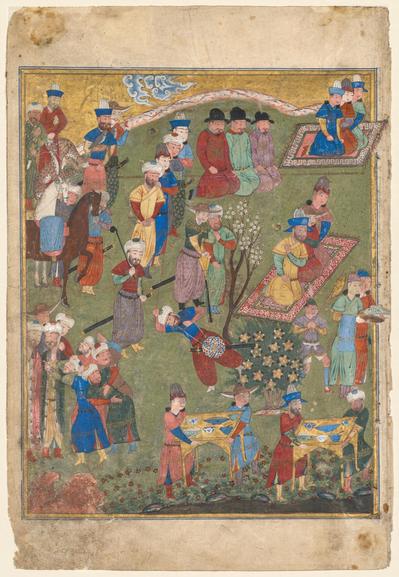

The royal feast is set in a green landscape dotted with flowers and blossoming bushes against a gold sky with wisps of blue and white clouds. The group of figures in the upper left includes a falconer, horses, attendants, and two hunting cheetahs, while servers transport food and drink in gold and ceramic vessels, some presumably Chinese blue and white porcelain. Possibly this banquet was offered after a courtly hunt, a prestigious symbol of power and wealth. Among the groups of men sitting on elaborate carpets are three Chinese officials, identifiable by their black hats, kneeling together on the ground. Although their presence indicates the presence of foreign cultures within the Timurid court, the painting also reveals that not all are welcome to the feast; in the bottom half of the page a guard wields a stick to drive a group of men out of the garden.
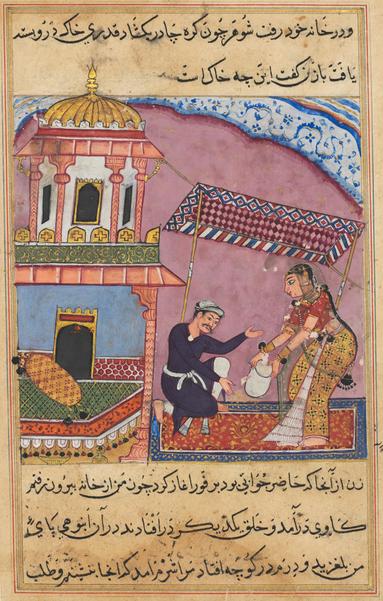

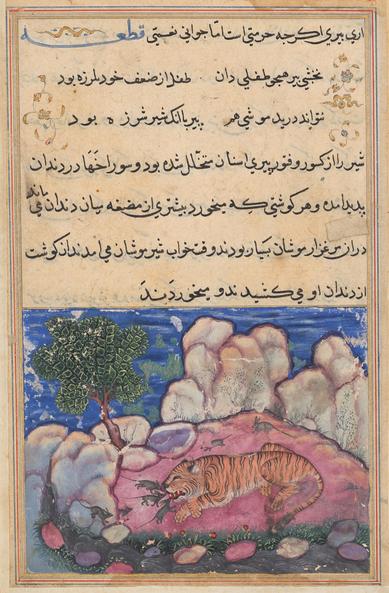
After a brief romantic encounter with a merchant, an unfaithful wife returns home to discover that the merchant's clerk replaced her sugar with gravel. Her husband demanded to know why she brought him a bag of dirt. In response, the wily adulteress concocts a quick lie that he readily accepts.
 Hidden Gems