Then a shift again for another very special #PapersInSystems meetup:

🥁 Monday, September 28 at 1pm-2pm Eastern Time

@testobsessed and @joeltosi will present a chapter of their book "Signals and Levers" which will be published on September 22.

We'll post the signup page when we have the link to the chapter.

But exciting things in the pipe, and you can preorder the book at
https://bookshop.org/p/books/signals-levers-systems-thinking-tools-to-unblock-software-delivery-elisabeth-hendrickson/bf2d9d17012f909f (where it is cheaper than from amazon 🎉)

Today's #PapersInSystems discussion was wonderful -- thanks to @donaldegray and @roundcrisis and everyone there, my thoughts are still being inspired by it!

Next, on July 8 (shifting from "first Monday" to Wednesday): *the* @art3starr and "Theory of Troubleshooting": https://dl.acm.org/doi/10.1145/3800945

Info/sign up: https://ti.to/bredemeyer/theory-of-troubleshooting

And back to first Monday in August (3rd): @AlexPtakhin will lead discussion of Donella Meadows "Leverage Points"

@dahukanna @RuthMalan @mayintoronto I had to scroll much farther into my bookmarks to find this than expected, 245 days apparently...
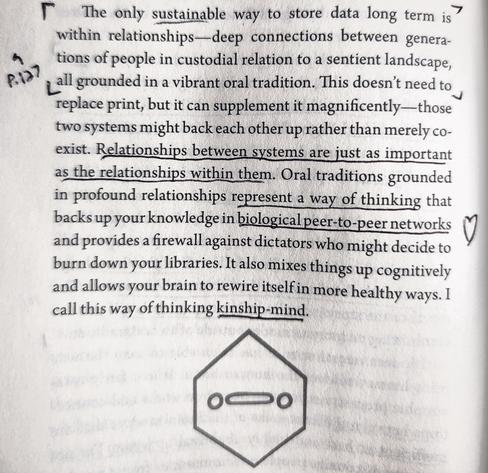
But I just finished Sand Talk and it is wonderful! I haven't marked up a book this thoroughly in a long time!
I flipped through just now to find something fun or relevant to share, and liked this as connected to #papersInSystems discussions.

“Every other year I come back to this absolute beauty of a column by Hegel.
I have given a talk that is just slowly reading the piece.” — @romeu

About:
Hegel, “Who thinks abstractly?”
https://hegel.net/en/who_thinks_abstract.htm

Source: https://www.linkedin.com/posts/romeu_every-other-year-i-come-back-to-this-absolute-activity-7466164525474705408-YxH0

Sooo, Romeu, we should do this (with discussion threaded in??) at an upcoming #papersInSystems — with you reading and leading discussion :)
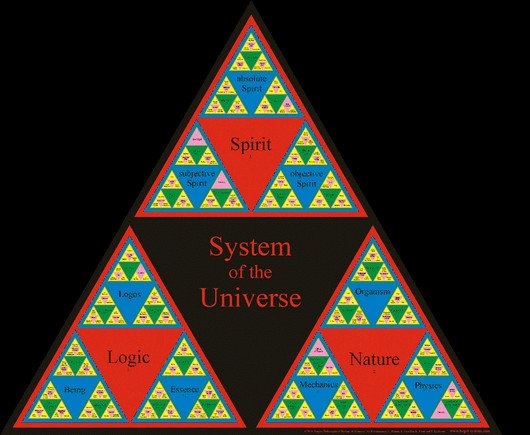

Who thinks abstractly

Who thinks abstractly

hegel.net

RE: https://mastodon.social/@RuthMalan/116449835177523776

#PapersInSystems June 1

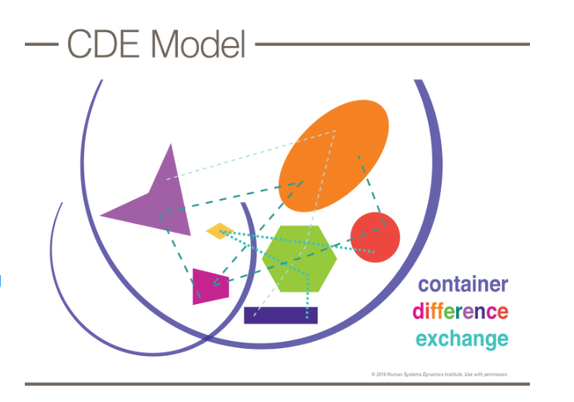
Excited to discuss Knowledge Power Maps and the CDE Model, and see what other "scaffolds" folk bring into the mix.

I'll have Rich Pictures (to commemorate the life and contribution to systems of Peter Checkland). And Kurt Lewin's Force Fields too, maybe.

How about you -- what are you bringing to the conversation (about supporting conversations with a structured format that focuses and supports getting perspectives out where we can see and interact with them)?

#PapersInSystems, June 1 (Monday), 2pm Eastern: Scaffolding Conversations (see upthread) with @donaldegray and @roundcrisis

PapersInSystems, July 8 (yes, Wednesday), 1pm Eastern:
“Theory of Troubleshooting” by Arty Starr and Margaret-Anne Storey, and discussion will be led by @art3starr (Arty Starr)

https://ti.to/bredemeyer/theory-of-troubleshooting

Papers in Systems Discussion: Theory of Troubleshooting

Theory of Troubleshooting Next in our Papers in Systems discussion series: “Theory of Troubleshooting” by Arty Starr and Margaret-Anne Storey. The discussion will be led by Arty Starr. When: July 8, 2026, 1PM - 2PM Eastern Time (US/Canada) (19:00 CEST). The Zoom room will remain open until 2:30PM (ET) for informal discussion. (Check time in your timezone: WorldTimeBuddy ) The official link to the paper is: https://dl.acm.org/doi/10.1145/3800945 (and you are encouraged to download it from that ACM link, for academic credit reasons). If that is hard to read due to the watermark, you can also download it here: https://arxiv.org/abs/2602.10540 The importance of this paper is all the greater, as pressures increase, and more code is generated, and generated faster, and the need to communicate Developer Experience in ways that resonate, is of such great consequence. Some quotes to tease the appetite: "the Theory of Troubleshooting that followed from our analysis: the cognitive problem-solving process of identifying, understanding, and constructing a mental model of the cause of an unexpected system behavior." "While cognitive fatigue has been widely studied in domains outside software development [1], research within this context remains limited. One exception is a survey by Sarkar and Parnin (n=311), which found that a majority of developers experience severe and frequent issues with cognitive fatigue [35]. Their findings highlight the need to better understand the cognitive demands placed on developers and how they contribute to fatigue. In software development, such demands are not evenly distributed across activities. Troubleshooting, in particular, places sustained demands on attention, working memory, and mental modeling, as developers work to reconcile unexpected system behavior with their existing understanding." "What makes the developer’s process troubleshooting is not the presence of a bug, but rather the developer’s engagement in a cognitive process of trying to understand unexpected behavior. These are related, but oriented differently: one reflects a condition of the code, the other a shift in the developer’s cognitive activity" "As developers strive to make sense of a confusing system behavior, they also draw on a “gut feel” intuition that guides their strategy, shaping where they look and how they begin. This intuitive sense—what we call experiential intuition—is a tacit form of knowing shaped by accumulated experience (expertise), in which perceived similarities to past situations provide a felt sense of direction, even before a clear rationale has formed."

Tito

I love a point that @ductape made about the #PapersInSystems reading and discussions: (paraphrasing from memory) they start to weave into, and inform our thinking/perspective/perspective taking.

The combination of reading to discuss, and the ways the work strikes others, and how they relate it to our work, deepens and informs our reading of that paper (or blog post, etc) and our thinking and approach more generally.

RE: https://mastodon.social/@RuthMalan/116449825863681338

The next #PapersInSystems discussion is June 1. It’s a chance to showcase and discuss collaboration support tools (in the sense of models, canvases, and other scaffolding to support sociotechnical system design work) that folk in our community find useful.

@roundcrisis will be joining us from NZ
and @donaldegray from the US

And you?

We’ll discuss the CDE model and Decision KP maps, then open to discuss other canvases and models you bring in to the discussion.

And nice to see

‘Emery and Trist’s “The Causal Texture of Organizational Environments” - how the environment forces shape an organisation’ ( @tdpauw )

in the foundations mentions, when @trondhjort just led the April #papersInSystems discussion on exactly that paper. :)

For the Monday, June 1 #PapersInSystems discussion, we will visit some of the systems-supporting practices that folk in our community have used or developed to support the socio-technical systems work we do. We will discuss:

- Container Differences Exchanges Model, which @donaldegray has used with organizations and Don will lead the discussion

- Decision KP Maps, created by @roundcrisis and discussion will be led by Andrea

Info/Enroll: https://ti.to/bredemeyer/scaffoldingconversations